Leave a comment

El gobierno de EE.UU. prohíbe a un matrimonio concebir hijos.

Muchos pensarán que es una información incierta, que un gobierno tan poderoso llegue hasta ese nivel de intromisión entre dos personas que han decidido unirse como pareja para formar una familia, lograr lo más sublime de esa unión, tener un hijo y poder verlo crecer, educarlo, formarlo, brindarle todo su cariño. Ver en ese nuevo ser la consumación plena de su amor.
Continue Reading »

Leave a comment

After They Passed the nNew Nuremburg Laws

After They Passed the nNew Nuremburg Laws

by: Gary Hicks 16.Dec

after they passed the new nuremburg lawsafter the longyears of accomodationcomes the occupyto say no to everythingto say yes to everythingto tell a majoritywe don’t have to live in the old wayand then likethe rat in the corner comesthe occupationto say no to usto say yes to constantlyresurrectingpharaoh andpriest-guardiansof the wealthcreated by all butenjoyed by fewto confirm thatfranklin of fed reservebenjamins famewas right whenway back whenhe warned thata country tradingliberty for securitywould have neitherand some of uslook at these newchildren of thealien and seditionfugitive slavedred scottjim crowcriminal anarchyanticommunistlaws and we knowfrom past timesthese laws are justitching to be broken and the standards andflags once againstrewn at thefeet of a newlytriumphant red army havingcaptured that city havingthe effronteryto be thenew berlin ofa fourth reichabout whicheven now peoplethe world overare placing theirwagers on howlong this monsterwill last.

Leave a comment

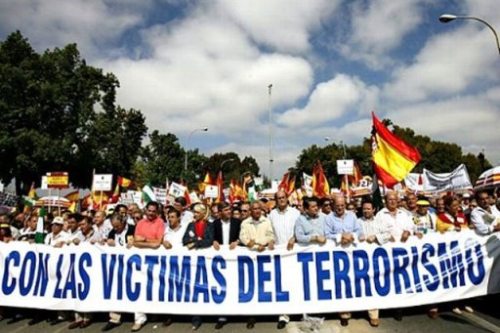
El paro marca un nuevo récord en enero: 4.599.829 desempleados

• 177.470 personas perdieron su trabajo en enero
• Es el segundo peor enero de la serie histórica tras 2009
• El paro ha aumentado un 8,7% en el último año: 368.826 personas
• Se trata de la sexta subida consecutiva desde agosto
• Los contratos han bajado un 7% desde enero de 2011
• El número de ocupados baja por primera vez de 17 millones
PÚBLICO.ES/AGENCIAS MADRID 02/02/2012 09:02 Actualizado: 02/02/2012 10:54
Continue Reading »

Leave a comment

“Cuba is one of the Countries of the World that Respect the Human Rights

April 13 2010, 12:00 pm GMT
Lilibeth Alfonso Martínez

Guantanamo, ( Venceremos) –-Not for too much repeating it is rhetorical. The Cuban Revolution is an unfinished project in the search of socialism, it was thought from and for the highest rights of men and women. So confirms Jose Sanchez Guerra, Guantanamo City Historian.

Jose Sanchez Guerra, Guantanamo City Historian.

For the researcher the anti-Cuba media campaign, launched after the European Parliament’s vote for a resolution condemning Cuba for supposed violations of the Human rights, “is a submission of these countries towards the powerful United States, combined with common ideology and economical interests”.

He says also, this prove their ignorance about the Cuban history, and more specifically, the revolutionary process.

“The History will Absolve me (La Historia me Absolverá) stated a program which fundamental nature was the benefit of the population, that is to say, the doctrines of the Revolution had premises in the human conditions, even before the triumph. After 1959, the economical, political and social essence has been, consequently, humanitarian”, he explains.
Continue Reading »

Leave a comment

Chavarria: Campaign Against Cuba a Prelude to Invasion

by PL — last modified Apr 12, 2010 02:20 PM Contributors: PL

The anti-Cuba media campaign orchestrated from the US and Europe aims at discrediting the revolutionary process in Cuba, and generate the conditions to destroy its social system, an editorial denounces Thursday.

The front page text published by Granma daily sustains the White House and its allies have launched a new crusade to try to demonize Cuba.

“It does not surprise us. Those are the same perverse methods put into practice for over 50 years, since President Eisenhower approved the plan of anti-Cuba covered actions,” the document sustains.

Based on Cuban President Raul Castro’s statements that Cuba will not give in to intimidation, the editorial stresses Cubans will wage a battle of ideas on streets and at all international scenarios.

Regarding that, it points out that on May Day, they will come up against the people’s strong, unequivocal support for the Revolution, clearly alluding to preparations for demonstrations that day.

They cynically invoke human rights that have infringed and are still infringing in several parts of the world with impunity, the note indicates. Meanwhile, it goes on, Washington uses its mercenaries its own way in the obsessive anti-Cuba drive.

They hypocritically accuse the Revolution for the death of a common prisoner whom they presented as political by the grace of anti-Cuba campaigns and considerable resources they entail, it reads.

They sacrificed him to be a spearhead in the attempt to denigrate the country that most efforts make to save lives worldwide, added the declaration alluding to the death in February of prisoner Orlando Zapata Tamayo.

After recalling that Cuba has acted in line with the ethical and political principles encouraged by the leader of the Cuban Revolution, Fidel Castro, the text highlights that respect for the human being has been the essence of the Cuban system, one of the keys for the popular support for the process.

“Despite constant US hostility and aggression, (…) the Revolution has never assassinated, tortured or disappeared any of its enemies,” it states.

Leave a comment

Iran will Pose Strong Resistance to a Possible Attack

July 13, 2010
tags: Cuba, fidel castro, iran
by lchirino

South Journal— If attacked, Iran will respond with strong resistance, which may lead to the use of nuclear weapons against it, said Cuban Revolution leader Fidel Castro in an unexpected appearance on Cuban Television after nearly some years out of the public scene, although present in his almost everyday articles published on the Cuban media about international issues.

Leave a comment

Fidel: “We Should Try to be a Little Bit Better Each Day”

HAVANA, July 27 (acn).-

Cuban News Agency
We waited in the small theater of the José Martí Memorial. We knew he was outside, laying, with as much privacy as possible, a wreath to the National Hero, next to the monument in the square. “It’s July 26, it’s not just any tribute,” someone notes almost in a whisper so as not to break the silence of the room where we waited, several dozen people sensing his proximity.

A second later his voice is heard at the door. It is Fidel.

“So many well-known people!”, he says, moving down the hall, waving to those in the seats nearby. “There is Rosa Miriam,” he says to Marina Menendez, the deputy director of Juventud Rebelde, who was sitting next to me. “You know, one day, she asked me if we would survive the Special Period?”, he laughs and squeezed my hand tightly. Unbelievable. He remembers one afternoon in late 1990 that I’d almost forgotten. I had just graduated and by chance I had to report an event at the Genetic Engineering and Biotechnology Center, and Fidel arrived. As if we were riding in a time machine, that day we literally watched the movie of what the

Cubans would live through in the coming years of the special period, after the fall of the USSR. I was so shocked that when I was in front of him the only thing I could think to ask was: “Do you really believe that we might survive?”.

Fidel walked on. He greeted relatives of Commander of the Revolution Juan Almeida, the Rev.

Lucius Walker, members of the Pastors for Peace Caravan, the Rev. Raul Suarez. Also Silvio Rodriguez, Amaury Pérez, Sara Gonzalez, Frank Fernández, Vicente Feliu, the painters Nelson Domínguez, Kcho, Zaida del Rio, Rancaño, Flora Fong …. joking with some, thanking others. He came in his olive green. Then he sat at the front of the auditorium, next to a small table waiting for some folders. Randy Alonso, director of Cuban television program, Mesa Redonda, moderated the exchange of questions and comments, beginning with Alexis Leyva Machado (Kcho)

HE ALSO TALKED WITH THE FAMILY OF COMMANDER OF THE REVOLUTION JUAN ALMEIDA.
He brought two flags, one of July 26, which Commander of the Revolution Juan Almeida gave the artist, and which accompanied the “Marta Machado” artistic Brigade, organized by Kcho and a group made up of prominent Cuban artists who attended to the victims of the terrible hurricanes that struck Cuba in 2008, and also to the victims of the earthquake on Jan. 12 in Haiti. Immediately, a flagpole appeared and the flag was raised, alongside the national flag, in the left wing of the Theatre.

Fidel warmed up and talked about the events of Moncada, exactly 57 years ago:”I’ve said it before and I repeat, if I had to do it again, I would do everything the same, except paying attention to the Cossack Post. I had to go on….If I had carried on these people would not have shot at those in the post, and I would not have given in to the temptation to take those two machine guns, which was due to our shortage of weapons.”

“There were enough men,” he reaffirmed. “I would say no more were needed. We had about three times more men than it needed to take that goal. I am convinced of that.”

INSPIRATION
The Rev. Raul Suarez, who heads the Martin Luther King Center, asked the Commander in Chief for a reflection. “For us it was not easy to live our faith and practice our vocation in a socialist-revolutionary process. We had been instilled to the core American anti-communist ideology…. What we really fell in love with of the Revolution and sharing this process with our people was what motivated you to go to Moncada. I would like a few words from you… At this time in our country we badly need ethical moral and spiritual sustain to do everything we have to do…” ended Raul.

THE LEADER OF THE REVOLUTION GREETS THE REVEREND LUCIUS WALKER.
Fidel had listened to him carefully: “Really all we had,” he said, “was inspiration.

One cannot explain what would have happened to Silvio and everyone here, without inspiration. One should aim, almost as a rule, to be each day a little bit better. And do not give up that line…..”

For everything else you can find explanations and each of these are legitimate, the Commander in Chief went on to say, acknowledging that there is no contradiction between the believers and the Revolution, as the Brazilian father Frei Betto said in the conversation that was later inserted in the book ‘Fidel and Religion’. He admits that “science permeates and penetrates and goes to incredible limits. We are less than dust, and that we know from science.”

“What did man know 200 years ago?” And he recalled the “Prayer to God,” by the poet Gabriel de la Concepción Valdés “Plácido” (1809-1844), where he talks of the “heliacal star” and that Mary, the mother of Christ, ‘bore the pain’. “That always struck me, because he knew that there was helium in the stars. But nothing more than that. Not much more. What happened to knowledge? They have erupted.

Fifty years ago, at the Moncada, we knew nothing. And since then, in a few years, science has advanced so much ….All these devices, all these cameras,
blackberry … that anyone has “he smiled “I am not a fortune teller, he continued,” I am not a prophet. But I see things logically and we must see them with a bit of serenity and be prepared. Our people are prepared now to see them. And see the dangers. It would be terrible if we were to face problems that we hadn’t thought of, “he concluded.

IRAN, NORTH KOREA AND BRITISH PETROLEUM
These concerns, Fidel added, led him to write the latest Reflections on the terrible situation that has been brewing in the Middle East, which began with an article entitled “The Empire and war”, published on June 1 after Israel’s attack on an humanitarian fleet bound for Gaza, which asks: “Could Obama enjoy the emotions of a second presidential election without the Pentagon or the State of Israel, whose behavior does not follow the U.S. decisions at all, in using their nuclear weapons on Iran? What would life on our planet be like after that? “.

Leaving the pages of his Reflections on the table he said: “And that is starting to appear in Korea and I think that the conflict could be unleashed there. They made people believe that North Korea had sunk the ship (Cheonan). With an old Soviet submarine, which makes a tremendous noise and can be heard almost without equipment ….And fires a torpedo. And half of the world believes that, yes, the North Koreans sank the ship.

He did not invent this information. Fidel cited an article by Global Research which had “truly amazing details of what happened.” When the situation started to worsen, the leader of the Revolution would share his findings systematically, born in the heat of the daily news in Asia and the Middle East, and warnings that important specialists were revealing, until he discerned “the inevitable war”, the title of his reflection on 16 June.

On June 24 he published “How I wish I was wrong.” “It’s funny,” he paused and looked at the audience: “I was wrong, but in another way,” and claimed the need to be prepared for a tragedy that can be daunting, if they use the vast nuclear arsenal that is in the hands of the superpowers today against Iran and North Korea.

To demonstrate how this is possible he recalls that years ago the United States, in time of Nixon, threatened to use tactical nuclear weapons against Vietnam and Korea. However, “with that comes the problem of the oil leak…. BP is drilling for oil at great depths, with modern technology, to 8,000 meters, which is where the leak is,” and adds: “Today 107 days after the leak occurred, it has not yet been resolved. And (Barack) Obama knows, but he does not admit publicly that it is a great danger.. “

The Commander in Chief said that this is not a hopeless situation: “What chance that the company was looking for oil!” he said, recalling the role of BP in the coup against Mossadegh in Iran. “Who would have thought of that? It is not the first time something like this has happened. There have been other disasters, with ships from Alaska…. But even Bush did not dare to authorize the drilling. However, Obama authorized the British to drill because he believes blindly in technology.”

What if British Petroleum hadn’t caused this accident? “They would have carried on
drilling….. they have 27,000 unproductive wells, and the concern of government, is textual, that gas begins to seep from the non-productive wells. And there is no solution to this disaster. That is why they have not talked again about this matter, after they said it had been resolved. “

This is the subject matter of the Reflection of Fidel on August 3: “I have all the data, but I’m waiting for what they say today and what they will say tomorrow…. but you will see, don’t get impatient. I just ask you to trust me.”
He announced that he will also call for a special session of the National Assembly to discuss such important matters.
Irma Shelton, a journalist with the Information System of Television Cubana, asked Fidel to comment on the situation no less critical in Latin America, with the U.S. military deployment in Costa Rica, approved by the parliament and the presidency of that country, to which can be added military exercises in Peru and the breaking of relations between Venezuela and Colombia. “All those things,” he said, “reveal the irresponsibility of the Empire. They do not control, they cannot control their instincts. I say it seriously, they belong to prehistory.”

And ironically he said: “That’s all inspired by the ‘noblest’ of purposes: fighting drugs..”

Later singer Amaury Perez asked, “There are forces supporting President Obama that have the impression that he was ill advised to authorize British Petroleum to drill the deeper hole, that this disaster was calculated by these right-wing forces that are against Obama to not triggering his re-election for another term. Have you ever thought that this could be a possibility too? “.

Fidel touched his forehead with his left hand for a second and responded, “It seems to me difficult that anyone might advise that, in order to spite the other. What they can do is taking up any little thing to attack him…. But it doesn’t seem to me that they have led the man to make a mistake so that they could attack him. No.. “

He added: “The problem with Obama is his obsession that U.S. be independent of oil imports. It has the highest per capita consumption of oil and gas in the world. And it is seeking not rely on oil from Venezuela, Iran and the Middle East. They have put that company in Saudi Arabia, which is producing 10 million barrels a day, and has the capacity to produce 20 millions a day. Do you know what can happen to the environment? “.

He talked of the dramatic predictions that the film Home, directed by Yann Arthus-Bertrand, raises and asked “But is renewable energy a dream? They have already made the first trial flight with a small plane that weighs 60 kilograms… the first time it flew for over ten hours with solar energy. In the new trial it could fly for 33 days. No one knows what you can do harnessing the power of the sea, rivers, methods to make rain in times of drought there are many ways in which science can help. “

STRATEGIC VICTORY
He put forward some ideas he would express this Tuesday, July 27, in a reflection dedicated to “the strategic victory”, which takes up again the military conception of the Rebel Army during the last moments of the offensive against Batista, where they did not commit the errors that prevented the taking of the Moncada Barracks in 1953, and the revolutionaries were able to withstand 10,000 men who had the support of the Navy, Air Force, under constant bombardment. He announces a forthcoming book, on which he has worked with researcher Katiuska Blanco.

The Rev. Lucius Walker, leader of the Pastors for Peace, asked about the future of Haiti.
Fidel responded without hesitation, “In today’s world, there is no solution there. In the future I am talking about, yes. (USA) is a major producer of food, it produces for two billion people. It has the capacity to build houses to withstand earthquakes. The problem is how the resources are distributed….. This country (Haiti) needs to plant again its forests. But it has no solution in the current world order.. “
He recalled the U.S. selfishness and callousness faced with the millions of hungry and in need of healthcare, particularly children. Also, the blockade that Cuba is suffering and the unjust imprisonment of the five Cuban anti-terrorists in U.S. prisons, who are serving long sentences. “They have not made the slightest gesture to release them. Five people separated from their families… And they will have to release them.”
He talked, quite moved, about his visit to Artemisa. We were looking on the Round Table at stories related to Moncada. “I discovered the value of music (which ran in the background).
Colossal. Fabulous. Vitier’s music. It’s something I can never forget. Nobody knows what it’s worth. It’s an infinite satisfaction. I do not want to stop paying tribute to the men whose gift to humanity is through their music.”

Applause. Fidel walked back down the hallway to leave the José Martí Memorial Theatre. Again, the hugs, greetings, a small comment here and there. When he passed near my chair, he paused for a moment: “See, my daughter, how we were able to resist.”

(I) http://videos.co.cu/videos/fidel26dejulio1.wmv”>
(II) http://videos.co.cu/videos/fidel26dejulio4.wmv
(III) http://videos.co.cu/videos/fidel26dejulio5.wmv
(IV) http://videos.co.cu/videos/fidel26dejulio6.wmv
(V) http://videos.co.cu/videos/fidel26dejulio7.wmv
(VI) http://videos.co.cu/videos/fidel26dejulio8.wmv
(VII) http://videos.co.cu/videos/fidel26dejulio9.wmv
(VIII) http://videos.co.cu/videos/fidel26dejulio10.wmv

Leave a comment

Venezuela will Suspend oil Shipments to the U.S. if Attacked, says PDVSA President

Ramirez, also Deputy Prime Minister and Minister for Energy and Petroleum, backed the warning of President Hugo Chávez, who claimed that there is an ongoing military action plan against the Bolivarian republic.

Ramirez called the oil workers to mobilize in support of Chavez and defend their national sovereignty, as they did before when the sabotage against this sector and during the attempted coup of the oligarchy.

The Venezuelan VP addressed those workers through the Venezuelan and Cuban
media accredited to the ministerial meeting prior to the Cuba-Venezuela Summit, which began this Sunday at the Ensenachos Hotel, located in the northern keys of the Cuban province of Villa Clara.

Ramirez, who heads his country’s delegation, summarized the first day in which the they established five working groups in the branches of light industry and trade, energy, oil and petrochemical, agriculture, mining and basic industry.

He noted that “we have completed over 139 projects to be worked out within
the framework of what we have called the economic union between Cuba and
Venezuela, mainly things related to productivity”

Both government delegations will meet quarterly to check the progress of the agreements, which are based on the principles of the Bolivarian Alternative for the Peoples of Our America (ALBA), complementarity and solidarity and seeking to expand the common grounds for our countries, said Ramírez.

Leave a comment

Cuban Women: Revolution within the Revolution

Written by Cubasi
Monday, 23 August 2010 12:32
federacion_50Anne has nearly 80 years, but still remembers the early years of the triumph of the Revolution. Her mind goes very quickly through the changes that were happening one after another. She quotes almost exactly Fidel’s words, his call to women and the challenge of creating a new country.

Ana remembers it very well so she raises the tone of her voice when she wants to reaffirm something calling her attention as if she were to differentiate the past with the present and anticipating the future.

“Darling, you have had the privilege of living a better time. Women have had to fight hard to have the freedoms we enjoy today. It could be only achieved with a social revolution like ours and a political leader like Fidel. He understood women must be trusted.”

When she speaks of those years I can not stop thinking about my grandmother, a poor peasant who had no right to study for the simple fact of being female. According to her parents, she only had to learn how to become an excellent wife and mother.

“You can imagine that all that was very difficult,” continued Ana, – some men did not understand that women were to work at jobs with equal responsibilities. I could tell you thousands of stories of my female partners who had tough battles with her husbands and even the mother-in-law because of that.”

We laughed and took a break to drink the cup of coffee served. Meanwhile, I keep thinking of the women in my family. I remember my aunt, who from time to time regrets not having been brave enough to confront the male chauvinism of her husband and gone to college to study law. “I think it would have been an excellent attorney,” said my aunt with some anguish.

“You surely believe it is a lie, but it was the truth, said Ana, who is recalling the events of that historic August 1960 in which the FMC was set up, Vilma’s work as head of the organization, the Houses of Direction to the Women and the Family, and the unconditional support of Fidel to projects for development of equality between men and women.”

I think of my mom and then I see her visiting working women in their houses to convince them of the benefits of the creation of Day Care Centers.

“Nonetheless, that was a nice time because we were aware that something good was going to emerge out of it. When I see my daughter and my granddaughter as independent women, masters of their own destiny, it gives me great joy to be a Cuban woman. And above all, I am proud to have been involved in this transformation. Now it’s your turn to continue battling to maintain the achievements reached so far,” says Ana with that smile unique in her almost 80 years.

WOMEN IN CUBAN SOCIETY

Since the early years of the triumph of the Revolution, the Government of Cuba attached great importance to the role of women in the development of the new society in which men and women would have the same rights and duties.

The social changes in our island after January 1, 1959 put women in the center of a dynamic that was considered by Cuban leader Fidel Castro as a “revolution within the Revolution” due to the changes that were happening in the minds of Cubans and the active role of women in decision-making.

During the decade of the 1970s, several laws, which granted women special rights in Civil Law, Family, Agrarian Law and Employment and Social Security were approved and amended. So the female workers have guaranteed inter alia, their right to receive a wage based on the value of their work, social security, pre- and postnatal motherhood, protection against occupational accidents and diseases.

It is undeniable the transformer role played by the FMC in this tough battle over the past 50 years. The organization has fought for women’s interest, contributed to their civil education and worked very closely with all government, political, social and mass organizations to foster equality.

Founded on August 23, 1960 at the request of Cuban leader Fidel Castro and Vilma Espin as the organization head, the FMC was erected as a mass organization responsible for developing policies and programs aimed at achieving the full realization of equality in all areas and levels of Cuban society.

At the achievements attained by women such as the right to vote and to divorce, it joined the full integration to work, economic independence, as well as the right to determine the number of children, culture, literacy and free health care.

With more than four million members, representing 88.5 percent of women over 14, the organization has made Cuban women to mostly occupy important spaces in the economy, health, education, the science sector and the legislature, but still not enough.

They represent 46.7 percent of employees in the civil state sector, 67 percent of college graduates, and more than 70 percent of workers in health and education.

During the last term, women’s presence in the National Assembly of the People’s Power reached 43.32 percent, which means that Cuba ranks fourth worldwide in terms of the number of women in Parliament, according to trade publication of the IPU 2009.

The country is also working for the implementation and progress of the major international treaties on gender. Cuba was the first to sign the convention “On the Elimination of All Forms of Discrimination against Women (CEDAW) and the second to ratify it, which has been recognized repeatedly by international organizations.

Leave a comment

I AM READY TO CONTINUE THE DISCUSSION

REFLECTIONS BY FIDEL CASTRO
Two days ago, I was watching Vanessa Davies on her program “Contragolpe” on Venezolana de Televisión’s Channel 8. She was talking to and multiplying her questions to Basem Tajeldine, an intelligent, honest Venezuelan whose face radiated his integrity. At the moment when I turned on the television, they were dealing with my position on the fact that only Obama was able to hold back disaster.

Leave a comment

VILMA ESPIN
HEROINA DE LA REVOLUCION CUBANA
Leave a comment

NUCLEAR WINTER, Reflections by Fidel Castro

http://bit.ly/9LxxUY

I am embarrassed to not know about a subject, one that I have not even heard mentioned.  Otherwise I should have understood much earlier that the risks of a nuclear war were much more serious than I imagined.  I was assuming that the planet was able to withstand the explosion of hundreds of nuclear bombs upon realizing that both in the United States as well as in the USSR countless tests had been done over the years.  I had not taken into account one quite simple reality: it is not the same to explode 500 nuclear bombs in 1,000 days as it is to have them explode in one single day.

I was able to know that when I requested information from several experts in the subject.  One can imagine my surprise when I learned that a nuclear world war was not needed for our species to disappear.

It would be enough to have a nuclear conflict between two of the weaker nuclear powers, such as India and Pakistan –who nevertheless have between the two of them much more than 100 weapons of this kind – and the human race would disappear.

I reasoned a bit with the elements of judgement given me by our experts in the subject, taken from what has been laid out by the most prestigious scientists in the world.

There are things that Obama knows about perfectly well:

“…a nuclear war between the US and the Soviet Union would produce a ‘nuclear winter.”

“The international debate about that prediction, fuelled by the astronomer Carl Sagan, forced the leaders of both the super-powers to face up to the possibility that their arms race had not only placed themselves at risk, but also all of humanity.”

“…‘the models drawn up by Russian and American scientists were showing that a nuclear war would bring about a nuclear winter tremendously destructive for all of life on this earth; for us, for persons having morals and honour, this knowledge signified a great incentive …’.”

“…regional nuclear wars could unleash a similar global catastrophe.  New analyses reveal that a conflict between India and Pakistan during which 100 bombs would be dropped on cities and industrial areas –only 0.4 % of the more than 25,000 warheads in the world – would generate enough fallout to destroy the world’s agriculture.  A regional war could cause losses of lives even in countries far removed from the conflict.”

“With modern computers and brand-new climatic models, our team has shown that not only were the ideas of the 1980s correct, but that the effects would last for at least 10 years, much longer than what had been earlier believed […] the fallout from a regional war would even be heated by the sun and would rise and remain suspended for years in the upper atmosphere, casting a veil over solar light and cooling off the earth.”

“India and Pakistan, who between the two of them have more than 100 nuclear warheads …”

“Some believe that the theory of nuclear winter developed in the 1980s has fallen into disrepute.  That is why they may perhaps be surprised by our contention that a regional nuclear war between India and Pakistan, for example, could wreak havoc on the agriculture of the entire planet.

“The original theory was strictly validated.  Its scientific basis was backed by research done by the National Academy of Sciences, by studies sponsored by the United States Armed Forces and by the International Council of Scientific Unions that included representatives of 24 national science academies and other scientific bodies.”

“Perhaps the cooling off does not appear to be anything to be particularly concerned about.  But one should be aware that a slight drop in temperature could bring serious consequences in its wake.”

“The total amount of grains being stored on the planet today could feed the world population for a couple of months (see ‘Food crises: a threat for civilization?’ by Lester R. Brown; RESEARCH AND SCIENCE, July 2009).”

“Sometimes the smoke from the huge forest fires penetrates into the troposphere and the lower stratosphere and it is dragged for great distances, generating the cooling off.  Our models also agree with those effects.”

“65 million years ago, an asteroid crashed into the Yucatan Peninsula.  The resulting dust cloud, mixed in with the smoke from the fires, hid the sun, killing the dinosaurs.  Massive volcanic activity which took place at the same time in India could have aggravated the effects.”

“…the growing number of states with nuclear capacity increases the possibilities of a war breaking out, deliberately or accidentally.

“North Korea has threatened war unless its vessels stop being held up and inspected for nuclear materials.”

“Some extremist leaders in India proposed attacking Pakistan with nuclear weapons as a result of the latest terrorist attacks on India.”

“Iran has threatened to destroy Israel, now a nuclear power, which in turn has sworn never to allow Iran to become a nuclear power.”

“The first two nuclear bombs so shook up the world that in spite of the massive increase in those weapons from then on, they have never again been used.”

A nuclear war is inevitable from the moment that the UN Security Council term is fulfilled; anything might happen when the first Iranian vessel would be inspected.

“Within the framework of the Strategic Treaty on Offensive Reduction, the US and Russia committed to leave their arsenal at 1,700 and 2,200 deployed strategic nuclear warheads for the end of 2012.”

“If those weapons were to be used against urban targets they would kill hundreds of millions of people and an enormous 189 Tg cloud of smoke would flood the planet’s atmosphere.”

“The only way to eliminate the possibilities of a climatic catastrophe is to eliminate nuclear weapons.”

At noon today I met with four Cuban experts: Tomás Gutiérrez Pérez, José Vidal Santana Núñez,  Col. José Luis Navarro Herrero, Head of the Secretariat for Science and Technology of the  MINFAR and Fidel Castro Díaz-Balart.  Together we analyzed the subject I am dealing with in this Reflection.

I requested the meeting yesterday on August 22nd.  I didn’t want to lose any time, not one second.  Without a doubt, the meeting was productive.

Fidel Castro Ruz

August 23, 2010

5:34 p.m.

Leave a comment

Reflections by Fidel Castro THE PRINCIPAL CHAPTER OF THE LATEST BOOK

http://bit.ly/97UQ1m

After publishing the two Reflections about Daniel Estulin’s book entitled “The True Story of the Bilderberg Club”, the author sent a message requesting an interview with me.  Before our meeting, I wanted to read an important chapter from his new book that is about to be published and must be translated from English.

Yesterday I got the book already translated in Cuba.  Its contents are spectacular and it deserves to be analyzed in its essential aspects.  By choosing some paragraphs from that material, I am offering an idea about the contents of the chapter which provides important facts that signify a challenge for the technicians.

The author begins by stating:

“This is the strangest chapter you will ever find in a book. This book or any other book written […].The last pieces of the puzzle to be put in place, to help you see the picture of the world we live in. […]it is not so easy to make you believe it for purely psychological reasons. It might partly be due to our own slavish mentality so thoughtfully cultivated in us by inhumane propaganda that heavily targeted humanity since the XIX century.”

“…little conspiratorial cliques go back to Cuba, Laos, Afghanistan and Nicaragua, have been involved for decades in everything from drug and gun-running, to assassinations, covert warfare, and outright terrorism.”

“People like George H.W. Bush, former CIA director William Casey; […] former Iran-Contra point man Oliver North, Mossad´s second in command Mike Harari represent one of the more visible of this lexicon of covert operators …”

“This chapter deals with weapons of mass destruction. Atomic weapons, nuclear weapons, mini-nukes.”

“In this chapter, we will analyze the Oklahoma City bombing blamed on America’s extreme right wing, Bali blamed on Islamic terrorists, assassination of Rafiq Hariri blamed on Syria and Barajas T4 blamed on ETA.”

“According to official information, at 9.02 AM (CST), April 19, 1995, the Ryder truck, containing about 2,300 kg of fertilizer and nitromethane mixture, detonated in front of the north side of the nine-story Alfred P. Murrah Federal Building. The blast destroyed a third of the building and created a 9-m wide, 2.4-m deep crater on NW 5th Street next to the building. The blast destroyed or damaged 324 (!) buildings in a sixteen-block radius, destroyed or burned 86 cars around the site, and shattered glass in 258 nearby buildings. The destruction of the buildings left several hundred people homeless and shut down multiple offices in downtown Oklahoma City. At least 168 people were killed and another 853 injured; majority of the injuries were burns. The effects of the blast could be heard and felt up to eighty-nine kilometers away.”

“Even though the official version has been confirmed by the United States government and most corporate media, it won´t be particularly difficult to disprove the “official” version with a saner version of the events:

“1. Car bombs do not leave craters; craters could only be left by a charge buried in the ground. Even if you place a nuclear bomb on a truck and detonate it – even in this case it won’t leave a crater.”

“2. Conventional explosives do not burn cars around the explosion…”

[…]

“4. Conventional explosions do not cause burns to their victims – it is a typical feature of nuclear explosions – because those burns are caused only by thermal radiation.”

“5. Conventional explosives do not cause any EMP that could burnout circuit boards in computers around. The described effects could only be caused by one “phenomena”: an Electromagnetic Pulse (EMP).”

“6. […]The amount of damage was typical to at least 10 pieces of 10-ton modern aviation bombs, or to a “mini-nuke” set to explode at the corresponding yield – i.e. at 0.1 kiloton.”

“9 … a 3.52 on Richter scale is typical for a 0.1 kt “mini-nuke” – which is an equivalent of 100 metric tons of TNT.”

“10.    2,300 kg of fertilizer (an equivalent of 1.8 tons of TNT), even if buried, would never be able to create 3.0 seismic signal (and when packed on a truck such a charge won’t produce any seismic signal whatsoever).”

“A certain, Mr. Timothy McVeigh confessed to the crime. He was tried, convicted, sentenced to death and executed by lethal injection on June 11, 2001. The attack, was the worst act of terrorism on US soil until 9-11. But, it gave the U.S. government the excuse it needed and the pretext necessary for new emergency measures – the Counter-Terrorism Bill, which a few short months later, on the heels of September 11 would morph into Homeland Security, depriving US citizens of most of their constitutional rights.”

“From Bali to Oklahoma City, from Kosovo to Moscow, from Afghanistan to the Wall Street these events give the reader a glimpse of how the Shadow Government operates utilising drug dealers, criminals, and terrorists to do its bidding.”

“The point man for these operations was a long time CIA operative, Theodore G. Shackley who worked in close partnership with Mafia figures John Roselli, Sam Giancana, and Santos Trafficante.”

“In 1975, Shackley became Associate Director in the Directorate of Operations, which put him in charge of Covert-Operations, Counter-Intelligence, and ironically, Counter-Narcotics, all under the command of George Herbert Walker Bush.”

“It was against this backdrop that Shackley served as a “consultant” to players such as Bush father, Oliver North, and CIA director William Casey in their illegal and bloody guns-for-drugs network that resulted in tens of thousands of deaths and the flooding of our streets with tons of drugs.”

“From the Bay of Pigs to Iran-Contra to Oklahoma City, to an outrageous nuclear bombing of Kurds in Kirkuk, Northern Iraq, to a nuclear bombing of a famous Khillani Shi’a mosque in Baghdad, and unprecedented quadruple nuclear bombing of Yazidi Satanic sect near Mosul in Iraq which set a new record in human casualties – over 550 dead and several thousands injured.”

“While Timothy McVeigh was still in the Army, he wrote his sister a letter telling her that he had been picked for a Special Forces (Green Beret) Covert Tactical Unit (CTU) that was involved in illegal activities.”

“It is highly likely that he was told he was on an important mission to infiltrate a terrorist organisation and prevent a bombing. It is a story a young, impressionable man like McVeigh would fall for.”

“Either way, the fact that there appeared to be two “Timothy McVeighs,” just as there were two Oswalds, would suggest a sophisticated intelligence operation, one that was designed to put McVeigh in the wrong place at the wrong time. Like Oswald, McVeigh probably believed himself to be a government agent, part of a secret project.”

“…was trapped, framed, made a patsy and finally killed. Case closed. Evidence removed. Still, the questions remain.”

October 12, 2002 Bali nightclub nuclear bombing.

“Official version of the Bali bombing states that one metric ton of conventional explosives packed in a jeep-like vehicle exploded in the immediate vicinity of the Sari Night Club – causing immediate deaths of 187 people and fatal injuries to many others, huge fireballs, allegedly from cooking gas cylinders, demolition of buildings around the blast spot and huge fires spreading around.”

“One of the first pieces of information about Bali bombing came from Fox News,  Indonesian Nightclub Bombing, Called an ‘Act of terror: “The explosion went off about 11 p.m .[…] The place was packed, and it went up within a millisecond.”

“The word “millisecond” represents one of the most unforgivable slips of the tongue. Just like “ground zero”, this word is reserved for nuclear explosions. So, one would never, under any circumstances, use this strange word while referring to an explosion, unless we were dealing with a nuclear bomb.”

“The problem is that a conventional explosion, however big, does not produce any heat or any flames.”

“In the words of another tourist: ´I felt my hotel shake violently and ran to look out of the window. In the distance I could see a large white mushroom cloud, and knew I wasn’t looking at an ordinary attack´.

“I think everybody knows what the “mushroom” form of a cloud means in reality.

“Furthermore, ordinary explosions do not cause fires to adjacent buildings. It is nuclear explosions that cause fires to adjacent buildings – due to their intense thermal radiation instantly emanating from the fireballs..”

“Indonesian police put the final death toll at unbelievably high 202  victims. You would never be able to instantly kill a couple of hundreds people plus injuring hundreds if not thousands of others with a 1000 kg of the conventional explosives packed into a jeep.”

“Did the government of Indonesia know that what went off in Bali was a nuclear bomb? Of course they did. For example, Deputy House Speaker A.M. Fatwa, referring to an alleged terrorist who allegedly planted the bomb, stated, “My conscience says that he is not a key actor. I don’t believe that Amrozi (the alleged terrorist) has the capability to make all kinds of the preparations for the bombings, like setting off a kind of micro nuclear bomb in Bali.[1]” So, the Deputy House Speaker of a country with a population of over 200 million people knew that it was a “mini-nuke”. Did the then President of Indonesia – Megawati Sukarnoputri know? And if she did, why didn’t she say anything?”

“There is a “confidential” version, of course known to the Indonesian government, US government officials and the Israeli Mossad – which says that it was a “mini-nuke” that went of at about 0.01 to 0.015 kiloton in the TNT yield and that “mini-nuke” belonged to “Al-Qaeda.”

“In the previous chapter, I have definitively proven that Al Qaeda would have an easier time cobbling together a wooden spaceship and landing on the Moon than having access to a mini nuke. I have also shown that four nation have the technical capabilities to make a mini nuke – USA, Russia, France and Israel. Confidential Indonesian sources confirmed to Russian nuclear intelligence that the bomb belonged to the Israeli Mossad.”

“Photographic evidence proving the use of an unconventional weapon was edited out almost immediately by the major media, though not from the amateur video camera which provided the picture at top centre above. […]  The very presence of the crater itself proves the weapon was detonated sub-surface, while the crater’s depth in combination with its diameter, prove the depth at which the weapon was initially placed.”

“Beginning with the end: It was a major nuclear bombing that had nothing to do with any “mini-nukes”. Still, it was officially blamed on a “car-bomb” as has become a tradition […]“confidentially” blamed on an alleged “mini-nuke” for various “patricians”.”

On December 30, 2006, ETA terrorist group placed a bomb in a van loaded with  200 and 500 kg of explosives, according Fuerzas de Seguridad del Estado (State Security Forces).  EFE agency collects from the investigations sources that the first police estimates showed  that ETA could have used around   500 kg of explosives to carry out the attack.

These sources have added that the estimate   (200-500 kg) is based on the visible effects of the explosion and the technicians´ expertise in defusing the artefact.

A Renault Traffic, a bomb van exploded the same day, a Satuday, December 30, 2006 at 9:01 in Parking Lot D of Terminal 4 of the Barajas Airport in Madrid.  The explosion caused a heavy smoke column and the collapse of five floors of Module D of the T4 Parking Lot.

As a result of the attack, 60% of module D has collapsed and has affected three of the six modules that make up the Terminal 4 parking lot in which ETA members had parked the deep-red Renault Traffic. The firefighters rely on the fire to extinguish by itself at the end.

Regarding the vehicle used, the Police has started an investigation approach that points out that the van was robbed three or four days before in any place of the Basque country.  Summarizing, EL MUNDO reports that the van may has the plate from Ordizia, guipuzcoana town even though it was robbed in France.

“Does anyone in their right mind believe that you could demolish such a huge part of steel-reinforced concrete structure by using mere 200 kg of conventional explosives, placed in one single spot? […]. The maximum damage such a 200 kg conventional explosion could cause – it could crash some of the concrete in the immediate vicinity of the explosion – on floors (one floor above, and one floor – beneath, and no more than that),  as well as on several surrounding pillars.”

“…the actual structure was made not of just concrete, but of steel-reinforced concrete. A radius of such damaged area will be very limited – 20-30 meters, at most. Again, there is zero chance to collapse a huge steel-reinforced structure by a 200 kg of explosives placed in a single spot.”

“. The maximum you could succeed in this case (if you are a professional demolition expert and you know where to position your car bomb exactly) – you might completely undercut one pillar. However, you will not be able to undercut two pillars at once with a single car bomb. Now, look at the above picture again and think – how many steel-reinforced concrete pillars you might need to undercut in order to collapse the entire structure that is now absent in the middle?”

“…any single conventional explosion did not demolish the building. Some other explosion demolished it. Logically, it should be presumed that it was demolished by a “mini-nuke” – that would be a typical patrician truth of the event. But, unfortunately, you can not demolish such a huge steel-reinforced building with so many pillars and so much empty space between its floors even by a “mini-nuke”. Even in case if you set your “mini-nuke” at its maximum available yield – 1 kiloton – it would still not be enough to completely demolish such a huge, strong, and almost empty structure.”

“Not one vehicle had signs of being burned as in a Bali explosion. […]  smash the remaining cars around by its tremendous air-blast wave. But none of these expected effects were reported after the “car-bombing” in the Barajas Airport. So, we can safely dismiss a “mini-nuke did the job” theory”

“Also there is some truly strange effect present here – if you try to draw an imaginary line from up to down indicating an exact border of destruction, such a line would not be vertical. It would be a line inclined at about 45° angle. Why a destruction wave that caused these damages would propagate under such an angle?”

“  I guess you got my point. It seems that here it was exactly a case. It seemed to be a huge deep underground nuclear explosion in the middle of the car-parking building that did the job.”

“Furthermore, it is truly mind blowing that Fuerzas de Seguridad del Estado (State Security Forces)  can be off in their estimates of the size of the explosion by 150%.  The fact that the  estimate   (200-500 kg) is based on the visible effects of the explosion and the technicians´expertise in defusing the artefact, makes me think on two things:  1) These are the most inept agents on the face of the Earth, comparable, at best to the famous Inspector Cluzeau. 2) These agents immediately ascertained that the explosion was a nuclear bomb and tried to hide the evidence from the general population.”

“I have no doubt that the two ETA terrorists indeed had parked their Renault Traffic in Parking D of the Terminal 4. When they admitted their guilt in court, I am sure they thought that their actions had caused the chaos. However, the real damage, nuclear damage came from a nuclear bomb buried deeply inside the terminal. Who knew and who did it? I don’t know. But, I think I have proven who didn’t do it.

“Conclusion regarding “mini-nuclear” bombings, alias “car-bombings” and “track-bombings’:

“1) There are “mini-nukes”.

“2) These “mini-nukes” are “confidentially” blamed to belong to various terrorist organizations, almost invariably – to the so-called “Muslim” organizations.

“3) These “terrorist organizations” do not hesitate to use these “mini-nukes” against various targets, mostly civilian.

“4) These “mini-nukes” produce unusually powerful blasts – equivalent to unreasonable amounts of TNT or other conventional explosives that could scarcely fit even into the biggest truck, not to say about a passenger car.”

Estulin continues reasoning his points of view in paragraphs  5, 6, 7, 8, 9, 10, some of them of some extend. I will not mentioned them due to brevity as they are not indispensable to understad his thesis.

Once more, he states in paragraph 11, page 64:

“11) These “mini-nukes” could only be manufactured by a maximum of four of the most developed countries – USA, Russia, France and Israel.

“12) The “Secret Team” performs almost all of these modern “mini-nuclear” bombings, with probably only a couple of exceptions. This “Secret Team” be they American, Israeli, French or Russian have absolutely nothing to do with Islam.

“13) In all modern “mini-nuclear” bombings, with the exception of a couple of cases, use the latest 3rd generation “mini-nukes”, which are small enough to be secretly hidden into sewage.

“14) While “mini-nukes” could obviously destroy a huge area build over by ordinary structures, they can not completely topple a modern heavily reinforced building even if they explode in its immediate vicinity – as it was demonstrated in the 1995 Oklahoma case, as well as in the case of 1996 Khobar Towers bombing.”

With these words Estulin basically concludes the chapter translated from the English of his latest book.

Fidel Castro Ruz

August 24, 2010

7:06 p.m.

Leave a comment

Reflections by Comrade Fidel THE OPINION OF AN EXPERT

If I were to be asked who best knows about Israeli thinking, I would answer that without question it is Jeffrey Goldberg. He is an indefatigable journalist, capable of having dozens of meetings to ascertain how some Israeli leader or intellectual may think.

He is not neutral, of course; he is pro-Israeli, no ands ifs or buts. When one of them does not agree with the policy of that country, that too is not done halfway.

For my aim, it is important to know the thinking that guides the main political and military leaders of that State.

I feel that I have the authority to have an opinion because I have never been anti-Semitic and I share with him a profound hatred of Nazi-Fascism and the genocide perpetrated against children, women and men, young or aged Jews against whom Hitler, the Gestapo and the Nazis took out their hatred against that people.

For the same reason, I abhor the crimes committed by the fascist government of Netanyahu which kills children, women and men, young and old in the Gaza Strip and on the West Bank.

In his illustrated article “The Point of No Return” that will be printed in The Atlantic journal in September 2010, now available on the Internet, Jeffrey Goldberg starts his more than 40-page paper; I am taking the essential ideas from it in order to enlighten the readers.

Leave a comment

Mordechai Vanunu: The Sunday Times articles

From Times Online
April 21, 2004

Mordechai Vanunu: The Sunday Times articles

The Sunday Times’ Insight Team was the first to reveal Israel’s nuclear secrets to the world after the paper published leaks from Morechai Vanunu. Here is how the newspaper chronicled the story, from Vanunu’s original claims, to how he was captured.

Sunday October 5, 1986: Headline: Revealed – the secrets of Israel’s nuclear arsenal/ Atomic technician Mordechai Vanunu reveals secret weapons production

THE SECRETS of a subterranean factory engaged in the manufacture of Israeli nuclear weapons have been uncovered by The Sunday Times Insight team.

Hidden beneath the Negev desert, the factory has been producing atomic warheads for the last 20 years. Now it has almost certainly begun manufacturing thermo-nuclear weapons, with yields big enough to destroy entire cities.

Information about Israel’s capacity to manufacture the bomb come from the testimony of Mordechai Vanunu, a 31-year-old Israeli who worked as a nuclear technician for nearly 10 years in Machon 2 – a top secret, underground bunker built to provide the vital components necessary for weapons production at Dimona, the Israeli nuclear research establishment.

Vanunu’s evidence has surprised nuclear weapons experts who were approached by Insight to verify its accuracy because it shows that Israel does not just have the atom bomb – which has been long suspected – but that it has become a major nuclear power.

Vanunu’s testimony and pictures, which have been scrutinised by nuclear experts on both sides of the Atlantic, show that Israel has developed the sophisticated and highly classified techniques needed to build up a formidable nuclear arsenal. They confirm that:

Israel now ranks as the world’s sixth most powerful nuclear power, afterAmerica, the Soviet Union, Britain France and China – with an arsenal far greater than than those other countries, such as India, Pakistan and South Africa, which have also been suspected of developing nuclear weapons.

It has possessed its secret weapons factory for more than two decades, hiding its plutonium extraction processes from spy satellites and independent inspections during the 1960s by burying it beneath an innocuous, little used building.

The plant is equipped with French plutonium extracting technology, which transformed Dimona from a civilian research establishment to a bomb production facility. Plutonium production rates amount to 40 kilograms a year, enough to build 10 bombs. In the past six years Israel has added further equipment to make components for thermo-nuclear devices.

The 26 megawatt reactor, also built by the French, has been expanded and is probably now operating at 150 megawatts to allow it to extract more plutonium. An ingenious cooling system disguises the output.

The nuclear scientists consulted by The Sunday Times are convinced by Vanunu’s evidence. They calculate that at least 100 and as many as 200 nuclear weapons of varying destructive power have been assembled – 10 times the previously estimated strength of Israel’s nuclear arsenal.
Page 1 of 6
Note: Next Page will be published tomorrow.

Leave a comment

VANUNU’S PHOTOS OF DIMONA – 1985

Mordechai Vanunu brought his camera to work in late 1985, shortly before leaving his eight-year stint as a technician at Israel’s nuclear weapons factory at Dimona.

Acting on his conscience, he carefully took about 60 photos of the top-secret labs and unique production processes involved. When some of these photos were originally published in the London Sunday Times’ exposé, they confirmed his eyewitness testimony about the extent of Israel’s nuclear weapons program and revealed Israel to be one of the world’s top nuclear powers. To this day, the Israeli government refuses international inspection of Dimona and continues to deny the existence of its nuclear arsenal. [click here for more of Vanunu's story: archive/story.html]

While their publication resulted in Vanunu being locked away for an 18-year prison sentence, his photographs of Israel’s nuclear weapons factory – a bold statement against nuclear secrecy and for the abolition of nuclear weapons – are here for all to see.

Click on the thumbnail views below to see the full-size photos in this selection.

1) Looking inside a glove box for tooling nuclear materials
2) Looking from outside into a glove box
3) Control panel
4) Control panel
5) Control panel for lithium 6 production
6) Control panel
7) Workshop
8) Looking inside a glove box at lathe for turning precision shaped pieces of plutonium or other components.
9) Laboratory model of nuclear weapons core
10) Looking inside a glove box at models of bomb components or containers for nuclear materials
11) Outside of glove box
12) Plutonium separation plant control room
13) Shielded viewing portal for observing nuclear reactions
14) Production model of nuclear weapons core
15) Production model of nuclear weapons core
Leave a comment

Three More US Soldiers Die in Afghanistan

Imagen activa27 de agosto de 2010, 10:39Kabul, Aug. 27 (Prensa Latina) Three U.S. soldiers died in two different attacks in southern and eastern Afghanistan on Friday, a source with the occupation forces said.

Two of the soldiers were killed by a roadside bomb in the eastern region, while the third lost his life in a similar attack in the south, according to a press release from the NATO-led International Security Assistance Force.

The three deaths on Friday brings the number of foreign occupation troops killed in Afghanistan so far this year to 465, with 302 them Americans.

The ISAF death toll since the beginning of the US-led invasion and occupation of this nation in October 2001 has been brought to 2,033 with the Friday deaths, according to the website www.icasualties.org.

sus/rab/ajs/nm

Modificado el ( viernes, 27 de agosto de 2010 )
Leave a comment

Cuba, Paraguay Foster Bilateral Ties

Imagen activa27 de agosto de 2010, 10:25Havana, Aug 27 (Prensa Latina) The 6th Meeting of the Cuba-Paraguay Consultative Mechanism ends on Friday in this capital, with the presence of their respective foreign ministers, Bruno Rodriguez and Hector Lacognata.

At the start of their talks, Lacognata expressed satisfaction at the progress made by the two nations’ technical teams.

“Our bilateral agenda has progressed a lot in the last few years, and among the activities scheduled in foreign policy, this visit to Havana has had an important role,” Lacognata stated.

Rodriguez said the Paraguayan’s visit would contribute to the further development of excellent bilateral relations and help to identify new common projects for strengthening historic ties of friendship, solidarity and affection.

He also acknowledged Paraguay’s support for Cuba, especially its stance in international organizations and the struggle to end the US blockade.

Lacognata stated that his country would take a forceful stance in the next UN assembly against Washington’s blockade of Cuba.

“We will demand the release of the five Cuban antiterrorist fighters unfairly imprisoned in US jails since September 12, 1998,” the Paraguayan diplomat said.

Lacognata expressed the sincerest gratitude on behalf of President Fernando Lugo and the Paraguayan government for the ongoing cooperation received from the Caribbean island in several fields.

Cuba and Paraguay established diplomatic relations in 1902, but they were broken off on September 5, 1960, and later reestablished at a consular level on August 1, 1996, and then at a diplomatic level on November 8, 1999.

Links are currently friendly and cooperative. Some 21 Cuban collaborators are now working in Paraguay, 18 of them as part of Operation Miracle, a program that provides free treatment of eye afflictions.

sus/rab/iff/dsa

Leave a comment

Nation’s Nuclear Power Plants Prepare for Cyber Attacks

Friday, Aug. 27, 2010

By Martin Matishak

Global Security Newswire

Fourth in a five-part Global Security Newswire series on emerging technologies and scientific advances that might pose new proliferation risks.

WASHINGTON — The threat to digital systems at the country’s nuclear power plants is considerable, but the sector is better prepared to defend against potentially devastating cyber attacks than most other utilities, according to government and industry officials and experts (see GSN, July 9).

Cyber attacks have been an increasing source of concern in recent years but the threat was highlighted last month by the first discovery of malicious code, called a worm, specifically formulated to target the systems that direct the inner operations of industrial plants. To date the malware is thought to have infected more than 15,000 computers worldwide, mostly in Iran, Indonesia and India.

The issue is critically important for new nuclear power facilities that would be built in the United States and throughout the world as control rooms would employ digital systems to operate the plants. Those state-of-the-art instruments and systems make them targets for hackers.

A U.S. Nuclear Regulatory Commission spokeswoman declined to say whether there have been any cyber strikes against the nation’s nuclear power sector. Security events, including a computer-based attack at an energy facility, would be “sensitive information” and therefore not released to the public, she said.

There have been no cyber attacks to date on U.S.nuclear facilities, according to Doug Walters, vice president of regulatory affairs at the Nuclear Energy Institute, a policy organization of the nuclear power and technologies industry.

Cyber attacks are “no different from other military activities, in that power grids are a normal target for guerrillas and militaries. It’s something they usually try to attack if they get into a conflict,” James Lewis, a senior fellow at the Center for Strategic and International Studies, said in an interview last week.

Nuclear power plant owners and operators “have been encouraged for a long time to think about security and to put a lot more effort into it than most civilian enterprises,” he told Global Security Newswire. “The question is how vulnerable are they so someone using remote access to send damaging commands and I think the answer is they’re not particularly vulnerable.”

Lewis said experts know other nations, possibly including China and Russia, have conducted reconnaissance for potential weak spots in the U.S. power grid and “we don’t know what they left behind.”

“People with nuclear power plants ought to be and thus are, more careful about this because it’s easier in the imagination to envision what happens if a hacker gets into a nuclear power plant,” said Martin Libicki, a senior management scientist at RAND Corp. “If I get into a coal-fired power plant, the worst I’m going to do is cause a blackout. If I get into a nuclear power plant, I can cause a Chernobyl.”

“I’m not sure that’s true but you can imagine how that might play in out in the media and politically,” he added.

The safety and control systems that operate nuclear power plants are isolated from the Internet and are protected against outside invasion. Yet in some cases, those operating systems and other critical infrastructure are decades old and not completely separated from computer networks used to manage administrative systems. Those gaps provide potential gateways for hackers to insert viruses, malicious codes and worms.

As much as 85 percent of the nation’s critical infrastructure is owned and operated by private companies, ranging from nuclear power plants to transportation and manufacturing systems. Atomic energy facilities are a tantalizing target for digital sabotage because a meltdown could result in a major radiological event.

In all, the nuclear industry has spent roughly $2.2 billion over the last decade on enhancements to prevent physical or cyber breaches, according to Walters. Those funds paid for security upgrades to meet U.S. Nuclear Regulatory Commission requirements, including vehicle barriers, cameras, bullet resistant enclosures and other new technologies, he said.

That figure also included expenditures for additional security officers, the number of which has increased by about 60 percent “across the fleet.”

Shortly after the Sept. 11 terrorist attacks, the regulatory commission, the agency with oversight of the country’s atomic energy plants, put out a series of orders requiring its 104 licensees to enhance their overall security efforts, including physical protection, personnel reliability and cyber defense, Walters said. A year later the commission for the first time ordered that cyber attacks be added to the list of threats sites must be able to defend against.

In March 2009 the commission unveiled a new rule that required power plants to complete cyber security plans that would protect against a “design basis threat,” according to Rich Correia, who head of the agency’s Security Policy Division. The plans would be amendments to the utility licenses to operate the reactors.

Design basis threat is “pretty much what the commission has determined what a private security force should be able to defend against,” Correia said this week. “Since power plants are run by private entities, we couldn’t expect them to defend against, say, a nation-state.”

The directive describes what actions site operators must take to identify and protect “critical digital assets,” computer systems and components key to the protection of the plant that, if harmed, could produce a radiological incident, he added. A critical system is identified as any that performs or is relied on for plant safety, security and emergency preparedness; provides a pathway to a system that could be used to compromise, attack, or degrade those functions; supports systems that if compromised could adversely impact those defenses; or protects against any of those cyber attacks.

“In essence, we’re making sure that we have a shield up around the plant beyond normal firewalls that would protect against a cyber attack,” Walters said last week.

Licensees submitted their cyber security blueprints for the country’s 65 nuclear power plants for commission review last November, Correia told GSN. The agency hopes to have all the plans approved by next spring.

Power plant operators would then implement the programs and the regulatory commission’s four regional offices would begin inspections to verify they were being used as designed, he said.

Correia said his division is in continuous contact with the commission’s threat assessment branch, which evaluates intelligence information from various government agencies, to make any changes to the perceived cyber danger.

The commission has also put together a “mock adversary force” to test power plants’ digital preparedness as part of the overall NRC site inspection process, he added. The agency conducts “force on force” exercises at facilities to challenge their physical security assets. The mock enemy’s mission might include action against digital systems and components.

The U.S. nuclear power industry is also well positioned to address the evolving threat because of its size, according to Lewis. The sector only has 104 reactors at 65 plants, compared to thousands of electrical utilities. Those companies are often too small to spend money to examine the cyber security or so large that it is glossed over, he said.

“Does it mean [the atomic energy sector is] totally invulnerable? No,” Lewis told GSN. “But if you’re an opponent you’re going to ask yourself, ‘Gosh, there’s so many easy targets, why should I go after hard targets when I can pretty much get the same bang for the buck with a lot less effort?’”

Walters said the industry has been “fairly proactive” on the issue even without the NRC orders, noting the Nuclear Energy Institute formed a task force in 2002 to develop cyber security guidelines, which received the regulatory agency’s blessing. That guidance delineated cyber security protection memsureas that should be installed on certain plant systems.

The institute has also established a nuclear sector council that meets with Homeland Security Department officials on a quarterly basis to address potential security concerns, he said.

“With the requirements we have in place and with licensees knowing what they need to do in terms of security controls … we are in very good shape in terms of protecting against cyber attacks,” according to Walters.

The Future of Cyber Security

Officials and experts agreed the country has begun to pay more attention to cyber security over the last several years. However, more could be done to counter the ever-evolving threat to the nation’s power grid, including nuclear reactors.

“If it was up to me, I would mandate that the electrical generation and distribution be provably disconnected from the [Internet],” Libicki said. He predicted that entities would argue that such a move would prove too costly.

Walters said nuclear plants are different from other utilities because many of their safety systems are already detached from the Web.

“For a nuclear plant, when you’re talking about controls and the systems for safety, those things are really confined to the sites and there’s no output to the Internet. There are inherent safeguards that exist,” he told GSN.

Lewis predicted it would take time to secure some of the nation’s power networks because “they were never designed to be secure.”

“We will just have to think; we can’t afford to replace everything at once,” he added.

Correia described cyber security in the nuclear realm as an “ongoing process” that would require continuous observation of what is happening within cyber space so that facilities could respond to developing threats.

“Licensees have to be able to react to it quickly, to adjust their cyber plans … to defend against it if there’s an attack,” he said.

Editor’s Note: Look for the next article in the series on Friday, Sept. 10.

http://bit.ly/a6t5Jx

Leave a comment

Nobody Can Predict How Things Will Happen. The Only Thing We Can Say is How Things Should Not Happen

By Rosa Miriam Elizalde and Arleen Rodriguez Derivet| Tuesday, 24 August 2010 11:31
Fidel CastroInvasor digital offers a resume of a conversation held August 22 by Cuban Revolution leader Fidel Castro and Cuban journalists Randy Alonso, Arleen Rodriguez, Reinaldo Taladrid, Lazaro Barredo, Barbara Betancourt, Nidia Diaz, Oliver Zamora and Aixa Hevia, all usual panellists on the prime time TV show The Round Table Discussion.

Responding to a first comment by Journalist Lazaro Barredo saying that some believe that he has been writing as a prophet of doom, Fidel said that “maintaining such an opinion is a shame. And that it is convenient that some people be ashamed of their own ignorance. If people are ashamed of their ignorance, they will learn and if they learn we will have a hope.”

Nobody wants war, he said. “Some are ready to do just anything-Israel–. Others are determined to fight the universal regime they want to impose on them-the most horrible world that could be there is the one that the group of millionaires [the Bilderberg Group] want to impose.”

The problem-Fidel pointed out-is the new context emerging in this pre-war situation. “The minimum number of nuclear weapons existing today is calculated at 20,000. Cuban nuclear scientists affirm that there are 25,000 nuclear weapons and I have said that their destructive power is 450,000 times that of the bomb that devastated Hiroshima. Do you know how many weapons are needed to cause a total nuclear winter that casts a shade around the whole world? One hundred.”

“Just a partial war, for instance, between India and Pakistan, just that war between two weak countries from the nuclear point of view, could produce that winter,” Fidel said. With only 0.0004 percent of the existing 25,000 nuclear weapons they could lead the world into that nuclear winter. See how serious this problem is,” he pointed out.

Journalists Randy Alonso and Reinaldo Taladrid recalled some information released last Saturday evening by The New York Times reading that the US administration had informed Israel that Iran will not have nuclear capacity until at least one year; therefore an attack plan is not necessary now.

Fidel answered that some journalist versions are saying that Iran is experiencing delays. “But for Israel, it is horrible that the Iranians are so close to having the nuke, no matter when. Even in three years. It is something the Israelis can not withstand. And this is a reason to attack, if the Americans do not attack.”

Fidel Castro invited Daniel Estulin to Havana. Estulin is the author of a trilogy on the Bilderberg Club, a group made up of multimillionaires and influential politicians who gather every year in secret to decide the future of the world. “Speaking with him will help us increase, what I call the persuasive force,” said Fidel.

Some of the 216 news wires that circulated around the world between June 1 and August 19 referred to the issue. “Now we are on the countdown of 90 days given by the UN Security Council for the inspection of Iranian ships. The countdown concludes on September 9. Will Iran be discouraged? What else has the US still to invent at the UN Security Council?

During this part of the conversation, Fidel Castro asked journalist Randy Alonso to read the draft of his latest article titled: “I am Ready to Continue the Discussion” in which he reiterates that President Barack Obama is the only one who can give the order to launch the nuclear weapon. And replying to a question by the journalists, Fidel insistedd on the role of Russia and China in the conflict: “If they get together to clearly tell Obama that he can avoid the conflict, their force could be enormous.”

ON OUR REGION
During the conversation the Cuban Revolution leader and the journalists addressed issues relevant to the Americas. Fidel also referred to the risks facing a president with the characteristics of Obama. The dialog also focused the case of the five Cuban antiterrorist fighters jailed in the US and the increasing possibilities for their release. “We have to see what will happen. US politicians are traveling around the world and they can’t find a solution. They are bogged down. If they use the nuclear weapons, everything will be untangled, but we have to avoid that. This is a new situation,” Fidel said.

“However, all the current efforts will not be worthwhile if the nuclear war were predetermined,” said Fidel and stressed that “the way events were evolving, it was precisely what would happen. But Obama still has his finger on the trigger and he does not have much time to take a decision. Let’s prevent him from doing it. All we have to do, we must do it now.”

http://bit.ly/9itld9

Leave a comment

238 REASONS TO BE WORRIED PART TWO

June 21:

AFP: Brazil refused to go on mediating on the Iranian nuclear subject after the US and other powers rejected the agreement for exchange signed in May by Iran and Turkey, as declared this Monday by Brazilian Foreign Minister Celso Amorim to The Financial Times.

June 22:

ANSA: The former head of Mossad between 1989 and 1996, Shabtai Shavit, today stated that Israel should take into consideration a preventive attack on Iran in order to destroy its nuclear plants.

June 22

AFP: This Tuesday the US government urged private businesses to go further in official sanctions against Iran and to cut the controversial ties with Teheran, at the same time as Washington prepares another series of sanctions against the Islamic Republic.

June 23:

ANSA: Today Iran announced that to date it produced more than 17 kilos of 20 % enriched uranium, at the time the supreme guide Ayatollah Ali Khomenei maintained that the arrogant powers are opposed to his country’s nuclear program because they fear Teheran as a symbol of Islamic movements in the world.

June 24:

EFE: The commander of the army of the elite corps of the Guardians of the Islamic Revolution, General Ali Fadavi today warned that if the US and their allies inspect Iranian vessels in international waters, they will receive a proper answer in the Persian Gulf and in the Straits of Ormuz.

A high-ranking Iranian soldier stated that the US and their allies would not dare to act against the Iranian ships and if they commit such a stupid move, based on the illegal resolution they have passed, they themselves will receive a proper answer from the Guardians of the Revolution in the Persian Gulf and the Straits of Ormuz.

Fadavi added that the Army of the Guardians of the Revolution today have hundreds of ships outfitted with missile launchers.

EFE: The US Senate today approved new unilateral sanctions against Iran, directed at its energy sector, and that would also sanction companies doing business with Teheran.

June 27:

ANSA: Head of the CIA Leon Panetta today warned that Iran has the capability of building two atomic bombs in two years since it now has sufficient capacity of enriched uranium to move forward in that plan, denied by Teheran.

June 30:

REUTERS: Iran issued a warning to members of the European Union about serious consequences due to their decision to impose tougher sanctions against Teheran because of their nuclear program.

This month there were 119 news cables about Iran.

In July, confrontation continued to grow. Before each additional imperialist measure, pressure, sanctions and threats the resolute Iranian resistance continued to strengthen.

July 1

AFP: In a letter to the 15 Council members, thanking Brazil and Turkey for their resistance to political pressures, Iranian Foreign Minister Manuchehr Mottaki stated that the new sanctions by the UN Security Council will not prevent Iran from pursuing its peaceful nuclear program.

ANSA: US President Barack Obama today assured that the new law of sanctions by his country against Iran is a blow to the heart of its presumed capacity to develop nuclear weapons…

Obama said that the US was showing the Iranian authorities that their actions had consequences and he accused Teheran of taking on a defiant position…

July 3:

REUTERS: On Saturday, President Mahmoud Ahmadinejad said that the latest sanctions against Iran are pathetic and he warned the world powers that they would regret their threat.

July 5:

AFP: On Monday an Iranian official announced that the airports of Great Britain, Germany and the United Arab Emirates refuse to supply fuel to Iranian passenger planes after the new US sanctions…

The official IRNA agency indicated that Kuwait airport was doing likewise.

They said that this measure was being applied since last Thursday following the US Congress decision that imposes sanctions on the sale of fuel products to Iran.

July 6:

AP: On Tuesday China said that the US and other nations should not be adding their own sanctions to the most recent penalties being imposed by the UN on Iran…

July 7:

AFP: This Wednesday, Iran acknowledged, for the first time, that the new international sanctions might slow down its much-discussed nuclear program, including the enriching of uranium, but he assured that it would not stop it.

DPA: Documents today revealed that Iran is ready to return to international talks about their nuclear program in September, but only if the EU denounces the Israeli nuclear arsenal and shelves its plans to impose greater sanctions on Teheran.

July 8:

AFP: On Wednesday, Iranian President Mahmud Ahmadinejad described the US as the planetary dictator before attacking Israel just after his arrival in Nigeria to attend a D-8 Summit which brings together eight developing Moslem countries.

The US has appointed itself leader of the world and everyone should know that a self-proclaimed authority is a dictatorship…

AFP: US President Barack Obama stated during an interview broadcast on Thursday on Israeli TV that it is improbable that Israel should attack Iranian nuclear installations without previously informing the US.

On Wednesday, Obama stated on Israeli Channel 2 that it is unacceptable for Iran to possess nuclear weapons and that the US shall do all they can to prevent that from happening.

DPA: Israeli Prime Minister Benjamin Netanyahu assured today in New York that an Iran with nuclear weapons would be more dangerous than the USSR during the Cold War.

Netanyahu indicated to the think tank Council on Foreign Relations that the Soviets had thousands of atomic weapons, but that they were rational and predictable, something Iran is not.

July 12:

ANSA: Iran insists that Brazil and Turkey should take part in the re-initiation of negotiations about its nuclear program as emphasized by Foreign Minister Manuchehr Mottaki, and quoted today on Press TV.

July 15:

EFE: The possibility of an Israeli attack against Iran because of this country`s nuclear program has grown stronger, but its consequences would be devastating and would lead to a prolonged war with regional and global implications.

Those were the conclusions of a study entitled `Military Action against Iran: Impact and Effects` by the Oxford Research Group, a British centre which states that the consequences would be so serious that a way must be found to solve that crisis using methods other than military.

July 16:

EFE: The UN Security Council today condemned terrorist attacks perpetrated on a Shiite mosque in the south-east of Iran where at least 20 persons died and more than 100 were wounded.

EFE: Official Japanese sources informed that the foreign ministers of Japan and Brazil agreed today on the necessity of keeping an open window of dialogue with Iran.

July 17:

AFP: This Saturday Iran accused western countries and Israel of being behind the double suicide attack that caused 27 dead on Thursday in the south-eastern part of the country even though both the EU and the US condemned it.

REUTERS: A semi-official Iranian news agency printed on Saturday that a senior commander of the Revolutionary Guard stated that the US would come up against serious negative consequences after a deadly bomb attack occurred in the southeaster part of Iran.

July 19:

EFE: Iranian Parliamentary President Ali Larijani criticizes the unfair structure of power in the international arena, and in his opinion this has led to the instrumentalized use of the international bodies…

July 20:

AP: On Tuesday, the Iranian Parliament authorized reprisal inspections against those countries which inspect cargo on Iranian ships and planes as part of the new UN sanctions because of Teheran`s nuclear program.

July 21:

AFP: On Wednesday Iranian supreme guide Ali Khomenei urged all Moslems to fight against the United States and United Kingdom`s blind and fierce terrorism; he accused these two countries of being behind the double suicide bombing that left 28 dead this month in a Shiite mosque.

July 23:

REUTERS: An Iranian official was quoted on Friday by the semi-official Mehr news agency as saying that Iran would be using other currencies than the Euro and the dollar in order to pay for its oil exports.

He said that they were free to choose any currency for the sale of their oil…

July 24:

REUTERS: On Saturday Iran stated that it had plans to build a reactor for experimental nuclear fusion, as reported on state TV, while western powers demand that the Islamic Republic puts a halt to its delicate atomic work.

July 25:

ANSA: Today Iran warned that it would respond with force to the sanctions that the European Union is hastening to ratify tomorrow as an adjunct to the UN Security Council resolution, in the framework of the dispute about the development of nuclear plans.

July 26:

EFE: Iranian Defence Minister, General Ahmad Vahidi, has threatened Israel with total destruction if it should commit an imprudent act against Iran, as informed today by the official Irna news agency.

July 27:

AFP: Russia considers the sanctions against Iran which were adopted outside the UN framework as unacceptable, in a statement on Tuesday by the Russian Minister of Foreign Relations after the approval on Monday of the EU and Canada`s sanctions against Teheran and its energy sector.

July 31:

AFP: China has become the first trading partner of Iran with 21,200 million dollars of exchanges as compared to 14,400 million three years ago, thanks in part to the retreating western companies that had been pressured by their governments.

International sanctions against Iran because of its disputed nuclear program, and above all those decided by the US and the EU countries allowed China to reinforce its presence in the Islamic Republic.

Beijing said that it did not approve of the sanctions decided last Monday by the European Union that mainly aim at the oil and gas sector.

In July, there were 65 dispatches from news agencies dealing with Iran.

August 1:

AFP: On Sunday the head of the US Joint Chiefs of Staff assured that a plan by the US to attack Iran was in the works if Teheran were to have a nuclear weapon, but he stated that he was extremely worried by the consequences the measure might bring.

Admiral Michael Mullen told NBC that a military action against Iran could have undesired consequences difficult to anticipate in an incredibly unstable area.

August 2:

EFE: The political advisor of the elite corps of the Guardians of the Islamic Revolution, General Yadola Javani, today stated that Iran has a plan ready to provide a tough answer for any US or Israeli military invasion.

EFE: China invested some 40,000 million dollars (30,600 million Euros) in the sectors of Iranian oil and gas as informed today by the official China Daily.

According to agreements signed between the two countries, Chinese investment in oil projects for prospecting and extracting, total 29, billion dollars, while the remaining 10 bilions will be destined for petro-chemistry, refineries, pipelines for both oil and gas.

August 4:

ANSA: Iranian President Mahmud Ahmadinejad, made a call to be prepared for an eventual war that Israel wants to start in the Middle East, and warned that the confrontations with Lebanon show the desperate tactics of the Zionist regime and its disorganization.

DPA: Ahmadineyad made a speech in Hamedan in the western part of the country saying that the US can adopt so many different resolutions and sanctions against us, that it will make them sick; the speech was rebroadcast on public TV.

He added that in matters dealing with the nation of Iran, we don`t care and we shall never beg for your products.

August 5:

ANSA: Iran presented a protest to the UN for the declarations in which the head of the US Chiefs of Staff Mike Mullin said that Washington had a strategic plan for an eventual attack on Teheran.

He warned that they would react to any attack…

AP: Two Iranian diplomatic letters to international authorities show that there is little hope for moving forward in the upcoming nuclear negotiations since Teheran is continuing to be defiant and ill-disposed to make any concessions.

AFP: This Thursday China defended its business ties with Iran in spite of US pressure to strictly apply the UN sanctions…

August 9:

EFE: The IAEA confirms that Iran has gone to a second cascade of centrifuges in order to make the process of enriching uranium more efficacious at its Natanz nuclear plant, contradicting the UN resolutions on the matter.

DPA: The Russian-Iranian Bushehr nuclear plant will be inaugurated in September according to the spokesperson of the Iranian Foreign Office, Ramin Mehmanparast.

August 10:

ANSA: Iran will mass produce a copy of the Bladerunner 51, defined as the fastest motorboat in the world, equipping it with missiles and rockets, for use in the Gulf.

Statement made by a commander of the […] Guardians of the Revolution, according to information from the FARS agency.

ANSA: Today an Iranian agency published on its Internet site pictures of excavations it defines as common graves, prepared to bury the bodies of soldiers who try to invade the Islamic Republic.

The images presented by the Fars agency show in the first place the supreme guide, Ayatollah Ali Khomenei speaking to the Iranian troops and then […] it shows the excavations, in a desert area…

August 11:

DPA: Analyst Jeffery Goldberg Israel writes in an article in the September issue of the American journal ‘The Atlantic’ that Israel could attack Iran in the next 12 months even without Washington’s permission in the case that is it deemed to be the only manner of stopping the Iranian nuclear program.

August 13:

EFE: Iran’s first atomic plant, Bushehr, built by Russian specialists on the Banks of the Persian Gulf, will begin operations next August 21st, as announced today by the Rosatom Russian nuclear agency.

August 15:

EFE: White House National Security counsel James Jones said that Obama is getting ready to meet with Ahmadineyad if Iran fulfils certain conditions.

AFP: Iran announces that it will begin to build a new site for enriching uranium in 2011.

August 17:

XINJUA.: Director of the Atomic Energy Organization of Iran, Ali-Akbar Salehi, warns that attacking the nuclear plants is an international crime and he said that any aggression against the Bushehr Plant would be followed by a serious reaction.

August 18:

REUTERS: […] the Islamic Republic will not dialogue with the US about its nuclear program unless the sanctions and military threats are abandoned.

ANSA: The Iranian plan to respond to an eventual American military attack includes closing the Straits of Ormuz, taking hostages from the American forces in Afghanistan and Iraq and actions against Israel, according to a senior Iranian official.

EFE: The Rusian state consortium Atomstroyexport, which is in charge of the project, informed that Russia hopes to load the nuclear fuel into the reactor of the Bushehr plant in Iran by the end of September.

August 19:

AP: […] Admiral Mike Mullen, head of the Joint Chiefs of Staff and other US officials and legislators threatened to use military action under the totally false pretense that Iran is developing nuclear weapons.

Mullen said […] that the US army has a plan to attack Iran […] he pointed out that the risk of Teheran developing an atomic weapon is unacceptable, and he repeated that the military option is still on the table.

August 20:

AFP: Iranian President Mahmud Ahmadinejad stated in an interview printed this Friday in Japan that Iran is ready to immediately participate in a dialogue with the great powers about an exchange of nuclear fuel.

On Wednesday the Supreme Guide Ali Khomenei declared that Iran would only negotiate with states about the nuclear program if Washington were to lift sanctions and stop making threats against Teheran.

AFP: The Treasury Department said that US officials began a tour through eight nations this Friday, among them Brazil and Ecuador in order to insist on the application of the sanctions imposed by Washington and the UN because of its nuclear program.

AFP: Iranian Minister of Defence Ahmad Vahidi announced on Friday that Iran effectuated a test run of a Qiam land-to-land missile, without giving details on the date of the launch. .”

August 21:

AFP: Iranian President Mahmud Ahmadinejad promised an answer on a planetary scale if his country is attacked, in an interview published on Saturday by the Qatar newspaper Al Sharq.

The Iranian president stated that their options will have no limits […] They will take in the entire planet. He was answering a question regarding the eventual reaction of Teheran to an attack.

ANSA: France and Great Britain today recieved with distrust the news from Iran of the Bushehr Nuclear Plant starting operations and they demanded guarantees about the truth of its civilian purposes, while Israel considered the event as unacceptable.

August 22:

AFP: On Sunday, Iranian leaders presented a drone bombing with a range of 1,000 Km at a ceremony destined to show the capacity of the Islamic Republic’s response to an eventual attack against its nuclear facilities.

REUTERS: On Saturday Iran began to load fuel into its first nuclear energy plant, a powerful symbol of its growing regional influence and of its rejection of international sanctions designed to prevent devlopment of an atomic bomb.

DPA: The Israeli Ministry of Foreign Affairs demanded in a communiqué quoted today by Radio Israel that the international community must increase pressure on Iran after the opening of its first atomic plant to prevent it from completing its nuclear program.

August 23:

DPA: The State Department pointed out today that the recent presentation of the first unmanned combat plane manufactured by Iran gave rise to new questions in the US about Iranian intentions, even though the greatest concern still focuses on Teheran’s nuclear program.

August 24:

XINHUA: Iranian President Mahmoud Ahmadinejad today said that the Islamic Republic places great priority on the broadening of its relations with all Latin American nations.

DPA: …Of course rejected the giving up of enriching uranium after the Bushehr Plant began operations in the southern part of the country last Saturday.

August 25:

DPA: The ISNA news agency informed that Iran showed itself today to be ready send military help to the Armed Forces of Lebanon if Beirut makes an official request,

Lebanon and also the Lebanese Army are our friends and if there should be an official request we would be prepared to help them and cooperate with them as much as possible, ISNA quoted the Minister of Defence Ahmad Vahidi.

August 26:

EFE: Today Russia declared itself to be ready to create with Iran a joint enterprise that would manufacture fuel for the first Iranian nuclear plant, Bushehr, even though it emphasized that enriching of uranium would only take place on Russian territory.

To the list of 238 reasons, one more was added yesterday, and another was added today.

August 27:

DPA: Today the director of the Iranian Atomic Organization, Ali Akbar Salehi, informed that Iran produced 25 kilos of enriched uranium at 20 percent, to be used for medical purposes.

The ISNA news agency quotes statements by Salehi that Iran would try to use the enriched uranium to manufacture fuel. With that purpose, Iran foresees concluding construction of its first facility to manufacture fuel before September 2011.

August 28:

DPA: Today Press TV informed on its web page that Iran withdrew its funds from European banks in response to the latest sanctions decreed by the EU because of its controversial nuclear program.

President of the Central Iranian Bank Mahmud Bahmani described the decision as a precautionary measure in defence of a possible freezing of Iranian accounts; the amount withdrawn was not specified.

From September 7th, the UN Security Council will analyze whether Iran has stopped its nuclear program. If according to the latest resolution, the US or Israel try to inspect any Iranian merchant ship in international waters, they will have to use force. This is where we find ourselves at this time, without a doubt, uncertain.

Whoever has carefully read Jeffery Goldberg’s important article that will be published under the title “The Point of No Return” in The Atlantic journal, knows what this ancient and almost unsolvable contradiction between the two countries means, and no less in this nuclear era.

In my opinion, there is no possibility in the least that the Iranian political and religious leaders
<a href="http://“>

Fidel Castro Ruz

August 28, 2010

6:18 p.m.

Leave a comment

USA Increases Funding for Venezuelan Opposition

Caracas, Sept 1 (Prensa Latina) The United States Agency for International Development will give US$50 million this year to finance Venezuelan opposition groups, according to U.S. government documents released in the Venezuelan capital

Leave a comment

U.S. Begins Patrolling Mexican Border with Drones

Washington, Sep 1 (Prensa Latina) U.S. drones began patrolling the Mexican border today, in a measure by the White House responding to demands by the opposition, in combination with a migration reform process.

The so-called drones are aircraft that are remote-controlled from land, and will begin operations on Wednesday from a military base in Corpus Christi, Texas.

The secretary of the Department of Homeland Security, Janet Napolitano, explained by telephone conference on Monday that the aircraft would fly over the 3,200 kilometers of the dividing line between her country and Mexico. “This is another major step on the way to border security. The drones are an important tool to ensure our safety”, said Napolitano.

Leave a comment

2010: Deadliest Year for USA in Afghanistan

Kabul, Sep 1 (Prensa Latina) With 322 soldiers killed in Afghanistan since January, 2010 is now the deadliest year for U.S. troops since the invasion began in 2001.

According to the website icasualties.org, U.S. troops account for 317 of the 521 foreign casualties reported by the occupation forces, the NATO-led International Security Assistance Force.

The number of U.S. soldiers killed in the Central Asian nation drastically increased in the last five days, with the deaths of 22 soldiers in various clashes and bombings attributed to Taliban rebels.

Leave a comment

Fidel Castro to Speak to Cuban University Students

Havana, Sep 2 (Prensa Latina) Cuban Revolution leader Fidel Castro will speak on Friday to Cuban university students, to analyze the danger of a new war in the Middle East, with unpredictable consequences for the world, according to an official release.

The meeting will take place at the Havana University staircase beginning at 07:30 local time (11:30 GMT), a few days before the beginning of the school year.

Leave a comment

Fidel Castro from the Havana University

The pictures do not lie . Fidel, the undisputed leader of the Cuban Revolution, he talked to the youth of Cuba and the World from the University of Havana. Thousands of students, housewives, workers, filled the steps of the historic staircase and surrounding areas of the bicentennial house of higher learning to listen to their Commander in Chief talking about the right of humans to live in a world without war.
Fidel, since his rostrum, defended the most important human right: life.
Who said that the University of Havana was closed? Who said the University of Havana was not talking about human rights?
Fidel Castro said:”We must preserve human life, that children live in a world of justice with his parents and grandparents in a world of peace. It is the only alternative.

Photos

Leave a comment

President of El Salvador Arrives in Cuba on Monday

Leave a comment

Book by Fidel Castro to Be Launched in Canada

HAVANA, Cuba, Oct 4 (acn) Cuban scholars that will attend the Conference of the Association on Latin American Studies, LASA 2010, in Toronto, Canada, confirmed that Fidel Castro’s book “The Strategic Victory” will be launched at a literary showcase included in the event.

http://bit.ly/aCDHfT

Leave a comment

Cuban Lawyers to Lead Forum on Cuban Five’s Case

HAVANA, Cuba, Oct 4 (acn) Cuba’s National Association of Jurists of Cuba will lead an
interactive forum about the case of the five Cuban anti-terrorist fighters imprisoned in the
United States.
http://bit.ly/9QYfcx

Leave a comment

Argentinean Cinema in Ibero-American Audiovisual Festival

OLGUIN, Cuba, Oct 4 (acn) Several Argentinean films will be screened during the Fourth Ibero-American Audiovisual Festival scheduled for October 25-28 in the eastern Cuban city of Holguin.

http://bit.ly/anqPri

Leave a comment

Historic Fourth Place for Cuban Women at World Chess Olympiad in Russia

HAVANA, Cuba, Oct 4 (acn) The Cuban national women’s chess team finished in a historic fourth place at the World Chess Olympiad that concluded on Sunday in the Russian city of Khanty Mansiysk, where the island’s men repeated their 23rd position of two years ago.

http://bit.ly/bhSoXj

Leave a comment

Cuba Ratified in the Board of Medical Association

HAVANA, Cuba, Oct 4 (acn) Cuba was ratified as member of the board of directors of the Latin
American College Neuropsychopharmacology during a congress in Dominican Republic, where the island’s experience on this branch of medicine attracted the attention of delegates.

http://bit.ly/c632qv

Leave a comment

Brazil: Rousseff Faces Runoff with Drive and Energy

Brasilia, Oct 4 (Prensa Latina) Ruling Workers Party (PT) presidential candidate Dilma Rousseff affirmed on Monday that she would face the election runoff with a lot of drive and energy.

http://bit.ly/ah91uW

Leave a comment

Fidel Castro”s Reflections: “Piedad Cordoba and Her Fight for Peace”

Imagen activa01 de octubre de 2010, 17:24Havana, Oct 1 (Prensa Latina) “Piedad Córdoba and Her Fight for Peace” is Fidel Castro”s latest reflection.
Below, Prensa Latina provides the full text:
Reflections by Comrade Fidel

Piedad Córdoba and Her Fight for Peace

Three days ago, there was news printed that the Attorney General of Colombia, Alejandro Ordóñez Maldonado had removed the prestigious Colombian Senator Piedad Córdoba from her post and disqualified her from carrying out political office for 18 years, because of her alleged promoting and collaborating with the FARC (the Revolutionary Armed Forces of Colombia). Faced with such an unusual and drastic measure taken against an elected post in the highest legislative body of state, Piedad has no alternative other than appealing to the very Attorney General who produced the measures.

Below, Prensa Latina provides the full text:

Leave a comment

Letter to President Obama by the Committee of Families of the Victims of the Cubana airliner blown-up off the coasts of Barbados

Havana, Cuba, October, 2010

Mr. Barack Obama

President of the United States of America

Mr. President,

The members of the Committee of Families of the Victims of the Cubana airliner blown-up off the coasts of Barbados, a commercial flight sabotaged in 1976 that exploded in-flight taking the lives of the 73 people on board, 57 of them Cuban, are appealing to you today because the mastermind of that crime, Luis Posada Carriles, is living in the United States where the legal authorities are reluctant to try him as the terrorist he is.

Meanwhile, Posada Carriles, the man who ordered the execution of such a horrendous violent crime, has made public statements to the media in your country where in complete disregard of life, of the US legal system and of an elementary sense of humanity he has boasted about that action, which set a precedent becoming the first terrorist action on civil aviation in the Western Hemisphere.

We had the opportunity to read your sincere and heartfelt message, of last September 11, to the American people where you said: “…we mourn today with the families of the dead. We grieve for husbands and wives, children and parents, friends and loved ones. We think of those nine years that have now passed, –of births and baptisms, weddings and graduations– where there was always an empty seat.”

That same day, at the monument built in the gardens of the Pentagon, you said referring to the victims of the terrorist actions: “…They were white and black and brown –men and women and some children made up of all races… And they were snatched from us senselessly and much too soon…”

Mr. President, the seats of our loved ones in the transcendental moments of our lives, –“births and baptisms, weddings and graduations”– have been empty for more than 34 years. Our relatives were senselessly deprived of their lives; they had a future to build and dreams to pursue but their lives and their dreams were shattered.

Last July 7, Salvadoran citizen Francisco Antonio Chávez Abarca arrived in Cuba. This man, extradited to Cuba by the authorities of the Bolivarian Republic of Venezuela, was the self-confessed perpetrator of terrorist actions in our country consisting in the blasting of tourist facilities. He is also responsible for recruiting Central American terrorists whose mission it was to carry out terrorist actions in Cuba. Chávez Abarca has admitted that it was Posada Carriles, in connivance with the Cuban American National Foundation, who provided them with the means, the instruction and the funds to ensure the implementation of the criminal actions that took the life of an Italian citizen: Fabio Di Celmo.

On the other hand, Mr. President, while these self-confessed terrorists live with impunity in the United States, five Cuban youths, whose mission it was to prevent the perpetration of terrorist actions in Cuba –and in the United States—against civilian aircraft and other targets, have already served twelve years of unjust and cruel incarceration in American prison centers.  The possibility to put an end to such an injustice and to pardon these men who have become a symbol of the fight on terrorism and of the loftiest values cherished by human beings is in your hands.

You have received the Nobel Peace Prize; may your actions bring peace to the souls of the noble families of Cubans whose loved ones were massacred.

We request from you that, on the basis of the proofs brought against terrorist Posada Carriles, the US authorities put on trial and condemn this murderer and that all the weight of the law is brought to bear on the true culprit of so many crimes against our people and other sister nations. If your government is not prepared to take Posada Carriles to court as a terrorist, please allow his extradition to Venezuela, a country that has every right to bring charges against him as a fugitive of that country’s legal system.

Mindful of Martin Luther King, Jr, a distinguished son of the American people, who in 1963 said “I have a dream”, we, the relatives of the victims of the Barbados Crime also have a dream: We dream of the day when justice is served and the authors of such an abominable terrorist action pay for their crimes. That day, the dreams of all humanity will be spared the nightmare of living in a world where terrorist actions go unpunished.

We demand justice!

By the Committee of Families of the Victims of the Cubana airliner blown-up off the coasts of Barbados

Leave a comment

Raúl Castro’s speech on State Terrorism Victims’ Day

Relatives of the victims of State Terrorism against Cuba,

Comrades:

As set out in the Council of State Decree-Law published today, beginning this year, October 6 will be commemorated as “Victims of State Terrorism Day.”

Exactly 34 years ago, 73 innocent people were assassinated: 11 Guyanese, 5 citizens of the Democratic Popular Republic of Korea and 57 Cubans. They were killed in midair when a bomb exploded aboard a Cubana de Aviación passenger plane that had just taken off from Barbados. Among them were 24 young Cubans from the national youth fencing team who had just swept all the gold medals at the Fourth Central-American and Caribbean Championships held in Venezuela.

For the Cuban people, who have been the target of state terrorism since the very triumph of the Cuban Revolution, the painful losses suffered that day were added to the numerous other victims for whom we are still seeking justice today.

The phenomenon dates back to 1959 when the newly-formed Revolution passed the first of a series of measures to benefit the people.

As early as March 1960, President Eisenhower approved a program of covert actions against Cuba that were declassified a few years ago. The U.S. Central Intelligence Agency (CIA) took over the lead role in planning, logistics, and the recruiting and training of mercenaries to carry out terrorist actions under the protection of the U.S. Government.

Fires, bombings and all sorts of acts of sabotage were carried out; airplanes and boats were hijacked; Cuban citizens were kidnapped; there were attacks against our embassies and assassinations of diplomats; dozens of our facilities were machine-gunned; multiple assassination attempts were carried out against the main leaders of the Revolution; and in particular, hundreds of assassination plans and attempts were carried out against the life of the Commander in Chief.

This year we are commemorating five decades since the brutal sabotage against the French steamship La Coubre in the port of Havana. The attack was planned to set off a double detonation of explosive charges that would greatly increase the number of victims. This crime caused the death of 101 people and left hundreds injured, including members of the French crew.

Every new aggression strengthened the Revolution across all sectors and levels. The consolidation of the revolutionary process forced the CIA terrorists and their bosses —who with their actions intended to provoke panic and demoralize the Cuban people— to draw up a plan to invade Cuba and create, in Florida, the largest intelligence center outside of their main headquarters in Langley.

The attack against Playa Girón (Bay of Pigs) caused the death of 176 compatriots and left 50 others permanently disabled. The sacrifice of these citizens helped our impassioned combatants defeat the invasion in less than 72 hours, preventing the arrival of a puppet government that was being safeguarded by the CIA in a military base in Florida. After arriving in Cuba, their plan was to request the intervention of the United States with the complicity of the OAS.

The recently elected President Kennedy inherited the invasion plan from the previous government and approved its implementation. However, he refused to accept responsibility for its resounding failure and instead decided to carry out Operation Mongoose that consisted of 33 projects that included plans to assassinate leaders of the Revolution, terrorist actions against socioeconomic objectives, and the introduction of arms and agents to Cuba to be used in espionage and subversive activities.

From the approval of the Operation Mongoose until January 1963, some 5,780 terrorist actions against Cuba have been carried out: 716 of which were full-scale sabotages against industrial facilities.

In this context, US-based terrorist organizations that were financed and protected by the CIA were the precursors to the use of airplane hijackings and civilian aircraft for military actions against Cuba.

Such actions soon turned against them, leading to a world pandemic of airplane hijackings which encouraged international terrorists to employ these methods. The situation was only resolved once the Cuban government unilaterally decided to return the hijackers.

Following the assassination of Kennedy, the new US president, Lyndon Johnson, continued with terrorist plans against the island. Between 1959 and 1965, the CIA organized, financed and supplied, from US territory, an estimated 229 armed counter-revolutionary groups, and some 3,995 mercenaries. These terrorists killed 549 Cuban combatants, farmers and teachers working in the national literacy campaign; and left thousands wounded and hundreds permanently disabled.

Shortly after, terrorist actions against Cuban embassies, offices and diplomatic officials abroad increased drastically causing the deaths of several brave comrades and many material losses.

On September 11, 1980, the Cuban representative at the UN, Félix García Rodríguez, was murdered by Cuban-born terrorist Eduardo Arocena, a member of the terrorist group “Omega 7.”

On May 5 that year 570 children and 156 workers were trapped by a fire set by terrorists at the Le Van Tan daycare center. These peoples lives were saved thanks to the quick and heroic actions by specialized forces and the solidarity of the Cuban people.

At the same time, another form of State Terrorism employed against Cuba is biological warfare developed by successive U.S. administrations. These methods included introducing diseases into Cuba that significantly affected the health of the Cuban people. In 1981, agents under the service of the U.S. government disseminated the hemorragic dengue epidemic that killed 156 people, including 101 children.

Several plagues were also introduced into Cuban territory to destroy the agriculture and livestock sector, causing incalculable losses in food stocks destined for the population and significant losses of export commodities.

The U.S. intelligence services, particularly the CIA, were directly or indirectly involved in the majority of these actions, in large part under the umbrella of Cuban counterrevolutionary organizations. It would be impossible to mention the endless chain of terrorist plans, actions and attacks committed against our country in just one address.

However, the list of perpetrators is quite short, because they are always the same.

Today we are here to pay tribute to the 3,478 Cubans who have died and the 2,099 that have become permanently disabled due to terrorist acts carried out against our homeland during half a century that add up 5,577 victims. The Barbados martyrs are part of the long list of fallen comrades who we have not forgotten nor ever will forget.

Orlando Bosch and Luis Posada Carriles, the authors of the Barbados crime and countless others against Cuba have lived and still live with impunity in Miami. Bosch, thanks to an executive pardon given by Bush Sr. the CIA director when Bosch´s agents committed sabotage against the Cuban plane; and Posada Carriles, thanks to the support of Bush Jr., walks freely while he awaits a trial for minor offences and not for the multiple charges of international terrorism that correspond to him.

Until very recently, these groups publicly proclaimed their crimes and cynically announced new acts of terror.

Had impunity not prevailed, 68 acts of terrorism against Cuba would have been prevented in the 1990s and we would not be regretting the death in Havana of Fabio di Celmo, a young Italian, who perished during the wave of terrorists attacks against tourism facilities in Havana in 1997.

The revealing declarations by self-confessed terrorist Chávez Abarca –broadcasted on Cuban television September 27 and 28– who was arrested by Venezuelan authorities as he planned to attack and undermine the stability of that brother country and other Latin American nations, confirm the existence of new methods of international terror and provide irrefutable proof about the guilt of Posada Carriles and his sponsors in the United States.

Despite all these crimes, Cuba has always been an example in the fight against terrorism and has ratified the condemnation of all such acts, in all its forms and manifestations.

Our country has signed all 13 existing international conventions on this issue and strictly abides by the commitments and obligations of the UN General Assembly resolutions and those of the Security Council. It does not possess nor intends to possess any type of weapons of mass destruction, and fully complies with its obligations under existing international instruments on nuclear, chemical , and biological weapons.

The Cuban territory has never been and never will be used to organize, finance or carry out terrorist acts against any other country, including the United States.

On several occasions the Cuban government has informed the U.S. Government about its willingness to exchange information regarding assassination plans and terrorist acts against objectives in both countries.

We have also provided ample information to the U.S. Government on terrorist acts against Cuba, particularly between 1997 and 1998 when we provided the FBI with abundant evidence on the bombings of several Cuban tourists resorts, and even gave them access to the perpetrators of these crimes, under arrest here, as well as to several witnesses.

In response, the FBI in Miami, closely linked to the Cuban-American extreme right that openly sponsors terrorism against Cuba, concentrated all of its efforts on chasing and prosecuting our fellow citizens Antonio, Fernando, Gerardo, Ramón, and Rene whom the US Government should have never arrested and imprisoned.

Today, thanks to international solidarity, the entire world knows about the unjust and inhumane treatment applied to the Five Cuban Heroes who fought in order to protect the Cuban people and even the American people from terrorism.

For how long will President Obama ignore international demands and allow injustice to prevail, something that is in his hands to eliminate? Until when will our Five Cuban Heroes remain in jail?

The current government of the United States of America, by their recent ratification of the arbitrary inclusion of our country in the State Department‘s annual list of “States Sponsors of Terrorism,” in addition to this infamous measure, has ignored once again the exemplary records of Cuba in this respect.

The United States of America also has disregarded the cooperation received from Cuba. In three occasions (November and December 2001, and March 2002) our representatives proposed to the U.S. authorities a draft project for bilateral cooperation to fight against terrorism, and in July 2009 reiterated their willingness to cooperate in this area without ever receiving a response.

The Cuban Government urges President Obama to abide with his commitment to fight terrorism and to act with determination and without double standards against those who from U.S. territory have perpetrated and continue to perpetrate terrorist acts against Cuba. This would be an honorable response to the open letter published today and sent by the Committee of Relatives of the Victims of the Cubana airplane that was blown up midair over the coast of Barbados.

Not for a moment can we forget that, as a result of State terrorism, the toll of dead and missing people we have suffered is higher than those who died during the attempt against the Twin Towers and the Oklahoma bombing combined.

I would like to conclude our tribute by recalling the unforgettable memorial service given to the victims of the Barbado`s crime on October 15, 1976, when we all swore to remember and condemn with unrelenting outrage the vile assassination.

Let us repeat Comrade Fidel`s statement on that occasion:
When an energetic and forceful people cry, injustice trembles!
We shall always remain loyal to those who have fallen in battle!

Glory to our heroes and martyrs!

Cuban students don't forguet their martyrs

Leave a comment

U.S. Cuba Relations – Strategies of the Past Have Not Worked

Tuesday, October 12, 2010

The following post is presented by Albert A. Fox Jr., The Alliance for Responsible Cuba Policy and The United States Cuba Political Action Committee:

The strategies of the past have not worked!
Please accept this memorandum in the same constructive manner in which it is sent, but we need to start candidly assessing our failures regarding the US/Cuba relations, and specifically, not being able to get Congress to approve legislation that will allow Americans to freely travel to Cuba. Accordingly, the Alliance for Responsible Cuba Policy Foundation is taking the liberty of sharing our thoughts with persons and organizations working US/Cuba relations. Please feel free to share this with e-mail/memorandum with interested parties you deem appropriate.
Many have serious philosophical and political differences with the Cuban Government and hope President Raul Castro will continue to make positive reforms started under Fidel Castro. Many of us would also like Cuba to improve its human rights policy and allow more freedom of the press and movement throughout Cuba. However, not withstanding the aforementioned, we must recognize Cuba is a sovereign country. There is no justification for the United States to continue embargoing Cuba at this point in time.
One cannot criticize the Cuban Government without acknowledging the Cuban Revolution of 1959 created benefits for the masses, namely a healthcare system for its entire population and an educational system that has produced one of the highest literacy rates in the Western Hemisphere.
In our opinion, the time is long overdue for an inclusive and substantive debate among us regarding US/Cuba relations. Anyone with a limited knowledge of the United States’ policy toward Cuba knows it is primarily driven by domestic politics in Miami and Tampa, Florida, and Union City, New Jersey. The policy has far more to do with hatred, retribution, pride and money than it does with Communism and human rights violations. Our great country should be above denying the sale of food or medicine unless absurd conditions are met solely to protect the selfish interest of a group of Cuban American extremists. The work ahead of us, to lift the embargo in its entirety is not difficult; it is not a question of not knowing what to do, but rather, a question of having the will to do it.
Inadvertently, we make our adversaries look good, because we are not organized, do not speak with one voice and do not participate in the political money game. Over the last 12 years that the Alliance has been working to enhance US/Cuba relations, scores of organizations have been formed and continue to be formed to remove the embargo toward Cuba. Most respectfully, we do not need more organizations, we need more cooperation. Unfortunately, many of us are more concerned with giving credit to our favorite Senator or Congressman. Those of us with liberal biases don’t like to work with conservatives, and those of us with conservative biases don’t like to work with liberals. Some of us are more concerned with who will get the credit for whatever project we undertake; and some of us are more interested in having our name in the media. Accordingly, we end up working at cross-purposes.
If Congressman Albio Sires, the Diaz-Balart brothers and Ileana Ros-Lehtinen, and Senators Joe Lieberman, Bob Menendez, Frank Lautenberg and Bill Nelson can get together to support an outdated Cold War Policy that has been a failure by any analysis; surely, we can find Congressmen and Senators to support a policy that is in the best interest of the American people and the Cuban people. While we have many friends in the Congress, they do not work with the same intensity for our goals like the Diaz-Balart work for their goals.
Theoretically, lifting the embargo toward Cuba should be very, very easy. If one were to make a list of the groups/corporations of proponents and opponents of the United States embargo toward Cuba, the number of proponents would be approximately ten, and the opponents would number in the hundreds. In addition, approximately 70 US Senators and 325 US Representatives would vote to lift the embargo if given the opportunity in an up or down vote. As a matter of fact, 65% of Cuban-Americans want to begin a constructive dialogue with the Cuban Government as it is not how we want it to be. In the last 12 years, collectively, we have made hundreds of trips to Cuba, organized and participated in seminars, supported legislation, visited Senators, Congressmen, Governors, business leaders and key Congressional Aides, met with administration officials, written letters and op ed pieces, held press conferences, conducted television interviews, taken Congressional Staff to Cuba and very much more.
With all of that effort and work, what have we accomplished? The answer is–nothing!
As a matter of fact, one may argue, the embargo toward Cuba today is tighter than at any time during the last 50 years. Does this mean we are incompetent? Quite the contrary. It is inconceivable to me if all of us worked together our talents and resources would be no match for mediocre members of Congress like Ileana Ros-Lehtinen and Mario Diaz-Balart, yet we continually lose ground to them and a handful of extremists in the Miami Cuban-American community. These “self appointed” leaders are driven by hatred that rivals the Catholics and Protestants in Northern Ireland and the Arabs and Jews in the Middle East. They have only one goal in mind: reversing the results of the 1958 Cuban Revolution. Ironically, they never cared about the existence of dishonest, tyrannical governments inCuba before the Revolution. Those governments executed thousands and thousands of Cuban Citizens and stole vast sums of money from the Cuban Treasury. The Diaz-Balart types never cared about Cuba’s poverty or human rights violations under the dictatorship of Fulgencio Batista. But because they have manipulated our political system by persuading politicians of both political parties with campaign money to accommodate their selfish desires, only a coordinated lobbying campaign will be effective in reversing their perceived political influence. Moreover, they desire to promote a military confrontation between our country and Cuba. They want American soldiers to be sent to Cuba to accomplish for them what was unachievable by the supporters of Fulgencio Batista. This goal is absurd to say the least. The United States is never going to send the “Marines” to Cuba unless our national security is in danger, which it is not. All our energies should focus on speaking with one voice, lobbying the United States Congress and contributing to political campaigns, for that is the only way change will take place. We must recognize it is “our friends” in the Congress that do not allow Americans travel to Cuba, and not “our enemies.”
If the Elian Gonzalez saga taught us anything, it is when our side speaks with one voice, the Cuban American National Foundation (which was a dead organization until President Obama resurrected it!), the Cuba Liberty Council and its cohorts is the money they give to selected elected officials. This, too, is a misconception. In the last thirty years, extremist Cuban-American Political Action Committees have contributed to Senators and Congressmen-in hard money-approximately $20 million. By comparison, the National Rifle Association, the Trial Lawyers Association and the pharmaceutical companies donate millions annually.
The Alliance proposes to hold a general meeting sometime in early December in Tampa, FL, to discuss how we can work together to develop a comprehensive strategy to get Tampa to break ranks with Miami and the new Congress to lift the travel ban in 2011. No group or individual should be excluded from participating solely because of turf concerns or petty partisan political considerations. So many on our side of the fence operate under the umbrella of “if it is not their idea, it is a bad idea.” This issue is so vital to the national and economic interest of our country and Cuba that we must find a way to work together. The staffs of several Senators and Congressmen would also like us to meet so they and others would know how much support exists for lifting the travel ban to Cuba and indeed, the embargo. Everything related to US/Cuba relations must be on the table for anyone to discuss, including resolution of the Cuba Five.
At the conclusion of this “general meeting”, we should have agreements and disagreements in several areas. But we will have clarity as to who thinks what and where we need to go as a group working together to achieve goals of mutual interest. Even if we continue with this “shot gun” approach, where all of us do what we want, when we want and how we want, at least it will be a decision approved by the attendees.
We could start with a dinner meeting one evening and begin the following day at 7:30am and conclude at 4pm.
Finally, the Alliance proposes that an ad hoc planning committee be created, made up of individuals from all the various groups that work so hard to enhance US/Cuba relations.
Please e-mail the Alliance at afoxcuba@aol.com if you would like to be a part of the planning committee. Again, by putting all our talents and resources, it is inconceivable that we can not defeat the extremists in Miami who continue to support a failed and outdated foreign policy.

Albert A. Fox, Jr.
President
Alliance for Responsible Cuba Policy Foundation
8675 Hidden River Parkway
Tampa, FL 33637
www.responsiblecubapolicy.org

Leave a comment

Reflections by Comrade Fidel THE EMPIRE FROM THE INSIDE (PART ONE)

I am amazed at the widespread ignorance about issues so vital for the existence of mankind, at a time that it has great media, unimaginable a hundred years ago, some as recent as the Internet.

Just three weeks ago the news was announced of the imminent distribution of a spectacular book by Bob Woodward, The Washington Post journalist, whose articles with Carl Bernstein, 38 years ago, led to the Watergate scandal which destroyed the Nixon administration for spying against the Democratic Party in June 1972, for violations of laws that American society could not ignore.

I contacted our “ambassador in Washington,” as I call Jorge Bolanos, the head of the Cuban Interests Section in the U.S. capital, and asked him to send me at least two copies of the book as soon as it appeared in the bookstores. Bolaños sent four copies.
The text is in English, of course, and as usual it will be long before the over 500 million people who speak or understand Spanish worldwide, including the Latin American immigrants in the United States, can read it in that language.
I contacted one of our best English translators, and asked for a special effort to summarize the contents. The voluminous copy, entitled “Obama’s wars”, has 33 chapters and 420 pages.
I should point out that I was given an overview of the 33 chapters, in 99 pages in 18 point type, in just three days.
I will pass on the contents of this book, using the exact words, crystal clear and precise, that the English translation specialist sent me. It will take up the Reflections for several days.
It would be impossible to understand anything about the current U.S. policy if the contents of this book by Woodward are ignored. He is the holder of more than one Pulitzer Prize and, for sure, has absolutely no intention of destroying the empire.
Our country will be the first in the world to know the essential contents of this book in an articulate form. As it is known, Cuban citizens have high levels of education, and it is the country with highest percentage of students enrolled in universities.
Our main strength is not in arms, but in ideas.

CHAPTER 1
“Two days after being elected President, Obama summoned the national intelligence director, Mike McConnell, for a meeting in Chicago to get details about the most secret intelligence operations of the extensive system of espionage in the United States. Other officials participated in the meeting, but McConnell said he had orders from former President Bush not to disclose the information related to spies, the new techniques of infiltrating Al Qaeda, the wars in Iraq and Afghanistan and the protection of the nation, to anyone other than the elected president.
Michael J. Morell, Head of the CIA analysis department, and McConnell sat alone with Obama in a secure room. He was informed, among other matters, that the main threat to the United States came from Pakistan and that this was the No. 1 priority of the NID. If the U.S. withdrew from Afghanistan, India and Pakistan would fill the power vacuum. The best was that Obama should seek peace between the two countries. Bush had ordered the drone attacks on the camps in Pakistan, and he had instructed that this country should be notified “concurrently”; that is, when the attack occurred or, for greater security, few minutes later.”

We encourage readers to take note of the names of each of the personalities mentioned, as well as the theories developed to justify the incredible events that take place.
“Al Qaeda had recruited people from 35 countries whose passports did not need a visa to enter the United States, and that was a big concern. Obama was informed of the key words for the attacks by drones (SYLVAN-MAGNOLIA), only known by those with the highest level of access to security issues, among whom was now the new president.
The main successes came from human sources, spies on the ground. The CIA told them where to look, where to hunt and where to kill. The spies were the real secrets that Obama carried with him from now on. The CIA was very careful with their sources.
Each one had a code name, for example, MOONRISE. When too many people knew about him or her, or their successes, they were liquidated. The officer in charge of the case reported that MOONRISE had made the ultimate sacrifice, but the person in question had not really died. Only their codename changed, and now the CIA would have another source called SOOTHING STAR, the same person with a new name.
One important secret that has never been reported in the media, or anywhere else, was the existence of a covert army of 3,000 men in Afghanistan, whose objective was to kill or capture Taliban and sometimes venture into the tribal areas to pacify them and get support.
McConnell and Morell referred to the Iranian nuclear program. It was known that they were trying to obtain nuclear weapons and had hidden installations. McConnell said he was confident that Iran would get a gun-type nuclear weapon, probably primitive, but that could detonate in the desert with great effect and that in his opinion this would occur between 2010 and 2015.
Another major threat was North Korea, which had enough material to make six bombs. The Koreans would talk, they would lie, would threaten to leave and then they would try to renegotiate.
The Chinese had hacked the computers of the Obama campaign in the summer of 2008 and also those of McCain, and had removed files and documents at an astounding rate. McConnell said the United States were vulnerable to cyber attacks.”
Straight away, the Woodward book reflects Obama’s first reaction to the mess and complexity of the situation created by the war on terror unleashed by Bush.

“Obama told one of his closest advisers he had inherited a world that could explode at any time in over six different ways, and had powerful but limited means to avoid it. Obama acknowledged that after the elections, all the world’s problems were seen as his responsibility and that people were saying, ‘You are the most powerful person in the world. Why don’t you do something about it?”

CHAPTER 2
“John Podesta, former chief of staff to Bill Clinton, was convinced that the policy should be designed, organized and monitored through a centralized system at the White House. But Obama had someone else in mind for the post: Rahm Emmanuel, who became the No. 3 of the White House. Both were from Chicago but they did not know each other well.
Obama, as presidential candidate, had told David Petraeus in Iraq to ask for everything he would need if eventually he became Commander in Chief. Obama was ready to say ‘no’ to what Bush had said ‘yes’.
Petraeus virtually redefined the concept of war in a new manual he wrote (Counterinsurgency Field Manual) that came into effect in Iraq. His main idea was that the U.S. could not get out of the war. They had to protect and win over the population, live among them, for a stable and competent government to succeed. The new soldier, he said, should be a social worker, a physical planner, an anthropologist and a psychologist.
Petraeus had few hobbies (he didn’t fish, hunt, or play golf). He could pass for a man of 35, and run 5 miles in about 30 minutes. He earned his Ph.D. at the University of Princeton. His father died and he decided to stay in Iraq to oversee the war. The Iraqis call him King David. Some of his colleagues call him the Legend of Iraq. But the Obama presidency would change the status of Petraeus.”

CHAPTER 3
“The new Director of the CIA, Mike Hayden, traveled to New York to discuss, with Pakistani President Asif Ali Zardari, the attacks by unmanned ‘Predator’ planes within that country. The great lesson of the Second World War and Viet Nam was that attacks from the air, even massive bombing cannot win a war.
The Pakistani media was concerned about the number of civilian casualties. But the accidental death of Pakistanis was only half the story.
In a meeting Hayden had with the Pakistani President, the latter told him: Kill the principals. You Americans can worry about collateral damage. I’m not worried.’ Zardari gave the CIA the green light and Hayden thanked him for his support.
In one of his long conversations with David Axelrod, his chief political adviser and closest to him, Obama brought up the issue of Hillary Clinton. Axelrod asked Obama how he could trust Hillary. Obama replied that he believed he knew her well and if she were part of the team, she would be faithful to him. She stood beside her husband during the Monica Lewinsky scandal, and Obama was impressed by her resilience. He needed someone with enough stature to become a major player in the international arena.
Mrs. Clinton was not convinced that this post would be for her. There was no body of trust between her team and his.
Then came the problems with her husband and the contributors of large sums of money to his presidential library, his foundation and the Clinton Global Initiative. Obama’s lawyers said these entities could not accept money if Hillary was appointed Secretary of State. She acknowledged that this was a big hurdle but she would not send Bill to live in a cave for four or eight years. She was not going to tell him to cancel the operations he had in 26 countries and were saving lives, she said, it was not worth it. Podesta promised they would work on that.

She prepared a speech in which she thanked Obama, by phone, for having taken her into account for the position, but Podesta saw to it that both could not connect.
The ‘no’ from Hillary was transformed into a ‘maybe’. Mark Penn, chief strategist for her campaign, thought that if they remained at the State Department for eight years, she would again be in the best position to be nominated for President. She would only be 69, the same age as Reagan when he took office.”

CHAPTER 4
“Retired General James L. Jones considered that the Bush administration was amazingly disorganized and unfortunately not very serious regarding peace in the Middle East. Jones said the Bush Security Council lacked personnel and that it was dysfunctional, and that National Security advisor had to take measures to guarantee reasonable advancement in pursuing the objectives.
An over large sector of US policy was on autopilot, and the National Security advisor had to find the way to achieve results without having detailed control of what different departments and agencies were supposed to do. Obama asked him how he could achieve that. Jones recommended that he should convince his subordinates that their vision was the President´s vision. […] Obama decided to appoint Jones National Security advisor. Jones was surprised that Obama had appointed him for a post with such a high responsibility and that he trusted someone that he hardly knew. Jones thought everything was based on personal relations, and he did not have such relations with Obama.
On November 26, Bush called one of the last meetings of the National Security Council to analyze a very secret report on the war in Afghanistan, made by Army Lieutenant General Douglas Lute, known as the Czar of War. The report concluded by stating that the United States could not stay in Afghanistan unless they solved three major problems: improving governability, lowering corruption levels and eliminating Taliban sanctuaries in Afghanistan.”
Another astonishing episode now follows, behind which was the hand of the US administration, revealing the risk hypothetically referred to by the author of the “Nuclear Winter”. It would only take—he said—a war between Pakistan and India, the two countries with the least number of atomic weapons in the Group of 8 that belong to the “Nuclear Club.” What is revealed by the book “Obama’s Wars” is the fact that any irresponsible step in US policy could lead to a catastrophe.
“Condoleezza Rice was not pleased with the report. Bush decided not to publish it. Later, 10 armed people began prowling the Indian city of Bombay and creating a picture of chaos and violence, which was aired live on TV for 60 hours. Six US citizens were killed. The operation was organized by a group known by the acronyms LeT, which means Army of the Righteous and was financed by Pakistan’s Intelligence Agency. Bush wanted to prevent any tensions between India and Pakistan. His mandate was based on zero tolerance with terrorists and their allies. The FBI was horrified to see that a low-cost, high-tech operation had paralyzed the city of Bombay. US cities were as vulnerable. An FBI official said that Bombay had changed everything.”

CHAPTER 5
“On taking on the post as CIA director, Hayden had inherited and organization that, according to him, was suffering from the battered child syndrome.
Obama had called him to a briefing on covert operations. Hayden considered it to be the opportunity to prove how serious the threats were and how seriously the CIA took them. He referred to 14 highly secret operations, whose objective was to carry out covert and lethal operations against terrorism, prevent Iran from developing nuclear weapons, discourage North Korea from building more nuclear weapons, carry out operations against proliferation in other countries, operate in an independent manner or in support of the United States in Afghanistan, carry out a series of lethal operations and other programs in Iraq, support undercover efforts to stop genocide in the Sudanese region of Darfur, and offer Turkey intelligence information to prevent the Workers’ Party in the Kurdistan from establishing a separatist enclave in Turkey.
On January 4, 2009 Hayden learned, from an article on the Washington Post Website, that he had been replaced as CIA director and that Leon Panetta had been appointed the new director. Hayden considered that being replaced by a politician was a personal humiliation. Panetta is skillful in making personal relations. While meeting with Panetta, Hayden advised him: 1) You are the commander of the nation in the global war against terrorism; 2) You have the best personnel of the Federal Government; 3) I have read some of your articles; do not use the words CIA and torture in the same paragraph again. Torture is a felony. You might not like this but do not ever say torture exists. Legally, the CIA has never tortured anyone. McConnell warned Panetta that he had to understand the battle he had to wage against the CIA, because they saw him as if he were the enemy.”

CHAPTER 6
“Obama asked Biden to travel to Afghanistan and Pakistan before his inauguration as President, and he asked him to be accompanied by a Republican. Lindsey Graham, from South Carolina, was the chosen man.

Biden officially told the Pakistani President about Obama’s idea: Afghanistan would be his war; he would send more troops soon, but he needed to work jointly with Pakistan.

Zardari, for his part, admitted not having as much experience as his late wife Benazir Bhutto, but he said his mission was not different and that he needed the United States to help him win enough support on the domestic scene, and that there was much anti-American feeling in the country.
Biden warned him that in that direction Zardari had to stop playing in both teams at the same time, since the CIA thought that much intelligence information was being used to alert terrorist camps about the attacks by unmanned planes.
Biden and Graham left for Kabul. Relations between Karzai and the United States had become very volatile after the 2004 elections. He would frequently criticize the Americans for the number of civilian victims. Evidence of corruption within his government and in his family raised tensions with the United States. Biden warned Karzai that he was not interested in making life difficult for him, but the success of the United States to a large extent depended on him.
Karzai called several members of his cabinet to inform Biden and Graham directly about what he was doing. Karzai was told that Obama wanted to help, but the idea of lifting the phone and calling President Obama as he used to do with Bush would not happen anymore. Biden criticized Karzai for his inability to rule the whole country, for his rejection of touring the country to raise a consensus among the different tribes, for the sumptuous homes of Afghan officials near the presidential palace and which undoubtedly were being paid for by the United States. You are nothing but the mayor of Kabul, Biden told Karzai.
Karzai was critical about the large number of civilian victims and Biden committed to minimize them, but he warned that he had to join them in that war; he said that if it was not their war, the United States would not send more troops. Karzai replied that he was not making any criticism, but letting them know about a problem. Biden suggested addressing the issue in private, not at a press conference, and Karzai did not agree. The number of civilian victims was a public problem and Biden had denigrated him in front of his cabinet members. Karzai warned that the Afghan people would not tolerate that, and the Afghan people should be their allies and not their victims. Ambassador William Word said that the conversation had been useful but that it revealed frustrations on both sides.
Biden met with the chief of the American troops in Afghanistan, David McKiernan, who told him that in order to win the war it was necessary to send the 30,000 troops still to come since Bush was in power. Biden inquired about Al Qaeda and David said that he had not seen a single Arab soldier there in two years. This confirmed Biden’s suspicion that Al Qaeda, the main objective of the war, was a Pakistani problem.
Biden suggested that Obama distance himself from Karzai. Graham told the President that they were losing the war. Graham was convinced that it was impossible to win the war in Afghanistan if they lost the war in Iraq.”

CHAPTER 7
“Obama’s swearing-in ceremony on January 20 was about to be cancelled. Reliable intelligence reports indicated that a group of Somali extremists were planning to attack Obama with explosives. However, all the attention was focused on Obama’s speech and what he would say.

General Petaeus was again concentrating on Afghanistan.

Obama called a meeting of his National Security group on January 21. The key decision was to appoint Petraeus chief of the Central Command. Obama requested three options on the war on Iraq. He ordered a 60-day study to know how they would get to where they wanted to. One of the options to bear in mind, as requested by the President, was the withdrawal of the troops in a 16-month period.

A team of 80 people began to study the situation in Afghanistan. They analyzed the interrogations of prisoners, the battlefield reports, financial reports, the propaganda and the communiqués issued by the Taliban.
When Petraeus asked what they had found, Derek Harvey, from the Defense Intelligence Agency, said that the situation was similar to that of a blind man helping another blind man to walk, that the United States was very ignorant about the Afghan insurgence, about who and where the enemy was, and the enemy’s perception of the war and their motivation.
They knew too little about the enemy to draw up a strategy that would lead to victory. Harvey tried to speed up the gathering of intelligence information and he dedicated himself completely to it. He held the opinion that the war could be won, but that the US administration had to make a significant commitment for many years; which perhaps would not be well accepted by the voters. Harvey said he believed that the war in Afghanistan could be waged, but could not be sold.
Obama said that the sending of new troops should be announced as part of a new strategy. Petraeus indicated that they would not reach their objectives without a larger number of troops, and that they could not just rely on the attacks by unmanned planes. Petraeus insisted on the sending of the 30,000 troops. Obama asked if sending all those troops at once was necessary, and he warned that it was before having a strategy and that the President needed him to propose the decisions to take. The President seemed to understand that the war would not be won in one or two years. The President left the meeting to fulfill other commitments without having taken any decision on that respect.”

To be continued tomorrow

Fidel Castro Ruz
October 10, 2010
6:00 p.m.

1 Comment

Reflections by Comrade Fidel THE EMPIRE FROM THE INSIDE (PART TWO)

In yesterday’s Reflection there appears a key paragraph taken from Woodward’s book: “One important secret that has never been reported in the media, or anywhere else, was the existence of a covert army of 3,000 men in Afghanistan, whose objective was to kill or capture Taliban and sometimes venture into the tribal areas to pacify them and get support.” That army, created and handled by the Central Intelligence Agency (CIA), trained and organized as a “special force” has been made up on tribal, social, anti-religious and anti-patriotic bases; its mission is the follow-up and physical elimination of Taliban fighters and other Afghans, described as extreme Moslems. A Saudi recruited and funded by the CIA to fight against the Soviets when their troops were occupying Afghanistan has nothing in common with Al Qaeda and Bin Laden. When Vice President Biden traveled to Kabul at the start of 2009, David Mckiernan, chief of American troops in Afghanistan told him in answer to a question about Al Qaeda that he hadn’t seen one single Arab in two years there. Despite the relatively brief and ephemeral importance that the principal international press gave to “Obama’s Wars”, without a doubt these did not shirk from recording this revealing piece of news.

The American government was faced with an unsolvable problem. In one of the last meetings of the National Security Council during the Bush presidency, a report was approved that stated that the US could not keep itself in Afghanistan unless three great problems were to be resolved: improve governability, decrease corruption and eliminate the Taliban sanctuaries…

One might add that the problem is more serious if one takes into account the US political and military commitments with Pakistan, a country endowed with nuclear weapons, whose stability in the midst of a tense ethnical balancing act has been affected by Bush’s war in Afghanistan. Hundreds of kilometres of mountainous borders, with populations having the same origin, that are being attacked and massacred by unmanned planes, are shared by Pakistan and Afghanistan. NATO troops, whose morale diminishes day by day, cannot win this war.

Without enormous amounts of fuel, food and ammunition no army can move itself. The very struggle of the Afghans and Pakistanis, on one side or the other of the border, has discovered the weakness of the sophisticated American and European troops. The long supply routes are turning into a graveyard of enormous trucks and tankers destined for that task. Unmanned planes, the most modern of communications, sophisticated conventional, radio-electrical and even nuclear weaponry, abound.

But the problem is much more serious than these lines express.

However, let us continue with the summary of Woodward’s spectacular book.

CHAPTER 8

Jack Keane, the retired General, a man who is very close to Hillary Clinton, advised that the strategy being followed in Afghanistan was incorrect, that the high toll of victims wasn’t going to put an end to the insurgency, that these were having the opposite effect, that the only option was a counterinsurgent offensive to protect the Afghans. McKiernan wasn’t interacting with the governors of the provinces. Keane told him that they were resorting too much to the antiterrorist struggle and that the counter insurgency strategy wasn’t keeping pace.

Keane proposed replacing McKiernan with Lieutenant General Lloyd Austin III, the second in command in Iraq; and he also proposed McChrystal, adding that he was, without a doubt, the better candidate.

McChrystal had run good antiterrorist campaigns in Iraq but the tactical successes did not translate into strategic victories. That was why counterinsurgency was necessary.

CHAPTER 9

At his confirmation hearing as CIA director before the Senate Intelligence Committee, Leon Panetta stated that the Agency would no longer be sending alleged terrorists to another country to be tortured because this was forbidden under the new president’s executive orders. He said that he suspected that the CIA was sending people to other countries to be interrogated using techniques that “were violating our norms”.

Hayden was watching him on TV and, bothered, he was wondering whether Panetta had overlooked the conversation the two had had the month before. Hayden contacted Jeff Smith, the former CIA general adviser who had been assisting in the transition from Hayden to Panetta and he threatened him, saying that either tomorrow he retract what he said in the public testimony or they would have a show where the current CIA director tells the future CIA director that he doesn`t know what he’s talking about. Hayden said he would say it publicly and that it wouldn’t benefit anyone. The next day it was Sen. Kit Bond of Missouri, the Republican head of the Intelligence Committee, who asked Panetta whether he would retract what he had said the previous day and Panetta said he would.

Hayden subsequently met with Panetta and told him that he had read his work where he was saying that the Bush government had chosen the best intelligence information to allege the existence of weapons of mass destruction in Iraq. Panetta had laid the blame for it upon a special Pentagon unit that had been created by Rumsfeld. Panetta replied that it wasn`t true, that it had been their error and he agreed that a catastrophic lapse of intelligence had occurred in the agency of which he was about to be the director.

On February 13, the president again met with the National Security Council to discuss four options for the deployment of troops in Afghanistan.

1. To decide only after defining a strategy.
2. To immediately send17,000 troops.
3. To send the 17,000, but in two installments.
4. To send 27,000, thus filling Gen. McKiernan`s request.

Clinton, Gates, Mullen and Petraeus backed sending 17,000 troops immediately. This was also Jones` recommendation. Richard Holbrooke, in a security video, warned that 44 years ago President Johnson was discussing the same thing with his advisors in the case of Vietnam. “We cannot forget history”, he added. Vietnam had taught us that the guerrilla wins in an impasse situation and so he was supporting sending the 17,000. Obama finally notified the Pentagon that he had decided to send 17,000 troops.

CHAPTER 10

The objective for the Obama government was clear: dismantle and finally defeat Al Quaeda and its extremist allies, its support structures and its sanctuaries in Pakistan, and prevent its return to Pakistan or Afghanistan. Jones, Gates and Mullen were wondering whether they could trust the Pakistanis. Biden was proposing reinforcing antiterrorist operations and concentrating on Al Quaeda and Pakistan. Obama asked if sending 17,000 troops and 4,000 more later on would make any difference and the answer was that it would. Obama asked how much this operation would cost and the answer was that nobody knew, that this was just a study and that no budget estimate had been made, but that the cost of stationing a soldier in Afghanistan, including a war veteran pension, health insurance, the cost of family care, food and weapons, would amount to approximately $25,000 a year. The cost of an Afghan soldier in the terrain would amount to some $12,000. Later Obama confirmed that Pakistan would be the centrepiece of any new strategy.

At a meeting with the National Security Council, Obama said that he was hoping on counting with popular support for his strategy for at least two years. Biden stated that the die had been cast, even though he remarked that he was in disagreement he assured that he would support the president`s strategy.

CHAPTER 11

Petraeus was appearing to be worried. He was worried about becoming the victim of his earlier successes in Iraq. Probably counterinsurgency was not the correct strategy for Afghanistan, but Petraeus had assigned the task of studying the matter to a group of experts in operations and intelligence activities who held an opposing view. It seemed that the president had not accepted his arguments in favour of counterinsurgent operations. The president announced his strategy of dismantling and defeating Al Qaeda in a speech. A Washington Post editorial praised the plan with the headline: “The Price of Realism.” The speech surprised some. The president had made changes to the wording himself. Obama had not totally committed to sending all the troops requested by the army. Obama said that he would analyze the matter again after the elections in Afghanistan.

Secretary of Defense Gates appeared comfortable with the decision: two days later he declared that he didn’t see the need to ask for more troops or to ask the President to approve them until such time as the performance of these could be seen.

The president of Pakistan met with Obama in his office. Obama told him he didn`t want to arm Pakistan against India. He acknowledged that they had moved forward in Swat but that the ceasefire had resulted in the extremists subverting the legitimacy of the Pakistani government, and that the government would be giving the impression that nobody was in charge. Obama acknowledged that Pakistan was now acting more decisively, something that had become evident by its performance in Swat and because they had allowed the CIA to launch an average of one attack with unmanned planes every three days during the course of the past month. The Pakistanis had launched an operation with 15,000 troops, one of the best until that time, against Taliban.

The chairman of the Joint Chiefs realized that the solution to Afghanistan was right before his eyes, walking through the hallways of the Pentagon. McChrystal was already a legend. He had worked harder than anyone, solving problems and not complaining. He would follow all orders to the letter. Gates finally announced that McChrystal would be the new commander of the troops in Afghanistan. “Our mission there,” he said, “requires new thinking and new approaches from our military leaders”. Later Obama stated that he had been in agreement with this decision because he trusted the opinions of Gates and Mullen, but that he hadn’t had a chance to talk to him in person.

On May 26, 2009, one of the most sensitive reports from the world of deep intelligence appeared in the TOP SECRET/ CODEWORD Presidents’ Daily Brief. Its title was: North American al Qaeda trainees may influence targets and tactics in the United States and Canada. According to the report, around 20 Al Qaeda members with US, Canadian or European passports were undergoing training in the sanctuaries of Pakistan in order to return to their countries of origin and perpetrate high profile terrorist acts. Among them there were half a dozen in the United Kingdom, several Canadians, some Germans and three Americans. Their names were not known. Dennis Blair thought that the reports were alarming and believable enough so that the President should be informed. But Rahm Emmanuel didn’t agree. Blair replied, as the president’s intelligence advisor, that he felt quite concerned and Emmanuel accused him of trying to make him and the President feel responsible.

Upon leaving the White House, Blair was convinced that they were living on different planets in terms of the matter. He was seeing, evermore, a flaw in the government.

CHAPTER 12

General Jones was used to travelling to Afghanistan himself to make his own assessments. It was his opinion that the US could not lose that war, because people would say that the terrorists had won and this type of action would be seen in Africa, South America and in other places. Organizations such as NATO, the European Union and the United Nations could be dumped into the trash bin of history.

Jones visits the wounded soldiers; he meets with the colonels and talks with McChrystal. McChrystal confesses to him that Afghanistan was much worse than he had anticipated. He noticed that there were reasons aplenty for worry and that if the situation did not soon turn around it would become irreversible. Jones asked him to list the problems and McChrystal started to quote a veritable litany: the number of Taliban in the country was much higher than they thought (25,000). Jones commented that that was the result of the treaty signed by Pakistan with its tribes because it was there that the new Taliban could train without interference. The number of Taliban attacks was close to 550 a week and in the last few months they had almost doubled. Bombs going off by the side of the highway were killing approximately 50 soldiers from the coalition troops each month, as compared to eight reported the previous year.

Jones was insisting that the new strategy had three stages:

1. Security

2. Economic development and reconstruction

3. Governance by the Afghans under the rule of law.

Jones was insisting that the war was not going to be won by the army alone, that during the next year the part of the strategy that would be starting to work was economic development, and if this wasn’t done well there wouldn’t be enough troops in the world to achieve victory. Jones pointed out that this was a new phase and that Obama was not going to give all the forces the army commanders were asking for, like Bush used to do during the Iraq war. Jones added that the president knew that he was treading on the razor’s edge, meaning that times were not just difficult and dangerous but that the situation could move forward in some other different direction.

In Helmand province, Jones made clear that the Obama strategy was designed to reduce US envolvment and commitment, that he didn’t think Afghanistan should be only an American war, but that there had been a tendency to Americanize it.

Upon his return, Jones informs Obama that the situation is disconcerting; that there was no relationship between what he was being told during the last few months and what General McChrystal was facing. Finally Obama asks him how many troops are needed and Jones informs him there is no definite number yet. He thought it was necessary to complete the first two phases of the strategy –economic development and governance –otherwise Afghanistan would simply swallow up any additional number of troops.

The reaction was very different at the Pentagon. Jones was accused of wanting to set limits on the numbers of troops. He was claiming that it wasn’t fair for the president to make the decision he took in March, and before reaching the number of 21,000 troops stationed there, to decide that since the situation was going so bad, 40,000 to 80,000 additional troops were needed.

The chasm between the White House and the Pentagon was growing deeper and this was happening only four months after the President informed of his new strategy.

CHAPTER 13

Some US government officials were describing the Obama government using Afghan terminology and they were saying that the presidency was populated by “tribes”, representing its divisions. The Hillary tribe lived in the State Department; the Chicago Tribe occupied Axelrod’s and Emmanuel’s offices; the presidential campaign tribe was occupying the National Security Council that was headed by the cabinet chief Mark Lippert and the director of strategic communications Denis McDonough. This group was known as the “insurgency”.

The Taliban defeat required more men, money and time than its dismantling. Defeat meant unconditional surrender, total capitulation, victory, winning in the broadest sense of the word, completely destroying the Taliban.

Richard Holbrooke was looking pretty pessimistic closet o the August 20th elections in Afghanistan and stated: “If there are 10 possible outcomes in Afghanistan, 9 of them are bad. They range from civil war to irregularities”.

As soon as the polling booths shut down on August 20th, there were reports of voting fraud. Many officials from the UN and the State Department did not leave their residences to visit the voting locations for security reasons.

The day after the elections, Holbrooke and the American ambassador met with Karzai, and they asked him what he would do if there were a second round. Karzai said that he had been reelected and that there would be no second round.

After the meeting Karzai called the State Department operations centre and asked to speak to either Obama or Hillary. The American ambassador recommended that the president not take the call since Karzai had taken the offensive saying that a second round was impossible. Obama agreed not to speak with him.

Intelligence reports would describe Karzai as a person who was increasingly more delusional and paranoid. Karzai told them: “You guys are oppossing me. It’s a British- American plot.

In August, a group was created to interview the members of General McChrystal`s strategic group who had just returned from Afghanistan in order to know what was happening in the terrain, how the war was going, what was working and what was not. McChrystal gave the group three questions as a guide for his study: Is the mission achievable?; if so, what needs to be changed to accomplish the mission?; are more resources necessary to complete the mission?

McChrystal told the group to be pragmatic and focus on things that would actually work.

The group came to the conclusion that the army understood relatively very little about the Afghan population. They couldn’t understand how the intimidation campaigns launched by the Taliban were affecting the population. The intelligence information gathering was a disaster. The group discovered that 70 percent of the intelligence requirements were enemy-centric. Some group members thought that within one or two years the war would be completely Americanized. The Americans preferred that the NATO allies supplied money and advisors for the Afghan security forces, instead of wandering throughout the country asking for air support to attack suspicious-looking Afghans.

The group had only bad news for McChrystal. They could carry out the best counterinsurgency campaign in the history of the world, and even so it would fail because of the weakness and corruption existing in the Afghan government. McChrystal looked as if he’d been hit by a train. In any case, he thanked the group.

McChrystal told Gates he would need 40,000 more troops. After lengthy discussions, Gates promised to give him as many troops as he could, while he could. “You’ve got a battle space over there and I’ve got a battle space over here”, he told him.

“CHAPTER 14

“Biden had spent five hours trying to design an alternative for McChrystal, something he called ‘counterterrorism plus’. Instead of an intensive amount of troops, the plan concentrates on what he believed was the real threat: Al Qaeda. This strategy emphasizes the destruction of the terrorist groups by the murder or capture of its leaders. Biden thought that it was possible to dissuade Al Qaeda from returning to Afghanistan, and so to avoid getting involved in the costly mission of protecting the Afghan people.

“Biden thought that Al Qaeda would take the path of least resistance and that they would not return to their former places of origin if:

“1. The U.S. mantained at least two bases- Baram y Khandahar- so Special Operations Forces could raid anywhere in the country.

“2. The U.S. had enough manpower to control Afghan air space.

“3. Human intelligence networks inside Afghanistan provided targeting information to Special Operations Forces.

“4. The CIA’s elite, 3,000-Afghan-strong-Counterterrorism Pursuit Teams (CTPT) could move freely.

“Afghanistan had to become a slightly more hostile environment for Al Qaeda than Pakistan so that they would decide to not return.

“Obama needed someone to guide him. He had been in the Senate for only four years and Biden had been there for 35. The President thought that the military couldn’t put pressure on him, but they could crush an inexperienced President. Biden came to Obama’s aid and Obama said to him: ‘You know these guys. Go after it. Push’.

“Later Obama confessed that he wanted his vice president to be an aggressive detractor, and that he said exactly what he was thinking, that he would ask the most difficult questions, because he was convinced that that was the best way to serve the people and the troops, establishing a strong discussion about these matters of life or death.

“Obama called on a small group of the most experienced members of his national security staff in order to analyze the 66-page classified assesment written by McChrystal which, in summary, said that if more troops were not going to be sent it was probable that the war would likely end in a failure in the next 12 months. The President added that the options in this case were not good and he made it clear that he would not automatically accept the solution proposed by the general or by anyone else. ‘We need to come this with a spirit of challenging our assumptions’.

“Peter Lavoy, the deputy for analysis in the Office of the Director of National Intelligence, believed that behind the attacks of the unmanned planes, Bin Laden and his organization had been beaten, beseiged, but not finished off, that Al Qaeda had become the Taliban leech.

“Obama wanted to know if it were possible to defeat Al Qaeda and how; if it were necessary to defeat the Taliban to defeat Al Qaeda; that it could occur in the next few years; what kind of presence was it necessary to have in Afghanistan in order to be able to have an efficacious antiterrorist platform.

“What wasn’t said and what everyone knew was that a President could not lose a war nor could he be perceived as losing it. Obama said that it was going to be necessary to work for five years and he was proposing that other national priorities be considered.

Fidel Castro Ruz

October 11, 2010

6:00 p.m.

Leave a comment

Reflections by Comrade Fidel THE EMPIRE FROM THE INSIDE (PART THREE)

CHAPTER 15

Admiral Mullen appeared before the Senate Armed Services Committee for his confirmation hearing heading towards a second two-year term, two days after the first session dedicated to the strategy. In his statement, the admiral refers to the strategy suggested by McChrystal and he adds that this “probably means more forces”.

When Obama heard about Mullen’s testimony, he let his staff know how unhappy he was knowing that Mullen was publicly endorsing McChrystal’s strategy. The admiral stated that “The Taliban insurgency grows in both size and complexity”, and that was why he was supporting a properly resourced, classically pursued counterinsurgency efforts. Had Mullen ignored what Obama said just two days earlier? Had the President not told everyone, including Mullen, that none of the options looked good, that they needed to challenge their assumptions, and they were going to have four or five long sessions for debate? What was the president’s principal military adviser doing, going public with his preventive conclusions?

At the meeting of the principal members of the National Security Council it was clear that they were furious. The generals and admirals are systematically playing him, boxing him.

Emmanuel commented that what was going on between the admiral and Petraeus was not right, that everyone had publicly supported the idea that more troops needed to be sent. The president didn’t even had a chance.

Morrell realized that Mullen could have ducked the controversy at his hearing by merely saying that his job was to be the principal military adviser to the president of the United States and secretary of the defence, and that he was to present his recommendations to them first in private before stating them publicly and that he didn’t consider it to be proper to share them before the Committee.

Morrell thought this was all part of Mullen’s compulsion to communicate, to enhance the prominene and stature of his position. He had a Facebook page, a Twitter account, videos on YouTube and a Web site called “Travels with Mullen: Conversation with the Country”.

As he left the lobby, Mullen himself discovered that it was he who was the topic of a heated powwow.

Emmanuel and Donilon asked him: How are we supposed to deal with this? You did this, and what should we say?

Emmanuel added that this was going to be the lead storied in all the evening news.

Mullen was surprised. The White House knew in advance what he was going to say, but in his testimony he hadn’t given any specific numbers for troops. He was as fuzzy as he could be. But at his confirmation hearing he had to say the truth and the truth was that he was sharing the idea about the need for counterinsurgency. “That’s what I think”, he said. What was his alternative?

Donilon was wondering why Mullen had had to use the word ‘probably’, and why he hadn’t said ‘I don’t know’. That would have been better.

The headline on the Washington Post’s frontpage the next morning read: “Mullen: More Troops ‘Probably’ Needed”.

Obama summoned the retired General Collin Powell to a private meeting in the Oval Office on September 16. Powell had given Obama an important endorsement during his campaign.

Referring to Afghanistan, Powell told him that it wasn’t a one-time decision that was going to have consequences for the better part of his administration. He recommended: “Mr. President, don’t get pushed by the left to do nothing. Don’t get pushed by the right to do everything. You take your time and you figure it out.”

He also recommended not to get pushed by the media, to take his time, get all the information he needed to ensure that afterwards he was going to feel comfortable with his decision.

“If you decide to send more troops or if that´s what you feel is necessary, make sure you have a good understanding what those troops are going to be doing some assurance that additional troops will be successful. You can’t guarantee success in a very complex theatre like Afghanistan and increasingly with the Pakistan problem next-door.”

“You’ve got to ensure that you’re putting your commitment on a solid base, because at the base is a little soft right now.”, Powell said, referring to Karzai and the generalized corruption existing in his government.

The president wasn’t fully backing a counterinsurgency operation because that meant assuming the responsibility for Afghanistan for a long period of time.

The president said that when he received McChrystal’s assessment it was evident that everyone had to get together in a room to ensure that everyone was on the same page.

CHAPTER 16

On September 29, Jones assembled the princials of the National Security Council for a two-hour discussion as a rehearsal for the meeting the next day, without the president.

Anyone who would have watched a video of the meeting would probably be alarmed. Eight years after starting the war, they were still struggling to define what the core of the objectives were.

Biden had written a six-page memo exclusively for the president, questioning the intelligence reports on the Taliban. The reports portrayed the Taliban as the new Al Qaeda. Because the Taliban who had fought against the Americans, it had become common for the Arabs, Uzbeks, Tayiks and Chechens to cross over towards Afghanistan for their so-called summer of jihad.

Biden pointed out that these numbers were exaggerated, that the number of foreign combatants did not surpass 50 to 75 each time.

On Wednesday September 30th, the president held the second meeting to analyze the problem of Afghanistan and Pakistan. This time the attending group was larger. Petraeus was present.

The president asked: “Is there anybody here who thinks we ought to leave Afghanistan?” Nobody spoke. Nobody said a word.

“Okay”, the president said, “now that we’ve dispensed with, let’s get on.”

Obama also wanted to steer away from the Afghanistan issue for the rest of the session.

“Let’s start where our interests take us, which is really Pakistan, not Afghanistan”, he said. “In fact, you can tell the Pakistani leaders, if you want to, that we are not leaving Afghanistan.”

Obama set the rules for the rest of the session. “I really want to focus on the issue of the U.S. homeland. I see three key goals. One, protecting U.S. homeland, allies and U.S. interests abroad. Two, the concern about Pakistan´s nuclear weapons and stability. If I’m just focused on the U.S. homeland, can we distinguish between the dangers posed by al Qaeda and the Taliban?

Lavoy and Petraeus spoke. MacChrystal gave a presentation about what he called “The Pathway” towards his initial assessment.

Obama stated: “Okay. You guys have done your job, but there are three developments since them. The Pakistanis are doing better; the Afghanistan situation is much more serious than anticipated; and the Afghan elections did not provide the pivot point hoped for – a more legitimate government”.

Biden was favouring the assumption, contested by the president, that Pakistan would evolve the same way Afghanistan had.

Robert Gates proposed keeping in mind the interests abroad and the allies.

Towards the end of the meeting, Hillary asked how the additional troops would be used, where they would be sent, if they were going as advisors and how the lessons learned in Iraq would be applied.

The intelligence analyses at the most senior level were never conclusive about action in Afghanistan at this time. A completely destabilized Afghanistan would, sooner or later, destabilize Pakistan. Thus, the question facing the president and his team was this: Could the United States take on this risk?

Gates met with Haqqani, the Pakistani ambassador in the US. He had to deliver an explicit message from the president: We are not pulling out of Afghanistan. Haqqani unfurled a shopping list of gear and vehicles that the Pakistani army needed. Congress had given them a 400 million dollars fund in May to pay for the improvements to Pakistan’s counterinsurgency arsenal. Haqqani brought up the 1,6 billion that America owed the Pakistani military for conducting operations along the Afghan border. After September 11th, the U.S. set up an expense account for Pakistan and other countries called the Coalition Support Fund; from this fund the allies were reimbursed for the assistance they provided.

CHAPTER 17

Obama met with a bipartisan group of about 30 congressional leaders to update them on the strategy review.

A number of legislators criticized the counterterrorism approach that Biden had been advocating. They interpreted it as a way of reducing the U.S. presence.

Biden made it clear that he wasn’t defending a policy that would imply an operation carried out only with the use of Special Troops.

The president had to make it clear that nobody was talking about abandoning Afghanistan.

McCain said he was only hoping that the decision was not being made leisurely and that he respected the fact that Obama, as the commander in chief, had to make the decision.

Obama responded to him: “I can assure you that I’m not making this decision in a leisurely way. And you’re absolutely right. This is my decision, and I’m the commander in chief.”

Obama continued by saying: “Nobody feels more urgency to make this decision –but to make it right – than I do”.

That same day, at 3:30 in the afternoon, Obama again called his group together for a meeting to analyze the Pakistan situation.

The consensus within the intelligence community was that the situation in Afghanistan was not going to be resolved unless there were stable relations between India and Pakistan.

Mullen pointed out that the collaboration programs between the US and Pakistani armies had reached the sum of almost 2 billion a year for equipment, training and other factors.

There were suggestions to open up new facilities in Pakistan in order to infiltrate information sources in the tribes and to include US military advisors in the Pakistani units.

Obama approved all the actions in the field. It was rare to receive an immediate order from the president since up to that time there was a lot of talk at the sessions and not much decision-making.

CHAPTER 18

At last McChrystal had his chance to present his option for the troop increase alone before the principals (Obama was not present) on October 8th.

The essence of his presentation, along with 14 slides, was that conditions in Afghanistan were much worse than those people had thought and that only a counterinsurgent offensive counting on full resourcing could fix the situation.

Jones said that there were still some unanswered questions and he jotted down in his notebook that it was impossible to put any strategy for Afghanistan into practice that didn’t tackle the problem of the sanctuaries in Pakistan”.

McChrystal listed three options:

1. 10,000 to 11,000 troops, mainly for training the Afghan security forces
2. 40,000 troops to protect the population.
3. 85,000 troops for the same purpose.

McChrystal made it clear that the aim in this case was not to defeat the Taliban but to wear it down, in other words, prevent them from taking control again of the key parts of the country.

Hillary asked whether it was possible to carry out a mission to degrade them down with fewer troops, and the general answered that it wasn’t, that he was advocating the 40,000 man option.

The next day, Obama awoke to the news that he had received the Nobel Peace Prize.

The same afternoon at 2:30, the National Security Council plenary had a work session with the president. Obama began the meeting asking them all to tell him what should be done with the war.

Lavoy started talking about Pakistan and his obsession with India, and that the Pakistanis had reservations about American commitment.

McChrystal said that unless the mission would change, he was presenting the same options.

Eikenberry took 10 minutes to summarize his options; they were rather pessimistic ones. He agreed that the situation was getting worse and that it was necessary to send more resources, but he thought that the counterinsurgent offensive was too ambitious.

Gates reminded them that everyone had embraced only three options:

1. Counterinsurgency, which has come to mean nation building.
2. Counterterrorism, which people think means missiles coming from a ship in the ocean.
3. The counterterrorism plus proposed by the vice president.

But evidently there were more options and not just those three. Gates added that it was necessary to redefine the objective and that probably the US was trying to achieve more than it could manage.

Petraeus concluded: “We are not going to defeat the Taliban, but we do need to deny them access to key population areas and lines of communication to “contain” them.

Biden asked:” What’s the best-guess estimate for getting things headed in the right direction? If a year from now is no demostrable progress in governance, what do we do?

No answer.

Biden tried again: “If the government doesn’t improve and if you get the troops, in a year, what would be the impact?

Eikenberry answered that if indeed the last five years had not been heartening, there had been small progress, and they had been able to capitalize on it, but that they shouldn’t expect significant forward movement in the next six to twelve months.

CHAPTER 19

It was Hillary’s turn at the October 9th meeting. Hillary said that the dilemma was to decide which came first, more troops or a better government; that in order to avoid collapse more troops were needed, but that that would not ensure progress.

She asked if it were possible to achieve the objectives in Afghanistan and Pakistan without committing to send more troops. She herself answered that the only way to get the government to change was to send more troops, but even then there would be no guarantees that this would succeed.

She added that all the options were difficult and unsatisfactory and added: “We do have a national security interest in ensuring the Taliban doesn’t defeat us. The same with destroying al Qaeda, which would be difficult without Afghanistan. It’s an extremely difficult decision, but the options are limited unless we commit and gain the psychological advantage“.

Mullen echoed the other hawkish comments. Dennis Blair suggested that domestic politics might be a problem due to the number of casualties, since in the past month the figure had gone up to 40, double the rate of the year before. He was wondering whether it would be worth it. The answer was that the people would support it as long as they believed there had been gains.

He said: “For the first time, the president would have a strategy developed by his full war cabinet, and we’ll be able to tell the American people what we are doing”.

Panetta’s opinion was: “You can’t leave. You can’t defeat the Taliban. They were not talking about a Jeffersonian democracy in Afghanistan”, said Panetta who was believing that this was the basis for reducing the US mission and accepting Karzai in spite of his defects. According to Panetta, the mission was to fight against Al Qaeda and ensure that no more sanctuaries existed. It was necessary to work with Karzai.

Susan Rice said she hadn`t made a decision but was thinking it was necessary to reinforce security in Afghanistan in order to defeat Al Qaeda.

Holbrooke said that they needed more troops and the problem was to know how many and how to use them.

John Brennan was asking what it was that they wanted to achieve since the decisions on security matters that would be adopted here would also be applied in other regions. If it was a matter of a non-corrupt government, that wouldn`t be achieved in his lifetime. “That’s why”, he was saying, “using terminology like ‘success’, ‘victory’ and ‘win’ complicates our task”.

Two and a half hours had gone by. The president said that those meetings had resulted in a useful definition of the problem, that a new definition was emerging.

“We won’t resolve this today”, said Obama. “We’ve recognized that we’re not going to completely defeat the Taliban”.

Obama said that if he approved sending 40,000 troops that would not be enough for a counterinsurgency strategy that would cover the entire country.

Obama was asking whether it was possible to get the Afghans to the point where the US could pull out in a period of two, three, four years.

“We can’t sustain a commitment indefinitely in the United States”, said Obama. “We can’t sustain internal support at home and with allies without having some explanation that involves timelines”.

Holbrooke returned to his office in the State Department where the personnel was complaining that they were staying up all night long writing analyses that nobody was reading.

Holbrooke answered that the person to whom they were being addressed did read them, that the sleepless nights hadn’t been in vain and that they should prepare a new reports package for the president.

Thus concludes the summary of Chapters 15 to 19 of the 33 chapters in “Obama’s Wars”.

Yesterday, almost at the same time, the publication of another book, Conversations with Myself, with a prologue by Barack Obama, was announced. But this time, the edition will come out in 20 languages. According to statements, it has the important letters and documents from the life of its author, our well-known and esteemed friend Nelson Mandela.

In the final years of his cruel imprisonment, the United States converted the evil apartheid regime into a nuclear power, providing it with more than half a dozen nuclear bombs, destined to strike at the internationalist Cubans in order to impede their advance into territory occupied by South Africa in Namibia. The crushing defeat of the armies of apartheid in southern Angola wiped out the monstrous system.

Our representatives in Spain promised to obtain and send copies of the book immediately; its launching is announced for today, October 12th. But at almost six in the afternoon, we had heard nothing about it yet because it was a holiday in Spain and the booksellers are closed. They are celebrating the 518th anniversary of the day when they discovered us and Spain became an empire.

To be continued tomorrow.

Fidel Castro Ruz

October 12, 2010

7:12 p.m.

Leave a comment

Iran, China and the Gwadar Port Posted in September 26, 2010 ¬ 11:30 pmh.stuartbramhall6 Comments » The Gwadar Port in Balochistan (one of Pakistan’s tribal regions) has been headline news in Pakistan, India and China this month. Interesting that I can’t find one mention of it in the western media – not even in on-line publications. Since many Pakistani commentators trace the US shift in military focus from Iraq to Afghanistan to the completion of the Chinese-built deep water port in 2005. I myself never heard of the Gwadar Port until I came across an obscure Pakistani blog by Khalid Baig. I was so concerned about its content that I assisted his translator in polishing the English and republished it on OpEdNews. See http://www.opednews.com/populum/print_friendly.php?p=Talibanization-The-Whole-by-Khalid-Baig-100901-169.html In fact the only US article I can find about the Gwadar Port is a May, 10 2010 Forbes article (see http://www.forbes.com/global/2010/0510/companies-pakistan-oil-gas-balochistan-china-pak-corridor.html). It explains how the province of Balochistan is well endowed with oil, gas, copper, zinc, gold, coal and a deepwater port at Gwadar the Chinese built for Pakistan in 2005. And how Balochistan also happens to be China’s link to its sizeable investments in Iranian gas and oil. China’s stated goal in building the deep water port was to capture the transit trade (via the old ’silk road’) of fossil fuels and minerals of landlocked countries like Afghanistan, as well as encouraging the transhipment of resources bound for other countries reliant on central Asian resources. China has invested well over $15 billion in Balochistan projects, including an oil refinery and zinc and copper mines, in addition to the Gwadar Port and its connecting highways. Iran and China: Our Two Favorite Countries The Forbes article doesn’t mention that Balochistan will also be a connecting hub for the Iran-Pakistan-India oil pipeline, which is looked to take the place of the planned Turmanistan-Afghanisan-Pakistan-India pipeline (the one the US supported). India recently pulled out of that one because the Afghan Taliblan kept blowing up the bridges and other critical infrastructure of the Afghan section. See http://www.defenceforum.in/forum/pakistan-defence-affairs/14468.htm Forbes also doesn’t mention that Iran definitely favors shipping oil and gas via Gwadar rather than the current route through the Strait of Malacaa, where oil tankers are subject to Somali pirates and US naval exercises. Nor that many Asian commentators expect Gwadar to outstrip Dubai as a trade and commercial center, given the immense demand for resources generated by China’s burgeoning middle class. The US War on Pakistan: the Real Reasons Nor, of course, the increasing belief by many Pakistani commentators that Gwardar is the real reason for American’s current “proxy war” in Balochistan and the other Pakistani tribal areas. Quetta, north of Gwadar, happens to be a major target of the CIA and Pentagon military operations because of the Taliban leaders who are allegedly hiding out there. Of course it isn’t really clear whether these are “good” Taliban (the ones Hamid Karzai has invited to participate in government – see Sept 12 blog http://stuartbramhall.aegauthorblogs.com/2010/09/12/afghanistan-is-it-all-smoke-and-mirrors/) or the other kind. Interesting, though, the sightings of US marines and Blackwater (Xe) mercenaries (read paid assassins) in Gwadar, which is more than 500 miles south of Quetta. See http://www.asiantribune.com/news/2010/02/07/grave-concerns-over-presence-blackwater-pakistan. Khalid Baig and others express concern that Blackwater and RAW (Indian intelligence) agents are stirring up the Balochistan separatist movement by recruiting jobless Balochistan youth and paying them to commit random terrorist acts – such as the rocket that landed in the Gwadar Port a week ago. Déjà Vu All Over Again It is still unclear whether the US military seeks to take over and occupy Pakistan’s tribal areas; whether they want to support Balochistan in separating from Pakistan to form an independent US friendly independent oil, gas and mineral rich independent state (like Uzbekistan, Kazakhstan and Turkmenistan in Eastern Europe); or if they will be content with their continuing campaign of terrorist activity and economic sabotage. There is no question that the military activity is disrupting the development and operation of the port. It seems incredibly cynical and hypocritical for the US to carry on this ruthless economic sabotage against Pakistan – especially with the recent floods that have virtually destroyed the country’s economy – and then to demand, via the World Bank, that Pakistan repay $50 billion in foreign debt.

Leave a comment

Reflections by Comrade Fidel THE EMPIRE FROM INSIDE (PART FOUR)

Leave a comment

Reflections by Comrade Fidel THE EMPIRE FROM INSIDE (PART FIVE

Leave a comment

Reflections by Comrade Fidel THE EMPIRE FROM INSIDE (PART FIVE)

Leave a comment

US Blockade Affects Cuban Civil Aviation


19 de octubre de 2010, 10:11Havana, Oct 19 (Prensa Latina) Like many Cuban sectors, civil aviation has suffered millions in losses due to the U.S. economic, commercial and financial blockade.

Leave a comment

Chile: Trapped Miners Warned of Risks

Leave a comment

Message by Commander in Chief Fidel Castro Ruz against the Nuclear Wa

The use of nuclear weapons in a new war would mean the end of humanity. This was candidly foreseen by scientist Albert Einstein who was able to measure their destructive capability to generate millions of degrees of heat, which would vaporize everything within a wide radius of action. This brilliant researcher had promoted the development of this weapon so that it would not become available to the genocidal Nazi regime.

Each and every government in the world has the obligation to respect the right to life of each and every nation and of the totality of all the peoples on the planet.

Today there is an imminent risk of war with the use of that kind of weapon and I don’t harbour the least doubt that an attack by the United States and Israel against the Islamic Republic of Iran would inevitably evolve towards a global nuclear conflict.

The World’s peoples have an obligation to demand that their political leaders uphold their right to live. When the life of humankind, of your people and your most beloved human beings run such a risk, nobody can afford to be indifferent; not one minute can be lost in demanding respect for that right; tomorrow will be too late.

Albert Einstein himself stated unmistakably: “I do not know with what weapons World War III will be fought, but World War IV will be fought with sticks and stones”. We fully comprehend what he wanted to convey, and he was absolutely right, yet in the wake of a global nuclear war, there wouldn’t be anybody around to make use of those sticks and stones.

There would be “collateral damage”, as the American political and military leaders always affirm, to justify the deaths of innocent people.

In a nuclear war the “collateral damage” would be the life of all humanity.

Let us have the courage to proclaim that all nuclear or conventional weapons, everything that is used to make war, must disappear!

Fidel Castro Ruz
October 15, 2010

Leave a comment

Message by Commander in Chief Fidel Castro Ruz against the Nuclear Wa

The use of nuclear weapons in a new war would mean the end of humanity. This was candidly foreseen by scientist Albert Einstein who was able to measure their destructive capability to generate millions of degrees of heat, which would vaporize everything within a wide radius of action. This brilliant researcher had promoted the development of this weapon so that it would not become available to the genocidal Nazi regime.

Each and every government in the world has the obligation to respect the right to life of each and every nation and of the totality of all the peoples on the planet.

Today there is an imminent risk of war with the use of that kind of weapon and I don’t harbour the least doubt that an attack by the United States and Israel against the Islamic Republic of Iran would inevitably evolve towards a global nuclear conflict.

The World’s peoples have an obligation to demand that their political leaders uphold their right to live. When the life of humankind, of your people and your most beloved human beings run such a risk, nobody can afford to be indifferent; not one minute can be lost in demanding respect for that right; tomorrow will be too late.

Albert Einstein himself stated unmistakably: “I do not know with what weapons World War III will be fought, but World War IV will be fought with sticks and stones”. We fully comprehend what he wanted to convey, and he was absolutely right, yet in the wake of a global nuclear war, there wouldn’t be anybody around to make use of those sticks and stones.

There would be “collateral damage”, as the American political and military leaders always affirm, to justify the deaths of innocent people.

In a nuclear war the “collateral damage” would be the life of all humanity.

Let us have the courage to proclaim that all nuclear or conventional weapons, everything that is used to make war, must disappear!

Fidel Castro Ruz
October 15, 2010

Leave a comment

At 5pm EST Friday#USA 22nd October 2010 #WikiLeaks released the largest classified military leak in history

he 391,832 reports (‘The Iraq War Logs’), document the war and occupation in Iraq, from 1st January 2004 to 31st December 2009 (except for the months of May 2004 and March 2009) as told by soldiers in the United States Army. Each is a ‘SIGACT’ or Significant Action in the war. They detail events as seen and heard by the US military troops on the ground in Iraq and are the first real glimpse into the secret history of the war that the United States government has been privy to throughout.

The reports detail 109,032 deaths in Iraq, comprised of 66,081 ‘civilians’; 23,984 ‘enemy’ (those labeled as insurgents); 15,196 ‘host nation’ (Iraqi government forces) and 3,771 ‘friendly’ (coalition forces). The majority of the deaths (66,000, over 60%) of these are civilian deaths.That is 31 civilians dying every day during the six year period. For comparison, the ‘Afghan War Diaries’, previously released by WikiLeaks, covering the same period, detail the deaths of some 20,000 people. Iraq during the same period, was five times as lethal with equivallent population size.

Leave a comment

CUBA AND THE SOLIDARITY

By Caridad Martínez

Friends from other parts of the world had referred to the kindness of our system as a longed treasure by many people: equality, free education and medical care. They are enough things to put the head on the pillow and sleep in peace.

Luis is Angolan and he was lucky to study in Cuba since he was a child though he was very poor and he could prepare for life in such extent that he is now a top official in his country and he never stops saying: You Cubans don’t know what you have.”

Luis has an adolescent son who he brought to know Cuba the “divine” land and he tells him: “Look how clean, healthy and educated the people in this country are. The country I own all I and you are.

Venancio, another Angolan friend who studied in Cuba since he was a child, always want me to mail him Fidel’s Reflections and says: “Thanks to Papito –pointing to Fidel’s portrait- who wanted that there were in Angola today many Venancitos.”

Venancio is a professor at Agostino Neto University in Luanda and he comes twice a year to his other Motherland to keep on studying. He loves Cuban music and gets moved with the lute’s sound and the Guantanamera song.

Leave a comment

The Entire Homeland is a Song

By Miguel Terry Valdespino

Homeland, as identity, is not a decree, but a feeling, that is born and kept alive when men and women understand it, respect it and are ready to save it under any political hurricane.
That is Homeland, a concept that no one can rightly define, because it is the addition of million creative peaces, an infinitive addition where architecture, geography, history and the way of walking, laughing, the human relationships, the sense of belonging and justice fit. In fact, a culture that reveals the spirit in the eyes of everybody.
Homeland and National Culture could never be born on the sides, but embraced in the middle of the battle for independence, lightening the way of the other since that October 20, 1868, when Perucho Figueredo, already in full redeeming campaign, wrote the National Anthem to become the highest Cuban symbol for the people from Bayamo; a synthesis of all the anthems, poems, verses, songs, plastic works, novels, dramas, political documents… created ever before or later in view to illuminate and defend the geographical space we believed and believe is not perfect and, at the same time, warm, unrepeatable and sacred.
When the nineteenth century closed its doors, there were the Cubans with the bitter flavor to see the Homeland incomplete, mutilated. But our culture kept on growing, our identity sense in the middle of so many treasons and interventions, until we got to the redeeming goal with the rebel bearded men in 1959.
Finally, Figueredo’s anthem, the anthem of all, could be pleasantly heard and the entire people could see flutter in its flag the many faces of a culture, which mean and malicious persons could not even smudge a corner.

Translator: Caridad Martinez Fernandez

Leave a comment

US blockade against Cuban people

The UN General Assembly is working and all countries who have spoken so far, condemning the U.S. block Cuba. Some have called on President Obama to end the blockade as part of an outdated and failed policy. The blockade violates international law of nations to self determination.

Leave a comment

Reflections by Comrade Fidel THE EMPIRE AND THE RIGHT TO LIFE OF HUMAN BEINGS

That’s terrific! So I exclaimed when I read down to the last line about the revelations of the famous journalist Seymour Hersh, printed in Democracy Now! and collected as one of the 25 most censored news items in the United States.

The material is entitled “The War Crimes of Stanley McChrystal, U.S. General” and it was included in Project Censored, put together by a university in California, including the essential paragraphs from those revelations.

Lieutenant General Stanley McChrystal, named the commander responsible for the war in Afghanistan by Obama in May of 2009, had earlier been the head of the Joint Special Operations Command (JSOC) reporting to Dick Cheney [Bush’s vice president]. Most of Gen. McChrystal’s 33-year military career is being kept classified [in other words, secret], including his services between 2003 and 2008 as commander of JSOC, the highly secret elite unit that for years the Pentagon refused to acknowledge its existence. JSOC is a special unit, of ‘black’ operations of the Navy Seals (Marines Special Forces) and Delta Force [secret army soldiers for special operations, formally called ‘Special Forces Operational Division-Delta (SFOD-D), while the Pentagon calls it the Combat Applications Group].

“Pulitzer Prize-winning Seymour Hersh said the Bush administration ran an “executive assassination ring” that reported directly to Vice President Dick Cheney and that Congress never felt any concern to investigate. JSOC teams used to travel to different countries, without even speaking to the ambassador or the CIA Station Head, with a list of people they were looking for, finding them, killing them and leaving. There was a current list of people marked as targets, drawn up by Vice President Cheney’s office […] There were assassinations in dozens of countries in the Middle East and in Latin America, Hersh stated : ‘There’s an executive order, signed by Jerry Ford, President Ford, in the ’70s, forbidding such action. It’s not only contrary—it’s illegal, it’s immoral, it’s counterproductive.’

JSOC was also implicated in war crimes, including the torture of prisoners in secret ‘ghost’ detention centres. Camp Nama in Iraq, operated by JSOC under McChrystal, was one of such `ghost` facilities hidden from the Red Cross International Committee (CICR) and accused of some of the worst acts of torture.”

They officially installed the Major General at Fort Braga, North Carolina, but he was “a frequent visitor to Camp Nama and at other special forces bases in Iraq and Afghanistan where the forces under his command were based”.

Next we deal with a point of special interest, when such facts came into conflict with officials who, in fulfilling their functions, were obliged to commit deeds that put them in open violation of the law and implied serious crimes.

“An interrogator at Camp Nama known as Jeff described locking prisoners in shipping containers for 24 hours at a time in extreme heat; exposing them to extreme cold with periodic soaking in cold water; bombardment with bright lights and loud music; sleep deprivation; and severe beatings.”

Immediately we are dealing with flagrant violations of international principles and covenants signed by the United States. Cuban readers will remember the story told in the two pieces where I wrote about our relations with the International Red Cross, to which we returned a great number of prisoners from the enemy army that had fallen into our hands during our defence of the Sierra Maestra and the later strategic counter-offensive against the Cuban army, trained and supplied by the U.S. Never was any prisoner mistreated and none of the wounded was ever denied immediate care. That very same institution, headquartered in Switzerland, could testify to those facts.

“The International Committee of the Red Cross (ICRC) is the international body charged under international law with monitoring compliance with the Geneva Conventions, and it, therefore, has the right to inspect all facilities where people are detained in a country that is at war or under military occupation.”

“In the explanation why no other press had covered this story, Hersh stated: ‘My colleagues at the press corps often don’t follow up, not because they don’t want to but because they don’t know who to call. If I’m writing something on the Joint Special Operations Command, which is an ostensibly classified unit, how do they find it out? The government will tell them everything I write is wrong or that they can’t comment. It’s easy for those stories to be dismissed. I do think the relationship with JSOC is changing under Obama. It’s more under control now.’.”

…the decision of the Obama Administration to appoint Gen. McChrystal as the new commander in charge of the war in Afghanistan and the prolongation of military jurisdiction for U.S. prisoners in its war on terrorism, held in the Guantanamo Bay prison, are unfortunately examples of how the Obama Administration continues walking in Bush`s footsteps.

Rock Creek Free Press revealed in June 2010 that Seymour Hersh, taking part in the Global Research Journalism Conference in Geneva, criticized President Obama in April of 2010 and denounced that US forces were carrying out executions on the battlefield.

“Those captured in Afghanistan are being executed on the battlefield”, Hersh stated

By this point, the story comes in contact with highly current reality: the continuity of a policy by the president that succeeded the delirious W. Bush, inventor of the war waged to get power over the most important gas and oil resources in the world in a region inhabited by more than 2.5 billion people, by virtue of acts committed against the people of the United States by an organization of men who were recruited and armed by the CIA to fight in Afghanistan against Soviet soldiers and who continue to enjoy the backing of the closest U.S. allies.

The complex and unpredictable area whose resources are being disputed goes from Iraq and the Middle East right up to the remote limits of the Chinese region of Xinjiang, going through Iraq, Saudi Arabia, the United Arab Emirates, Iran, and the former Soviet republics of Turkmenistan, Uzbekistan, Kazajstan, Kirguistan and Tayikistan, capable of supplying the gas and oil for the growing economy of the Peoples` Republic of China and industrialized Europe. The population of Afghanistan, as well as a part of Pakistan, a country with 170 million inhabitants and possessing nuclear weapons, is the victim of the unmanned Yankee airplane attacks that are massacring the civilian population.

Among the 25 most censured news items by the great media, selected by Sonoma State University of California, as it has been doing for 34 years, one of them, corresponding to the 2009-2010 period, was “The War Crimes of General Stanley McChrystal”; and another two are related with our island: “The Media Ignores Cuban Medical Aid in Haitian Earthquake” and “Prisoners in Guantanamo are Still Being Brutalized”. A fourth state: “Obama Reduces Social Spending and Increases the Military”.

Our Minister of Foreign Affairs, Bruno Rodríguez, was politically responsible for the Cuban Medical Mission sent to Pakistan when the destructive earthquake battered the simple nature of that country`s north-eastern region where extensive areas inhabited by the same ethnic group, with the same culture and traditions were arbitrarily split up by English colonialism into countries that later fell under the aegis of the Yankees.

In his speech yesterday, on October 26th, at UN headquarters, he demonstrated how excellently well-informed he is about the international situation of our complicated world.

His brilliant speech and the Resolution approved by that body, because of its great importance, require a Reflection that I propose to write.

Fidel Castro Ruz
October 27, 2010
9:16 p.m.

Leave a comment

Reflections by Comrade Fidel AN UPRISING AT THE UNITED NATIONS (PART I)


The session of October 26 last at the United Nations General Assembly, which is supposedly the top political authority in the planet, was convened for the purpose of discussing an item that has been reiterated for so long that it even sounds familiar: “Necessity of ending the economic, commercial and financial embargo imposed by the United States of America against Cuba.” This has been the most debated and approved –although never implemented- draft resolution in the history of the United Nations.

We all know that if such an accusation was to be made against Cuba or any other Latin American or Caribbean country and the latter did not bother to take the hint, a rain of fire and hail would certainly fall upon the country in question. The abominable act that has been so clearly and accurately attributed to the “United States of America”, the ceasing of which is being called for, has been described by International Law as an “act of genocide”.

It has been already nineteen times since this draft resolution was first approved in 1992 by the General Assembly, calling for an end to that abusive and criminal action. But, while the number of times this Resolution was put to the vote and approved has increased, the group of countries supporting it has also increased, and the number of those who abstained as well as the minute handful of those which voted against has grown ever smaller. Last time there were only two which voted against and the three which abstained were small States that are in fact US colonies.

We must bear in mind the fact that huge changes have taken place in the world since the times when the UN was found and the battles of the Second World War, which took a toll on fifty million human lives and caused an enormous destruction, had not yet ceased. Many countries which today account for the majority at the UN, were still colonies of the European powers, which had forcefully seized most of the territories of the world and, in some continents, they had virtually taken over all them. In quite a few cases, hundreds of millions of persons of more ancient civilizations and of superior culture were submitted to colonialism by virtue of the superiority of the aggressors’ weaponry.

Cuba was no exception.

Our country was the last Spanish colony in this hemisphere, given its wealth of the then scarce and highly demanded agricultural products, which emerged from the hands of hardworking free peasants and hundreds of thousands of African slaves. While all other Spanish colonies obtained their independence during the early decades of the nineteenth century, Spain still kept an iron grip and imposed its most despotic methods on its Cuban colony.

During the second half of that century, our Island, where Spain longed to have a stronghold for the re-conquest of its former colonies in South America, became the cradle of profound national and patriotic sentiments. The Cuban people began its struggle for independence almost seventy years later than the rest of the Latin American sister nations, its only weapons being the ‘machete’, used to cut the sugar cane, and the spirit and speed of indigenous horses. In no time the Cuban patriots became fearsome soldiers.

Thirty years later our long-suffering people were at the verge of attaining its historical goals in its heroic struggle against a decadent, though stubborn, European power. The Spanish army, despite its huge amount of soldiers, was no longer able to secure the Island, since it only controlled the main urban areas and was about to collapse. It was then when the booming empire, which never hid its intention to take hold of Cuba, intervened in that war after cynically stating that “the people of the Island of Cuba are, and of right ought to be, free and independent.”

After the war was over, our country was denied the right to participate in the peace negotiations. The Spanish government fully completed its betrayal against Cuba by placing it in the hands of the interventionists. The United States took over Cuba’s national resources, best lands, trade, banks, services and main industries. It turned us into a neo-colony. We had to put up with that over more than sixty years, but we gained back our independence and will never cease in our struggle. All these antecedents will help readers from other countries to better understand the words expressed by our foreign minister Bruno Rodríguez on October 26 this year.

The general debate began at 10:00 in the morning. The first speakers were the representatives of five countries who spoke on behalf of the Group of 77, the Non-Aligned Movement, the African Union, CARICOM and MERCOSUR, all of them in support of the Resolution.

Then, fourteen countries took the floor, two of them with more than one billion inhabitants each -China and India. They both account for almost 2.5 billion inhabitants. Others which also took the floor have more than one hundred million, such as the Russian Federation, Indonesia and Mexico. Another nine play an outstanding role in the international arena –so is the case for Venezuela, the Islamic Republic of Iran, Algeria, South Africa, Solomon Islands, Zambia, the Gambia, Ghana and Barbados. Nineteen speakers took the floor before Bruno.

His speech was lapidary. I will quote several times entire paragraphs of it. He began his speech by referring to the grave dangers of the war that threatens us, and added:

“In order to survive, it is indispensable for humanity’s awareness to take a leap, which would only be possible through the dissemination of truthful information about these issues which are hidden or ignored by most politicians, not published by the press, and found by people so horrible that seem to be unbelievable.”

“…the US policy against Cuba is devoid of any ethical or legal grounds and lacks credibility and support. So it has been evidenced by the more of 180 votes cast at this United Nations General Assembly which during the last few years have been calling for an end to the economic, commercial and financial blockade.”

“Latin America and the Caribbean have vigorously and unanimously rejected such policy. The Summit of Unity held in Cancun in February 2010 resolutely stated the same. The leaders of the region have conveyed this feeling directly to the current US President. It could be assured that the express rejection against the blockade and the Helms-Burton Act, characterizes, as very few other items do, the political heritage of the region.”

“Equally unequivocal views have been endorsed by the Non-Aligned countries Movement, the Ibero-American Summits, the European Union and Latin American and Caribbean Summits, the African Union, the ACP Group Summits and virtually any other group of nations abiding by International Law and the observance of the principles and purposes of the United Nations Charter.

“There is a broad and growing consensus within the United States society and the Cuban emigration in that country against the blockade and in favor of a change of policy towards Cuba. […] 71 per cent of American citizens favor the normalization of relations between Cuba and the United States…”

“The sanctions against Cuba remain intact and are fully implemented.

“In the course of the year 2010, the economic siege has been tightened and its everyday impact continues to be visible ion all aspects of life in Cuba. It has particularly serious consequences in areas so sensitive to the population such as health and food.”

Then he described a series of cruel measures that seriously affect children with delicate health conditions. The US government could not give the lie to any of those measures.

Further on he pointed out as follows:

“The fines imposed by the Treasury and Justice Departments on American and European entities during the last year for their transactions with Cuba, among other States, have totaled more than 800 million dollars.”

He went on to report the following:

“The confiscation of a transfer of more than 107 thousand Euros that belonged to the Cuban company ‘Cubana de Aviación’, which was made through the ‘Banco Popular Español’ from Madrid to Moscow, was an outright theft.”

Our foreign minister then pointed out something of great importance about the effects of the gross crime committed against the Cuban economy, given the present trend of making reference to historical figures about the price in dollars of both movable and immovable properties, loans, debts or any other thing that could be measured in American dollars, without taking into account the ever decreasing value of that currency over the last four decades.

By way of an example I will refer to a well known soft drink: Coca-Cola –and I will not charge anything for the publicity. Forty years ago it cost 5 cents; now, its price in any country ranges from 150 to 200 US cents.

Bruno stated:

“The direct economic damage caused to the Cuban people by the implementation of the blockade during the last 50 years is worth more than 751 billion dollars according to the present value of that currency.”

That is to say, he does not fall into the same error of referring to the figure of losses caused by the blockade year after year as if the dollar value were exactly the same year after year. As a result of the global fraud meant by the unilateral suspension by Nixon of the gold pattern, whereby one Troy ounce of gold was equal to 36 US dollars, coupled with the unlimited printing of dollar bills, the purchasing power of that currency was dramatically reduced. The Ministry for Foreign Affairs took the trouble of asking a group of experts from the Ministry of Economy to make this calculation, the result of which being the total value of the economic damage caused by the blockade against Cuba all along these 50 years expressed in the current value of that currency.

Bruno continued to say:

“On September 2 last, President Obama himself ratified the sanctions against Cuba, claiming it was within the US alleged “national interest”. However, everybody knows that the White House continues to pay more attention to the well-funded “special interests” of an exiguous minority that has turned the policy against Cuba into a very profitable business.”

“Very recently, on October 19, President Obama described all the processes that are currently taking place in Cuba as ‘insufficient’ and conditioned any new step by his government to the internal changes they would like to see in our country.

“The President is wrong to believe he has the right to interfere and qualify the processes that are taking place in Cuba today. It is regrettable to realize he is so misinformed and ill-advised.

“The transformations we have embarked upon today are a result of the aspirations of Cubans and the sovereign decisions adopted by our people. […] They are not intended to quench the desires or satisfy the interests of the US government, which until today have always been contrary to those of the Cuban people.

“The superpower will find any process that is not conducive to the establishment of a regime subordinated to its interest to be insufficient. But that is not going to happen because many generations of Cubans have offered and continue to offer the best of their lives to defend the sovereignty and independence of Cuba.

“Quite on the contrary, the US government has continued with its arbitrary practice of adding Cuba’s name to spurious lists, including the list of States that allegedly sponsor international terrorism, produced by the State Department to qualify the behavior of other nations. That country has no moral authority to draft such lists. As a rule it is its name that should appear at the top of them all. There is no reason whatsoever to include Cuba in any of those lists.

“The US government likewise upholds the unjust conviction imposed on the Five Cuban Antiterrorists who have been imprisoned for more than twelve years in US prisons. Their cause has aroused the broadest solidarity within the international community.

“Cuba, which has been and still is a victim of State terrorism, calls for that government to put an end to double standards and the impunity enjoyed in its own territory by the confessed authors of terrorist actions which were organized under the auspices of the anti-Cuban policy of that country…”

At this point, Bruno dealt the US delegation the coup de grace, which was the famous memorandum by the former Deputy Assistant Secretary of State, Lester Mallory that was declassified decades after it was written, which shows the repugnant cynicism of the US policy. It read as follows:

“The majority of Cubans support Castro […] There is no effective political opposition […] The only foreseeable means of alienating internal support [from the government] is through disenchantment and disaffection based on economic dissatisfaction and hardship.

Every possible means should be undertaken promptly to weaken the economic life […] denying money and supplies to Cuba, to decrease monetary and real wages, to bring about hunger, desperation and overthrow of government.”

Bruno kept on saying:

“Although the economic harassment has been the main obstacle hindering the development of our country and the improvement of the living standards of our people, Cuba can show undeniable results in the eradication of poverty and hunger, in the fields of health and education -which have become a world referent…”

“A few weeks ago Cuba was able to declare here it had largely and exceptionally complied with the Millennium Development Goals. These results achieved by Cuba are still a utopia for a large segment of people in this planet.

“Cuba will never cease to denounce the blockade; it will never cease to demand its people’s legitimate right to live and work for its social and economic development under conditions of equality, in cooperation with other nations, without any economic siege or external pressures.”

“Cuba conveys its gratitude to the international community for its firm solidarity with our people, convinced that, some day, justice will be served and this resolution will no longer be necessary.

“Thank you, very much”, he said to conclude his first intervention.

To be continued tomorrow.

Fidel Castro Ruz

October 31, 2010

5:13 p.m.

Leave a comment

Raul Castro Announces Communist Party Congress for April 2011

Nov 08 2010, 08 :10 pm GMT

Guantanamo, ( Venceremos) –- Cuban President Raul Castro announced this Monday that the Sixth Congress of the Communist Party (PCC) will be held in the second fortnight of April 2011.

Raul spoke at the central ceremony, attended by Venezuelan President Hugo Chavez, on the occasion of the 10 anniversary of the signing of the Cuba-Venezuela Comprehensive Cooperation Agreement.

The greatest event of the Cuban communists will be held on the occasion of the 50th anniversary of the victory of Playa Giron (Bay of Pigs) and the proclamation of the socialist character of the Cuban revolution.

The Cuban president said the Congress will focus on the solutions to theeconomic problems, the updating of the Cuban socialist model, and will set the guidelines for the economic and social lives of the PCC and the Revolution.

It will be a Congress of all the militants and all the people which will participate in the main decisions of the Revolution, he said.

The project of the guidelines for the economic policy, to be discussed in the PCC Congress, will be debated in seminars for the party cadres starting in the second fortnight of this month.

Raul added that starting December 1 through February 28, the project will be discussed in all the Party grassroots organizations and among the population and workers.

He stressed that the economic battle is today, more than ever, the main task and the center of the ideological work of the cadres, because the system愀 preservation depends on it.

Cuba will give priority to its participation in the Bolivarian Alliance for the Peoples of Our America (ALBA), which requires coordination and economic complementation in short, medium and long terms to achieve its goals.

The Cuban president said Cuba and Venezuela are heading to the economic union under a new kind of relationships that will enable rationality in the joint projects and which is an important step towards the true independence.

This relation has been strengthened in the last 10 years and will continue doing it, taking into account the strategic planning of both countries, he said.

Raul announced that the first copy of the project of the guidelines for the economic policy was given to Cuban Revolution leader Fidel Castro and the second to Venezuelan president Hugo Chavez.

Source: Cuban News Agency

Leave a comment

Raul Castro Participates in Second Session of Seminar on Project of Guidelines for Social and Economic Policies

(acn) President Raul Castro attended on Thursday the second session of a seminar on the Project of Guidelines for Social and Economic Policies that is underway at the Ñico Lopez Higher School of the Cuban Communist Party (PCC) in Havana with the participation of 523 leaders and specialists who will conduct a nationwide process of discussion of the project at the grass-roots level.

Leave a comment

Fidel’s message to the students

Bolstered by the original text, I was picking out the main ideas of the speech that I had given then, in order to present them with the very same words I used at that time. In the interest of brevity, I omitted numerous examples that were backing up the opinions I held.

I must confess that the timeliness of the ideas expressed surprised me; 5 years later they are more current than they were then, since many of them had to do with the future, and events have gone on as they were foreseen, only that today, with the knowledge available about phenomena such as climate change, the economic crisis that surpasses any previous one, the dangers of war and the drifting off of imperial power towards fascism demand the maximum of dedication and effort from our university youths in the ideological battle.

One of the first ideas I expressed was:

“The combination of factors that made life possible occurred after billions of years on planet Earth, this very fragile life form that can only survive between a few limited degrees of temperature, between a few degrees below zero and a few degrees above zero…”

“I was trying to recall how those universities were, what we did, what our concerns were. We were concerned about this island, [...] There was no talk then of globalization; there was no television or Internet; instant communication were not possible from one end of the planet to the other; [...] In my time, back in 1945, our passenger planes could hardly make it to Miami…”

“…there had been a terrible war that took the lives of some 50 million people. I am speaking of the time in 1945 when I entered the university, on September 4th. Well, I started on that date, and you, of course, have taken the liberty to celebrate the anniversary any day of that year.”

Later on, I asked: “What kind of world is this? What kind of world is this where a barbaric empire proclaims its right to launch pre-emptive attacks on 60 or more countries, and is capable of bringing death to any corner of the globe, using the most sophisticated weapons and killing techniques?”

“Even today, the empire is threatening to attack Iran if nuclear fuel is produced there.”

“There is already an international debate on what day and at what time a pre-emptive attack will be launched on the research centers for production of nuclear fuel and on whether it will be the empire that does it, or its satellite Israel as it was the case in Iraq.”

“…and Iran is demanding its right to produce nuclear fuel just like any industrialized nation and not be obliged to destroy the reserves of a raw material, which can be used not only as an energy source but also as a raw material for numerous products such as fertilizers, textiles and many others currently used worldwide.”

“…. Let’s see what happens if they decide to bomb Iran in order to destroy any facility used in the production of nuclear fuel.”

“We have never considered producing nuclear weapons. We have a different type of nuclear weapon: it’s our ideas [...] Our nuclear weapon is the invincible power of moral weapons. [...] nor have we ever considered seeking biological weapons [...] weapons that defeat death, that defeat AIDS and cancer that we dedicate our resources.”

Leave a comment

Reflections by Comrade Fidel HAITI:UNDERDEVELOPMENT AND GENOCIDE

Just a few months ago, on July 26, 2010, Lucius Walker, the head of the American organization Pastors for Peace, at an encounter with Cuban intellectuals and artists, asked me what the solution for Haiti’s problems would be.

Without a second’s delay, I told him: “In today’s world, there is no solution, Lucius; in the future of which I am speaking, there is. The US is a great food producer, it can feed 2,000 million people, it would be able to build homes that stand up to earthquakes; the problem is the way in which resources are distributed. We have to return even the forests to Haitian territory; but there is no solution in today’s world order.”

Lucius was referring to the problems of this mountainous, over-populated country, stripped of trees, of fuel for cooking, communications and industries, with a high rate of illiteracy, diseases such as HIV and being occupied by United Nations troops.

“When those circumstances change ―I added ― you yourselves, Lucius, will be able to take American food to Haiti.”

The noble and humanitarian leader of the Pastors for Peace died a month and a half later, on September 7th, at the age of 80, passing on the legacy of the seed of his example to many Americans.

Leave a comment

Reflections by Comrade Fidel SEVEN DAYS WITH NO CHOLERA DEATHS

Yesterday I explained that in Haiti 1,523 persons had died as a result of cholera and at the same time, the measures adopted by the Party and Government of Cuba.

I didn’t think I would be writing anything today about the problem. However I give up that idea in order to write a short Reflection on the subject.

Dr. Lea Guido, PHO-WHO representative en Cuba ―at this moment is representing both organizations in two countries and is a person with a wealth of experience ―, stated this afternoon that under current conditions Haiti can expect that the epidemic will affect 400,000 persons.

On the other hand, the Deputy Minister of Health of Cuba and Chief of the Cuban Medical Mission, our country’s ambassador in Haiti and other comrades in the mission, have been meeting all day with President René Preval, Dr. Lea Guido, the Haitian Minister of Health and other officials from Cuba and Haiti, drawing up measures that will be urgently applied.

The Cuban Medical Mission is looking after 37 centres dealing with the epidemic where, until today, they have cared for 26,040 persons affected with cholera; to these they will immediately add, along with the Henry Reeve Brigade, 12 more medical centres (for a total of 49) with 1,100 new beds, in tents that were designed and made for those purposes in Norway and other countries, already purchased with earthquake funds, delivered to Cuba by Venezuela for the reconstruction of the Haitian health system.

Late today encouraging news arrived from Dr. Somarriba: during the past seven days there has not been one single death from cholera in the centres looked after by the Cuban Medical Mission. That figure would be impossible to keep up since other factors can come into play in that result, but the acquired experience, suitable methods and the degree of dedication achieved provides us with a very cheering idea.

We are also pleased that President René Preval, whose term in office ends next January 16th, has made the decision to transform the struggle against the epidemic into the most important activity of his life, one he will leave as a legacy to the people of Haiti and to the government that follows him.

Fidel Castro Ruz

November 27, 2010

9:56 p.m.

Leave a comment

Reflections by Comrade Fidel DUTY AND THE EPIDEMIC IN HAITI

Last Friday, on December 3rd, the UN decided to devote one General Assembly session to analyzing the cholera epidemic in that sister country. News of that decision was heartening. Surely it would serve to alert international opinion about the seriousness of the fact and to mobilize its support of the Haitian people. After all, its raison d’être is to confront problems and promote peace.

At the present, Haiti’s situation is very serious, and the emergency aid required is far too little. Our hectic world invests one million 500 thousand million dollars every year on weapons and wars; Haiti, a country that less than a year ago suffered a brutal earthquake that caused 250,000 dead, 300,000 injured and enormous destruction, needs an ever growing amount for its reconstruction and development; according to experts’ calculations the figure totals around 20 billion, just 1.3% of what is being spent in one year for such purposes.

But now that is not what we are dealing with; that would be a mere dream. The UN is not only calling for a modest economic request that could be resolved in a few minutes but also for 350 doctors and 2,000 nurses, something that poor countries do not have and the rich countries are used to ripping away from the poor countries. Cuba responded immediately by providing 300 doctors and nurses. Our Cuban Medical Mission in Haiti looks after almost 40% of those suffering from cholera. Quickly, after the call from the international organization, the task was set to look for the concrete causes of the high death rate. The low rate for the patients they look after is less than 1%; it grows smaller and smaller day by day. Compare this to the 3% death rate of persons looked after in the other health centres at work in the country.

It is clear that the number of deaths is not limited just to the more than 1,800 persons who are being reported. That figure does not include the persons who die without having gone to any doctor or any of the existing health centres.

Investigating the reasons for those most serious cases that come to the centres dealing with the fight against cholera that are run by our doctors, they observed that these persons were coming from the sub-communes which were further away and had less communication. Haiti has a mountainous geography, and one can only reach many of the isolated areas by walking over rough terrain.

The country is divided into 140 communes, both urban and rural, and 570 sub-communes. In one of the isolated sub-communes, where approximately 5,000 persons are living – according to the Protestant pastor’s calculations – 20 people had died from the epidemic without having gone to any health centre.

According to emergency research done by the Cuban Medical Mission, in coordination with the health authorities, it has been shown that 207 Haitian sub-communes in the most isolated areas have no access to the centres fighting against cholera or providing medical care.

At the abovementioned UN meeting, the need was confirmed by Valerie Amos, UN Under-Secretary General for Humanitarian Affairs, who made a two-day emergency visit to the country and calculated the figure of 350 doctors and 2,000 nurses. What was needed was to calculate how many human resources were already in the country in order to figure out the number of personnel required. That factor will also depend on the hours and days devoted by the personnel fighting against the epidemic. An important fact to bear in mind is not only the time being dedicated to work, but also the daily hours. In analyzing the high death rate one can observe that 40% of the deaths occur during the night; this proves that during those hours affected patients do not receive the same treatment for the disease.

Our Mission thinks that better use of personnel would reduce the abovementioned totals. Mobilizing the human resources available from the Henry Reeve Brigade and the ELAM graduates who are there, the Cuban Medical Mission is certain that, even in the midst of the enormous adversity caused by the destruction from the earthquake, the hurricane, the unpredictable rain and the poverty, the epidemic can be conquered and the lives of thousands of people who under the present conditions are inexorably dying could be saved.

On Sunday the 28th, they held elections for the presidency, all of the House of Representatives and for a part of the Senate; this was a tense, complicated event that greatly concerned us because of its relationship with the epidemic and the traumatic situation of the country.

In his statement of December 3rd, the UN Secretary General indicated, and I quote: “Whatever the complaints or reservations about the process, I urge all political actors to refrain from violence and to start discussions immediately to find a Haitian solution to these problems — before a serious crisis develops”, an important European news agency reported.

The Secretary General, agreeing with that agency, urged the international community to carry out the delivery of 164 million dollars, of which only 20% has been supplied.

It is not right to approach a country as it one were scolding a small child. Haiti is a country that, two hundred years ago, was the first one in this hemisphere to put an end to slavery. It has been the victim of all kinds of colonial and imperialist aggressions. It was occupied by the government of the United States just six years ago after promoting a civil war. The existence of the foreign occupying army, on behalf of the UN, does not take away this country’s right for respect for its dignity and its history.

We believe that the position of the UN Secretary General to urge Haitian citizens to avoid confrontations among each other is correct. On the 28th, relatively early in the day, the opposition parties signed a call for street protests, causing demonstrations and creating notable confusion within the country, especially in Port-au-Prince; and especially abroad. However, both the government and the opposition were able to avoid violence. The next day, the nation was calm.

The European agency informed that Ban Ki-moon had declared in regards to the elections last Sunday in Haiti [...] that ‘the irregularities’ recorded ‘now appear more serious than what was thought at first’.”

Whoever reads the information from Haiti and the later statements by the main opposition candidates, cannot understand how the person who is appealing for avoiding civil strife after the confusion created among the voters, just before the results of the vote count that will determine the two rival candidates in the January election, now states that the problems were more serious than what he had thought at the beginning; it’s like adding coals to the fire of political antagonisms.

Yesterday, December 4th, it was 12 years from the arrival of the Cuban Medical Mission in the Republic of Haiti. Since then, thousands of doctors and public health technicians have provided their services in Haiti. With their people, we have lived through times of peace and war, earthquakes and hurricanes. We are by their side in these days of intervention, occupation and epidemics.

The President of Haiti, the central and local authorities, whatever their religious or political ideas, all know that they can count on Cuba.

Fidel Castro Ruz

December 5, 2010

8:12 p.m.

Leave a comment

Reflections by Comrade Fidel MINUSTAH AND THE EPIDEMIC

About three weeks ago news and photos were published showing Haitian citizens throwing stones and protesting in indignation against the forces of MINUSTAH, accusing it of having transmitted cholera to that country by way of a Nepalese soldier.

The first impression, if one doesn’t get any additional information, is that this deals with a rumour born out of the hatred caused by any occupying army.

How could this be proven? Many of us were not aware of the characteristics of cholera and how it is transmitted. A few days later the protests ceased in Haiti and nobody said anything else about the matter.

The epidemic followed its inexorable course, and other problems, such as the risks from the electoral battle, took up our time.

Today we are getting reliable and believable news about what really happened. The Haitian people had reason aplenty to express their indignant protests.

The AFP news agency textually reported that: “The renowned French epidemiologist Renaud Piarroux led research in Haiti last month and came to the conclusion that the epidemic was generated by an imported strain and spread from the Nepalese base” of the MINUSTAH.

Another European agency, EFE, reported that: “The origin of the disease is in the small town of Mirebalais, in the centre of the country, where Nepalese soldiers had set up their camp, and it appeared a few days after their arrival, thus proving the origin of the epidemic…”

“Up to the present time, the UN Mission in Haiti (MINUSTAH) has denied that the epidemic entered along with the blue helmets.”

“…French doctor Renaud Piarroux, considered to be one of the main specialists in the world in the study of the cholera epidemic, leaves no doubts about the origin of the disease…”

“The study was ordered by Paris at the request of Haitian authorities, a French diplomatic spokesman declared.”

“…the appearance of the disease coincides with the arrival of Nepalese soldiers who, moreover, come from a country where there is a cholera epidemic.

“There is no other way to explain the sudden and powerful outbreak of cholera in a small town with a few dozen inhabitants.

“The report also analyzes the way the illness spreads, since the fecal waters in the Nepalese camp were draining into the same river from which the townspeople were getting their drinking water.”

The most surprising thing, according to the abovementioned agency, the UN did was to “…send a research mission into the Nepalese camp, and it concluded that it couldn’t be the origin of the epidemic.”

Haiti, in the midst of the destruction by the earthquake, the epidemic and poverty, cannot now dispense with an international force cooperating with a nation ruined by foreign interventions and the exploitation of the transnationals. The UN not only must fulfill the elementary duty of fighting for reconstruction and development in Haiti, but also of mobilizing the necessary resources to eradicate an epidemic which threatens to spread to the neighbouring Dominican Republic, the Caribbean, Latin America and other similar countries in Asia and Africa.

Why did the UN insist on denying that MINUSTAH brought the epidemic to the Haitian people? We are not blaming Nepal which in the past was a British colony, and whose men were used in their colonial wars and today seek employment as soldiers.

We inquired among the Cuban doctors who are today providing their services in Haiti and they confirmed to us the news transmitted by the abovementioned European news agencies with remarkable precision.

I make a brief summary of what was communicated to us by Yamila Zayas Nápoles, a specialist in comprehensive general medicine and anesthesiology, director of a medical institution with 8 basic specialties and the diagnostics of the Cuba-Venezuela Project inaugurated in October 2009 in the urban area of Mirebalais with 86,000 inhabitants in the North Department.

On Saturday October 15, 3 patients were admitted with symptoms of diarrhea and acute dehydration: on Sunday the 16th , 4 more were admitted with similar characteristics, but all from the same family, and they made the decision to isolate them and communicate what happened to the mission; on Monday the 17th, 28 patients were admitted, surprisingly, with the same symptoms.

The Medical Mission urgently sent a group of epidemiologists who took blood, vomit, stool samples and information that was sent immediately to the national Haitian laboratories.

On October 22nd the labs informed that the isolated strain corresponded to the one prevalent in Asia and Oceania, the most severe type. The UN blue-helmeted Nepalese unit is located on the banks of the Artibonite River which flows through the small town of Méyè, where the epidemic broke out, and Mirebalais, where it spread later very quickly.

Despite the sudden form in which cholera appeared in the small but excellent hospital that is at the service of Haiti, of the first 2,822 patients initially looked after in its isolation areas, only 13 people died, for a death rate of 0.5%; later on, when the Cholera Treatment Centre was created separately, of 3,459 patients, 5 of the very serious cases died, for a rate of 0.1%.

The total figure for persons ill from cholera in Haiti today, Tuesday December 7th, comes to 93,222 persons, and the death rate reached 2,120. Among those looked after by the Cuban Mission it went to 0.83%. The death rate in the other hospital institutions it is 3.2%. With experience acquired, proper measures and the reinforcement of the Henry Reeve brigade, the Cuban Medical Mission, with the support of Haitian authorities has offered the assistance to any of the 207 isolated subcommunes, so that no Haitian citizen is lacking care in confronting the epidemic, and many thousands of lives can be saved.

Fidel Castro Ruz
December 7, 2010
6:34 p.m.

Leave a comment

JOHN LENNON AND LOVE FOREVER

Love is real, real is love… Love is wanting to be loved… Love is feeling, feeling love…

1 Comment

JOHN LENNON, HUMAN RIGHTS AND PEACE

One of the most remarkable songwriters of the world died too young (30 years now), but left a significant work for people who love peace in this world. On December 10th, the International Human Rights Day, all people who defend human rights and justice will remember him for his endless struggle to end wars and violence against human beings.

Leave a comment

Traitors and liers paid by U.S. power received their fees

Who are they?Vlamiro Roca(left) and MarthaBeatriz Roque,false defenders of  Human Rights

Darsy Ferrer coming out from the SINA after recieving instructions

Will they need a taxi to carry the “gifts” from the SINA?

Elizardo Sánchez(El Camaján). It is evident that he feeds the lie.

Leave a comment

THE PROTECTION OF HUMAN RIGHTS ACT 1998

Act No. 19 of 1998

I assent

C. UTEEM  President of the Republic 18th December 1998

ARRANGEMENT OF SECTIONS

Section

1.   Short title
2.   Interpretation
3.   Establishment and appointment of the Commission
4.   Functions of the Commission
5.   Staff of the Commission
6.   Powers and duties of the Commission
7.   Investigation
8.   Protection of witnesses
9.   Persons likely to be prejudicially affected
10. Protection of action taken in good faith
11. Reports of the Commission
12. Finance
13. Offences
14. Jurisdiction
15. Regulations
16. Consequential amendment
17. Commencement

http://bit.ly/eqzEMT

Leave a comment

International Human Rights in Cuba(Photos)

Leave a comment

SESIONAN LAS COMISIONES PERMANENTES DE LA ASAMBLEA NACIONAL DEL PODER POPULAR

En la mañana de hoy comenzaron las labores de las doce Comisiones permanentes de trabajo de la Asamblea Nacional del Poder Popular, convocada para celebrar el Sexto Período Ordinario de Sesiones de su Séptima Legislatura.

Los Diputados analizan las tareas que llevaron a cabo durante el presente año y aprobarán los planes que cumplirán en el próximo. Cada Comisión conocerá y debatirá el proyecto del Presupuesto del Estado para el año 2011 correspondiente a los sectores de su ámbito de atención.

Mañana se reunirán los Diputados en sesión plenaria para analizar los resultados económicos del 2010 y la propuesta de actualización de la política tributaria, entre otros temas. Todos los días en que sesione la Asamblea Nacional, a partir de las 6 de la tarde en el espacio de la Mesa Redonda y al concluir la novela, Cubavisión y Radio Rebelde transmitirán resúmenes de lo sucedido durante el día, incluyendo el análisis y discusión por nuestros Diputados del Proyecto de Lineamientos de la Política Económica y Social del Partido y la Revolución.

Leave a comment

THE EMPIRE ON THE PRISONERS’ DOCK

Julian Assange, a man who was known by very few people in the world a few months ago, is showing that the most powerful empire that ever existed in history can be challenged.

The daring challenge was not coming from a rival superpower; from some State with more than a hundred nuclear weapons; from a group of nations with enormous natural resources, something the United States cannot do without; or from a revolutionary doctrine capable of shaking the foundations of the empire that bases itself on pillage and exploitation of the world.

It was one single person of whom we had heard mentioned in the press. Although now he is famous, we know very little about him, other than the highly publicized imputation about his affairs with women, without using the due precautions in the days of HIV. A book has not yet been written about his origins, education or his philosophical and political ideas.

Nor do we even know the motives that led him to the stunning blow that he dealt the empire. We only know that he has morally brought it to its knees.

The APF news agency informs today that the “creator of WikiLeaks shall remain in prison even though he was granted bail [...] but he shall have to stay behind bars until the appeal presented by Sweden is resolved; Sweden is demanding his extradition on the grounds of alleged sex crimes.”

“…the lawyer representing the Swedish State, […] announced their intention to appeal the decision to set him free.|

“…Judge Riddle established the condition of bail set at $ 380,000, the use of an electronic bracelet and compliance with a curfew.”

The same dispatch informed that in the event that he is set free “…he has to live at a property belonging to Vaughan Smith, his friend and the president of the Frontline Club, the London journalists’ club where WikiLeaks has had its headquarters for the past few weeks …”

Assange stated: “‘My convictions are unshakeable. I remain faithful to the ideals I have expressed. If this process has done anything, it is to increase my determination that my ideals are true and right’ …”

The brave and brilliant American film-maker Michael Moore stated that he has offered WikiLeaks his website, his servers, his domain names and anything else he can provide to “…‘keep WikiLeaks alive and well while it goes on working to expose crimes that were concocted in secret and committed on our behalf and with our tax-paying dollars’…”

Moore states that Assange “is suffering ‘such a merciless attack’ […] ‘because he has shamed those people who have hidden the truth’.”

“…‘notwithstanding whether Assange is guilty or innocent […] he has the right to pay bail and defend himself’. […] ‘I have joined forces ―for this reason― with film-makers Ken Loach and John Pilger and writer Jemima Jan and I have offered money to pay his bail’.”

Moore’ contribution came to $ 20,000.

The American government barrage against WikiLeaks has been so brutal that, according to ABC News/Washington Post polls, two out of three Americans would like to take Assange before the US courts for having divulged the documents. In contrast, nobody has dared to contest the truths they contain.

We don’t know anything about details of the plan drawn up by WikiLeaks strategists. We do know that Assange distributed an important number of communications to five large media transnationals; at this moment they have the monopoly on much of the news, some of them being extremely mercenary, reactionary and pro-fascist such as PRISA in Spain and Der Spiegel of Germany, using them to attack the more revolutionary countries.

World opinion will be closely following everything that happens in the WikiLeaks story.

Upon the right-wing Swedish government and the warmongering mafia of NATO, who so love to invoke freedom of press and human rights, shall fall the responsibility about whether or not we can know the truth about the cynical policy of the United States and its allies.

Ideas can be more powerful than nuclear weapons.

Fidel Castro Ruz

December 14, 2010
9:34 p.m.

Leave a comment

LAS MENTIRAS DE CLINTON

Realmente me apena tener que desmentirlo. Hoy no es más que un hombre de aspecto bonachón consagrado al legado histórico, como si la historia del imperio e incluso algo más importante: el destino de la humanidad, estuviese garantizado más allá de algunas decenas de años, sin que por Corea, Irán o cualquier otro punto conflictivo estalle una guerra nuclear.

Como se conoce, la Organización de Naciones Unidas lo designó su “enviado especial” en Haití.

Clinton ―que por cierto fue Presidente de Estados Unidos después de George H. W. Bush y antes que George W. Bush― por ridículos celos políticos impidió que el expresidente Carter participara en las negociaciones migratorias con Cuba, promovió la Ley Helms-Burton y fue cómplice de las acciones de la Fundación Cubano-Americana contra nuestra Patria.

Sobre esa conducta existen sobrados testimonios, pero no por ello lo tomábamos demasiado en serio, ni éramos hostiles a sus actividades en torno a la misión que por razones obvias le asignó la ONU.

Veníamos cooperando con ese hermano país desde hacía muchos años en varios campos, especialmente en la formación de médicos y la prestación de servicios a su población, y Clinton no nos estorbaba para nada. Si le interesaba tener algún éxito, no veíamos razones para obstaculizar nuestra cooperación en tan sensible campo con Haití. Vino el inesperado terremoto que tanta muerte y destrucción causó y posteriormente la epidemia.

Hace solo dos días, una reunión que se realizó en la capital dominicana en torno a la reconstrucción de Haití vino a complicar las cosas. Alrededor de 80 personas, entre ellas varios embajadores, representando los donantes de más de 100 millones de dólares, numerosos miembros de la Fundación Clinton, del gobierno de Estados Unidos y el de Haití participaron en la misma.

Pocas personas hicieron uso de la palabra, entre ellos el embajador de Venezuela, por ser uno de los donantes más importantes, lo cual hizo brevemente, con sentidas y certeras palabras. Casi todo el tiempo lo utilizó Clinton en un encuentro que comenzó a las 5 y 30 de la tarde y terminó a las 12 de la noche. Allí estaba, como invitado de piedra, el embajador de Cuba a petición de Haití y Santo Domingo. No se le concedía derecho a decir una palabra, aunque sí ser testigo de un evento en el que no se resolvió absolutamente nada. Se suponía que proseguiría al día siguiente. Pero nada de eso ocurrió.

La reunión en República Dominicana fue una maniobra de engaño. La indignación de los haitianos estaba absolutamente justificada. El país destruido por el terremoto ocurrido hace casi un año, en realidad había sido abandonado a su suerte.

Hoy jueves 16 de diciembre un despacho de la agencia norteamericana de noticias AP, publicaba lo siguiente:

“El expresidente Bill Clinton declaró su confianza sobre el esfuerzo de reconstrucción de Haití durante una visita de un día en medio de desórdenes civiles, un mal endémico y una crisis política inextricable.

“El enviado especial de la ONU a Haití viajó al afligido país un día después que la comisión de reconstrucción interina, cuya presidencia comparte, fue obligada a sostener una reunión en la vecina República Dominicana por la violencia que estalló después de las disputadas elecciones presidenciales haitianas del 28 de noviembre.

“Clinton visitó una clínica especializada en pacientes afectados por el cólera que administra “Médicos sin Fronteras”, donde han sido tratadas 100.000 personas afectadas por la epidemia que estalló en octubre. A continuación fue a visitar la principal base de pacificación de la ONU para sostener reuniones con funcionarios haitianos e internacionales.

“En la reunión del día previo se aprobaron proyectos por unos 430 millones de dólares. Pero lo más notable fueron las expresiones de indignación por el lento ritmo de la reconstrucción y una carta enviada por frustrados miembros haitianos que afirmaban que se les marginaba de las decisiones y se quejaban de que los proyectos aprobados ‘no contribuían a la reconstrucción de Haití, ni al desarrollo a largo plazo’.”

Observen lo que según el despacho añadió después en una conferencia de prensa:

“‘Comparto su frustración…’.”

“…cientos de miles de haitianos hallarán vivienda permanente el próximo año y muchos más dejarán de vivir en tiendas y carpas de lona que han albergado a más de un millón de personas desde el terremoto del 12 de enero.

“Sin embargo esas promesas han sido hechas antes. […] Sólo han sido entregados 897 millones de dólares de la ayuda prometida de más de 5.700 millones de dólares para el 2010-11.”

Los 897 millones de que se habla no se ven por ninguna parte.

Constituye, además, una absoluta falta de respeto a la verdad afirmar que en una clínica administrada por “Médicos sin Fronteras” han sido tratados 100 mil personas.

En una declaración a la prensa de la doctora Lea Guido, representante de la OPS-OMS en Haití, informó hoy que el número de afectados hasta el 11 de diciembre se elevaba a 104 918 personas, una cifra realmente sin precedentes que no podían ser atendidos en una clínica por “Médicos sin Fronteras”.

Es evidente, y le consta al señor Clinton, que Europa, Estados Unidos y Canadá sustraen médicos, enfermeras, rehabilitadores y otros técnicos de la salud a los países del Caribe, y carecen del personal necesario para cumplir esa tarea, salvo honrosas excepciones.

Obviamente, Clinton con sus mentiras pretende ignorar el trabajo de más de mil médicos, enfermeras y técnicos cubanos y latinoamericanos que están llevando el peso principal de la batalla para derrotar la epidemia de la única forma posible, que es penetrando hasta los más apartados rincones del país. La mitad de sus casi
10 millones de habitantes viven en las áreas rurales.

Tan elevado número de personas, en tales condiciones, no habría sido posible atenderlas sin el apoyo de la eminente latinoamericana que representa a la OPS-OMS en Cuba y Haití.

Nuestro país se ha comprometido a movilizar el personal humano necesario para cumplir esa noble tarea.

Como ella indicó: “Los recursos humanos que está enviando Cuba están dirigiéndose en estos momentos a las zonas más aisladas de esta nación. Y eso es muy oportuno.”

Ya están llegando y muy pronto estará allí el personal necesario.

En el día de ayer se atendieron por la Brigada Médica Cubana 931 pacientes, con dos fallecidos, para una tasa de letalidad ese día del 0,2%.

Fidel Castro Ruz

Diciembre 16 de 2010

9 y 14 p.m.

Leave a comment

Speech by Raul Castro,President of Cuba

Speech delivered by Army General Raúl Castro Ruz, President of the Councils of State and of Ministers, at the Sixth Session of the Seventh Legislature of the National People’s Power Assembly held in Havana’s Conference Center. December 18th, 2010, “Year 52 of the Revolution.”

Comrades all:

We have been meeting for several days now discussing extremely important matters for the future of the nation. This time, in addition to our customary work in commissions, the deputies have met in plenary with the purpose of analyzing the details of the current economic situation, as well as the budgetary proposals and the economic plan for the year 2011.

The deputies have also devoted long hours to the thorough evaluation and clarification of some doubts and concerns about the Draft Guidelines for the Economic and Social Policy of the Party and the Revolution.

Our media has given a broad coverage to these discussions in order to make it easier for the general public to receive this information.

In spite of the impacts of the world crisis on the national economy, the irregular rainfall patter during the last 19 months -from November 2008 until June this year-, and without excluding our own errors, I can affirm that the performance of the 2010 economic plan could be deemed as acceptable considering the times we are living. We will attain the goal of 2.1 per cent growth in the Gross Domestic Product, better known by its acronym (GDP); exports of goods and services have increased. The annual forecast figure of foreign visitors has already been reached when the current year is not yet at a close. Although once again we will not be able to meet the planned revenues goals, we have strengthened the domestic financial balance and, for the first time in several years, we are beginning to see a favorable dynamic, still somewhat limited, in work productivity as compared to average salary.
Withholdings of foreign transfers or, what amounts to the same thing, the restrictions we were forced to impose at the end of 2008 on payments from Cuban banks to foreign suppliers -which shall be totally suppressed next year- have continued to decrease. At the same time, significant progress has been achieved in the rescheduling of our debt with our principal creditors.

Once again I would like to thank our commercial and financial partners for their confidence and understanding; I confirm to them our most steadfast intentions of punctually honoring our commitments. The Government has given precise instructions to not take on new debts without guaranteeing their payment within the terms agreed upon.

As was explained by the Vice President of the Government and Minister of Economy and Planning, Marino Murillo Jorge, next year’s plan foresees a 3.1 per cent GDP growth, which should be reached in the midst of a scenario that is not any less complicated or tense.

The year 2011 is the first of five included in the midterm projection of our economy. During this period we shall be gradually and progressively introducing some new structures and concepts in the Cuban economic model.

During the coming year, we shall decisively move on to reduce superfluous expenses, thus promoting the saving of all types of resources which, as we have said on several occasions, is the quickest and safest source of income at our disposal.

Likewise, we shall not overlook in the least the social programs in the areas of health, education, culture and sports; we would rather raise their quality, since we have identified enormous reserves of efficiency through a more rational use of the existing infrastructure. We shall also be increasing exports of goods and services, while continuing to concentrate investments in those areas showing the quickest return on those.

Regarding the economic plan and the budget, we have insisted that the old story of non-compliances and overdrafts must come to an end. The plan and the budget are sacred. And I repeat, from now on, the plan and the budget will be sacred; they were drafted to be complied with, not to make us feel content with justifications of any sort or even with imprecisions and lies, whether deliberate or not, when the goals previously set are not met.

At times some comrades, although without a fraudulent purpose, contribute inaccurate information received from their subordinates without previously checking them and so they fall into unconscious lying. But these false data could lead us to make wrong decisions with major or minor repercussions on the nation. Whosoever acts in that manner is also lying, and whoever these persons may be they must be definitively and not temporarily removed from the position they hold and, after the analysis of the corresponding bodies, they must also be removed from the ranks of the Party, should they be a member of it.

Lies and their harmful effects have accompanied mankind since we learned the art of speech in ancient times, motivating society’s condemnation. We recall that the eighth of the Ten Commandments of the Bible reads: “Thou shalt not bear false witness or lie”. Likewise, the three basic moral ethical principles of the Inca civilization stated as follows: do not lie, or steal, or be lazy.

We must struggle to eradicate, once and for all, lies and deceit from the cadres’ behavior at all levels. No wonder Comrade Fidel in his brilliant definition of the concept of Revolution, pointed out, among other things: “…to never say a lie or violate ethical principles”.

After the publication of the Draft Guidelines for the Economic and Social Policy on November 9th last, the train of the Sixth Party Congress has taken on steam, since now the true congress will be the open and honest discussions of said guidelines by Party members and the entire people. This genuine democratic exercise will allow us to further enrich that document and, without excluding divergent opinions, achieve national consensus about the need and urgency of introducing strategic changes in the way the economy functions, with the purpose of making Socialism in Cuba sustainable and irreversible.

We should not be afraid of discrepancies of criteria and this instruction, which is not new, should not be interpreted as being limited only to the discussions of the Guidelines; the differences of opinion, preferably expressed in the right place, time and form, at the right moment and in the correct form, shall always be more desirable than the false unanimity based on pretense and opportunism. Moreover it is a right nobody should be deprived of.

The more ideas we are capable of inspiring in the analysis of a problem, the closer we shall come to its correct solution.

The Economic Policy Commission of the Party and the 11 groups which make it up, have worked long months to draw up the abovementioned guidelines which, as we have explained, shall constitute the leitmotif of the Congress, based on the conviction that the economic situation is the most important task of the Party and the Government and the basic subject of cadres at all levels.

During the last few years we have been insisting that we could not let ourselves be carried away by improvising and hurrying in this area, bearing in mind the magnitude, complexity and the inter-relations of the decisions to be adopted. For that reason I think that we did the right thing when we decided to defer the Party Congress even though we had to patiently resist the honest and also the ill-intended protests both inside Cuba and abroad urging us to rush into the adoption of a score of measures. Our adversaries abroad, as we might expect, have challenged our every step, first by calling the measures cosmetic and insufficient and now trying to confuse public opinion by prophesizing a sure failure and concentrating their campaigns on the extolling of an alleged disappointment and skepticism with which they say our people have welcomed this draft.

Sometimes it seems that their most heartfelt wishes prevent them from seeing the reality. By making their true desires evident, they blatantly demand that we dismantle the economic and social system that we created, just as if this Revolution was willing to submit to the most humiliating surrender or, what tantamount to the same thing, rule its own destiny by submitting to denigrating conditions.

Throughout 500 years, from Hatuey to Fidel, our people have shed too much blood to accept the dismantling of what we have built with so much sacrifice.

To those who may entertain those unfounded illusions, we must remind once and again what I said before this Parliament on August 1, 2009, and I quote: “I was not elected President to restore capitalism in Cuba nor to surrender the Revolution. I was elected to defend, maintain and continue improving socialism, not to destroy it”, end of quote.

Today, I add that the measures we are implementing and all the modifications that need to be introduced to the updating of the economic model are aimed at the preservation of socialism by strengthening it and making it truly irrevocable, as was stated in the Constitution of the Republic at the behest of the vast majority of our population in the year 2002.

We have to put on the table all the information and arguments behind every decision and also suppress the excessive secrecy to which we became used to during these 50 years that we have lived under the enemy siege. Any State must reasonably keep some matters secret; that is something nobody can deny. But matters defining the political and economical course of the nation shall be no secret. It is vital to explain, provide arguments and convince the people of the fairness, need and urgency of any measure, no matter how tough it appears to be.

The Party and the Communist Youth, as well as Cuba’s Workers’ Central and its unions, along with the rest of the mass and social organizations have the capacity to mobilize the support and the confidence of the people through debate, free from unviable dogmas and schemes that would put up a colossal psychological barrier that we need to dismantle little by little, and we shall do it together.

That is exactly the fundamental agenda that we have reserved for the National Conference of the Party to be held in 2011, after the Congress, at a date we shall set later. On that occasion we shall analyze, among other matters, the modifications of the working methods and styles of the Party since, as a result of the deficiencies found in the performance of the Government administrative bodies, the Party has engaged in the exercise of functions outside its duties, thus restricting and compromising its role as the organized avant-garde of the Cuban nation and the top leading force of society and the State, as established by Article Five of the Constitution of the Republic.

The Party should lead and supervise and not interfere with the activities of the Government at no level: it is the Government that governs. Each body has its own norms and procedures, depending on their missions in society.

It is necessary to change the mentality of the cadres and of all other compatriots in facing up the new scenario which is beginning to be sketched out. It is just about transforming the erroneous and unsustainable concepts about socialism, that have been deeply rooted in broad sectors of the population over the years, as a result of the excessively paternalistic, idealistic and egalitarian approach instituted by the Revolution in the interest of social justice.

Many of us Cubans confuse socialism with freebies and subsidies and equality with egalitarianism. Quite a few of us consider the ration card to be a social achievement that should never be gotten rid of.

In this regard, I am convinced that several of the problems we are facing today have their origin in this distribution mechanism. While it is true that its implementation was inspired by the wholesome idea of ensuring people a stable supply of foodstuffs and other goods to counter the unscrupulous hoarding by some for profit, it is an evident expression of egalitarianism that equally benefits those who work and those who do not, or those who do not need it, thus generating bartering and resale in a submerged black market, etc, etc.

The solution to this complex and sensitive matter is not that simple since it is closely related to the strengthening of the role of salaries in society. That will only be possible if, at the same time, freebies and subsidies are reduced and the productivity of work and the supply of products to the population are increased.

In this matter, as well as in the reduction of overstaffing, the Socialist State shall not leave any citizen unprotected and via the social welfare system it shall ensure that people who are unable to work will receive the minimum required protection. In the future there will be subsidies, but not to products, but to Cuban men and women who for one reason or another really need them.

As is known, as from September the cigarette rations were eliminated. This product was received only by part of the population. Obviously, due to its harmful effects to human health, it can not be considered a basic commodity.

Next year we can not afford to spend around 50 million dollars to import coffee, which has so far been distributed in rations to all consumers, including newborn children. Since this is an unavoidable necessity, we intend to mix it with peas, as we used to do until 2005, since they are much cheaper than coffee, whose price is almost three thousand dollars per ton, while the cost of peas is 390 dollars.

If we want to keep on drinking pure, un-rationed coffee the only solution is to produce it in Cuba where it has been proven that all the required conditions for its cultivation exist, and where we can produce enough quantities to satisfy the demand and even to export it with the highest quality.

These decisions, and others that we shall have to apply, even though we know they are not popular ones, are a must in order to be able to maintain and even improve the free public health, education and social security services for all of our citizens.

The leader of the Cuban Revolution, Comrade Fidel himself, in his historical speech on November 17, 2005, stated, I quote: “Here is a conclusion I’ve come to after many years: among all the errors we may have committed, the greatest of them all was that we believed that someone really knew something about socialism, or that someone actually knew how to build socialism”, end of quote. Hardly one month ago, exactly five years later, in his message on the occasion of the International Students Day, Fidel confirmed these concepts which are still fully valid.

I for one remember the idea of a Soviet award-winning scientist who about half a century ago was thinking that even though the possibility of a manned flight into space had been theoretically documented, it was still a journey into the unknown.

While we have counted on the theoretical Marxist-Leninist legacy, according to which there is scientific evidence of the feasibility of socialism and the practical experience of the attempts to build it in other countries, the construction of a new society from an economic point of view is, in my modest opinion, also a journey into the unknown. Therefore each step must be profoundly meditated upon and planned before the next step is taken; mistakes are to be timely and quickly amended so that the solution is not left up to time, which will make them grow and will and finally send us an even more costly invoice.

We are fully aware of the mistakes we have committed and the Guidelines precisely mark the beginning of the road to rectification and the necessary updating of our socialist economic model.

Nobody should claim he or she has been deceived: the Guidelines signal the road towards a socialist future, adapted to Cuba’s conditions and not to the capitalist and neo-colonial past which was defeated by the Revolution. Planning and not free market shall be the distinctive feature of the economy. As was outlined in the third general guideline, the concentration of ownership shall not be allowed. This is as clear as glass, but there is no one as blind as the one who doesn’t want to see.

The building of socialism should be according to the special features of every country. It is a history lesson that we have learned very well. We do not intend to copy from anyone; that brought about enough problems to us because, in addition to that, we also copied badly; but we shall not ignore the experiences of others and we shall learn from them, even from the positive experience of capitalists.

Speaking about the necessary change of mind, I shall mention one example: we have arrived at the conclusion that large numbers of self-employed persons are one more employment opportunity for working-age citizens with the aim of increasing the supply of goods and services to the population which could rid the State of those so that it could focus on what is truly decisive, what the Party and the Government should do is facilitate their work rather than generating stigmas and prejudices against them. Therefore it is fundamental that we modify the existing negative approach that quite a few of us have towards this form of private employment. When defining the features that ought to characterize the building of a new society, the classics of Marxist-Leninism stated, among other things, that the State, on behalf of all the people, should keep the ownership over all the basic production means.

We turned this precept into an absolute principle and almost all the country’s economic activity started to be run by the State. The steps we have been taking and shall take in broadening and relaxing self-employment are the result of profound meditations and analysis and we can assure you this time there will be no going back.

Cuba’s Workers’ Central and its respective national unions are currently studying forms and methods to organize the provision of assistance to this labor force, promote full compliance with the Law and the payment of taxes and encourage these workers to eschew illegalities. We should defend their interests just as we do with any other citizen, as long as they observe the approved juridical norms.

The introduction of the basic concepts of the taxation system at different levels of education becomes very important, since younger generations will become permanently and concretely acquainted with the application of taxes as the most universal form of redistribution of the national income, in the interest of covering social costs.

From the point of view of the society as a whole, we have to encourage among all taxpayers the civic values of respect of and compliance with tax payments; we should educate people in that discipline and culture, reward those who comply and sanction tax evaders.

Another area where there is still much to do, in spite of the advances made, is the attention to the different production modalities in agriculture to remove the existing obstacles to the promotion of productive forces in our rural areas so that, depending on the savings from saving on the import of foodstuffs, farmers can receive just and reasonable revenues for their hard work. However this does not justify the fixing of extremely high prices to the commodities consumed by the population.

After two years since we started to distribute idle lands in usufruct, I think we are in conditions to evaluate the allocation of additional areas, above the limits regulated by Decree-Law 259 of July 2008, to those agricultural workers who have achieved outstanding results in the intensive use of the lands they are responsible for.

I think it timely to clarify that the ownership of the lands distributed in usufruct belong to all the people. Thus, if these are required for uses different from these in the future, the State would compensate beneficial owners for their investments and would pay to them the value of the benefits created.

In due time, once we conclude the studies based on the experience we have been accumulating, we shall submit to the Council of State the corresponding proposals to modify the abovementioned Decree-Law.

One of the most difficult barriers to overcome in the effort to create a different view -and we should publicly recognize that-, is the lack of knowledge about the economy among the people, including quite a few cadres who, giving clear proof of a supine ignorance on the subject, adopt or propose decisions while facing customary problems without stopping for a minute to evaluate their effects and costs, or without knowing whether there is a budget or resources assigned to that end according to a plan.

I have not made any discovery when I state that improvisation in general, particularly when it comes to the economy, leads to a sure failure regardless of the lofty ends one intends to attain.

On December 2 last, on the occasion of the 54th anniversary of the landing of the Granma, the official newspaper of our Party published an excerpt of the speech delivered by Fidel in 1976 on that same date when we were celebrating the twentieth anniversary of that event. Given its validity and relevance I find it appropriate to quote it: “The strength of a people and a revolution lies precisely in its capacity to understand and cope with difficulties. Despite everything, we will move forward on numerous fronts and we will struggle bravely to increase the economy’s efficiency, save resources, reduce non-essential costs, increase exports and create economic awareness in every citizen. I said earlier that we are all politicians; now I add that we should all be economists, that the mindset of saving and efficiency is different from a consumer mindset”, end of quote.

Ten years later, on December 1 of 1986, during the postponed session of the Third Party Congress, Fidel stated, and I quote: “Many do not understand that the Socialist State, just as any other State or system, can not deliver what it does not have. Much less is it going to have that which it does not produce if it gives away money without having a productive backing. I am sure that overstaffing, excess money paid out to people, idle stocks, and wasting of resources are all linked to the great number of unprofitable companies that we have in our country…” end of the quote.

After 34 and 24 years respectively, from these instructions given by the Leader of the Revolution, these and many other problems are still with us.

With his genius, Fidel was breaking through, showing the way, and the rest of us didn’t know how to ensure and consolidate the march forward to pursue those goals.

We were lacking cohesion, organization and coordination between the Party and the Government. In the midst of the threats and the daily emergencies we neglected mid and long-term planning; we did not act strong enough against the economic violations and the errors committed by some leaders and we also stalled in correcting decisions that didn’t have the effect we expected.

On more than one occasion I have referred to the fact that in this Revolution almost everything has been said and that we should check which of the instructions given by the Leader of the Revolution have been fulfilled and which have not, ever since he made his vibrant statement “History Will Absolve Me” until the present. We will retake Fidel’s ideas, which continue to be valid, and will not allow the same to happen to us again.

Errors, if they are just analyzed with honesty, can become experiences and lessons that could teach us how to eradicate them and avoid its replication. That is precisely the great usefulness of a thorough analysis of errors. That should become a permanent rule of conduct for all leaders.

The reality of figures prevails over all our hopes and dreams. Since our early years in first grade, when we studied elementary arithmetic, we learn that two plus two makes four, not five or six. You don’t have to be an economist to understand that. Therefore, if at any given time we have to do something in the economic and social field whose cost can not be covered by the resources available, we should do that bearing in mind the consequences and knowing, ahead of time, that, ultimately, bare facts shall irremissibly prevail.

Cuba has tens and tens of thousands of professionals graduated by the Revolution in the specialties of economy, accounting and finances, just to mention some, which we haven’t known how to make a proper use of their knowledge in the interest of the nation’s orderly development.

We have something that is very precious, which is human capital. We must further unite it, with the help of the National Association of Economists and Accountants (ANEC) to take up the task of constantly and systematically instructing our educated public and their leaders at all levels in this subject. A large number from the ANEC National Board took part in the first seminars that we organized to analyze these guidelines and many of their members are immersed in the process of discussions under way.

In this regard, we should emphasize the decisive contribution made by thousands and thousands of accountants to recover the place they deserve in economic management which, as we well know, is an indispensable condition to ensure success and order in everything that we intend to accomplish.

In these circumstances, nobody should lose sight of the relevance of keeping a differentiated approach to the youth. I should emphasize the decision to exempt new graduates fulfilling their Social Service from any overstaffing reduction process.

Now then, we are not trying to assign them to jobs that have nothing to do with their professional profiles, as it has occurred in the past, when they were even employed as doormen at some work places, because that period is precisely designed to train them in production and the provision of services, so that they could complement the theory they learned in school with practice and cultivate in them the love for work.

No less important is the work to be carried out by cadres and specialists involved in the drafting and review of legal documents, along with the modifications that are being implemented. For example, the issuance of almost 30 provisions -including decree-laws, Government agreements and resolutions from various ministries and national institutes- have been required to create the legal framework for two guidelines (158 and 159), referring to self-employment, its taxation regime and the reduction of overstaffing.

Just a few days ago, a resolution issued by the Ministry of Finances that modified the prices set by redistribution centers for a series of agricultural products had to terminate another 36 resolutions of that same body, issued on different dates in previous years, but all valid.

These facts give you some idea of the work facing us in the area of juridical organization for the purpose of reinforcing the institutionality of the country and eliminating so many irrational prohibitions that have been on the books for years, without bearing in mind existing circumstances, creating a true breeding ground for multiple barely legal actions that frequently give rise to corruption in different degrees. One can arrive at a life-tested conclusion: irrational prohibitions lead to violations and that in turn leads to corruption and impunity; that is why I believe that the population is right in its concern over the mind-boggling procedures associated with housing and automobile sales between individuals, just to mention two examples that are currently under study for an orderly solution.

At the right time, we must simplify and group together legislation in effect which is generally rather spread out. The guiding documents are drawn up to be mastered by those responsible for their fulfillment, not just to be filed away. As a result, we have to educate all cadres and demand that they work with legal provisions that govern their functions and monitor that this complies as a requisite for suitability in occupying a determinate position.

It is worthwhile remembering, once again, that ignorance of the law is no excuse for not following it and that, according to the Constitution, every citizen has equal rights and responsibilities, therefore whoever commits a crime in Cuba, regardless of the position he or she holds, whoever they may be, shall have to face up to the consequences of their mistakes and to the weight of justice.

Moving on to another matter, also part of the Guidelines, in next year’s plan, we have excluded 68 important investments for the country because they have not followed the established requirements, among them funding definition, technical and project preparation, the definition of building forces capable of undertaking them in the set terms and evaluation of feasibility studies. We shall not allow the wastage of resources destined for investments resulting from spontaneity, improvisation and superficiality which, in more cases than not, has characterized the investment process.

In dealing with these subjects I must refer to the decisive role corresponding of Party cadres, the Government, mass and youth organizations in the coordinated and harmonious management of the process of updating the Cuban economic model.

In the course of the gradual decentralization that we are putting forth, we have adopted different measures in favor of increasing the authority of administrative and business executives on whom we shall continue to delegate powers. Simultaneously we are improving control procedures and raising to higher levels the demands to confront manifestations of negligence, apathy and other behaviors incompatible with public positions.

Likewise, we are fully aware of the harm caused by the “upside-down pyramid” to the cadres policy during the years; I mean, when salaries are not paid in relation to the importance and hierarchy of leadership positions, nor is there adequate differentiation between some and others, all of which works against motivation for promoting the most capable workers towards senior level responsibilities in the companies and in the ministries themselves. This is a basic matter that must be resolved according to what is indicated in guidelines number 156 and 161, referring to salary policy.

The sixth Party Congress should be, as a fact of life, the last to be attended by most of us who belong to the Revolution’s historical generation. The time we have left is short, and without an ounce of immodesty or conceit, I think we have the obligation of taking advantage of the power of the moral authority we enjoy among the people to trace out the route to be followed.

We don’t think we are more intelligent or able than anyone else or any of the like, but we strongly believe that we have the elemental duty to correct the mistakes that we have made all along these five decades during which we have building socialism in Cuba. To this Endeavour we will devote all the energy we have left, which fortunately is not just a little.

We will increase our perseverance and our intransigence against wrong. The ministers and other administrative and political leaders know they will count on our full support when, while performing their duties, they educate and the same time are demanding with their subordinates and are not afraid of running into trouble.

Running into trouble for confronting the wrong is right now one of our main tasks.

Likewise it is very clear to all of us that we are no longer living through the early years after the triumph of the Revolution in 1959, when some of those who were appointed to government posts resigned to demonstrate their opposition to the first radical measures adopted by the Revolution. That behavior was then branded as counterrevolutionary. Today, the true revolutionary and honest behavior is for any cadre to resign with dignity and without any fear whenever they feel tired or incapable of fully performing their duties. This will always be preferable to a demotion.

In this regard, I should refer to three comrades who occupied important positions in the leadership of the Party and the Government. As a result of their mistakes, the Political Bureau asked them to resign to their condition as members of that leading body, the Central Committee and as deputies to the National People’s Power Assembly. I am referring to Jorge Luis Sierra Cruz, Yadira García Vera and Pedro Sáez Montejo. The first two were also released from their positions as minister of Transportation and of the Basic Industry respectively. Sierra took upon himself attributions he was not entitled to, which led him to make serious mistakes in management. Yadira García’s performance as minister was dreadful, which became particularly evident in the poor control of the resources allocated to investments, which led to a waste of those resources, as it became obvious during the expansion of the nickel factory Pedro Soto Alba of Moa, in the province of Holguín. Both comrades were severely criticized at the joint meetings of the Political Bureau and the Executive Committee of the Council of Ministers.

On his part, Pedro Sáez Montejo, evidencing superficiality incompatible with his position as First Secretary of the Communist Party in the City of Havana, infringed upon the party work standards, something that was discussed with him by a Political Bureau commission which was presided over by myself and made up by comrades Machado Ventura and Esteban Lazo.

It is fair to say though that these three comrades the mistakes which of them had made and adopted a correct attitude. That is the reason why the Political Bureau Commission decided to respect their condition as members of the Communist Party. Likewise, we deemed it convenient to assign them to tasks related to their respective specialties.

Personally, the three of them will continue to be my friends but my only single commitment is with the people, particularly with those who have lost their lives in these 58 years of continued struggle since the coup d’etat in 1952. This has been the procedure followed with three high level leaders, so let it be known that this would be the same procedure to be followed by the Party and the Government with every cadre. We will demand more from them, but at the same time we will war them and adopt any relevant disciplinary measure if any of the established rules are infringed upon.

As was established by the Law to Modify the Country’s Political and Administrative Division, on January next year the new provinces of Artemisa and Mayabeque will be created. Their respective governments will start to world according to the new organizational and structures conceptions, which are far more rational than the ones that exist in the present Havana province.

All functions, structures and payrolls have been already defined. We are still working of the definitions of their attributions as well as their relations with the Central State Administrative Apparatus, national companies and political and mass organizations. We will follow very closely this experience so that it could be gradually implemented on all other local government bodies throughout the country in the course of the next five years. We very much favor the usefulness of continuing to gradually increase the authority of provincial and municipal governments by entrusting them with greater faculties for the execution of local budgets, which will absorb much of the taxes generated by the economic activity aiming at contributing to its further development.

The relations with the peoples and governments of almost every nation move on amidst the convulsive international situation.

The world has known in amazement the scandalous revelations of hundreds of thousands of classified documents of the US government. Some of the most recent are about the wars in Iraq and Afghanistan; others deal with the most varied topics about the US relations with tens of States.

Although everybody is wondering what is really going on and how could this be linked to the twists and turns of the US politics, what has been revealed so far show that that country, although pretending to practice a kind rhetoric, essentially, it continues to implement the usual politics and acts as a global gendarme.

There isn’t the slightest willingness on the part of the United States to change its policy against Cuba, not even to eliminate its most irrational aspects. It is evident that a powerful and reactionary minority that props up the anti Cuban mafia continues to have a major influence on these issues.

The United States not only turns a blind eye to the overwhelming call issued by 187 countries asking for an end to the economic, commercial and financial blockade against our country. In the year 2010, it reinforced its implementation and once again included Cuba in its spurious lists, whereby they take upon themselves the right to qualify and denigrate other sovereign States to justify punitive actions or even acts of aggression.

The US policy against Cuba does not have an ounce of credibility. The US has no other choice but to resort to lies to reiterate certain allegations. Some of them stand out for being scandalously false, as the one asserting that Cuba is a country that sponsors international terrorism, tolerates domestic traffic in children and women for sexual exploitation, violates flagrantly human rights and is responsible for significantly restricting religious freedom.

The US government tries to hide its own sins and attempts to evade its responsibilities when it allows that notorious international terrorists who have been wanted by the legal systems of several countries continue to live with impunity in that country while maintaining our Five brothers unjustly imprisoned for fighting against terrorism.

In its slanderous campaigns about the human rights situation in Cuba, the United States has found the connivance of European countries known because of their complicity with the CIA secret renditions, the creation of torture and detention centers, for placing the burden of the economic crisis on the lowest income workers, violently repressing demonstrators and implementing discriminatory policies against migrants and minorities.

We will continue to struggle, together with all Latin American nations, for an emancipating integration. In the context of the Bolivarian Alliance for the Peoples of Our America, we will continue to work to consolidate the solidarity and unity that will make us ever stronger.

Therefore, we will continue to support he sister nation of Haiti where our health staff together with Latin American and Haitian doctors who graduated in Cuba, in a selfless and humanitarian way, are coping with the cholera epidemic, the destruction caused by the earthquake and the sequels of hundreds of years of exploitation and plundering of that noble people that needs the international community to grant resources for reconstruction and especially for a sustainable development.

This is also the right occasion to convey, from this parliamentary meeting and on behalf of all Cubans, a message of support and solidarity to the brother people of Venezuela, who are suffering from the ravages of torrential rains which have great human and material losses. At a very early stage, the tens of thousands of Cuban cooperation workers who are offering their services in that country were instructed to place themselves at the disposal of the Venezuelans and of President Hugo Chavez for whatever might be necessary.

April next year will mark the 50th anniversary of the proclamation of the Socialist character of our Revolution. In the sands of Playa Girón our forced fought for the first time to defend socialism and within hardly 72 hours and led by Commander in Chief in person, they managed to defeat the mercenary invasion sponsored by the US government.

On the occasion of such a relevant commemoration, there will be a military parade on April 16 with the participation of troops and combat equipment, to be attended by the delegates to the 6th Congress of the Communist Party who will gather on that very afternoon to begin their works, which we hope will conclude on April 19, the day when we celebrate the Victory of Playa Giron. The parade will be closed by tens of thousands of youths representing the new generations, which are the guarantee of the continuity of the Revolution.

This celebration will be dedicated to our youth, which has never failed to be faithful to the Revolution. Youth were those who died during the attack on the Moncada and Bayamo garrisons; youth were those who rose up in Santiago de Cuba led by Frank Pais; youth were the Granma expeditionaries who after the fiasco at Alegría de Pío, founded the Rebel Army, and were joined by waves of other youths from the countryside and the city, particularly by the reinforcement that came from Santiago that was personally organized and sent by Frank himself; youth were those who were members of the powerful clandestine movement; youth were those who courageously attacked the Presidential Palace and the Radio Reloj radio station on March 13, 1957, headed by Jose Antonio Echeverría; youth were those who fought heroically in Girón; youth and teenagers were those who joined the literacy campaign also 50 years ago; youth were most of those who fought against the mercenary bands organized by the CIA; youth were those who wrote beautiful pages of courage and stoicism in the internationalist missions in several countries, particularly those in support of the liberation movements in Africa; youth are our Five Heroes who risked their lives I the struggle against terrorism and have suffered more than 12 years of cruel imprisonment; youth are many of the thousands and thousands of cooperation workers who defend the human life by curing diseases that have already been eradicated in Cuba, supporting the literacy programs and disseminating culture and the practice of sports throughout the world.

This Revolution has been the results of the sacrifices made by the Cuban youth: the workers, farmers, students, intellectuals, military, all the youths from all the times when they have lived and struggled.

This Revolution will be carried forward by the youth, full of optimism and with an unshakable faith in victory.

Equally big have been both the challenges and dangers since the triumph of the Revolution, especially after Girón. But no difficulty has ever bent our spirit. We are and will be here due to the dignity, the integrity, the courage, the ideological strength the revolutionary spirit and the sacrifice of the Cuban people which since long ago embraced the concept that socialism is the only guarantee to continue to be free and independent.

Thank you, very much.

Leave a comment

Discurso de Raúl Castro, Presidente de Cuba, en la Asamblea Nacional.

Compañeras y compañeros:

Llevamos varios días reunidos debatiendo asuntos trascendentales para el futuro de la nación. En esta oportunidad, además del habitual trabajo en comisiones, los diputados han sesionado en plenaria, con el propósito de analizar los detalles de la situación económica actual, así como las propuestas del presupuesto y el plan de la economía para el año 2011.

También los diputados han dedicado largas horas a valorar a profundidad y esclarecer dudas e inquietudes acerca del Proyecto de Lineamientos de la Política Económica y Social del Partido y la Revolución.

Nuestros medios de difusión han publicado con amplitud el desarrollo de estos debates, para facilitar la información de la población.

A pesar de la incidencia en la economía nacional de los efectos de la crisis mundial, el irregular comportamiento de las lluvias durante 19 meses, desde noviembre de 2008 hasta junio del actual año, y sin excluir errores propios, puedo afirmar que el plan del 2010 ha tenido un desempeño aceptable para los tiempos que vivimos. Se alcanzará la meta de crecimiento de 2.1 por ciento del Producto Interno Bruto, más conocido por sus siglas P.I.B; se elevaron las exportaciones de mercancías y servicios, sin concluir el año ya se alcanzó la cifra prevista de visitantes extranjeros, aunque nuevamente se incumplirán los ingresos, se consolida el equilibrio financiero interno y, por vez primera en varios años, comienza a apreciarse una dinámica favorable, todavía limitada, en la productividad del trabajo en comparación con el salario medio.

Continúan disminuyendo las retenciones de transferencias al exterior, o lo que es lo mismo, las limitaciones que nos vimos obligados a imponer a finales del año 2008 en los pagos desde los bancos cubanos a los suministradores extranjeros, las cuales serán suprimidas totalmente el próximo año y, al propio tiempo, se han logrado significativos avances en la renegociación de la deuda con nuestros principales acreedores.

Nuevamente deseo agradecer la confianza y comprensión de nuestros socios comerciales y financieros, a quienes ratifico el más firme propósito de honrar puntualmente los compromisos contraídos. El Gobierno ha impartido instrucciones precisas de no asumir nuevas deudas sin la seguridad de cumplimentar su pago en los plazos pactados.

Como fue explicado por el Vicepresidente del Gobierno y Ministro de Economía y Planificación, Marino Murillo Jorge, el plan del próximo año prevé un crecimiento del P.I.B del 3.1%, que deberá alcanzarse en medio de un escenario no menos complejo y tenso.

El año 2011 es el primero de los cinco incluidos en la proyección a mediano plazo de nuestra economía, período en el que, de manera gradual y progresiva, se irán introduciendo cambios estructurales y de conceptos en el modelo económico cubano.

Durante el próximo año proseguiremos de manera decidida en la reducción de los gastos superfluos, promoviendo el ahorro de todo tipo de recursos, el cual, como hemos dicho en varias ocasiones, constituye la fuente de ingresos más rápida y segura a nuestra disposición.

Igualmente haremos, sin descuidar en lo más mínimo, sino elevando la calidad de los programas sociales en las esferas de la salud, la educación, la cultura y el deporte, en las cuales se han identificado enormes reservas de eficiencia en el uso más racional de la infraestructura existente. También incrementaremos las exportaciones de bienes y servicios, al tiempo que continuaremos concentrando las inversiones en aquellas actividades de más rápida recuperación.

En materia del plan y el presupuesto, hemos insistido en que tiene que acabarse la historia repetida de los incumplimientos y los sobregiros. El plan y el presupuesto son sagrados, repito, desde ahora el plan y el presupuesto son sagrados y se elaboran para ser cumplidos, no para conformarnos con justificaciones de cualquier tipo y hasta con imprecisiones y mentiras, intencionadas o no, cuando no se logran las metas trazadas.

A veces algunos compañeros, sin un propósito fraudulento, aportan informaciones inexactas de sus subordinados sin haberlas comprobado y caen en la mentira inconcientemente, pero esos datos falsos nos pueden conducir a decisiones erradas con mayor o menor repercusión en la nación. Quien así actúa, también miente y sea quien sea, debe ser demovido definitiva y no temporalmente del cargo que ocupa y, después del análisis de los organismos correspondientes, también separado de las filas del Partido si milita en él.

La mentira y sus nocivos efectos han acompañado a los hombres desde que aprendimos a hablar en épocas remotas, motivando la repulsa de la sociedad. Recordemos que en los diez mandamientos bíblicos, el número ocho dispone: “No darás falso testimonio ni mentirás”. Igualmente en los tres principios éticos morales fundamentales de la civilización inca se establecía: no mentir, no robar, no ser holgazán.

Hay que luchar para desterrar definitivamente la mentira y el engaño de la conducta de los cuadros, de cualquier nivel. No por gusto el compañero Fidel en su brillante definición del concepto Revolución, entre otros criterios, señaló: “No mentir jamás ni violar principios éticos”.

Tras la publicación el pasado 9 de noviembre del Proyecto de Lineamientos de la Política Económica y Social, el tren del VI Congreso del Partido está en marcha, ya que el verdadero congreso será la discusión abierta y franca con los militantes y todo el pueblo de sus enunciados, lo que en un genuino ejercicio democrático, permitirá enriquecerlos, al tiempo que, sin excluir opiniones divergentes, logremos la conformación de un consenso nacional acerca de la necesidad y urgencia de introducir cambios estratégicos en el funcionamiento de la economía, con el propósito de hacer sustentable e irreversible el Socialismo en Cuba.
No hay que temerle a las discrepancias de criterios y esta orientación, que no es nueva, no debe interpretarse como circunscrita al debate sobre los Lineamientos; las diferencias de opiniones, expresadas preferiblemente en lugar, tiempo y forma, o sea, en el lugar adecuado, en el momento oportuno y de forma correcta, siempre serán más deseables a la falsa unanimidad basada en la simulación y el oportunismo. Es por demás un derecho del que no se debe privar a nadie.

Mientras más ideas seamos capaces de provocar en el análisis de un problema, más cerca estaremos de su solución apropiada.

La Comisión de Política Económica del Partido y los 11 grupos que la conformaron, trabajaron durante largos meses en la elaboración de los citados lineamientos, que como se ha explicado, constituirán el tema central del Congreso, partiendo de la convicción de que la situación económica es la principal tarea del Partido y del Gobierno y la asignatura básica de los cuadros a todos los niveles.

Durante los últimos años habíamos insistido en que no podíamos dejarnos llevar por improvisaciones y apresuramientos en esta esfera, teniendo en cuenta la magnitud, complejidad y las interrelaciones de las decisiones a adoptar. Es por ello que pienso que hicimos bien en aplazar el Congreso del Partido, aunque hemos debido resistir, pacientemente, los reclamos honestos y también los mal intencionados dentro y fuera de Cuba para que apuráramos la adopción de múltiples medidas. Nuestros adversarios en el exterior, como era de esperar, han impugnado cada paso que dimos, primero los descalificaban como cosméticos e insuficientes, ahora tratan de confundir a la opinión pública presagiando el seguro fracaso y concentran sus campañas en la exaltación del supuesto desencanto y escepticismo con que dicen nuestro pueblo ha acogido este proyecto.

A veces da la impresión de que sus deseos más íntimos les impiden apreciar la realidad. Haciendo evidentes sus verdaderas pretensiones, nos exigen sin tapujos desmontar el régimen económico y social que conquistamos, como si esta Revolución estuviera dispuesta a someterse a la más humillante rendición o lo que es igual, regir su destino por condicionamientos degradantes.

A lo largo de 500 años, desde Hatuey hasta Fidel, es mucha la sangre derramada por nuestro pueblo para aceptar ahora el desmantelamiento de lo logrado al precio de tanto sacrificio.

A quienes abriguen esas infundadas ilusiones, vale recordarles, otra vez, lo expresado en este Parlamento el 1ro de agosto de 2009: cito: “A mí no me eligieron Presidente para restaurar el capitalismo en Cuba ni para entregar la Revolución. Fui elegido para defender, mantener y continuar perfeccionando el socialismo, no para destruirlo”, fin de la cita.
Hoy añado que las medidas que estamos aplicando y todas las modificaciones que resulte necesario introducir en la actualización del modelo económico, están dirigidas a preservar el socialismo, fortalecerlo y hacerlo verdaderamente irrevocable, como quedó incorporado en la Constitución de la República a solicitud de la inmensa mayoría de nuestra población en el año 2002.

Es preciso poner sobre la mesa toda la información y los argumentos que fundamentan cada decisión y de paso, suprimir el exceso de secretismo a que nos habituamos durante más de 50 años de cerco enemigo. Siempre un Estado tendrá que mantener en lógico secreto algunos asuntos, eso es algo que nadie discute, pero no las cuestiones que definen el curso político y económico de la nación. Es vital explicar, fundamentar y convencer al pueblo de la justeza, necesidad y urgencia de una medida, por dura que parezca.

El Partido y la Juventud Comunista, además de la Central de Trabajadores de Cuba y sus sindicatos junto al resto de las organizaciones de masas y sociales, tienen la capacidad de movilizar el apoyo y la confianza de la población mediante el debate sin ataduras a dogmas y esquemas inviables, que constituyen una barrera psicológica colosal, que es imprescindible desmontar poco a poco y lo lograremos entre todos.

Ese es precisamente el contenido fundamental que reservamos a la Conferencia Nacional del Partido a celebrarse en el año 2011, después del Congreso, en fecha que se fijará más adelante; en ella analizaremos, entre otras cuestiones, las modificaciones a los métodos y estilos de trabajo de la organización partidista, ya que, a consecuencia de las deficiencias presentadas en el desempeño de los órganos administrativos del Gobierno, el Partido a lo largo de los años se tuvo que involucrar en el ejercicio de funciones que no le corresponden, lo cual limitó y comprometió su condición de vanguardia organizada de la nación cubana y fuerza dirigente superior de la sociedad y del Estado, en consonancia con el artículo cinco de la Constitución de la República.
El Partido debe dirigir y controlar y no interferir en las actividades del Gobierno, a ningún nivel, que es a quien corresponde gobernar, cada uno con sus propias normas y procedimientos, según sus misiones en la sociedad.

Es necesario cambiar la mentalidad de los cuadros y de todos los compatriotas al encarar el nuevo escenario que comienza a delinearse. Se trata sencillamente de transformar conceptos erróneos e insostenibles acerca del Socialismo, muy enraizados en amplios sectores de la población durante años, como consecuencia del excesivo enfoque paternalista, idealista e igualitarista que instituyó la Revolución en aras de la justicia social.

Muchos cubanos confundimos el socialismo con las gratuidades y subsidios, la igualdad con el igualitarismo, no pocos identificamos la libreta de abastecimientos como un logro social que nunca debiera suprimirse.

Al respecto, estoy convencido de que varios de los problemas que hoy afrontamos tienen su origen en esta medida de distribución, que si bien estuvo animada en su momento por el sano empeño de asegurar al pueblo un abastecimiento estable de alimentos y otras mercancías en contraposición al acaparamiento inescrupuloso por algunos con fines de lucro, constituye una expresión manifiesta de igualitarismo, que beneficia lo mismo a los que trabajan y a aquellos que no lo hacen o que no la necesitan y genera prácticas de trueque y reventa en el mercado sumergido, etc, etc.

La solución a este complejo y sensible asunto no es sencilla, pues guarda estrecha relación con el fortalecimiento del papel del salario en la sociedad y ello sólo será posible, si a la par de reducir gratuidades y subsidios, elevamos la productividad del trabajo y la oferta de productos a la población.

En esta cuestión, como en la reducción de las plantillas abultadas, el Estado Socialista no dejará desamparado a ningún ciudadano y mediante el sistema de asistencia social, asegurará que las personas impedidas para trabajar reciban la protección mínima requerida. En el futuro existirán subsidios, pero no a los productos, sino a las cubanas y cubanos que por una u otra razón realmente los necesiten.

Como se conoce, desde el mes de septiembre se eliminó la distribución normada de cigarros, un artículo que recibía sólo una parte de la población y que es obvio, por sus nocivos efectos a la salud, no constituye un producto de primera necesidad.

El próximo año no podremos darnos el lujo de gastar casi 50 millones de dólares en importaciones de café para mantener la cuota que hasta el presente se distribuye a los consumidores, incluyendo a los niños recién nacidos. Se prevé, por ser una necesidad ineludible, como hacíamos hasta el año 2005, mezclarlo con chícharo, mucho más barato que el café, que nos cuesta casi tres mil dólares la tonelada, mientras que aquel tiene un precio de 390 dólares.
Si queremos seguir tomando café puro y sin racionamiento, la única solución es producirlo en Cuba, donde está probado que existen todas las condiciones para su cultivo, en cantidades suficientes que satisfagan la demanda y hasta exportarlo con la más alta calidad.

Estas decisiones, y otras que será necesario aplicar, aunque sabemos que no son populares, sí son obligadas para poder mantener y mejorar incluso los servicios gratuitos de salud pública, educación y la seguridad social a todos los ciudadanos.

El propio líder de la Revolución Cubana, el compañero Fidel, en su histórico discurso el 17 de noviembre de 2005, expresó: cito: “Una conclusión que he sacado al cabo de muchos años: entre los muchos errores que hemos cometido todos, el más importante error era creer que alguien sabía de socialismo, o que alguien sabía de cómo se construye el socialismo”, fin de la cita. Hace apenas un mes, exactamente al cabo de cinco años, Fidel a través de su mensaje en ocasión del día Internacional del Estudiante, ratificó esos conceptos que conservan total vigencia.

Por mi parte, recuerdo los planteamientos de un laureado científico soviético que hace alrededor de medio siglo, consideraba que aunque teóricamente se había documentado la posibilidad del vuelo del hombre al espacio, no dejaba de ser un viaje a lo ignoto, a lo desconocido.

Si bien hemos contado con el legado teórico marxista leninista, donde científicamente está demostrada la factibilidad del socialismo y la experiencia práctica de los intentos de su construcción en otros países, la edificación de la nueva sociedad en el orden económico es, en mi modesta opinión, también un trayecto hacia lo ignoto, por lo cual cada paso debe meditarse profundamente y ser planificado antes del próximo, donde los errores se corrijan oportuna y rápidamente para no dejarle la solución al tiempo, que los acrecentará y al final nos pasará la factura aún más costosa.

Tenemos plena conciencia de los errores que hemos cometido y precisamente, los Lineamientos marcan el inicio del camino de la rectificación y la necesaria actualización de nuestro modelo económico socialista.

Nadie debe llamarse a engaño, los Lineamientos señalan el rumbo hacia el futuro socialista, ajustado a las condiciones de Cuba, no al pasado capitalista y neocolonial derrocado por la Revolución. La planificación y no el libre mercado será el rasgo distintivo de la economía y no se permitirá, como se recoge en el tercero de los lineamientos generales, la concentración de la propiedad. Más claro ni el agua, aunque no hay peor ciego que el que no quiere ver.

La construcción del socialismo debe realizarse en correspondencia con las peculiaridades de cada país. Es una lección histórica que hemos aprendido muy bien. No pensamos volver a copiar de nadie, bastantes problemas nos trajo hacerlo y porque además copiamos mal; aunque no ignoramos las experiencias de otros y aprendemos de ellas, incluyendo las positivas de los capitalistas.

Abundando sobre el necesario cambio de mentalidad mencionaré un ejemplo: si hemos arribado a la conclusión de que el ejercicio del trabajo por cuenta propia constituye una alternativa más de empleo para los ciudadanos en edad laboral, con el fin de elevar la oferta de bienes y servicios a la población y liberar al Estado de esas actividades para concentrarse en lo verdaderamente decisivo, lo que corresponde hacer al Partido y al Gobierno es facilitar su gestión y no generar estigmas ni prejuicios hacia ellos y para eso es fundamental modificar la apreciación negativa existente en no pocos de nosotros hacia esta forma de trabajo privado. Los clásicos del marxismo leninismo al proyectar los rasgos que debían caracterizar la construcción de la nueva sociedad, definieron, entre otros, que el Estado, en representación de todo el pueblo, mantendría la propiedad sobre los fundamentales medios de producción.

Nosotros absolutizamos ese principio y pasamos a propiedad estatal casi toda la actividad económica del país. Los pasos que hemos venido dando y daremos en la ampliación y flexibilización del trabajo por cuenta propia, son el fruto de profundas meditaciones y análisis y podemos asegurar que esta vez no habrá retroceso.

Por su parte, la Central de Trabajadores de Cuba y los respectivos sindicatos nacionales, se encuentran estudiando las formas y métodos para organizar la atención a esta fuerza laboral, promover el cumplimiento estricto de la Ley y los tributos y motivar en estos trabajadores el rechazo a las ilegalidades. Debemos defender sus intereses igual que hacemos con cualquier otro ciudadano, siempre que actúen en cumplimiento de las normas jurídicas aprobadas.

En esta dirección reviste gran importancia la introducción en los diferentes niveles de la enseñanza de los conceptos básicos del sistema tributario con el objetivo de familiarizar, de manera permanente y concreta, a las nuevas generaciones en la aplicación de los impuestos como la forma más universal de redistribución de la renta nacional, en interés del sostenimiento de los gastos sociales.

A escala de toda la sociedad, debemos fomentar los valores cívicos de respeto y cumplimiento por los contribuyentes de sus obligaciones tributarias, crear en las personas esa cultura y disciplina, bonificar a los que cumplen y sancionar la evasión de impuestos.

Otra tarea en la cual, a pesar del avance logrado, falta mucho por hacer es la atención a las distintas formas productivas en la agricultura, de modo que se eliminen las diversas trabas existentes para potenciar las fuerzas productivas en nuestros campos y que, en correspondencia con el ahorro en la importación de alimentos, los agricultores obtengan ingresos justos y razonables por su sacrificada labor, lo cual no justifica que se impongan precios abusivos a la población.

A más de dos años de iniciada la entrega de tierras ociosas en usufructo, pienso que estamos en condiciones de valorar la asignación de áreas adicionales, por encima de los límites que regula el Decreto-Ley 259, de julio de 2008, a aquellos productores agropecuarios con resultados destacados en la utilización intensiva de los suelos bajo su responsabilidad.

Considero oportuno aclarar que las tierras entregadas en usufructo constituyen propiedad de todo el pueblo, por lo que si se requirieran para otros usos en el futuro, el Estado compensaría a los usufructuarios lo invertido y les abonaría el valor de las bienhechurías.

En su momento, una vez que concluyamos los estudios, a partir de las experiencias que hemos ido acumulando, presentaremos al Consejo de Estado las correspondientes propuestas de modificación del citado Decreto-Ley.

Una de las barreras más difíciles de sortear en el empeño de formar una visión diferente, y así debemos reconocerlo públicamente, es la ausencia de una cultura económica en la población, incluidos no pocos cuadros de dirección, los cuales, evidenciando una ignorancia supina en la materia, al enfrentar problemas cotidianos adoptan o proponen decisiones sin detenerse un instante a valorar sus efectos y los gastos que se generan, ni si existen recursos asignados en el plan y el presupuesto con ese destino.
No descubro nada cuando afirmo que improvisar, en general, y en la economía en particular, conduce a un seguro fracaso, con independencia de los buenos propósitos que se pretenda alcanzar.

El pasado 2 de diciembre, en ocasión del 54 aniversario del desembarco del Granma, el órgano oficial de nuestro Partido reprodujo un fragmento del discurso que pronunciara Fidel en 1976, en igual fecha, cuando se conmemoraban apenas 20 años del suceso y que por su vigencia y actualidad he considerado oportuno citar: “La fuerza de un pueblo y de una revolución consiste precisamente en su capacidad de comprender y enfrentar las dificultades. A pesar de todo avanzaremos en numerosos campos y lucharemos denodadamente por elevar la eficiencia de la economía, ahorrar recursos, reducir gastos no esenciales, aumentar las exportaciones y crear en cada ciudadano una conciencia económica. Antes dije que todos somos políticos, ahora añado que todos debemos ser también economistas y, repito, economistas, no economicistas, que no es lo mismo una mentalidad de ahorro y eficiencia que una mentalidad de consumo”, fin de la cita.

Diez años después, el primero de diciembre de 1986, durante la sesión diferida del III Congreso del Partido, Fidel expresó cito: “Mucha gente no entiende que el Estado Socialista, ningún Estado, ningún sistema puede dar lo que no tiene, y mucho menos va a tener si no se produce; si se está dando dinero sin respaldo productivo. Estoy seguro de que las plantillas infladas, el exceso de dinero entregado a la gente, los inventarios ociosos, los despilfarros, tienen que ver mucho con el gran número de empresas irrentables que hay en el país…” fin de la cita

A 34 y 24 años, respectivamente, de estas orientaciones del Jefe de la Revolución, esos y muchos otros problemas siguen estando presentes.

Fidel con su genialidad iba abriendo brechas y señalaba el camino y los demás no supimos asegurar y consolidar el avance en pos de esos objetivos.

Nos faltó cohesión, organización y coordinación entre el Partido y el Gobierno; en medio de las amenazas y urgencias cotidianas descuidamos la planificación a mediano y largo plazos, no fuimos suficientemente exigentes ante violaciones y errores de carácter económico cometidos por algunos dirigentes y también demoramos en rectificar decisiones que no tuvieron el efecto esperado.

Más de una vez me he referido a que en esta Revolución casi todo está dicho y que debemos revisar qué orientaciones del Jefe de la Revolución hemos cumplido y cuáles no, desde su vibrante alegato “La Historia me Absolverá” hasta hoy. Recuperaremos las ideas de Fidel que siguen vigentes y no permitiremos que nos vuelva a pasar lo mismo.

Los errores, si simplemente son analizados con honestidad, pueden transformarse en experiencias y lecciones para superarlos y no volver a incurrir en ellos. Esa es precisamente la gran utilidad que tiene el análisis profundo de los errores y esa debe empezar a ser una norma permanente de conducta de todos los dirigentes.

La realidad de los números está por encima de todas nuestras aspiraciones y deseos. En la aritmética elemental del primer grado de la escuela primaria, se aprende a temprana edad que dos más dos da cuatro, no cinco ni seis; no hay que ser economista para comprenderlo, por tanto, si en un momento dado tenemos que hacer algo en materia económica y social por encima de los recursos disponibles, hagámoslo con conciencia de las consecuencias y sabiendo de antemano que al final la crudeza de los hechos se impondrá irremisiblemente.

Cuba dispone de decenas y decenas de miles de profesionales graduados por la Revolución en las especialidades de economía, contabilidad y finanzas, por sólo mencionar algunas de este perfil, que no hemos sabido utilizar adecuadamente en provecho del desarrollo ordenado de la nación.

Contamos con lo más preciado, el capital humano, que debemos cohesionar con el concurso de la Asociación Nacional de Economistas y Contadores (ANEC) para emprender la tarea de educar en esta materia, de manera constante y sistemática, a nuestro pueblo instruido y a sus dirigentes en todos los niveles. Una numerosa representación del Comité Nacional de la ANEC participó en los primeros seminarios sobre los lineamientos que organizamos y muchos de sus miembros están inmersos en el proceso de discusiones en marcha.

En este sentido, cabe destacar la contribución decisiva de miles y miles de contadores para recuperar el lugar que corresponde a la contabilidad en la dirección de la actividad económica, que como sabemos es una condición indispensable para asegurar el éxito y el orden en todo lo que nos proponemos.

En estas circunstancias, nadie debe perder de vista la relevancia de mantener un enfoque diferenciado hacia la juventud, y en correspondencia con ello, debo resaltar la decisión de excluir de los procesos de disponibilidad laboral a los recién graduados en el plazo del cumplimiento del Servicio Social.

Ahora bien, no se trata de ubicarlos en funciones no afines a su perfil profesional, como ha sucedido en el pasado, que han llegado a ponerlos hasta de porteros del centro laboral, porque precisamente ese período está diseñado para adiestrarlos en la base de la producción y los servicios, completar en la práctica la formación teórica de las escuelas y cultivar en ellos el amor al trabajo.

No menos importante resulta la labor que corresponde a los cuadros y especialistas involucrados en la elaboración y revisión de los documentos legales, a tono con las modificaciones que se vayan instrumentando; por ejemplo, sólo para dar cobertura jurídica a dos lineamientos (los números 158 y 159), referidos al ejercicio del trabajo por cuenta propia, su régimen tributario y los procesos de disponibilidad laboral, se ha requerido emitir casi 30 disposiciones, entre decretos-leyes, acuerdos del Gobierno y resoluciones de varios ministerios e institutos nacionales.

Hace sólo unos días una resolución del Ministerio de Finanzas que modificó los precios de acopio de un grupo de productos agropecuarios, tuvo que dejar sin efectos otras 36 resoluciones de ese propio organismo, emitidas en diferentes fechas de años anteriores, pero todas vigentes.

Estos hechos dan una idea del trabajo que en materia de ordenamiento jurídico tenemos por delante con el fin de reforzar la institucionalidad del país, y eliminar tantas prohibiciones irracionales que han perdurado por años, sin tener en cuenta las circunstancias existentes, creando el caldo de cultivo para múltiples actuaciones al margen de la ley, que frecuentemente dan lugar a la corrupción en distintos grados. Puede llegarse a una conclusión probada por la vida: las prohibiciones irracionales propician las violaciones, lo que a su vez conduce a la corrupción y la impunidad, por eso creo que la población tiene razón en sus preocupaciones respecto a los engorrosos trámites asociados a la vivienda y la compra-venta de vehículos entre las personas, por solo citar dos ejemplos, que actualmente son objeto de estudio para su solución de manera ordenada.

Al propio tiempo, se impone simplificar y agrupar la legislación vigente, por lo general bastante dispersa. Los documentos rectores se elaboran para ser del dominio de aquellos responsabilizados con su cumplimiento, no para ser engavetados. En consecuencia, es preciso educar a todos los cuadros y exigirles trabajar con las disposiciones legales que rigen sus funciones y controlar que esto se cumpla como un requisito de idoneidad para ocupar un cargo determinado.

Vale recordar, otra vez, que el desconocimiento de la ley no exime a nadie de su cumplimiento y que, según la Constitución, todos los ciudadanos tienen iguales derechos y deberes, por lo cual quien cometa un delito en Cuba, con independencia del cargo que ocupe, sea quien sea, tendrá que enfrentar las consecuencias de sus errores y el peso de la justicia.

Pasando a otro asunto, también recogido en los Lineamientos, del plan del próximo año se han excluido 68 inversiones de importancia para el país por no cumplir los requerimientos establecidos, entre ellos, la determinación del financiamiento, la preparación técnica y de proyectos, la definición de las fuerzas constructoras capaces de acometerlas en los plazos fijados y la evaluación de los estudios de factibilidad. No permitiremos el derroche de los recursos destinados a inversiones a causa de la espontaneidad, la improvisación y la superficialidad, que en no pocos casos, han caracterizado al proceso inversionista.

Al tratar estos temas es obligado referirme al papel determinante que corresponde jugar a los cuadros del Partido, el Estado, el Gobierno, las organizaciones de masas y juveniles en la conducción coordinada y armónica del proceso de actualización del modelo económico cubano.

En el curso de la paulatina descentralización que desplegamos, se han adoptado diversas medidas en favor de elevar la autoridad de los dirigentes administrativos y empresariales, a quienes continuaremos delegando facultades. En paralelo se perfeccionan los procedimientos de control y se eleva a niveles superiores la exigencia frente a las manifestaciones de negligencia, indolencia y otras conductas incompatibles con el desempeño de cargos públicos.

Igualmente, tenemos plena conciencia del daño que ha ocasionado a la política de cuadros durante años el fenómeno de la “pirámide invertida”, es decir, que los salarios no están en correspondencia con la importancia y jerarquía de los puestos de dirección ocupados, ni existe la diferenciación adecuada entre unos y otros, lo cual desestimula la promoción de los más capaces hacia responsabilidades superiores en las empresas y en los propios ministerios. Esta es una cuestión fundamental que debe ser solucionada de acuerdo con lo señalado en los lineamientos números 156 y 161, referidos a la política salarial.
El VI Congreso del Partido debe ser, por ley de la vida, el último de la mayoría de los que integramos la Generación Histórica; el tiempo que nos queda es corto y, sin el menor asomo de inmodestia o vanidad personal, pienso que estamos en la obligación de aprovechar el peso de la autoridad moral que poseemos ante el pueblo para dejar el rumbo trazado.

No nos creemos más inteligentes o capaces que nadie, ni nada por el estilo, pero sí estamos convencidos que tenemos el deber elemental de corregir los errores que hemos cometido en estas cinco décadas de construcción del Socialismo en Cuba y en ese propósito emplearemos todas las energías que nos quedan, que afortunadamente no son pocas.

Redoblaremos la constancia y la intransigencia ante lo mal hecho, los ministros del gobierno y otros dirigentes políticos y administrativos conocen que contarán con todo nuestro respaldo cuando, en el cumplimiento de sus funciones, eduquen y a su vez exijan a sus subordinados y no teman buscarse problemas. Buscarse problemas por enfrentar lo mal hecho es en estos momentos una de nuestras tareas principales.
También para todos está claro que no nos encontramos en aquellos años iniciales tras el triunfo en 1959, cuando algunos que ocuparon cargos gubernamentales renunciaban para patentizar su oposición a los primeros pasos radicales que emprendía la Revolución y por ello esa actitud se catalogaba entonces de contrarrevolucionaria. Hoy lo verdaderamente revolucionario y honesto, cuando un cuadro se sienta cansado o incapaz de ejercer su cargo a cabalidad, es solicitar su renuncia, con dignidad y sin ningún temor, lo que siempre será preferible a ser destituido.

Con relación a este asunto, debo hacer referencia a tres compañeros que ocuparon importantes responsabilidades en la dirección del Partido y el Gobierno, y que por las faltas que cometieron, el Buró Político les solicitó la renuncia a su condición de miembros de ese organismo de dirección, del Comité Central y de diputados a la Asamblea Nacional del Poder Popular.
Se trata de Jorge Luis Sierra Cruz, Yadira García Vera y Pedro Sáez Montejo. Los dos primeros fueron liberados además de las responsabilidades como ministros del Transporte y la Industria Básica, respectivamente. Sierra por tomarse atribuciones que no le correspondían y que le condujeron a serios errores en la dirección y Yadira García por un pésimo trabajo al frente del ministerio, reflejado de manera particular en el débil control sobre los recursos destinados al proceso inversionista, propiciando el derroche de estos, como se comprobó en el proyecto de expansión de la empresa niquelífera Pedro Soto Alba, en Moa, provincia de Holguín. Ambos compañeros fueron criticados severamente en sendas reuniones conjuntas de la Comisión del Buró Político y el Comité Ejecutivo del Consejo de Ministros.

Por su parte, Pedro Sáez Montejo, dando muestras de superficialidad incompatibles con el cargo de Primer Secretario del Partido en Ciudad de La Habana, infringió normas del trabajo partidista, lo cual fue discutido con él por una comisión del Buró Político, presidida por mí e integrada por los compañeros Machado Ventura y Esteban Lazo.

Es justo hacer constar que los tres reconocieron los errores señalados a cada uno y asumieron una actitud correcta, razón por la cual la Comisión del Buró Político decidió mantener su condición de militantes del Partido. Igualmente, se consideró conveniente ubicarlos a todos en trabajos afines a sus respectivas especialidades.

En el plano personal, los tres seguirán siendo mis amigos, pero yo solo tengo compromisos con el pueblo y muy especialmente con los caídos en estos 58 años de lucha ininterrumpida desde el golpe de estado de 1952. Si así hemos procedido con tres altos dirigentes, sépase que esta es la línea que seguirá el Partido y el Gobierno con todos los cuadros. Mayor exigencia, a la vez que alertaremos y adoptaremos las medidas disciplinarias pertinentes cuando se detecten transgresiones de lo establecido.

Como estipuló la Ley modificativa de la División Político Administrativa, el próximo mes de enero se constituirán las nuevas provincias Artemisa y Mayabeque, cuyos órganos de gobierno iniciarán su funcionamiento bajo nuevas concepciones organizativas y estructurales, mucho más racionales que las existentes en la actual provincia La Habana.

Se han definido las funciones, estructuras y plantillas. Se trabaja en la definición de sus atribuciones, así como en las relaciones con los organismos de la Administración Central del Estado, las empresas nacionales y las organizaciones políticas y de masas. Seguiremos muy de cerca esta experiencia para su gradual generalización al resto de los órganos locales de gobierno, o sea, de todo el país, en el transcurso de los próximos cinco años. Defendemos la utilidad de proseguir elevando paulatinamente la autoridad de los gobiernos provinciales y municipales y dotarlos de mayores facultades para el manejo de los presupuestos locales, a los cuales se destinará parte de los impuestos generados en la actividad económica con el fin de contribuir a su desarrollo.

En medio de la convulsa situación internacional avanzan las relaciones con los pueblos y gobiernos de casi todas las naciones.

El mundo ha recibido asombrado las escandalosas revelaciones de cientos de miles de documentos clasificados del gobierno de los Estados Unidos, una parte de ellos muy recientes, sobre las guerras en Irak y Afganistán y, luego, sobre los más variados temas de sus relaciones con decenas de Estados.

Aunque todos se preguntan qué estará ocurriendo verdaderamente y cómo podría relacionarse esto con los vericuetos de la política norteamericana, lo difundido hasta ahora demuestra que ese país, aunque disimule con una retórica amable, sigue en lo esencial las políticas de siempre y actúa como un gendarme global.

En las relaciones con los Estados Unidos no se aprecia la menor voluntad de rectificar la política contra Cuba, ni siquiera para eliminar sus aspectos más irracionales. Se hace evidente que en esta cuestión sigue prevaleciendo una minoría reaccionaria y poderosa que sirve de sustento a la mafia anticubana.

Estados Unidos no solo desprecia el reclamo abrumador de 187 países que demandan poner fin al bloqueo económico, comercial y financiero contra nuestro país, sino que en el año 2010 endureció su aplicación e incluyó nuevamente a Cuba en sus listas espurias, mediante las cuales se arrogan el derecho de calificar y difamar a Estados soberanos para justificar acciones punitivas o incluso actos de agresión.

La política de Estados Unidos contra Cuba no tiene la menor credibilidad. No les queda más remedio que acudir a la mentira para reiterar acusaciones entre las que sobresalen, por su escandalosa falsedad, que somos un país patrocinador del terrorismo internacional, tolerante ante el tráfico interno de niños y mujeres con fines de explotación sexual, violador flagrante de los derechos humanos y responsable de restringir, de manera significativa, las libertades religiosas.

El gobierno norteamericano trata de esconder sus propios pecados y pretende evadir su responsabilidad en el hecho de que sigan impunes en ese país notorios terroristas internacionales, reclamados por la justicia de varios países, al mismo tiempo que se mantienen en injusta prisión nuestros Cinco hermanos por luchar contra el terrorismo.

En sus calumniosas campañas sobre el tema de los Derechos Humanos en Cuba, los Estados Unidos han encontrado la connivencia de países europeos conocidos por su complicidad con los vuelos secretos de la CIA, el establecimiento de centros de detención y tortura, por descargar los efectos de la crisis económica sobre los trabajadores de menores ingresos, la violenta represión contra los manifestantes y la aplicación de políticas discriminatorias hacia los inmigrantes y minorías.

Junto a las naciones hermanas de América Latina proseguiremos luchando por la integración emancipadora y en los marcos de la Alianza Bolivariana para los Pueblos de Nuestra América, trabajaremos por afianzar la solidaridad y unidad que nos fortalecerá a todos, cada vez más.

Así continuaremos apoyando a la fraterna nación de Haití, donde nuestro personal de la salud, junto a médicos latinoamericanos y haitianos graduados en Cuba, enfrenta con abnegación y de forma desinteresada y humanitaria la epidemia de cólera, los daños del terremoto y la secuela de siglos de explotación y saqueo de ese noble pueblo, que necesita de la comunidad internacional recursos para la reconstrucción y, especialmente, para el desarrollo sostenible.

También es propicia la ocasión para desde este Parlamento enviar, en nombre de todos los cubanos, un mensaje de aliento y solidaridad al hermano pueblo de Venezuela, que sufre los embates de lluvias torrenciales con cuantiosas pérdidas de vidas humanas y daños materiales. Las decenas de miles de colaboradores cubanos que prestan servicios en ese país, recibieron tempranamente instrucciones de ponerse a disposición de los venezolanos y del Presidente Hugo Chávez para lo que sea necesario.

El próximo mes de abril se cumplirán 50 años de la proclamación del carácter Socialista de nuestra Revolución. En las arenas de Playa Girón nuestras fuerzas combatieron por primera vez en defensa del socialismo y en apenas 72 horas, bajo la conducción personal del Comandante en Jefe, derrotaron la invasión mercenaria patrocinada por el gobierno norteamericano.

En ocasión de tan relevante acontecimiento, el 16 de abril realizaremos una Revista Militar, con participación de tropas y medios de combate, a la que asistirán los delegados al VI Congreso del Partido que esa propia tarde se congregarán para el inicio de sus trabajos, que esperamos concluir el 19 de abril, Día de la Victoria de Playa Girón. El cierre de la Revista lo protagonizarán varias decenas de miles de jóvenes, representando a las nuevas generaciones, que constituyen la garantía de la continuidad de la Revolución.

Esta conmemoración estará dedicada a nuestra juventud, que nunca le ha fallado a la Revolución. Jóvenes fueron los que cayeron en el asalto a los cuarteles Moncada y de Bayamo;

jóvenes fueron los que se sublevaron en Santiago de Cuba bajo la dirección de Frank País;

jóvenes eran los expedicionarios del Granma, que tras la debacle de Alegría de Pío formaron el Ejército Rebelde, fortalecidos por oleadas también de jóvenes provenientes del campo y las ciudades, en primer lugar el refuerzo santiaguero organizado personalmente y enviado por el propio Frank;

jóvenes eran los integrantes del poderoso movimiento clandestino;

Jóvenes fueron los valerosos asaltantes al Palacio Presidencial y a la emisora Radio Reloj el 13 de marzo de 1957, encabezados por José Antonio Echeverría;

jóvenes fueron los que combatieron heroicamente en Girón;
jóvenes y adolescentes se sumaron a la campaña de alfabetización hace también 50 años;

jóvenes eran la mayoría de los combatientes en la lucha contra las bandas mercenarias que organizó la CIA;

jóvenes fueron los que protagonizaron hermosas páginas de coraje y estoicismo en las misiones internacionalistas en varias naciones, particularmente en ayuda a los movimientos de liberación en África;

jóvenes son nuestros Cinco Héroes que arriesgaron sus vidas luchando contra el terrorismo y sufren ya más de doce años de cruel prisión;

jóvenes son muchos de los miles y miles de colaboradores cubanos que defienden la vida humana curando enfermedades erradicadas en Cuba, apoyan programas de alfabetización y difunden cultura y la práctica deportiva a niños y adultos por todo el mundo.

Esta Revolución es obra del sacrificio de la juventud cubana: obrera, campesina, estudiantil, intelectual, militar; de todos los jóvenes en todas las épocas que les ha tocado vivir y luchar.

Esta Revolución la conducirán adelante los jóvenes plenos de optimismo e inconmovible fe en la victoria.

Grandes han sido los retos y también los peligros desde el triunfo de la Revolución y muy especialmente a partir de Girón, mas ninguna dificultad ha podido doblegarnos. Estamos aquí y estaremos por la dignidad, la entereza, el valor, la firmeza ideológica y el espíritu de sacrificio y revolucionario del pueblo de Cuba, que hace mucho tiempo hizo suyo el concepto de que el socialismo es la única garantía para seguir siendo libres e independientes.

Muchas gracias.

Leave a comment

ALLOCUTION PRONONCÉE PAR RAÚL CASTRO RUZ, PRÉSIDENT DU CONSEIL D’ÉTAT ET DU CONSEIL DES MINISTRES, À LA SIXIÈME SESSION ORDINAIRE DE L’ASSEMBLÉE NATIONALE DU POUVOIR POPULAIRE (SEPTIÈME LÉGISLATURE), AU PALAIS DES CONGRÈS (LA HAVANE), LE 18 DÉCEMBRE 2010

Cette fois-ci, mon allocution est légèrement plus longue que les précédentes, mais c’est que cette session de l’Assemblée a été vraiment exceptionnelle par les points qu’elle a discutés, les opinions que vous avez formulées et les documents que nous avons adoptés.
En venant à cette Assemblée, je me suis rendu compte en lisant le journal que nous étions le 18 décembre. Et j’ai aussitôt évoqué un détail historique d’il y a exactement cinquante-quatre ans. Nous ne pensions pas vivre si longtemps alors, compte tenu des circonstances que nous traversins, l’Armée rebelle naissante, les forces armées révolutionnaires actuelles et la Révolution en soi… C’était après le désastre et le grand revers que nous avions essuyés à un lieudit Alegría de Pío, trois jours après le débarquement du Granma, le 5 décembre 1956, et après que nous ayons erré pendant treize jours par petits groupes, nous efforçons de franchir les deux cordons immédiats que l’armée avait tendus. Finalement, grâce à l’aide des paysans, j’ai pu rejoindre avec d’autres le petit groupe de Fidel. La rencontre a eu lieu le soir, à Cinco Palmas. Après une forte étreinte, Fidel m’a conduit à l’écart et m’a demandé combien de fusils nous avions. Je lui ai répondu : « Cinq. » « Alors, avec les deux miens – s’est-il exclamé – nous avons gagné la guerre ! » (Applaudissements.) Et apparemment, il avait raison.
C’est une heureuse coïncidence, et j’ai tenu à ouvrir mon allocution finale par un souvenir aussi agréable.

Compañeras et compañeros

Voilà maintenant plusieurs jours que nous débattons de questions capitales pour l’avenir de la nation. Cette fois-ci, en plus du travail habituel en commissions, vous vous êtes réunis en séance plénière afin d’analyser par le menu notre situation économique et les projets de budget et de plan économique pour 2011.
Vous avez aussi consacré de longues heures à évaluer en profondeur et à éclaircir vos doutes et vos inquiétudes au sujet du Projet d’Orientations de la politique économique et sociale du parti et de la Révolution.
Nos médias ont longuement rendu compte du déroulement de ces débats afin que la population soit bien informée.
Malgré les retombées de la crise mondiale sur notre économie, l’irrégularité des pluies ces dix-neuf derniers mois – de novembre 2008 à juin 2010 – et indépendamment de nos propres erreurs, je peux affirmer que le plan 2010 s’est réalisé d’une manière acceptable par les temps qui courent. Nous atteindrons la croissance prévue de 2,1 p. 100 du Produit intérieur brut (PIB) ; nous avons élevé les exportations de biens et services ; la quantité de touristes étrangers prévue, mais non, une fois de plus, les revenus, a été atteinte avant même la fin de l’année ; l’équilibre financier interne s’est consolidé et, pour la première fois en plusieurs années, on constate une dynamique favorable, bien qu’encore limitée, dans la productivité du travail par rapport au salaire moyen.
Les retenues de transferts à l’étranger continuent de se réduire, autrement dit les limitations que nous avons été contraints d’imposer fin 2008 aux paiements entre banques cubaines et fournisseurs étrangers, qui seront totalement supprimées l’an prochain, et nous avons enregistré des avancées significatives dans la renégociation de la dette avec nos principaux créanciers.
Je tiens à remercier de nouveau nos partenaires commerciaux et financiers étrangers de leur confiance et de leur compréhension, et je ratifie que nous sommes résolus à honorer ponctuellement nos engagements. Le gouvernement a donné des instructions précises de ne pas assumer de nouvelles dettes sans assurance de paiement dans les délais concertés.
Comme l’a expliqué Marino Murillo Jorge, vice-président du gouvernement et ministre de l’Économie et de la Planification, le plan de l’an prochain prévoit une croissance du PIB de 3,1 p. 100, à atteindre dans un environnement non moins complexe et tendu que cette année-ci.
L’année 2011 est la première des cinq incluses dans les prévisions économiques à moyen terme, une période durant laquelle nous introduirons d’une manière graduelle et progressive des changements structurels et conceptuels dans le modèle économique cubain.
Nous continuerons l’an prochain à réduire résolument les dépenses superflues, en stimulant les économies de toutes sortes de ressources, ce qui, nous l’avons dit à plusieurs reprises, constitue la source de rentrées la plus sûre et la plus rapide dont nous disposons.
Ce qui ne veut pas dire pour autant que nous négligerons les programmes sociaux de santé, d’éducation, de culture et de sport. Au contraire, nous en élèverons la qualité, car nous y avons repéré d’énormes réserves d’efficacité si nous utilisons plus rationnellement les infrastructures en place. Nous élèverons aussi les exportations de biens et services, tout en continuant de concentrer les investissements dans les activités où l’amortissement est le plus rapide.
En ce qui concerne le plan et le budget, nous avons insisté pour qu’il soit mis fin une fois pour toutes aux inaccomplissements et aux virements à découvert. Le plan et le budget sont sacrés. Je le répète : désormais, le plan et le budget sont sacrés. On les met au point pour qu’ils soient exécutés, non pour entendre ensuite des justifications de toute sorte accompagnées parfois, sciemment ou non, d’imprécisions et de mensonge quand les objectifs ne sont pas atteints.
Certains compañeros nous fournissent parfois, sans intention frauduleuse, des informations inexactes qui proviennent de leurs subordonnés, mais qu’ils n’ont pas pris la peine de vérifier. Ce sont là des mensonges inconscients, mais qui peuvent entraîner des prises de décision erronées ayant des répercussions plus ou moins graves sur la nation. Quiconque agit de la sorte ment et doit être, quel qu’il soit, cassé de son poste, non à titre temporaire, mais définitif, puis, le cas échéant, écarté du parti après analyse des organismes correspondants.
Le mensonge et ses effets nocifs accompagnent l’homme depuis qu’il a appris à parler en des temps immémoriaux, engendrant le rejet de la société. Le huitième commandement du décalogue n’avertit-il pas : « Tu ne mentiras pas » ? De son côté, la civilisation incaïque s’est fondée sur trois principes moraux : ne pas mentir, ne pas voler, ne pas paresser.
Je vais répéter ces principes que respectent encore de nos jours les descendants des Incas : ne pas mentir, ne pas voler, ne pas paresser ou fainéanter. Ce sont des bons principes, n’est-ce pas ? Alors, ayons-les à l’esprit.
Il faut tout faire pour éliminer définitivement le mensonge et la tromperie de la conduite des cadres à tous les niveaux. Ce n’est pas pour rien que le compañero Fidel a posé, entre autres critères, dans sa brillante définition du concept de Révolution : « Ne jamais mentir et ne jamais violer de principes moraux. » Ces concepts apparaissent à la première page de la brochure contenant les Orientations que nous avons discutées.
Une fois publié, le 9 novembre, le Projet d’Orientations de la politique économique et sociale, le train du Sixième Congrès du Parti s’est ébranlé. Le vrai Congrès sera en effet la discussion ouverte et franche de ses énoncés – comme c’est en train de se faire – par les militants et par le peuple tout entier, ce qui permettra, grâce à cette véritable exercice de démocratie, de l’enrichir et, sans exclure les opinions divergentes, d’aboutir à un consensus national sur la nécessité urgente d’introduire des changements stratégiques dans le fonctionnement de l’économie afin de rendre le socialisme à Cuba viable et irréversible.
Il n’y a pas de raisons de craindre les divergences de critères. Cette vision des choses, qui n’est pas nouvelle, ne doit pas se circonscrire au débat sur les Orientations : les divergences d’opinions, exprimées de préférence à l’endroit adéquat, au moment opportun et de manière correcte, seront toujours préférables à la fausse unanimité fondée sur la simulation et l’opportunisme. C’est par ailleurs un droit dont nul ne doit être privé.
Plus nous serons capables de générer dans l’analyse d’un problème le plus grand nombre d’idées possibles, et plus nous serons proches de la solution appropriée.
La commission de Politique économique du parti, distribuée en onze sous-commissions, a œuvré de longs mois pour mettre au point ces Orientations qui, comme cela a été expliqué, constitueront le thème central du Congrès, car nous sommes convaincus que la situation économique est la principale tâche du parti et du gouvernement et la matière de base sur laquelle les cadres doivent plancher à tous les niveaux.
Nous avons insisté, ces dernières années, que nous ne pouvons pas nous laisser aller à des improvisations et agir à la légère dans ce domaine, compte tenu de l’ampleur, de la complexité et de l’interdépendance des décisions à adopter. Voilà pourquoi je pense que nous avons bien fait d’ajourner le Congrès du parti, même si nous avons dû de ce fait supporter patiemment les réclamations, honnêtes ou malveillantes, de ceux qui, à Cuba et à l’étranger, nous pressaient d’adopter différentes mesures. Nos adversaires de l’étranger, comme de bien entendu, ont critiqué tous les pas que nous avons faits, les disqualifiant d’abord comme du ravalement de façade, comme insuffisants, puis s’efforçant de berner l’opinion publique en en présageant l’échec fatal ; maintenant, ils concentrent leur campagne sur le fait que notre peuple serait censément désenchanté et sceptique face à ce projet
On a parfois l’impression qu’ils prennent leurs désirs pour des réalités. En fait, ils révèlent leurs vraies visées quand ils exigent sans ambages que nous démontions le régime économique et social que nous avons conquis, comme si cette Révolution était prête à se soumettre à la reddition la plus humiliante ou, ce qui revient au même, à régir ses destinées selon des diktats dégradants.
D’Hatuey à Fidel, tout au long de cinq cents ans, notre peuple a versé bien trop de sang pour accepter maintenant de démanteler ce qu’il a conquis au prix de tant de sacrifices (applaudissements).
Il vaut donc la peine de rappeler, une fois de plus, à ceux qui se bercent d’illusions mes affirmations du 1er août 2009, face à cette même Assemblée nationale : « Je n’ai pas été élu président pour restaurer le capitalisme à Cuba ni pour saborder la Révolution. J’ai été élu pour défendre, maintenir et continuer de perfectionner le socialisme, non pour le détruire. » (Applaudissements.)
J’ajoute aujourd’hui que les mesures que nous appliquons et toutes les modifications qu’il s’avérerait nécessaires d’introduire dans l’actualisation de notre modèle économique visent à préserver le socialisme, à le fortifier et à le rendre vraiment irrévocable, selon la formule que nous avons introduite en 2002 dans la Constitution de la République à la demande de l’immense majorité de notre population.
Il faut étaler sur la table toutes les informations et tous les arguments qui justifient chaque décision et, soit dit en passant, supprimer la manie du secret à laquelle nous nous sommes accoutumés en plus de cinquante ans de harcèlement ennemi. Un État devra toujours maintenir en secret – c’est logique et nul ne le discute – certaines questions, mais pas celles qui définissent le cours politique et économique de la nation. Il est vital d’expliquer et de fonder en raison la justesse, la nécessité et l’urgence de chaque mesure, si dure qu’elle paraisse, et d’en convaincre le peuple.
Le parti, l’Union des jeunes communistes, aux côtés de la Centrale des travailleurs de Cuba et de ses syndicats, ainsi que les autres organisations de masse et organisations sociales, sont capables de mobiliser l’appui et de gagner la confiance de la population par un débat exempt de dogmes et de schémas inviables qui constituent un obstacle psychologique énorme et qu’il est indispensable de démonter peu à peu. Nous y parviendrons entre tous (applaudissements).
C’est justement là le contenu essentiel de la Conférence nationale du parti qui se tiendra en 2011, après le Congrès, à une date que nous fixerons plus tard : nous y analyserons, entre autres points, les modifications à apporter aux méthodes et au style de travail de notre parti, lequel, justement à cause des déficiences présentées par les organes administratifs du gouvernement, a dû s’impliquer au fil des années dans des fonctions qui ne lui incombent pas, ce qui a limité et compromis sa condition d’avant-garde organisée de la nation cubaine et de force dirigeante supérieure de la société et de l’État, selon la formule de l’article 5 de notre Constitution.
Le parti doit diriger et contrôler les activités du gouvernement, non s’y ingérer, à quelque niveau que ce soit, car c’est à ce dernier qu’il incombe de gouverner, et chacun doit le faire selon ses normes et ses procédés conformément à sa propre mission dans la société.
Il faut changer la mentalité des cadres et de tous nos compatriotes face à ce nouveau scénario qui commence à se dessiner. Il s’agit tout simplement de transformer des concepts erronés et insoutenables au sujet du socialisme, très ancrés des années durant dans de vastes secteurs de la société à la suite de l’approche excessivement paternaliste, idéaliste et égalitariste que la Révolution a instituée au nom de la justice sociale.
Nous sommes beaucoup à confondre le socialisme avec les gratuités et les subventions, l’égalité avec l’égalitarisme, et à identifier le carnet d’approvisionnement avec un acquis social intangible.
Je suis convaincu à cet égard que plusieurs des problèmes auxquels nous nous heurtons aujourd’hui trouvent leur origine dans cette méthode de distribution qui, bien qu’inspirée au départ par la volonté salubre d’assurer au peuple un approvisionnement stable d’aliments et d’autres marchandises, face à l’accaparement sans scrupules auxquels certains recouraient à des fins de profit, constitue une expression manifeste d’égalitarisme qui bénéficie aussi bien à ceux qui travaillent et à ceux qui ne travaillent pas, ou à ceux qui n’ont pas besoin, ce qui favorise des pratiques de troc et de revente sur le marché noir, etc.
Régler cette question complexe et sensible n’est pas simple, car elle est étroitement en rapport avec le renforcement du rôle du salaire dans la société, ce qui ne sera possible que si, tout en réduisant les gratuités et les subventions, nous élevons la productivité du travail et l’offre de produits.
Sur ce point, tout comme sur la réduction des excédents de personnels, l’État socialiste ne laissera aucun citoyen dans l’abandon et, par le système d’assistance sociale, assurera aux personnes ne pouvant travailler la protection minimale requise. Les subventions continueront d’exister à l’avenir, mais elles concerneront non les produits, sinon les Cubaines et les Cubains qui en ont vraiment besoin pour une raison ou une autre.
Nous avons éliminé depuis septembre la distribution normalisée de cigarettes, un article qui ne concerne qu’une partie de la population et qui ne constitue pas, tant s’en faut, compte tenu de ses effets nocifs sur la santé, un produit de première nécessité.
Nous ne pourrons pas nous payer le luxe, l’an prochain, – on en a parlé ici au cours des débats – de dépenser presque cinquante millions de dollars – quarante-sept exactement – en importations de café pour maintenir les quantités distribuées jusqu’à présent aux consommateurs, dont les nouveau-nés. Nous prévoyons, parce que c’est là une mesure inéluctable, comme nous le faisions jusqu’en 2005, de le mêler aux petits pois, bien meilleur marché que le café, soit 390 dollars la tonne contre presque 3 000 dollars.
Si nous voulons continuer de prendre du café pur et sans rationnement, alors la seule solution est que nous le produisions à Cuba, où toutes les conditions culturales sont réunies pour obtenir la qualité la plus élevée, en quantités suffisantes pour satisfaire la demande, voire pour l’exporter.
À la fin de la guerre d’agression étasunienne, le peuple vietnamien héroïque et invaincu nous a demandé de lui apprendre à cultiver du café, et nous y sommes allés, nous lui avons appris, nous lui avons transmis notre expérience. Le Vietnam est aujourd’hui le second exportateur de café au monde. Et un fonctionnaire vietnamien a demandé à son collègue cubain : « Comment se fait-il que vous, qui nous avez appris à cultiver le café, vous nous en achetiez maintenant ? » Je ne sais ce que le Cubain lui a répondu. Il lui a sûrement dit : « Le blocus. »
Ces décisions-ci, et d’autres qu’il faudra appliquer, même si elles ne sont pas populaires, et nous le savons, sont absolument obligatoires si nous voulons maintenir, voire améliorer, les services gratuits de santé publique et d’éducation et la sécurité sociale à tous les citoyens.
Le leader de la Révolution cubaine, le compañero Fidel, a affirmé dans son mémorable discours du 17 novembre 2005 : « Il y a une conclusion que j’ai tirée au bout de bien des années : parmi les nombreuses erreurs que nous avons tous commises, la plus importante a été de croire que quelqu’un s’y connaissait en socialisme, ou que quelqu’un savait comment on bâtissait le socialisme. » Voilà à peine un mois, exactement cinq ans après, Fidel a ratifié ces concepts absolument d’actualité dans son message pour la Journée internationale de l’étudiant.
Je me rappelle pour ma part les opinions d’un fameux scientifique soviétique qui pensait, voilà une cinquantaine d’années – à l’époque du premier homme dans l’espace, qui a été Gagarine – que même si on avait prouvé théoriquement que l’homme pouvait voler dans l’espace, cela n’en restait pas moins un voyage vers l’inexploré, vers l’inconnu.
Même si nous avons pu compter sur le legs théorique marxiste-léniniste qui prouve scientifiquement que le socialisme est faisable et sur l’expérience pratique d’autres pays qui se sont efforcés de le construire, l’édification de la nouvelle société sur le plan économique est, à mon humble avis, un voyage vers l’inconnu, vers l’inexploré, raison pour laquelle chaque pas doit être mûrement pensé et être planifié avant de faire le prochain, afin de corriger les erreurs d’une manière opportune et rapide, sans attendre que le temps le fasse, car il ne fera que les aggraver et nous présentera à la fin une facture encore plus salée.
Nous sommes tout à fait conscients des erreurs que nous avons commises. Les Orientations indiquent justement le point de départ de la rectification et de l’actualisation nécessaire de notre modèle économique socialiste.
Que nul ne s’y méprenne : les Orientations marquent le cap sur l’avenir socialiste ajusté aux conditions de Cuba, non un retour au passé capitaliste et néocolonial liquidé par la Révolution. C’est la planification, et non le libre-échange, qui sera le trait distinctif de l’économique et, comme le signale la troisième Orientation générale, la concentration de la propriété est interdite. C’est clair comme de l’eau de roche, même s’il n’y a pas de pire aveugle que celui qui ne veut pas voir.
Le socialisme doit se bâtir selon les particularités de chaque pays. C’est là une leçon historique que nous avons très bien apprise. Nous n’avons plus l’intention de copier qui que ce soit, car ça nous a attiré bien des déboires, d’autant que nous copiions mal, comme je le disais hier. Ce qui ne veut pas dire pour autant que nous ignorions les expériences des autres et que nous n’apprenions pas d’elles, y compris des expériences positives des capitalistes.
Pour revenir au changement de mentalité nécessaire, je vais donner un exemple. Puisque nous sommes arrivés à la conclusion que le travail à son compte constitue une possibilité d’emploi de plus pour les citoyens d’âge actif, en permettant d’élever l’offre de biens et services et de libérer l’État de ces activités de sorte qu’il se concentre sur ce qui est vraiment décisif, la fonction du parti et du gouvernement est donc de le faciliter, et non de le stigmatiser à partir de préjugés, encore moins de le sataniser. Pour ce faire, il est essentiel que bon nombre d’entre nous modifient l’évaluation négative qu’ils ont du travail privé. Les classiques du marxisme-léninisme, projetant les traits qui devaient caractériser la construction de la nouvelle société, ont défini entre autres que l’État, représentant tout le peuple, doit maintenir la propriété des moyens de production fondamentaux.
Nous avons fait de ce principe un absolu et nous avons transformé en propriété publique presque toute l’activité économique du pays. Les mesures que nous avons prises et que nous continuerons de prendre pour amplifier et assouplir le travail à son compte sont issues de profondes réflexions et analyses, et je peux assurer que, cette fois-ci, nous ne reculerons pas.
De son côté, la Centrale des travailleurs de Cuba et ses syndicats nationaux étudient les formes et les méthodes requises pour organiser la prise en charge de cette force de travail, promouvoir le respect rigoureux de la loi et des impôts, et motiver chez ces travailleurs le rejet de l’illégalité. Nous devons défendre leurs intérêts, – je le répète : nous devons défendre les intérêts des travailleurs à leur compte – comme nous le faisons pour n’importe quel autre citoyen, pourvu qu’ils respectent les normes juridiques approuvées.
À cet égard, il est très important d’introduire aux différents niveaux d’enseignement les concepts clefs du système fiscal afin de familiariser d’une manière constante et concrète les nouvelles générations au fait que les impôts sont la forme la plus universelle de redistribution de la richesse nationale pour garantir les dépenses sociales, dont l’aide aux plus nécessiteux.
À l’échelle de toute la société, nous devons promouvoir les valeurs civiques de respect par tous les citoyens de leurs obligations fiscales, créer chez les gens cette culture et cette discipline, récompenser ceux qui paient leurs impôts et punir ceux qui ne le font pas.
Il existe un autre point sur lequel, malgré les progrès enregistrés, il reste encore beaucoup à faire : promouvoir les différentes formes de production agricole, afin de supprimer les obstacles qui empêchent d’optimiser les forces productives, de sorte que, tout en nous permettant de moins importer d’aliments, les agriculteurs puissent obtenir des revenus justes et raisonnables en fonction de leur dur labeur, ce qui ne justifie pas pour autant qu’ils imposent des prix abusifs à la population.
Voilà maintenant deux ans que nous avons commencé à distribuer en usufruit des terres en friche. Je pense que nous sommes maintenant en mesure d’analyser l’assignation de terres supplémentaires, au-delà des limites fixées dans le décret-loi 259 de juillet 2008, aux producteurs et aux éleveurs qui ont obtenu des résultats marquants en utilisant intensivement les sols sous leur responsabilité.
J’estime opportun de préciser que les terres confiées en usufruit constituent la propriété de tout le peuple, de sorte que si l’État en avait besoin un jour pour d’autres usages, il compenserait les usufruitiers de leur investissement et leur paierait la valeur de leurs apports.
Une fois conclue l’étude des expériences accumulées, nous présenterons au Conseil d’État, au moment opportun, les propositions de modifications correspondantes à ce décret-loi. Les paysans sont représentés au Conseil d’État en la personne du compañero Lugo Fonte, président de l’Association nationale des petits agriculteurs (ANAP).
L’un des obstacles les plus difficiles à surmonter dans la formation de cette nouvelle vision des choses – et nous devons le reconnaître publiquement – c’est l’absence de culture économique dans la population, voire chez nombre de cadres qui, étalant une ignorance crasse en la matière, adoptent ou proposent face aux problèmes quotidiens des décisions qui ne tiennent absolument pas compte de leurs effets et des dépenses qu’elles engendrent, ou ne se demandent jamais s’il existe pour cela des ressources suffisantes au plan et au budget.
Je ne révèle rien en disant que l’improvisation en général et en économie en particulier conduit forcément à l’échec, indépendamment des bonnes intentions.
L’organe officiel de notre parti a reproduit, le 2 décembre, pour le cinquante-quatrième anniversaire du débarquement du Granma, un extrait du discours prononcé à cette même date de 1976 par Fidel, vingt ans à peine après cet événement. Je juge opportun de le redire ici, du fait son actualité : « La force du peuple et d’une révolution repose justement dans leur capacité à comprendre les difficultés et à leur faire face. Nous avancerons malgré tout dans de nombreux domaines et nous lutterons d’arrache-pied pour élever l’efficacité de l’économie, économiser des ressources, réduire les dépenses non vitales, accroître les exportations et créer dans chaque citoyen une conscience économique. Je viens de dire que nous sommes tous des politiques ; j’ajoute maintenant que nous devons tous être aussi des économistes. Des connaisseurs de l’économie, je dis bien, pas de l’économisme, car autre chose est une mentalité d’épargne et d’efficience, et autre chose une mentalité de consommation. »
Oui, des économistes. Ce qui ne veut pas dire que nous allions maintenant tous chercher à décrocher un diplôme d’économiste, car nous en avons assez. Non, ça veut dire maîtriser les principes de l’économie, non passer un doctorat.
Le cœur même de ces Orientations que vous avez discutées et du développement économique était déjà là : produire ce qu’on peut exporter, réduire les importations, investir dans des domaines à amortissement rapide, élever l’efficience de l’économie. Économiser des ressources, réduire les dépenses non essentielles – nous en avons parlé tous ces jours-ci – augmenter les exportations, créer chez chaque citoyen une conscience économique. Je répète : « Des connaisseurs de l’économie, je dis bien, pas de l’économisme, car autre chose est une mentalité d’épargne et d’efficience, et autre chose une mentalité de consommation. » Dit un 2 décembre, voilà trente-quatre ans !
Dix ans après, le 1er décembre 1986, durant la session ajournée du Troisième Congrès du Parti, Fidel a affirmé : « Bien des gens ne comprennent pas que l’État socialiste, qu’aucun État, qu’aucun système ne peut donner ce qu’il n’a pas, et à plus forte raison, qu’il ne peut pas avoir s’il ne produit pas, si l’argent se distribue sans contrepartie productive. Je suis sûr que les effectifs gonflés, l’excès d’argent remis aux gens, les stocks immobilisés, les gaspillages ont beaucoup à voir avec le grand nombre d’entreprises non rentables dans notre pays. »
Trente-quatre ans et vingt-quatre ans respectivement après ces affirmations du chef de la Révolution, ces problèmes et bien d’autres existent toujours.
Oui, eh bien, que faisions-nous ? Pourquoi n’avons-nous pas appliqué les instructions ou plutôt les orientations du chef de la Révolution ? Nous applaudissions les discours, nous lancions de vivats à la Révolution, et après tout restait pareil !
Fidel a fait ce qu’il lui incombait, et j’essaie de trouver une explication : Fidel ouvrait des brèches avec génie et signalait la voie, mais nous, les autres, nous n’avons pas su garantir et consolider la marche vers ces objectifs.
Nous avons manqué en fait de cohésion – malgré l’unité de ce peuple autour de son parti, de ses dirigeants, de son gouvernement, notre arme stratégique fondamentale pour pouvoir survivre plus de cinq décennies, telle une forteresse assiégée, face au plus puissant Empire de l’Histoire. Oui, nous avons manqué de cohésion, d’organisation et de coordination entre le parti et le gouvernement. Au milieu des menaces et des urgences quotidiennes, nous avons négligé la planification à moyen et long termes, nous n’avons pas été assez exigeants face aux violations et aux erreurs économiques commises par certains dirigeants et nous avons trop tardé à rectifier des décisions qui n’ont pas eu l’effet escompté.
J’ai dit plus d’une fois – et ici même à notre Assemblée nationale – que presque tout a été dit dans cette Révolution et que nous devons analyser quelles sont les orientations de son chef que nous avons appliquées et lesquelles nous n’avons pas appliquées, depuis son vibrante plaidoirie, « L’Histoire m’acquittera », jusqu’à aujourd’hui. Nous récupérerons les idées de Fidel qui sont toujours d’actualité et nous ne permettrons pas qu’il nous arrive la même chose.
Ce qui explique ces Orientations, et la ligne qu’ont suivie le parti et le gouvernement au sujet des erreurs, des violations, etc., etc. Si nous voulons sauver la Révolution, il faut appliquer ce que nous avons décidé, ne pas permettre, comme ça s’est passé jusqu’ici dans bien des cas éloquents, que les documents aillent dormir du sommeil du juste dans les tiroirs, comme on l’a expliqué durant ces journées-ci de discussions, fructueuses, démocratiques et vraiment profondes. C’est de cette manière que nous voulons que le peuple continue de discuter ces Orientations, durant les presque cent jours qu’il reste encore. Soit nous rectifions soit nous n’aurons plus le temps de continuer de frôler le précipice et nous y tomberons, et nous saborderons, comme je l’ai dit avant, l’effort de générations entières, depuis l’Indien Hatuey, venu de ce qui est aujourd’hui la République dominicaine et Haïti – le premier internationaliste de notre pays – jusqu’à Fidel, qui nous a conduits avec génie à travers ces situations si compliquées depuis le triomphe de la Révolution (applaudissements).
N’oublions jamais, les moins jeunes, ou ceux qui sont plus âgés, mais qui continuons d’être jeunes et restons sur la brèche (applaudissements), et les nouvelles générations aussi – dont certains représentants se sont exprimés ici hier d’une manière éloquente – ce qu’a dit Fidel, une fois arrivé dans la capitale, depuis la principale caserne de Batista, l’ancienne Columbia, aujourd’hui Cité Liberté : « La Révolution a triomphé, la joie est immense, mais il y a encore beaucoup à faire. N’allons pas croire que désormais tout sera facile. Tout sera peut-être plus difficile. » Et cette orientation visionnaire et précise de Fidel a bel et bien été une réalité durant ces cinquante ans et quelque.
Tout n’allait pas être couleur de rose. Nous savions les problèmes qui se poseraient. Nous n’avions que le peuple et les armes, celles que nous avions enlevées à Batista, et après nous avons continué de nous armer autant que nous avons pu jusqu’à aujourd’hui. Et nous avions la grande unité de notre peuple que Fidel a su forger et à laquelle nous devons veiller comme à la prunelle de nos yeux, comme à la vie même. Mais cette unité ne se fait pas par décret. Nous serons d’autant plus unis que nous appliquerons des méthodes absolument démocratiques dans tout le cours politique de la nation, depuis une cellule du parti jusqu’à l’organe supérieur du pouvoir de l’Etat, qui est cette Assemblée nationale-ci, et en faisant preuve de patience.
Nous avons un pays qui possède un niveau d’instruction élevé, et nous avons des tas de choses positives, nous avons fait des progrès gigantesques qu’il n’y a pas le lieu d’énumérer ici. Des acquis de la Révolution, notre presse s’en charge bien, et nous abondons aussi là-dessus dans les discours. Mais il nous faut aller à la racine des problèmes, comme ça s’est fait à cette session de notre Assemblée nationale.
Bref, les questions que nous avons analysées et les erreurs que nous avons critiquées ne peuvent pas se répéter. La vie de la Révolution est en jeu.
Les erreurs, analysées avec honnêteté, peuvent se convertir en expériences et en leçons pour les surmonter et ne pas les refaire. Telle est la grande utilité de l’analyse profonde des erreurs, ce qui doit finir par devenir une norme de conduite permanente de tous les dirigeants.
Vous connaissez l’adage selon lequel l’homme est le seul animal qui butte deux fois sur la même pierre. Eh bien, j’en connais certains ici qui ont butté cinq fois, six fois, dix fois, et si vous ne les arrêtez pas, ils continueront de butter. Ce n’est pas seulement la douleur à la cheville ou au bout du pied, c’est que ces erreurs coûtent des millions ! Vous avez écouté la liste qu’a dressée le vice-président, notre ministre de l’Économie et de la Planification, Murillo, ou le président de la commission des Affaires économiques de l’Assemblée nationale, le compañero Osvaldo Martínez, qui vient d’en parler : par exemple, le manque à gagner de tant de millions en rapport avec les cours du sucre, qui ont été déprimés toutes ces années-ci et qui sont repartis à la hausse, parce que nous n’avons pas atteint la production de sucre prévue pour une raison ou pour une autre ; tel autre manque à gagner de tant de millions de dollars dans un autre domaine, par inaccomplissement des plans, et dans tel autre…
Je le commentais avec Machado Ventura en entendant ça : si tu fais le calcul des millions de manque à gagner par inaccomplissement des plans, vois un peu combien de problèmes nous aurions réglés. Et c’est comme ça dans tous les domaines.
Voilà pourquoi je suis partisan à outrance d’en finir avec notre manie du secret, même si nous devons en maintenir certains. Hier, par exemple, nous avons parlé de points que je ne pense pas publier. Presque rien n’a été publié dans notre presse de mes interventions, et c’est parce que j’ai demandé qu’on ne le fasse pas, justement pour pouvoir parler librement, en séance non publique, pour que nous puissions discuter, comme on dit, à visage découvert. Nous n’avons pas eu à beaucoup tomber le masque, c’est vrai, mais nous avons discuté de ce qu’il fallait discuter. Parfait, donc.
Oui, je suis partisan de lutter contre la manie du secret, parce que, sous ce tapis tout orné, il se cache les failles que nous avons et que les responsables ont tout intérêt à ce que continue pareil. Je me rappelle certaines critiques que j’avais personnellement demandé à la presse de publier, voilà maintenant bien des années, des critiques non contre un organisme, mais contre un produit. Et aussitôt la grosse bureaucratie s’est mobilisée : « Ça n’aide pas, ça démoralise les travailleurs ! » Quels travailleurs vous allez donc démoraliser ainsi ? Une autre occasion, ça a été la grande entreprise laitière du Triángulo. Ça faisait des semaines qu’un des camions de cette laiterie – qui est immense, et qui le reste, et qui est maintenant un centre de reproduction génétique (on lui dit qu’il s’agit de Triunvirato). Oui, oui, Triunvirato, c’est exact. Le Triángulo, c’est en Camagüey. Donc, un des camions de ramassage du lait était en panne, et alors le lait d’une partie de cette entreprise, pas de l’entreprise complète, on en alimentait les cochons !
Et j’ai demandé alors à un secrétaire du Comité central qui chapeautait l’agriculture à ce moment de raconter tout ça dans Granma, de faire une critique. Quel coup de pied dans la fourmilière j’avais donné ! Mais on ne savait pas que c’était moi qui avais demandé de le faire, et certains sont venus me voir pour me dire : « Ces trucs-là n’aident pas, ça démoralise les travailleurs ! » Tout près du chef-lieu de province, en train de jeter le lait, d’en nourrir les cochons !
Alors, pas question de manie du secret. Si vous voulez garder le secret sur vos déficiences, eh bien, battez-vous et efforcez-vous de ne pas les commettre !
Bref, je le répète, les erreurs, analysées avec honnêteté, peuvent se convertir en expériences et en leçons pour les surmonter et ne pas les refaire.
Si nous ne le faisons pas, nous continuerons de commettre les mêmes erreurs. Je le disais : à Cuba, vous avez des animaux qui buttent, non pas deux fois, mais des tas de fois, sur la même pierre.
Je pourrais aussi évoquer un autre Dominicain, un grand internationaliste, le chef de notre armée de libération, le généralissime Máximo Gómez, qui nous connaissait bien, mariée à une Cubaine, Manana dont les enfants sont nés sur le champ de bataille, dont beaucoup sont morts dans le besoin, cette Manana qui ne l’abandonnait jamais… Et Gómez disait : « Les Cubains ? Ou ils n’en font pas assez ou ils en font de trop ! » Ce n’est pas vrai ? (On lui répond que oui.) Alors, tâchons d’en faire de trop, mais en remplissant strictement notre devoir…
Je le redis : Telle est la grande utilité de l’analyse profonde des erreurs, ce qui doit finir par devenir une norme de conduite permanente de tous les dirigeants, à toutes les instances, à tous les niveaux. Celui qui ne le fait pas viole son principal devoir de dirigeant.
La réalité des chiffres dépasse toutes nos aspirations et tous nos désirs. L’arithmétique la plus élémentaire nous apprend que deux et deux font quatre, pas cinq ni six, comme je l’ai dit une fois ici. Il n’y a pas besoin d’être économiste pour le comprendre. Et cette fois-là, j’ai ajouté : « mais parfois, à cause de nos déficiences, deux et deux font trois. » Ainsi donc, si à un moment donné nous voulons faire en matière économique et sociale quelque chose qui dépasse les ressources disponibles, sachons d’avance les conséquences et soyons conscients que les faits s’imposeront irrémédiablement à la fin dans toute leur brutalité, malgré toutes nos bonnes intentions.
Cuba compte des dizaines de milliers de diplômés en économie, comptabilité et finances, pour ne citer que ces professions, et nous n’avons pas su les utiliser dûment pour développer notre nation dans l’ordre.
Nous possédons le plus valable – le compañero Fidel en a parlé bien des fois – le capital humain, que nous devons utiliser avec le concours de l’Association nationale des économistes et comptables (ANEC) afin d’éduquer dans ce domaine, d’une manière constante et systématique, notre peuple instruit et ses dirigeants à tous les niveaux. Une forte représentation du Comité national de l’ANEC a participé – avec nous autres et plusieurs des dirigeants présentes, et la totalité ou presque du Conseil des ministres – aux premiers séminaires sur les Orientations que nous avons organisés, et nombre de ses membres sont fortement impliqués dans les discussions en cours. La direction nationale au complet a assisté à ces séminaires, et ensuite les autres se sont incorporés à cette activité dans les provinces et les communes, directement, avec les militants du parti et la population.
Il faut souligner dans ce sens la contribution décisive apportée par des milliers de comptables afin que la comptabilité retrouve la place qu’il lui correspond – vous savez de quoi je parle, vous savez comment va la comptabilité dans notre pays, dans presque toutes les entreprises – dans la direction de l’activité économique qui, comme nous le savons, est une condition indispensable au succès ordonné de tout ce que nous nous proposons.
Dans ces circonstances, nul ne peut oublier l’importance qu’il y a à maintenir une approche différenciée de la jeunesse – j’aborde un autre point, celui des diplômés universitaires et des techniciens du secondaire, comme cela apparaît dans la première résolution du ministère du Travail – et, par conséquent, à exclure du processus de mise en disponibilité les jeunes diplômés durant leur époque de service social. Sinon, ils seront les premiers sacrifiés.
Il ne s’agit pas de les situer à des postes sans rapport avec leurs études, comme cela est arrivé par le passé – au point que certains se retrouvaient portiers, indépendamment de leurs titres ou de leurs connaissances théoriques – parce que cette période du service social est conçue justement pour les former directement sur les lieux de production et de services, pour compléter dans la pratique la formation reçue sur les bancs de l’école et cultiver en eux l’amour du travail. Si nous ne faisons pas comme ça, nous sacrifions l’avenir immédiat, car ce sont nos successeurs.
Non moins importante est la tâche des cadres et spécialistes impliqués dans la mise au point et la révision des documents légaux en rapport avec les modifications introduites peu à peu. Ainsi, rien que pour assurer la couverture légale – car on ne peut faire un seul pas sans en donner d’abord le fondement juridique – de deux Orientations (158 et 159), concernant l’exercice du travail à son compte, de son régime fiscal et du processus de mise en disponibilité, il a fallu émettre presque trente dispositions entre décrets-lois – nous avons adopté ici aujourd’hui ceux qui ont été promulgués durant cette période – accords du gouvernement et résolutions de ministères et d’instituts nationaux.
Voilà juste quelques jours – voyez cet exemple – une résolution du ministère des Finances modifiant le prix d’achat au producteur d’une série de produits agricoles a entraîné l’invalidation de trente-six autres résolutions antérieures de cet organisme, et toujours en vigueur. Qui peut donc maîtriser une activité de ce genre, la fixation des prix des produits agricoles non vendus selon la loi de l’offre et de la demande, s’il doit recourir à trente-six documents ! Vous avez beau avoir des ordinateurs, c’est impossible. Et ainsi, vous avez de nombreuses décisions qui viennent remplacer les précédentes, comme ça, à la queue-leu-leu… Une seule décision en a remplacé trente-six toujours en vigueur !
Ceci vous donne une idée du travail qui nous attend encore en matière de restructuration juridique afin de renforcer l’institutionnalisation du pays – non parce que nous adorons les papiers, mais parce que toute activité doit être régulee par un document adopté officiellement – et d’éliminer tant de prohibitions irrationnelles que nous avons maintenues pendant des années sans tenir compte des circonstances, ce qui a créé le bouillon de culture idéal à de nombreux agissements en marge de la loi et provoqué fréquemment la corruption à différents niveaux. La vie nous conduit à cette conclusion : les prohibitions irrationnelles favorisent les violations, ce qui conduit à la corruption et à l’impunité. La population a donc tout à fait raison d’exprimer ses préoccupations – et elle l’a fait dès l’analyse de mon discours de 2007, qui n’était pas un discours qu’il valait la peine de discuter avec la population, mais de toute façon, on a dit aux gens : « Bon, d’accord, discutez-en », et j’ai moi-même rendu compte ici des résultats de cette enquête ; ça a servi en plus à tirer des leçons et des expériences pour tout ce que nous sommes en train de faire maintenant, et nombre des prises de position de ce moment-là apparaissent dans les Orientations dont nous discutons aujourd’hui, c’est donc un processus de plusieurs années – devant les démarches tracassières relatives au logement et à la vente-achat de véhicules entre personnes, pour ne citer que deux exemples de situations dont la solution ordonnée fait l’objet d’étude.
Car, et Marino le rappelait hier, l’État réglemente ses relations avec l’individu, mais il n’a pas à se mêler des relations entre deux individus et à vouloir les réglementer. Si j’ai une voiture et qu’elle est à moi, j’ai le droit de le vendre à qui je veux, pourvu que je respecte les normes relatives au registre de la propriété.
Il faut par ailleurs simplifier et regrouper la législation en général trop dispersée. Les documents clefs sont émis pour être appliqués par les responsables correspondants, mais pour végéter dans un tiroir. Il faut donc éduquer tous les cadres et exiger qu’ils travaillent à partir des dispositions légales qui régissent leurs fonctions et faire en sorte que leur respect soit une condition requise pour occuper un poste donné. Hier ou avant-hier, on a cité un exemple d’un fait concret qui était un dénominateur commun dans toutes les provinces. Il était devenu normal de mettre les documents dans un tiroir, tandis que la vie suit son cours.
Il vaut la peine de rappeler une fois de plus que nul n’est censé ignorer la loi et que, selon la Constitution, tous les citoyens ont les mêmes droits et les mêmes devoirs. Quiconque commet un délit, indépendamment de son poste, devra donc en payer les conséquences et sentir le poids de la justice.
Je passe à un autre point, qui apparaît aussi dans les Orientations : comme on l’a informé ici – on a retiré du plan de l’année prochaine soixante-huit investissements importants pour le pays parce qu’ils ne remplissent pas les conditions requises, entre autres la détermination du financement, la préparation technique et des projets, la définition des forces de constructeurs capables de s’en acquitter dans les délais fixés et l’évaluation des études de faisabilité. Nous ne permettrons pas que les ressources assignées aux investissements soient gaspillées par spontanéisme, improvisation et superficialité, tous facteurs qui ont caractérisé bien souvent les investissements. Tout ceci a été discuté au Conseil des ministres, et beaucoup de vous le savent : quiconque viole cette norme doit en subir les conséquences, quelles qu’elles soient.
Sur ce point, je tiens à souligner le rôle déterminant que doivent jouer les cadres du parti, de l’État, du gouvernement, des organisations de masse et de jeunes dans la conduite coordonnée et harmonieuse de l’actualisation du modèle économique cubain.
Nous avons maintenant un champ de bataille spécial et bien délimité pour prouver que tout ceci peut se faire et se faire bien, sans en faire pas assez ou trop, comme disait le Généralissime.
Compte de la décentralisation graduelle en cours, nous avons adopté des mesures pour élever l’autorité des dirigeants administratifs et d’entreprises auxquels nous continuerons de déléguer des facultés. Nous avons, parallèlement, perfectionné les procédés de contrôle et renforcé l’exigence face à la négligence, à l’indolence et à d’autres conduites incompatibles avec l’exercice de fonctions publiques.
La vice-présidente du Conseil d’Etat, Gladys Bejerano, qui, vous le savez, dirige avec efficacité la Cour des comptes, est assise là, au premier rang.
Gladys Berejano dirigeait avant le ministère de l’Audit et du Contrôle, le MAC, qui ne pouvait pas faire grand-chose parce que les gens trouvaient toujours des justifications et qu’apparaissait toujours un parrain, etc., et la compañera n’était pas bien vue par certains. Quand elle contrôlait, aussitôt les lamentations tombaient : « Non, ça n’aide pas », ou « Ça démoralise » – pensez un peu ! – ou « Elle dit des choses très dures, elle est très dure ». Justement, c’est bien ça que nous voulons, et c’est ce que j’exige d’elle constamment, maintenant qu’elle dirige la Cour des comptes, qui dépend du Conseil d’État et dont je suis personnellement le fonctionnement jour après jour, ainsi que le procureur général de la République, auxquels je confie des tâches.
À un moment donné – je n’avais pas encore cette responsabilité – j’ai dit : « Je crois que nous devrions dissoudre ce ministère. » J’ai vu des visages s’épanouir, sauf celui de Gladys, qui faisait triste mine parce qu’elle pensait qu’on méprisait son travail si important. J’ai laissé s’écouler une minute, et j’ai ajouté : « Nous allons dissoudre ce ministère, qui a la même hiérarchie que les autres, et nous allons créer la Cour des comptes subordonnée au Conseil d’État, et elle, nous allons la nommer vice-présidente. » J’ai vu les visages s’assombrir à nouveau, et le sien s’épanouir (rires). Ce n’est pas de la blague ce que je vous raconte, ce n’est pas de la blague (applaudissements).
Autrement dit, les dirigeants administratifs, les ministres, les administrations provinciales et municipales vont recevoir des facultés accrues, nous allons les appuyer, nous allons décentraliser des facultés d’en-haut.
Nous avons dit que l’administration municipale doit avoir des facultés et des ressources, et nous avons parlé de la façon de les obtenir, et nous allons continuer de déléguer des facultés. Je répète : Nous avons, parallèlement, perfectionné les procédés de contrôle et renforcé l’exigence face à la négligence, à l’indolence et à d’autres conduites incompatibles avec l’exercice de fonctions publiques.
Nous sommes aussi tout à fait conscients du dommage que le phénomène de la « pyramide inversée » a causé durant des années à la politique des cadres, autrement dit le fait que les salaires ne correspondent pas à l’importance et à la hiérarchie des postes de direction, et qu’il n’existe pas de différenciations adéquates entre les uns et les autres, ce qui freine la promotion des plus capables aux responsabilités supérieures dans les entreprises et les ministères. C’est là une question fondamentale qu’il faut régler en fonction des Orientations 156 et 161 concernant la politique salariale.
Le Sixième Congrès du parti sera forcément, par loi vitale, – ne l’oubliez jamais ¬– le dernier pour la plupart de ceux qui constituent, comme nous, la « génération historique ». Il nous reste peu de temps, la tâche est gigantesque, et je pense, sans vouloir faire preuve d’immodestie ou de vanité personnelle, ou de sentimentalisme, que nous avons l’obligation de profiter de l’autorité morale que nous avons devant le peuple pour tracer la route à suivre et laisser quelques autres questions importantes résolues (applaudissements).
Nous ne nous croyons pas plus intelligents ni plus capables que d’autres, tant s’en faut, mais nous sommes convaincus en tout cas que notre devoir élémentaire est de corriger les erreurs que nous avons commises durant ces cinquante ans de construction du socialisme à Cuba. Nous emploierons dans ce but toute les énergies qu’il nous reste et qui, heureusement, sont encore robustes (applaudissements).
Nous redoublerons de constance et d’intransigeance face à ce qui est mal fait. Les ministres et les autres dirigeants politiques et administratifs savent qu’ils peuvent compter sur tout notre appui quand, dans l’exercice de leurs fonctions, ils éduqueront leurs subordonnés et seront exigeants envers eux, et qu’ils n’auront pas peur de se mouiller. En règle générale, personne ne veut s’attirer des ennuis. Eh bien, n’ayez pas peur de vous en attirer en faisant face à la gabegie. Se mouiller pour contrer ce qui est mal fait, c’est en ce moment une de nos tâches principales pour surmonter toutes ces déficiences dont nous avons parlé.
Qu’il soit aussi clair pour tout le monde que nous ne sommes plus au début de la Révolution, en 1959, dans les premiers mois, quand certains de ceux qui occupaient des postes au gouvernement – en particulier au premier gouvernement qu’avait nommé Urrutia, exception faite de la Défense et de l’Agriculture… En effet, on lui avait dit : « Laissez ça tranquille », parce qu’on pensait à la réforme agraire et aux armements qu’il fallait acquérir. Je vous parle du 2 janvier 1959. Après avoir parlé à la population sur la place Céspedes, Fidel s’était rendu au quartier général de l’ennemi pour inviter les soldats à se joindre à nous, parce qu’il y avait eu un coup d’État dans la capitale, et que nous ne savions pas conduire les chars, manier l’artillerie et les autres moyens sur place. Et on avait laissé Urrutia et d’autres compagnons dirigeants du 26-Juillet à l’Université de Santiago de Cuba, pour qu’ils nomment le gouvernement.
J’ai fait transmettre ce message à Urrutia, le 2 janvier au petit matin, car le meeting sur la place avait fini après minuit : « On vous recommande de ne pas toucher aux ministères de l’Agriculture et de la Défense. » C’est tout ce qu’on lui a dit. Et quand je lui ai fait savoir de la part de Fidel qu’il devait nommer le colonel Rego Rubido, qui venait juste de se rendre à Fidel aux hauts d’Escandel, le 1er janvier, eh bien, mon Urrutia est venu me trouver dans le garage de la villa de Vista Alegre, tandis qu’une foule entourait l’endroit pour venir saluer. Urrutia se promenait de long en large dans le garage, et la discussion a duré un bon moment. Il me disait : « Je ne peux pas nommer un casquito chef de l’Armée rebelle ! » Je lui disais : « Écoutez, président, Fidel sait ce qu’il fait. Il y a eu un coup d’État à La Havane, il est parti à Bayamo parler aux soldats de Batista… » Justement les soldats qui l’ont rejoint ensuite en route et l’ont accompagné jusqu’à La Havane. Le trajet a duré une semaine, et les poils de la barbe avaient même commencé à pousser quand ils sont arrivés à Columbia. Guillermo était avec Fidel, et d’autres qui sont ici présents : Colomé, Ramiro, lui, est venu avec le Che, Polito avec Fidel. Álvaro, je ne sais pas ce qu’il a fait, il avait quinze ans. Tu es resté là-bas ou tu es venu aussi ? (Il dit être resté à Santiago.) Tu es resté à Santiago, tu as bien fait, tu es de là-bas.
Il y avait cinq mille soldats ennemis dans la ville, et je n’avais que deux ou trois escortes avec moi. Nous avons créé quelques colonnes, parce que nous avons préparé à Fidel une bonne force. Lussón, qui était le chef d’une colonne plus puissante, dont faisait partie Colomé ; Belarmino était dans l’autre colonne ; Efigenio, on l’a monté à bord de quelques vieux avions saisis à Batista, pour qu’il aille à La Havane se charger de la police. Efigenio Ameijeiras était le chef de la VIe colonne, devant Guantánamo, et je l’avais nommé chef des trois colonnes qui encerclaient la ville et que nous pensions occuper le 2 janvier, après la trahison du général Cantillo.
Pour ma part, je suis entré dans le bureau même de Chaviano, justement le bureau où on m’avait interrogé lors de l’attaque de la Moncada. Je suis entré par cette même porte.
Je suis tombé prisonnier, heureusement, bien des jours après que la répression et le massacre de nos compagnons de la Moncada avaient cessé, et on ne m’a pas tapé dessus, je n’ai pas connu cette expérience. Mais j’avais décidé de me porter dignement, sans insolence, et on m’a fait passer au milieu d’une rangée de soldats qui m’insultaient, et le capitaine et les officiers le lui demandaient : « Laissez-le-moi, mon capitaine, pour faire justice. »
Cinq ans, cinq mois et cinq jours après, le 1er janvier 1959, nous sommes entrés dans Santiago de Cuba. Je me suis rendu à la caserne Moncada pour parler à toute la garnison, et j’y suis entré cette fois-ci au milieu des vivats, et je n’avais qu’un soldat avec moi comme escorte, et je leur ai parlé. Ma mission était de réunir tous les officiers et de les conduire à l’Escandel, du côté du Caney, pour rencontrer Fidel. Je n’ai pas pu ressortir de la Moncada, une foule de soldats et de sergents m’a conduit en poids à leur quartier, à côté de la caserne, et on m’a donné du café, je ne pouvais plus repartir… (Quelqu’un lui dit quelque chose.) Comment ? Ah oui, le « gerolan » ! Bon, je suis en train de m’adresser aux soldats, et eux de scander: « Gerolan ! Gerolan ! » Alors, je demande aux officiers de Batista: « C’est quoi, le gerolan ? » Personne ne me répondait, et les autres de scander : « Gerolan, gerolan ! » J’étais en train de m’égosiller à leur parler depuis un balcon, et pas moyen, il n’y en avait que pour ce gerolan… Le soldat rebelle qui m’accompagnait ne savait pas non plus, jusqu’à ce qu’un officier, un lieutenant ou un sous-lieutenant, un comptable, je crois, de la logistique, s’approche de moi et me dit : « Comandante, le gerolan, c’est la paie supplémentaire qu’on leur verse quand ils sont en campagne. » Je lui demande : « On ne la leur a pas versée ? » Il me dit : « Non, parce qu’ici les chefs n’informaient même pas des morts pour pouvoir empocher l’argent. » Je dis alors : « Demain, après avoir occupé la forteresse, du gerolan pour tout le monde ! » Vous auriez dû voir ça ! Du délire ! Je me suis dit : « Une sacrée troupe que j’ai en face! » (Rires.) On a demandé un crédit à une banque et on leur a payé le gerolan… Ces pauvres soldats n’avaient pas… Voilà ce que Guillermo voulait rappeler.
Ah oui, qu’est-ce que c’était que ce gerolan ? C’était une espèce de potion qui avait censément des propriétés spéciales, un truc de charlatan (rires).
Je disais donc que nous ne sommes plus dans les premières années de la Révolution…
Ah oui, je n’ai pas terminé l’histoire d’Urrutia… Melba Hernández – qui n’est pas avec nous aujourd’hui – en est témoin. Je ne l’avais plus revue depuis l’époque du Mexique, et après elle a pu rejoindre le IIIe front d’Almeida. Comme ces villas de Vista Alegre possèdent un garage qui donne directement sur la cuisine par un escalier, elle était dans la cuisine et attendait que notre dispute se termine. Je lui avais fait signe d’attendre. Donc, mon Urrutia se promenait de long en large, les mains dans le dos. Le temps passait. Alors, mes origines de Galicien ont apparemment pris le dessus et je lui ai lancé une bordée de gros mots que je ne peux pas répéter ici. Et je lui dis : « Écoutez, ça fait sept ans que je me bats contre Batista, j’ai été de tous les combats, la prison, l’exil, etc., et vous croyez que ça ne me fait pas mal au cœur de voir un casquito commander l’armée ? Mais ce type-là, en fait, il ne commande rien, il doit me consulter sur tout, et je le tiens dans le bureau du chef du régiment. » Et le premier ordre que j’ai donné, c’est pour faire partir tous les soldats qui étaient là. Comme les ponts avaient été dynamités et que je ne voulais qu’ils rencontrent Fidel en chemin, même s’ils étaient désarmés, j’ai réquisitionné les trois frégates de la marine de guerre de Batista et je les ai utilisées pour les renvoyer, par groupe de cinq cents, dans le centre et l’Ouest du pays où ils vivaient.
Je lui ai lâché un certain nombre de choses à Urrutia. Je lui ai parlé dur : « Fidel sait ce qu’il fait, et moi, j’obéis à Fidel ! » Et lui continuait de déambuler : « Bon, comandante, on va trouver une solution, je crois que c’est raisonnable, n’est-ce pas ? » Je lui dis : « Oui, je crois que ça l’est. » « Alors, d’accord. » Après ça, j’ai embrassé Melba et je suis parti faire mon devoir.
À Santiago, Fidel m’avait laissé à la tête des provinces de l’Est. Je ne suis pas allé à la prise de possession, je suis allé à l’Université de Santiago…
Vous avez vu comment se tiennent nos réunions, n’est-ce pas ?
Juste quand je pars, le vieil Urrutia m’appelle et me dit : « Comandante, il faut que vous ne nommiez un aide-de-camp, un commandant. » Je lui dis : « Je vous l’envoie, président. » Je me dis : « Diable, qui donc puis-je nommer là ? » Je devinais déjà les problèmes que ce type-là allait nous causer. On était début janvier. À peine cinq mois plus tard… bon, vous connaissez l’histoire. Sur ce, je croise Machado Ventura (rires). Il avait déjà une Thompson à la main, il était comandante, et je lui dis : « Dis donc, Machado… – je ne veux pas lui raconter cet incident, que j’ai raconté uniquement à Fidel quand je suis allé à La Havane en février – dis donc, Machado, le président m’a demandé ceci et cela, et il me semble que tu es la personne indiquée… » « Non, non, non ! Pas question, je vais chercher un travail comme médecin… » Je lui dis : « Laisse tomber ce travail, c’est maintenant que tout commence. » Et il a fini par accepter.
Urrutia va donc à la Havane, et moi, je reste à Santiago. Quand je vais a La Havane, en février, le mois où commencent pour de bon les problèmes avec Urrutia, des choses dont on n’a pas beaucoup parlé, les mesures qu’il prend, les trucs absolument irrationnels qu’il décide, et même son attitude comme personne… La première chose qu’il a faite, c’est conserver pour lui le salaire de Batista et avec tous les frais de représentation. Bien entendu, il s’est acheté une « petite chaumière » tout comme Grau San Martín, qui doit toujours être là… Alors, je me dis : « Parfait, je vais appeler mon ami Machado pour voir de quoi il retourne. » Je téléphone au Palais présidentiel, et on me dit : « Non, Machado est parti d’ici depuis quelque temps. » Je me dis : « Où s’est-il fourré ? » Et je le retrouve finalement en train d’exercer comme médecin à La Havane. C’est bien ça, n’est-ce pas ? (Machado répond affirmativement.) Autant dire que je l’ai taxé de premier déserteur des modernes Forces armées révolutionnaires ! (Rires.) Heureusement qu’après, par son travail, il a lavé cette tache!
Après cette petite diversion aux dépens de mon ami Machado, je poursuis. Ou plutôt, je reprends.
Qu’il soit aussi clair pour tout le monde que nous ne sommes plus au début de la Révolution, en 1959, quand certains de ceux qui occupaient des postes au gouvernement – d’où mon anecdote sur ce gouvernement d’alors – y renoncèrent pour protester contre les premières mesures radicales prises par la Révolution, surtout la réforme agraire, la première, le 17 mai 1959, et que l’on avait qualifiés à juste titre de contre-révolutionnaires. Autrement dit, ils démissionnaient pour prouver leur opposition aux mesures radicales, on les taxait de contre-révolutionnaires et on acceptait leur démission. Aujourd’hui, être vraiment révolutionnaire et honnête pour un cadre, c’est à l’envers : quand un cadre se sent fatigué ou incapable d’occuper vraiment son poste, ou d’appliquer les nouvelles orientations que nous prenons, il est correct qu’il présente sa démission, dignement et sans crainte, ce qui sera toujours préférable à la destitution.
À ce sujet, je dois évoquer trois compagnons qui ont occupé d’importantes responsabilités à la direction du parti et du gouvernement et auxquels, compte tenu des fautes commises, le Bureau politique a demandé de renoncer à leur condition de membres de cet organisme de direction, du Comité central et de député de l’Assemblée nationale du pouvoir populaire.
Il s’agit de Jorge Luis Sierra Cruz, de Yadira García Vera et de Pedro Sáez Montejo. Les deux premiers ont été par ailleurs destitués comme ministre du Transport et de vice-président du gouvernement, et ministre de l’Industrie lourde, respectivement. Sierra, pour s’être attribué des facultés qui n’étaient pas de son ressort et qui l’ont conduit à commettre de graves erreurs que nous payons encore. Yadira García pour son très mauvais travail à la tête d’un ministère aussi important, qui couvre le pétrole, les mines, etc., notamment par le faible contrôle qu’elle a exercé sur les ressource destinées aux investissements, ce qui a favorisé leur gaspillage, comme on a pu le constater dans le projet d’agrandissement de l’entreprise de nickel Pedro Sotto Alba, à Moa, province d’Holguín. Ces deux compagnons ont été vertement critiqués au cours de deux réunions conjointes de la commission du Bureau politique et du Comité exécutif du Conseil des ministres.
De son côté, Pedro Saez Montejo, faisant preuve d’une superficialité incompatible avec son poste de premier secrétaire du parti à La Havane, a violé dans son travail des normes du parti, ce dont une commission du Bureau politique que j’ai présidée et dont faisaient partie Machado Ventura et Esteban Lazo a discuté avec lui.
Il est juste de signaler que tous trois ont reconnu leurs erreurs et ont réagi correctement, si bien que la commission du Bureau politique a décidé de leur laisser la condition de militant du parti et a jugé bon de les situer dans des travaux en rapport avec leurs spécialités respectives, certains à la base, d’autres, comme Sierra, qui est ingénieur mécanicien, dans un petit atelier d’une base de réparations générales de chars, un atelier de onze ou quatorze compagnons qui fabrique des pièces et qu’il dirige donc.
Sur le plan personnel, tous trois resteront mes amis, mais je n’ai d’engagement que vis-à-vis du peuple et, en particulier, de ceux qui sont tombés durant ces cinquante-huit ans de lutte ininterrompue depuis le coup d’État de 1952. Nous avons agi ainsi envers ces trois hauts dirigeants du parti et du gouvernement, mais sachez que c’est là la ligne que le parti et le gouvernement suivront envers tous les cadres. Nous serons toujours plus exigeants, et nous mettrons en garde et adopterons des mesures disciplinaires en cas de transgressions des normes établies.
Selon la loi modifiant la division administrative, deux nouvelles provinces seront constituées, Artemisa et Mayabeque, dont les organes de direction fonctionneront à partir de nouvelles conceptions organisationnelles et structurelles bien plus rationnelles que celles qui existaient dans la province actuelle de La Havane-Grande Banlieue.
On a défini leurs fonctions, leurs structures et leurs personnels. On travaille à définir leurs attributions, ainsi que leurs relations avec les organismes de l’administration centrale de l’État, les entreprises nationales et les organisations politiques et les organisations de masse. Nous suivrons de très près cette expérience afin de la généraliser peu à peu aux autres organes d’administration locale, autrement à tout le pays, dans les cinq prochaines années. Nous sommes partisans de renforcer graduellement l’autorité des administrations provinciales et municipales et de les doter de plus de facultés dans la gestion des budgets locaux auxquels sera destinée une partie des impôts générés par l’activité économique afin de contribuer à leur développement.
Les relations avec les peuples et les gouvernements de presque toutes les nations progressent au milieu d’une situation internationale agitée.
Le monde a lu avec étonnement les révélations scandaleuses contenues dans des centaines de milliers de documents secrets du gouvernement étasunien, dont une partie très récente sur les guerres en Iraq et en Afghanistan, ainsi que sur les questions les plus variées de ses relations avec des dizaines d’États.
Bien que tout le monde se demande ce qu’il se passe vraiment en son sein et comment on peut relier tout ça avec les coulisses de la politique étasunienne, ce que l’on sait pour l’instant prouve que les USA, tout en se dissimulant sous une rhétorique aimable, poursuivent leurs politiques de toujours et agissent comme un gendarme mondial.
On ne constate pas la moindre volonté de leur part de rectifier leur politique envers Cuba, même pas pour en éliminer les aspects les plus irrationnels. Il est évident que, dans ce domaine, une puissante minorité réactionnaire qui sert d’appui à la mafia anticubaine continue de prédominer.
L’administration étasunienne, non contente de mépriser la volonté absolument majoritaire de l’ONU, où cent quatre-vingt-sept États membres réclament la levée du blocus économique, commercial et financier appliqué à notre pays, l’a durci en 2010 et a continué d’inclure Cuba sur ses listes illégitimes par lesquelles elle s’arroge le droit de qualifier et de diffamer des États souverains pour justifier des actions punitives, voire des actes d’agression.
La politique étasunienne contre Cuba n’étant absolument pas crédible, il ne lui reste plus qu’à recourir aux mensonges et à ressasser des accusations dont le comble, par sa fausseté scandaleuse, est qu’on puisse nous qualifier de pays qui favorise le terrorisme international, qui est tolérant avec la traite intérieure d’enfants et de femmes à des fins d’exploitation sexuelle, qui viole d’une manière flagrante les droits humains et qui restreint significativement les libertés religieuses.
L’administration étasunienne prétend camoufler ses propres fautes et éluder sa responsabilité devant l’impunité dont jouissent dans ce pays des terroristes internationaux avérés que réclame la justice de plusieurs pays, tout en continuant d’imposer une prison injuste à nos cinq frères qui se battaient contre le terrorisme.
Dans leurs campagnes calomnieuses contre Cuba au sujet des droits humains, les USA ont agi de connivence avec des pays européens qui ont été complices des vols secrets de la CIA et de la création de centres de détention et de torture, et qui n’hésitent pas à faire retomber les effets de la crise économique sur les travailleurs les plus mal payés, à réprimer violemment les manifestants et à instaurer des politiques discriminatoire envers les émigrés et les minorités.
Nous continuerons de lutter aux côtés des nations sœurs d’Amérique latine pour une intégration libératrice, et, dans le cadre de l’Alliance bolivarienne des peuples de Notre Amérique, nous travaillerons à consolider la solidarité et l’unité qui nous renforcera tous toujours plus.
Nous continuerons d’aider la nation sœur d’Haïti, où nos personnels de santé, de pair avec des médecins latino-américains et haïtiens formés à Cuba, combattent avec abnégation, et d’une manière désintéressée et humanitaire, l’épidémie de choléra, les dommages causés par le séisme et les séquelles de siècles d’exploitation et de pillage de ce noble peuple qui a besoin que la communauté internationale lui fournisse des ressources pour la reconstruction et en particulier pour le développement durable.
L’occasion est aussi propice pour adresser depuis cette Assemblée nationale, au nom de tous les Cubains, un message d’encouragement et de solidarité au peuple vénézuélien frère, victime de pluies torrentielles qui ont causé de lourdes pertes en vies humaines et en biens matériels. Les dizaines de milliers de coopérants cubains dans ce pays ont reçu très tôt des instructions de se mettre au service des Vénézuéliens et du président Chávez pour tout ce qu’il faudrait.
Avril prochain marquera le cinquantième anniversaire de la proclamation du caractère socialiste de notre Révolution. C’est sur les sables de Playa Girón que nos forces se sont battues pour la première fois en faveur du socialisme, au point de liquider en moins de soixante-douze heures, sous la conduite personnelle du commandant-en-chef, l’invasion mercenaire parrainée par le gouvernement étasunien.
Pour fêter un événement si important, nous organiserons le 16 avril un défilé militaire de troupes et de moyens de combat, auquel assisteront les délégués au Sixième Congrès du parti qui, l’après-midi même, ouvriront leurs travaux dont la conclusion est prévue le 19, jour de la victoire de Playa Girón. Nous commençons donc par fêter la proclamation du caractère socialiste de notre révolution, annoncée par Fidel à l’enterrement des victimes des bombardements qui ont précédé le jour de l’attaque de Playa Girón, et nous conclurons la journée de la victoire. Le défilé sera clos par plusieurs dizaines de milliers de jeunes en représentation des nouvelles générations qui constituent le garant de la continuité de la Révolution.
Cette commémoration sera consacrée à notre jeunesse qui n’a jamais failli à la Révolution :

Ce sont des jeunes qui sont tombés dans l’attaque de la caserne Moncada et de celle de Bayamo.

Ce sont des jeunes qui se sont soulevés à Santiago de Cuba sous la direction de Frank País.

Ce sont des jeunes qui étaient les expéditionnaires du Granma, qui, après la débâcle d’Alegría de Pío, ont formé l’Armée rebelle, renforcée par des vagues de jeunes en provenance des campagnes et des villes, et tout d’abord par le renfort organisé et envoyé personnellement de Santiago par Frank País.

Ce sont des jeunes qui constituaient le puissant mouvement clandestin.

Ce sont des jeunes qui, le 13 mars 1957, ont attaqué vaillamment le Palais présidentiel et la station Radio Reloj sous la conduite de José Antonio Echeverría.

Ce sont des jeunes qui ont combattu héroïquement à Playa Girón.

Ce sont des jeunes et des adolescents qui ont rejoint, voilà cinquante ans, la Campagne d’alphabétisation.

Ce sont des jeunes qui se sont battus en majorité contre les bandes mercenaires organisées par la CIA, et ce jusqu’en 1965.

Ce sont des jeunes qui ont écrit de belles pages de courage et de stoïcisme au cours de missions internationalistes dans plusieurs nations, notamment pour aider les mouvements de libération en Afrique.

Ce sont des jeunes, nos Cinq Héros qui ont risqué leur vie pour lutter contre le terrorisme et qui sont cruellement incarcérés depuis plus de douze ans (applaudissements).

Ce sont des jeunes pour la plupart les milliers et milliers de coopérants qui défendent la vie humaine, soignant des maladies déjà éradiquées à Cuba, qui soutiennent des programmes d’alphabétisation, qui divulguent la culture et la pratique des sports auprès de jeunes et d’adultes dans le monde entier.

Cette Révolution-ci est l’œuvre du sacrifice et des luttes de la jeunesse cubaine – ouvriers, paysans, étudiants, intellectuels, militaires – de tous les jeunes de toutes les époques.
Cette Révolution-ci sera poursuivie par des jeunes pleins d’optimisme et ayant une confiance inébranlable dans la victoire.
Grands ont été les défis et aussi les dangers depuis le triomphe de la Révolution, surtout depuis Playa Girón, mais aucune difficulté ne nous a fait plier. Nous sommes ici et nous y resterons grâce à la dignité, à l’intégrité, au courage, à la fermeté idéologique et à l’esprit de sacrifice révolutionnaire du peuple cubain qui a intégré depuis longtemps l’idée que le socialisme est la seule garantie pour lui de rester libre et indépendant.
Je vous remercie. (Ovation.)

Leave a comment

Cita con Ángeles – Silvio Rodríguez

Cita con Ángeles

Leave a comment

¡Viva WikiLeaks! SiCKO Was Not Banned in Cuba

December 18th, 2010 4:47 AM

By Michael Moore

Yesterday WikiLeaks did an amazing thing and released a classified State Department cable that dealt, in part, with me and my film, ‘Sicko.’

It is a stunning look at the Orwellian nature of how bureaucrats for the State spin their lies and try to recreate reality (I assume to placate their bosses and tell them what they want to hear).

The date is January 31, 2008. It is just days after ‘Sicko’ has been nominated for an Oscar as Best Documentary. This must have sent someone reeling in Bush’s State Department (his Treasury Department had already notified me they were investigating what laws I might have broken in taking three 9/11 first responders to Cuba to get them the health care they had been denied in the United States).

Former health insurance executive Wendell Potter recently revealed that the insurance industry — which had decided to spend millions to go after me and, if necessary, “push Michael Moore off a cliff” — had begun working with anti-Castro Cubans in Miami in order to have them speak out and smear my film.

So, on January 31, 2008, a State Department official stationed in Havana took a made up story and sent it back to his HQ in Washington. Here’s what they concocted:

XXXXXXXXXXXX stated that Cuban authorities have banned Michael Moore’s documentary, “Sicko,” as being subversive. Although the film’s intent is to discredit the U.S. healthcare system by highlighting the excellence of the Cuban system, he said the regime knows the film is a myth and does not want to risk a popular backlash by showing to Cubans facilities that are clearly not available to the vast majority of them.

Sounds convincing, eh?! There’s only one problem — ‘Sicko’ had just been playing in Cuban theaters. Then the entire nation of Cuba was shown the film on national television on April 25, 2008! The Cubans embraced the film so much so it became one of those rare American movies that received a theatrical distribution in Cuba. I personally ensured that a 35mm print got to the Film Institute in Havana. Screenings of ‘Sicko’ were set up in towns all across the country.

But the secret cable said Cubans were banned from seeing my movie. Hmmm.

We also know from another secret U.S. document that “the disenchantment of the masses [in Cuba] has spread through all the provinces,” and that “all of Oriente Province is seething with hate” for the Castro regime. There’s a huge active underground rebellion, and “workers there readily give all the support they can,” with everyone involved in “subtle sabotage” against the government. Morale is terrible throughout all the branches of the armed forces, and in the event of war the army “will not fight.” Wow — this cable is hot!

Of course, this secret U.S. cable is from March 31, 1961, three weeks before Cuba kicked our asses at the Bay of Pigs.

The U.S. government has been passing around these “secret” documents to itself for the past fifty years, explaining in painstaking detail how horrible things are in Cuba and how Cubans are quietly aching for us to come back and take over. I don’t know why we write these cables, I guess it just makes us feel better about ourselves. (Anyone curious can find an entire museum of U.S. wish fulfillment cables on the website of the National Security Archive.)

So what do you do with about a false “secret” cable, especially one that involves you and your movie? Well, you wait for a responsible newspaper to investigate and shout what it discovers from the rooftops.

But yesterday WikiLeaks gave the ‘Sicko’ Cuba cable to the media — and what did they do with it? They ran it as if it were true! Here’s the headline in the Guardian:

WikiLeaks: Cuba banned Sicko for depicting ‘mythical’ healthcare system

Authorities feared footage of gleaming hospital in Michael Moore’s Oscar-nominated film would provoke a popular backlash

And not one scintilla of digging to see if Cuba had actually banned the movie! In fact, just the opposite. The right wing press started to have a field day reporting a lie (Andy Levy of Fox — twice — Reason Magazine, Spectator and Hot Air, plus a slew of blogs). Sadly, even BoingBoing and my friends at the Nation wrote about it without skepticism. So here you have WikiLeaks, who have put themselves on the line to find and release these cables to the press — and traditional journalists are once again just too lazy to lift a finger, point and click their mouse to log into Nexis or search via Google, and look to see if Cuba really did “ban the film.” Had just ONE reporter done that, here’s what they would have found:

June 16, 2007 Saturday 1:41 AM GMT [that's 7 months before the false cable]

HEADLINE: Cuban health minister says Moore’s ‘Sicko’ shows ‘human values’ of communist system

BYLINE: By ANDREA RODRIGUEZ, Associated Press Writer

DATELINE: HAVANA

Cuba’s health minister Jose Ramon Balaguer said Friday that American filmmaker Michael Moore’s documentary ‘Sicko’ highlights the human values of the island’s communist-run government… “There can be no doubt this documentary by a personality like Mr. Michael Moore helps promote the profoundly human principles of Cuban society.”

Or, how ’bout this little April 25, 2008 notice from CubaSi.Cu (translation by Google):

Sicko premiere in Cuba

25/04/2008

The documentary Sicko, the U.S. filmmaker Michael Moore, which deals about the deplorable state of American health care system will be released today at 5:50 pm, for the space Cubavision Roundtable and the Education Channel.

Then there’s this from Juventudrebelde.cu (translation by Google). Or this Cuban editorial (translation by Google). There’s even a long clip of the Cuba section of ‘Sicko’ on the homepage of Media Roundtable on the CubaSi.cu website!

OK, so we know the media is lazy and sucks most of the time. But the bigger issue here is how our government seemed to be colluding with the health insurance industry to destroy a film that might have a hand in bringing about what the Cubans already have in their poverty-ridden third world country: free, universal health care. And because they have it and we don’t, Cuba has a better infant mortality rate than we do, their life expectancy is just 7 months shorter than ours, and, according to the WHO, they rank just two places behind the richest country on earth in terms of the quality of their health care.

That’s the story, mainstream media and right-wing haters.

Now that you’ve been presented with the facts, what are you going to do about it? Are you gonna attack me for having my movie played on Cuban state television? Or are you gonna attack me for not having my movie played on Cuban state television?

You have to choose one, it can’t be both.

And since the facts show that the movie played on state TV and in theaters, I think you’re better off attacking me for having my films played in Cuba.

¡Viva WikiLeaks!

Leave a comment

Cuba: Raul Castro: “I was elected to improve socialism”

Leave a comment

CUBAN MEDICS in HAITI PUT the WORLD to SHAME

Cuban medics in Haiti put the world to shame
Castro’s doctors and nurses are the backbone of the fight against cholera

By Nina Lakhani
The Independent

Sunday, 26 December 2010

They are the real heroes of the Haitian earthquake disaster, the human catastrophe on America’s doorstep which Barack Obama pledged a monumental US humanitarian mission to alleviate. Except these heroes are from America’s arch-enemy Cuba, whose doctors and nurses have put US efforts to shame.

A medical brigade of 1,200 Cubans is operating all over earthquake-torn and cholera-infected Haiti, as part of Fidel Castro’s international medical mission which has won the socialist state many friends, but little international recognition.

Observers of the Haiti earthquake could be forgiven for thinking international aid agencies were alone in tackling the devastation that killed 250,000 people and left nearly 1.5 million homeless. In fact, Cuban healthcare workers have been in Haiti since 1998, so when the earthquake struck the 350-strong team jumped into action. And amid the fanfare and publicity surrounding the arrival of help from the US and the UK, hundreds more Cuban doctors, nurses and therapists arrived with barely a mention. Most countries were gone within two months, again leaving the Cubans and Médecins Sans Frontières as the principal healthcare providers for the impoverished Caribbean island.
Related articles

* Joan Smith: We should button up and press on
* Search the news archive for more stories

Figures released last week show that Cuban medical personnel, working in 40 centres across Haiti, have treated more than 30,000 cholera patients since October. They are the largest foreign contingent, treating around 40 per cent of all cholera patients. Another batch of medics from the Cuban Henry Reeve Brigade, a disaster and emergency specialist team, arrived recently as it became clear that Haiti was struggling to cope with the epidemic that has already killed hundreds.

Since 1998, Cuba has trained 550 Haitian doctors for free at the Escuela Latinoamericana de Medicina en Cuba (Elam), one of the country’s most radical medical ventures. Another 400 are currently being trained at the school, which offers free education – including free books and a little spending money – to anyone sufficiently qualified who cannot afford to study medicine in their own country.

John Kirk is a professor of Latin American studies at Dalhousie University in Canada who researches Cuba’s international medical teams. He said: “Cuba’s contribution in Haiti is like the world’s greatest secret. They are barely mentioned, even though they are doing much of the heavy lifting.”

This tradition can be traced back to 1960, when Cuba sent a handful of doctors to Chile, hit by a powerful earthquake, followed by a team of 50 to Algeria in 1963. This was four years after the revolution, which saw nearly half the country’s 7,000 doctors voting with their feet and leaving for the US.

The travelling doctors have served as an extremely useful arm of the government’s foreign and economic policy, winning them friends and favours across the globe. The best-known programme is Operation Miracle, which began with ophthalmologists treating cataract sufferers in impoverished Venezuelan villages in exchange for oil. This initiative has restored the eyesight of 1.8 million people in 35 countries, including that of Mario Teran, the Bolivian sergeant who killed Che Guevara in 1967.

The Henry Reeve Brigade, rebuffed by the Americans after Hurricane Katrina, was the first team to arrive in Pakistan after the 2005 earthquake, and the last to leave six months later.

Cuba’s constitution lays out an obligation to help the worst-off countries when possible, but international solidarity isn’t the only reason, according to Professor Kirk. “It allows Cuban doctors, who are frightfully underpaid, to earn extra money abroad and learn about diseases and conditions they have only read about. It is also an obsession of Fidel’s and it wins him votes in the UN.”

A third of Cuba’s 75,000 doctors, along with 10,000 other health workers, are currently working in 77 poor countries, including El Salvador, Mali and East Timor. This still leaves one doctor for every 220 people at home, one of the highest ratios in the world, compared with one for every 370 in England.

Wherever they are invited, Cubans implement their prevention-focused holistic model, visiting families at home, proactively monitoring maternal and child health. This has produced “stunning results” in parts of El Salvador, Honduras and Guatemala, lowering infant and maternal mortality rates, reducing infectious diseases and leaving behind better trained local health workers, according to Professor Kirk’s research.

Medical training in Cuba lasts six years – a year longer than in the UK – after which every graduate works as a family doctor for three years minimum. Working alongside a nurse, the family doctor looks after 150 to 200 families in the community in which they live.

This model has helped Cuba to achieve some of the world’s most enviable health improvements, despite spending only $400 (£260) per person last year compared with $3,000 (£1,950) in the UK and $7,500 (£4,900) in the US, according to Organisation for Economic Co-operation and Development figures.

Infant mortality rates, one of the most reliable measures of a nation’s healthcare, are 4.8 per 1,000 live births – comparable with Britain and lower than the US. Only 5 per cent of babies are born with a low birth weight, a crucial factor in long-term health, and maternal mortality is the lowest in Latin America, World Health Organisation figures show. Cuba’s polyclinics, open 24 hours a day for emergencies and specialist care, are a step up from the family doctors. Each provides for 15,000 to 35,000 patients via a group of full-time consultants as well as visiting doctors, ensuring that most medical care is provided in the community.

Imti Choonara, a paediatrician from Derby, leads a delegation of international health professionals at annual workshops in Cuba’s third city, Camaguey. “Healthcare in Cuba is phenomenal, and the key is the family doctor, who is much more proactive, and whose focus is on prevention … The irony is that Cubans came to the UK after the revolution to see how the NHS worked. They took back what they saw, refined it and developed it further; meanwhile we are moving towards the US model,” Professor Choonara said.

Politics, inevitably, penetrates many aspects of Cuban healthcare. Every year hospitals produce a list of drugs and equipment they have been unable to access because of the American embargo which prevents many US companies from trading with Cuba, and persuades other countries to follow suit. The 2009/10 report includes drugs for childhood cancers, HIV and arthritis, some anaesthetics, as well as chemicals needed to diagnose infections and store organs. Pharmacies in Cuba are characterised by long queues and sparsely stacked shelves, though in part this is because they stock only generic brands.

Antonio Fernandez, from the Ministry of Public Health, said: “We make 80 per cent of the drugs we use. The rest we import from China, former Soviet countries, Europe – anyone who will sell to us – but this makes it very expensive because of the distances.”

On the whole, Cubans are immensely proud and supportive of their contribution in Haiti and other poor countries, delighted to be punching above their weight on the international scene. However, some people complain of longer waits to see their doctor because so many are working abroad. And, like all commodities in Cuba, medicines are available on the black market for those willing to risk large fines if caught buying or selling.

International travel is beyond the reach of most Cubans, but qualified nurses and doctors are among those forbidden from leaving the country for five years after graduation, unless as part of an official medical team.

Like everyone else, health professionals earn paltry salaries of around $20 (£13) a month. So, contrary to official accounts, bribery exists in the hospital system, which means some doctors, and even hospitals, are off-limits unless patients can offer a little something, maybe lunch or a few pesos, for preferential treatment.

Cuba’s international ventures in healthcare are becoming increasingly strategic. Last month, officials held talks with Brazil about developing Haiti’s public health system, which Brazil and Venezuela have both agreed to help finance.

Medical training is another example. There are currently 8,281 students from more than 30 countries enrolled at Elam, which last month celebrated its 11th anniversary. The government hopes to inculcate a sense of social responsibly into the students in the hope that they will work within their own poor communities for at least five years.

Damien Joel Suarez, 27, a second year from New Jersey, is one of 171 American students; 47 have already graduated. He dismisses allegations that Elam is part of the Cuban propaganda machine. “Of course, Che is a hero here but he isn’t forced down your neck.”

Another 49,000 students are enrolled in the El Nuevo Programa de Formacion de Medicos Latinoamericanos, the brainchild of Fidel Castro and Hugo Chavez, who pledged in 2005 to train 100,000 doctors for the continent. The course is much more hands-on, and critics question the quality of the training.

Professor Kirk disagrees: “The hi-tech approach to health needed in London and Toronto is irrelevant for millions of people in the Third World who are living in poverty. It is easy to stand on the sidelines and criticise the quality, but if you were living somewhere with no doctors, then you’d be happy to get anyone.”

There are nine million Haitians who would probably agree.

Leave a comment

Cuban Children to Reissue Che Guevara´s Liberating Heroic Deed

Havana, Dec 26 (Prensa Latina) Some 200 children and adolescents will reissue Argentine-Cuban guerrilla Ernesto Che Guevara´s heroic deed in December 1958 when he staged the Battle of Santa Clara that underpinned the victory of the Revolution.

In this way, the members of José Martí Pioneers Organization, which groups students in elementary and basic teachings, will recall the 52 years of the event, reported Juventud Rebelde newspaper.

Those involved will tour the sculpture complex where lie the remains of the also former minister, as well as presentation and sale of books, a chess tournament, and the performances of a brigade of art instructors.

Among other actions it will be evoked the armored train derailment, which defeated the last attempt by the government of Fulgencio Batista (1952-1959) to withstand the pressure of the guerrilla movement headed by the leader of the Cuban Revolution, Fidel Castro.

hr/hmr/ro

Leave a comment

Nordic Brigade Begins Solidarity Program in Cuba

Pinar del Río, Cuba, 25 (Prensa Latina) Members of the Nordic Solidarity with Cuba brigade will arrive Sunday in the westernmost province where they will visit education and health institution as well as tobacco factories and communities.

Members of the friendship group will observe an etching workshop created for children with Downâ�Ös syndrome, Daloyma Crespo, official of the Cuban Institute of Friendship with the Peoples, told Prensa Latina.

The solidarity brigade that will remain until December 29 will hold workshops, hold social-cultural exchanges with inhabitants of the region.

The 53rd contingent of the Nordic Brigade began its visit in the Island last Monday when it took part in agricultural work in several localities.

In 2010 more than 600 solidarity organizations visited this region including many from the United States and Germany, Crespo added.

She commented that most of the friends who arrive in Pinar del Rio expressed interest in the advances of public health and education as well as actions to restore homes damaged by different hurricanes.

Vueltabajo, as the region is also known is often battered by tropical storms that in the past have caused damages to more than 100,000 homes.

hr/ap/avp

Leave a comment

Cuba Grateful for International Solidarity

Havana, Dec 24 (Prensa Latina) The Cuban Institute for Friendship with the Peoples (ICAP) thanked many nations of the world for their longstanding and consistent solidarity and support.

On behalf of the organization, its vice president, Enrique Roman, expressed the gratitude of all those friends who have backed the 50 years of work of that institution.

“Without the help of all our friends, it would have been impossible to fight to end to the economic, commercial and financial blockade the United States has imposed on Cuba for more than 50 years,” he said.

“Cuba’s circle of friends, comprised of the diplomatic corps accredited in Havana, representatives of political parties, organizations and foreign students, also contribute to our fight to free the five Cuban antiterrorists imprisoned in the United States since 1998,” he said.

The 50th anniversary of ICAP is a collection of all the actions that have been carried out seeking closer ties among the peoples of the world and the desire for values such as justice and equality to prevail in the international order, Roman said.

Leave a comment

Cuban National Ballet to Hold Gala on New Year

The Cuban National Ballet, directed by prima ballerina assoluta Alicia Alonso, will hold its traditional gala on January 1st, to mark a new anniversary of the triumph of the Cuban Revolution.

The presentation will take place at the García Lorca Hall of Havana’s Grand Theater.

The event’s program also includes the presentation of the winner of the Grand Theater Annual Award in 2010.

The organizers will also announce the artists that will be included in the Book of Honor.

The ballet company will perform the trilogy of choreographies by Alicia Alonso: Improntu Lecuona, the adagio of the second act of Swan Lake and The Magic Flute, with designs by Ricardo Reymena and light works by Rudy Artiles.

The company closed this year with presentations on December 25 and 26.

During 2010, the Cuban National Ballet Company has performed on several stages in Cuba and around the world, while also carrying out many activities to celebrate Alicia’s 90th birthday.

Source Cubarte

Leave a comment

Cuba y el mundo: Para los incrédulos

Pensaba mucho en lo que tenemos en Cuba, cuando conversando con una amiga de América Latina, cuyo país aún está bajo un régimen neoliberal, me contaba cosas, que solo las comparo con la otrora Cuba capitalista y neocolonial.
Amiga de Cuba, se lamentaba de no poder estar en la Isla para las fiestas de fin de año y el advenimiento de un nuevo aniversario de la Revolución cubana.
Por qué, pues porque en su país, que pudiera ser cualquier país de América Latina con sistema capitalista, para una persona con un trabajo medianamente bueno le resulta difícil ahorrar para comprar divisas, entiéndase dólares; en su país hay que pagar 4 pesos por cada dólar. El salario medio está alrededor de los 1500 pesos, y solo el alquiler de una vivienda modesta está en los 1150 pesos, la libra de carne a 40 pesos, a pesar de ser grandes productores de carne.
Cómo es que una persona puede rentar una vivienda modesta?, pues con todos los requisitos de garantías para el dueño: no sólo es tener el dinero, sino que un propietario le sirva de garante y firme como que la persona que renta pagará mensualmente, pero ese garante tiene que tener ingresos y no ser mayor de 65 años, ah, y si la persona no paga el alquiler entonces le ejecutan la propiedad al garante.

Añadía, con algo de amargura: “mi vieja que tiene casa no puede salir como garantía mía, primero porque la casa es muy humilde y segundo porque ella es mayor de 65 años. Yo por ejemplo tengo un recibo de sueldo para alquilar pero no tengo garantía de propiedad, entonces un amigo me firma el contrato a partir del valor de su casa para que yo pueda alquilar.”

“Las personas que no tienen estas posibilidades no pueden acceder, se van a vivir a las villas que son como las favelas de Brasil, los barrios más humildes sin servicios de nada, ni de agua, ni de luz, ni gas, casas muy humildes, no como las de ustedes en Cuba”

Le decía, en Cuba la mayoría de las personas son propietarias de sus viviendas, gracias a las facilidades de pago que la Revolución les dio. Y sabemos que por razones de falta de recursos, las viviendas en nuestro país están falta de mantenimiento, pero nada que ver con las que ella menciona para la gente más pobre en su país.

Contaba la amiga, que muchas veces se hacen comparaciones lineales que no son correctas, porque por ejemplo quien tiene menos en Cuba no es igual a quien tiene menos en su país, los cubanos no están desprotegidos.

Acotaba que en una sociedad de consumo el hecho de tener cosas materiales no es sinónimo de estar protegido socialmente y ponía como ejemplo que el hecho de tener ella una computadora, no es síntoma de que mañana se pueda enfermar y tener que morir por no tener el dinero para una operación

No obstante, reconoce que en los últimos tiempos en su país se ha avanzado en asistencia social, como por ejemplo, los jubilados antes tenían una obra social que no funcionaba y hoy funciona bastante bien, se les ha brindado la cobertura en casi todos los medicamentos que habitualmente toman los adultos.

Claro, le aclaré que mi intención nunca sería denigrar su país, sino exponer las consecuencias de un sistema neoliberal en el que están atrapados la mayoría de los países del mundo. Y respondió con entereza: “está bien, que vean lo que sucede fuera de Cuba y no se coman todo el verso de los medios”. “El año pasado cuando estuve por allá (Cuba), vi un poco a personas que creen, que tener una computadora en su casa es síntoma de estabilidad, de bienestar, pero yo por lo menos soy consciente que todo por aquí tiene sus costos, porque esta sociedad está pensada para unos pocos y que el consumo para unos pocos en las sociedades neoliberales tiene sus costos”.”

“Un día iba en un taxi particular no de turistas, y al pasar por una embajada el hombre me dice, por qué yo no puedo vivir en una casa como esa y me señala la embajada, yo no lo podía creer, la verdad que con respeto pero le dije de todo. Primero que en un país como el nuestro no sólo no iba a vivir en una casa como esa por su color, sino tampoco iba a tener acceso a la educación como lo había hecho en Cuba.”

“Es que algunos no acaban de entender que todo lo que se consume por acá no todo el mundo puede acceder a ello, y que quienes hemos podido viajar al exterior no somos la mayoría y tampoco significa que tengamos la vida resuelta. Por ejemplo, mi vieja estaba re mal porque tiene un hermano de 62 años que es carpintero y se cortó una mano trabajando, y él no tiene para comer, pero no tiene nada de nada, de esa protección hablamos.”

He querido compartir esta información para que las personas que no confían en la justeza social del socialismo cubano, reflexionen sobre lo que aquí se dice, no por los medios cubanos ni figuras del gobierno cubano, sino por una persona que está viviendo aún en un país bajo los efectos del neoliberalismo. Quizá esto contribuya modestamente a que se comprenda lo que significa la Revolución para los cubanos y para los pueblos del mundo.
Agradezco a esta amiga, haberme permitido hacer público esta conversación coloquial, que tanto ilustra por la sinceridad de sus palabras.

Leave a comment

Reflections by Comrade Fidel THE FIGHT AGAINST CHOLERA

I have taken a pause among several important analyses occupying my time these days to refer to two subjects of which our people must be made aware.

The UN, at the instigation of the US, creator of poverty and chaos in the Republic of Haiti, had decided to send its occupation troops into Haitian territory, the MINUSTAH (UN Stabilization Mission in Haiti), which in passing introduced the cholera epidemic into that brother country.

As for the OAS Secretary General, he decided, at the beginning of 2009, to appoint as his personal representative in Haiti a Brazilian intellectual, Ricardo

Seitenfus who at that time was working in his country’s Ministry of Foreign Affairs.

Seitenfus was enjoying well-deserved prestige in diplomatic and government circles in the Haitian capital because of the seriousness and openness with which he was dealing with the problems. In 1993 he had written a book called “Haiti: Sovereignty of the Dictators”. He visited Haiti for the first time that year.

Two days ago, on December 25th, the information agencies spread the news that the OAS special representative had been dismissed abruptly from his job.

What was the cause of the drastic measure?

Interviewed several days ago by Le Temps in Switzerland, Seitenfus answered several questions made by that press body, sincerely laying out his point of view.

Very briefly, I shall explain what happened, using the actual words, according to the information available on the Internet and translated from French.

The first question from Le Temps was:

“Ten thousand blue helmets in Haiti, in your opinion, is this a counterproductive presence?”

Ricardo Seitenfus’ answer:

“The system for the prevention of strife within the UN framework is not adapting to the Haitian context. Haiti is not an international threat. We are not in civil war conditions. […] the Security Council […] imposed the blue helmets in 2004 after the exit of President Aristide. […] For the UN it was a matter of freezing the power and transforming the Haitians into prisoners on their own island.”

Question 2.

“What prevents normalization in the case of Haiti?

“Ricardo Seitenfus: For two hundred years, the presence of foreign troops has alternated with that of the dictators. It is force that defines international relations with Haiti and never dialogue. Haiti’s original sin, on the world stage, is its liberation. Haitians committed the unacceptable in 1804: a crime of lèse-majesté for an impatient world. At that time the West was a colonialist world, slave-owning and racist, basing its wealth on the exploitation of conquered lands. As a result, the Haitian revolutionary model frightened the great powers. The United States did not recognize Haitian Independence until 1865 and France demanded payment of a ransom in order to accept that liberation. Right from the beginning, independence was compromised and the country’s development was road-blocked.[…] Nothing is being solved, it’s getting worse. They want to turn Haiti into a capitalist country, an export platform for the American market, it is absurd. [...] There are elements in this society that have managed to prevent violence from spreading like wildfire.”

Question 3.

“Is it not resignation to view Haiti as a nation that cannot be assimilated, whose only future is the return to traditional values?

“Ricardo Seitenfus: Part of Haiti is modern, urbane and looking abroad. The number of Haitians living outside its borders is estimated at four million. It is a country that is open to the world [...] More than 90% of the education and health systems are in private hands. The country has no public resources for the functioning of an official system even in a minimal fashion. [...] The problem is socio-economic. When the unemployment rate is at 80%, deploying a stabilizing mission is intolerable. There is nothing to stabilize…”

Question 4.

“Haiti is one of the world’s countries receiving the most aid, yet the situation has only been deteriorating for the last twenty-five years. Why?

“Ricardo Seitenfus: Emergency aid is effective; but when it becomes structural, when that aid substitutes the State in all its missions, a lack of collective responsibility is attained. [...] The January 12th earthquake and the subsequent cholera epidemic have only accentuated this phenomenon. The international community feels that every day you have to re-do whatever was completed the day before. [...] I was hoping that, before the tragedy of January 12th, the world would understand that it had made a mistake with Haiti. [...] Instead of making a balance, even more soldiers were sent over. Highways need to be built, dams constructed, participation in the organization of the State, in the judicial system. The UN says that it doesn’t have the mandate for that. Its mandate in Haiti is to keep the peace of the cemetery.”

Question 5.

“What role do the NGOs play in this disaster?

“Ricardo Seitenfus: Starting with the earthquake, Haiti has become an inevitable cross-road. For the transnational NGOs, Haiti has become a country at a forced march. I would even say something worse than that: a country of professional formation. […] There is an evil or perverse relationship between the NGOs’ strength and the Haitian State’s weakness. Some of the NGOs exist only because of the Haitian misfortune.”

Question 6.

“What errors have been made after the earthquake?

“Ricardo Seitenfus: In the face of massive importing of consumer goods to feed the homeless, the situation of Haitian agriculture had become worse. The country offers free rein to all humanitarian experiences. It is unacceptable from the moral point of view to see Haiti as a laboratory. The rebuilding of Haiti and the promise that we emphasize with 11 billion dollars arouse avarice. [...] The Haitian doctors being trained by Cuba, [...] close to one half [...] that ought to be in Haiti [...] are today working in the US, in Canada or in France.”

Question 7.

“Haiti is endlessly being described as being the edge of the world. Do you see the country as a concentrate of our contemporary world…?

“Ricardo Seitenfus: It is the concentrate of our dramas and of the failures of international solidarity. We are not up to the challenge. The foreign press comes to Haiti and describes the chaos. [...] For them, Haiti is one of the worst countries in the world. We have to go to Haitian culture; we have to go to the roots. [...] Nobody takes the time or wants to try to understand what I call the Haitian soul.”

Question 8.

“Besides acknowledging the failure, what solutions do you propose?

“Ricardo Seitenfus: In two months I will have completed a two-year mission in Haiti. In order to remain here, and so as not to be overwhelmed by what I see, I had to create a series of psychological defenses for myself. I wanted to continue being an independent voice in spite of the weight of the organization I represent [...] On January 12th I learned that there is an extraordinary potential for solidarity in the world. And it is necessary not to forget that, during those first days, it was the Haitians who, completely alone, with empty hands, tried to save their fellow men. [...] At the same time we must think about offering export opportunities to Haiti and to also protect that family farm system that is essential to the country. Haiti is the last Caribbean paradise, as yet unexploited by tourism, with 1,700 kilometres of virgin coastline [...] Two hundred years ago, Haiti illuminated the history of mankind and of human rights. Now it is necessary that we give the Haitians a chance to confirm their vision.”

One can agree or not with each of these words spoken by the Brazilian Ricardo Seitenfus, but it is without question that he uttered solid truths in his answers.

I think it is convenient to add, and also to clarify:

Our country not only sent hundreds of doctors to our neighbouring brother country of Haiti, but also thousands of doctors to other countries in the Third World, especially in natural disaster situations, and it contributed to the formation of tens of thousands of doctors in our Homeland and abroad.

The medical collaboration with Haiti began 12 years ago, on December 4th, 1998.

When at the end of the 1990s the tyranny of Duvalier and the Tonton Macoutes ceased to exist, -imposed for decades by the United States – and a government elected by the people assumed the leadership of Haiti, Cuba sent 100 doctors to provide services to that country, and the first contingent of young Haitian high school graduates travelled to Cuba to begin medical studies in 1999.

In turn, in 2001, we began collaboration with the University of Medicine created by President Jean Bertrand Aristide: we sent them professors who also worked as doctors at the service of the Haitian people. When the Yankees promoted a coup d’état and the medical school was turned into a garrison for the coup perpetrators, around 270 of its students travelled to Cuba with their professors to continue their studies in our Homeland.

The Cuban Medical Mission continued, however, to provide its humanitarian services in Haiti, having nothing to do with the internal political problems of the country under the occupation of coup’s soldiers, Yankee troops or the MINUSTAH forces.

In August of 2005, the first 128 Haitian sixth-year medical students returned to their country for the practical part of their courses, side-by-side with the Cuban doctors who were providing their services in Haiti.

From the second half of 2006 until the second half of 2010, 625 young Haitian doctors have graduated: we admire them immensely. Of these, 213 are at work in the Haitian governmental medical institutions; 125 are working at the Cholera Medical Control Centres or in brigades being sent out to the sub-communes along with Cuban and Latin American ELAM graduates who are fighting the cholera epidemic; 72 are working in NGO or private medical centres; 20 are at the so-called “Mixed Centres”; 41 are continuing their studies in a second specialty in Cuba; 27 new graduates are already in Haiti, awaiting their postings; 14 are unemployed because of personal problems such as pregnancy and maternity; another four are at unknown locations and one has died.

Finally, 104 are at work abroad, basically in Spain, the US, Canada and France; one is in Switzerland and four are in Latin American countries. It would not be right to judge any of these since their country is extremely poor, lacking resources and jobs, and there is no record of any of them refusing to serve their country. They are medical values in high demand, and they were born in Haiti and Cuba.

The official figure of those dying from cholera reaches 2,707, for a death rate of 2.1%.

For three consecutive days, there has not been one single death from cholera among the people being looked after by the Cuban Medical Mission. The death rate has been lowered now to 0.57 among the 47,537 patients being treated by them. The epidemic can be eradicated, avoiding that it becomes endemic.

At the Round Table TV programme tomorrow, at six o’clock in the evening, we shall be hearing fresh and interesting news about the fight against cholera in Haiti, and we shall be listening to voices bringing us important news and authority on the subject.

I shall continue on Tuesday the 28th with the second point.

Fidel Castro Ruz

December 27, 2010

5:12 p.m.

Leave a comment

AMAME COMO SOY por Pablo Milanés y Omara Portuondo

Leave a comment

EL BREVE ESPACIO EN QUE NO ESTAS por Pablo Milanés

Leave a comment

EL NECIO por Silvio Rodríguez

Leave a comment

Así es Cuba en el 2011

Cuba abrió el 2011 con una nueva división político-administrativa, a la que se incorporan las nacientes provincias de Artemisa y Mayabeque. Son ahora 15 las demarcaciones provinciales y un Municipio Especial, Isla de la Juventud, donde vivimos 11 240 841 cubanos.

La Oficina Nacional de Estadísticas actualizó los datos de superficie y población que tienen ahora cada una de las provincias cubanas. CubaDebate te brinda esos interesantes datos para que tengas una fotografía actualizada de la Cuba del 2011.

Ubicación por orden descendente de las provincias

La población corresponde a estimaciones para el 31 de diciembre de 2010.

Leave a comment

President Rene Preval Thanks Cuba for Its Cooperation with Haiti

Guantanamo (Solvision).- President Rene Preval thanked Cuba for its support of the Haitian people in the fight against cholera and sent a congratulation message to the people of Cuba on the occasion of the 52nd anniversary of the Cuban Revolution.
“Cuba, in spite of its own difficulties, is the country that helps Haiti the most. They were present even before the earthquake hit us, assisting us in the education and health sectors; and, after the earthquake, this assistance increased,” he told Cuban reporters in Haiti.

“The Cuban State, Government and people, and particularly Commander in Chief Fidel Castro, have paid close attention to Haiti. He has dedicated more than five of his Reflections to our difficult situation,” Preval told Granma newspaper.

“More than 500 Haitian doctors have been trained in Cuba and we will soon have 1,500 Cuban health professionals working in the most remote places of my country in the fight against cholera. It is the most important and effective help we have received,” he added.

“On the occasion of the double anniversary of the Cuban and Haitian revolutions, on behalf of the Haitian people and Government, on my behalf and in particular on behalf of those who benefit from the Cuban medical assistance, I wish the Cuban people a happy new year. Forever onward to victory! We will conquer!,” Preval concluded.

As of December 31, 2010, the Cuban Medical Brigade saved more than 50,000 Haitians infected with cholera and reduced to 0.54% the mortality rate of the disease in the health institutions under their management.

Leave a comment

One of the five requests new trial

Gerardo Hernandez, one of Cuba’s so-called Five on trial for espionage and conspiracy in 2001 for infiltrating anti-Castro groups in Miami to prevent terrorist acts against Cuba, has filed an appeal before the judiciary, arguing that the charge of conspiracy to commit murder must be dismissed because he was unaware of plans to shoot down two planes of Brothers to the Rescue anti-Castro organization.

The charge of conspiracy to commit murder focused on the shootdown by the Cuban government on February 24, 1996 in Havana insists it was Cuban airspace and that U.S. claims was an international area. His first defense lawyer Hernandez focused on where the demolition occurred, and that being in Cuban airspace was a justified act of defense, not murder. The new lawyers argue that Hernandez’s defense was the focal point because the focus should be the fact that no prior knowledge of plans to shoot down the planes you can not convict Hernandez of conspiracy to commit murder. The appeal argues that, therefore, Hernandez was denied the right to an effective defense and due process of law.

However, in presenting this appeal, in Miami was interpreted that Hernandez is the assumption that the planes were shot down over international waters and that this represents a break with the Cuban government. In fact, note the item in the Miami Herald was that the “spy” Cuban Hernandez gave a “stunning turnaround” with which it is “fundamentally contradict the position of the regime which has sworn allegiance and which has declared him as a hero modern revolution. “
Hernandez was the only one of the five Cuban anti-terrorist cell accused of charges relating to the shootdown. He, along with others, was also prosecuted for being an agent of a foreign government without declaring it officially and conspiracy to commit espionage. If the court accepted his appeal is granted a new trial on the charge of conspiracy to commit murder. “The evidence does not support that Gary is guilty of conspiracy to commit murder. There is no evidence that Gary knew in advance the plans to shoot down the planes … Consequently, there is no evidence that he has conspired to make the shot down, “he told La Jornada lawyer Jose Pertierra who has closely followed the case of 5 from startup.

In fact, as pointed Pertierra, during the original trial, the prosecution itself asked to withdraw this charge for being so weak, but the judge refused. Around Miami suggestions that all this represents a break between Hernandez and Cuba, Pertierra said simply “no break” because it is the legal argument about the charge of conspiracy to commit murder.

Pertierra, whose offices are in Washington and represents the government of Venezuela in the extradition case of Luis Posada Carriles, said that “America knows full well that the five were in this country to defend Cuba against terrorism whose origin is Miami . Terrorism that has killed thousands of defenseless Cubans. One of the masterminds of terrorism against Cuba is Luis Posada Carriles, whom the United States on U.S. soil protection and impedes his extradition to Venezuela. However, the five are incarcerated with long and unjust sentences. Gerardo is not a murderer. He is a fighter against terrorism, who unjustly serving two life sentences in federal prison in California. Posada Carriles is the murderer. He flew a plane with 73 passengers in 1976 and freely walks the streets of Miami where some will pay tribute and celebrate it. ”

Pertierra said it’s time for President Barack Obama proceed toward normalization of relations with Cuba, including lifting the embargo. “A first step in that direction would be granted to the five executive clemency for them to return to Cuba, and to extradite Posada Carriles to Venezuela to face trial there for 73 counts of murder.”…

Leave a comment

Gerardo’s special bird as told to Alicia Jrapko and translated by Machetera

Gerardo’s special bird as told to Alicia Jrapko and translated by Machetera
The bird and the prisoner
November 17, 2009

This is How it All Began
By Alicia Jrapko
Translation: Machetera

Once upon a time, a bird made friends with a prisoner. Both were incarcerated in the United States and both were unjustly imprisoned for defending Cuba against terrorist activity.

This is how the story began. On June 4, 2009, on his birthday, Gerardo Hernández heard about this creature. He found out about it through a prisoner whose last name was Lira, who worked in the prison factory. Lira and a guard were cleaning the roof with a pressure hose and without meaning to or perhaps without knowing, had destroyed a nest that contained three chicks. Two of them died instantly but one remained alive. They were so tiny that they didn’t even have any feathers. It’s possible that they had just barely hatched.

The guard was visibly moved, and feeling responsible, allowed Lira to bring the chick secretly inside the prison to try to save it. The prisoner arrived with the chick in the palm of his hand and not knowing what to do with it, began to ask the other prisoners what to do. Someone suggested: “Ask Cuba[the nickname the prisoners had given Gerardo]; he likes animals and surely he will know what to do.” That’s how Gerardo came to be summoned, and he came to the cell where they kept the bird.

Gerardo’s first reaction was to whistle, imitating what he imagined the chick’s mother would have done. He moved his fingers as though they were little wings.

Miraculously, the little bird opened its beak. Gerardo began to give it breadcrumbs and later, dipped his fingers in water and let the drops fall softly into the little bird’s beak.

Gerardo didn’t want to take the bird to his cell, but every day he went to feed it. The problem was that at the beginning, the bird didn’t want to take food from anyone except Gerardo. One day it occurred to Gerardo to offer the chick a few slivers of fish, and afterwards the rascal didn’t want breadcrumbs any more. His feathers began to grow and so Gerardo taught it to eat on its own. He put the bits of food in the palm of his hand and the little bird came fearlessly.

However, the prisoners were worried. If an inspection were to happen, the little bird would be a problem. Since he was already quite a bit bigger, they let him loose in the patio so that he might fly free. The bird flew a little while and then returned to Gerardo’s shoulder. Every time he tried to fly with the other birds, they rejected him with little pecks. Little by little he gained confidence. Gerardo went alone to the wing where his cell was, but when he returned to the patio, the bird also returned to see him.

Once there were many prisoners in the patio. Someone told Gerardo that the bird was perched on the concertina wire surrounding the prison. Gerardo whistled, and in front of all the prisoners, the little bird appeared out of nowhere and landed on his shoulder.

Incredible. Everyone talked about it.

The little bird was named Cardinal, because Gerardo had painted its tail feathers with a red marker to distinguish him from all the rest. The ink affected the bird a bit. It lost its tail feathers but only for a little while. Later they grew back, in their natural color.

However, the name remained: Cardinal.

On a different occasion another prisoner found the little bird in the patio with its beak stretched open. It was very hot, and the bird was thirsty. Gerardo gave it water. He hid the bird under his hat in order to go inside without the bird being seen. Of course the guards realized he had something odd on his head. “What’s under the hat?” they asked, and Gerardo answered, “Nothing.” Cardinal answered as well, whistling like crazy. “Don’t tell me you’re training him to take messages to Fidel,” said one of the guards, laughing.

The story didn’t end there. Gerardo brought the bird to his cell and made a nest for him to stay there with him. He played with him, letting him rest on his shoulder, or on his head. When Gerardo was writing, the bird came to play and Gerardo would pet him gently, to calm him. So Cardinal would run along his back, where he’d be out of reach. Sometimes he curled up inside Gerardo’s collar and slept there. Or he pecked at his friend’s ear and when Gerardo moved his head, he’d go for the other ear.

Once when Gerardo had let Cardinal go, he flew toward the cafeteria and landed on the plate of a very large, tough prisoner who was eating a piece of chicken. The prisoner caught the bird in his hands, meaning to strangle him and someone shouted, “Don’t kill him! He belongs to Cuba.” The outcry took the prisoner by surprise. He let Cardinal go and asked, surprised, “And who the hell is Cuba?”

Gerardo was actually very worried. A certain guard was not showing any mercy toward the little bird. During an inspection, the guard had forced Gerardo to let Cardinal go, and closed the door behind him. The little bird returned later, completely exhausted. Gerardo let him rest for a few days inside his cell. And then came the lock down (solitary confinement as punishment for all prisoners), and whenever there’s a lock down, there are inspections.

When Gerardo heard that they were checking all the space between the floor and the door, he pushed Cardinal outside. Cardinal flew, within the wing where Gerardo’s cell was located. When the guard arrived, he saw the box where Cardinal lived. Gerardo said that this was where his friend lived, of his own free will: “The problem is that I take him outside and he returns; it’s not my fault.”“Look,”said the guard, gesturing as though to say he thought Gerardo was nuts, “if you think I’m going to believe that bird is going to return…”Gerardo whistled from his cell and the guard froze in his tracks as he watched the bird return. Cardinal had no problem picking out the cell belonging to his friend, among the huge array of cells on two floors that looked exactly alike.

Cardinal arrived at Gerardo’s cell. He looked at him through the bars but couldn’t enter (since this was a lock down). He waited there nervously, until Gerardo couldn’t stand it any more and opened the slot where food was delivered, and Cardinal came in. A few days later there was another inspection. When the guards arrived at Gerardo’s cell, he told them that he had a small bird, so they wouldn’t be scared if the bird should happen to fly overhead. He was told that he had to release it, but since none of them could catch the bird, they brought Gerardo to the entrance for the entire wing so that he could let it go himself. Since they were in lock down, Gerardo and the little bird walked down the passageway, escorted by the guards. All the other prisoners saw them through the bars of their cells and began to shout: “They’re taking Cuba and the bird to the hole!” as they banged their doors in protest. The guard shouted, “Calm down! He’s not going to the hole; we’re just going to free the bird!”
That was the last time that Gerardo saw Cardinal. The lock down lasted a month while the wing was completely shut down. Gerardo couldn’t leave and Cardinal couldn’t enter. The little bird had been inside this rough high-security prison since Gerardo’s birthday, from June 4th, and he remained there until July 16th, one day after the wedding anniversary of Gerardo and his wife, Adriana.

And that’s the end of this (true) story.

Gerardo is incarcerated under a double life sentence plus 15 years, for unproven charges made against him in a highly prejudiced trial in Miami.
Gerardo Hernández Nordelo was born in Havana on June 4, 1965; the third child of Gerardo Hernández Martí and Carmen Nordelo Tejera, both deceased. He is a graduate of the Raúl Roa García Foreign Services Institute (ISRI). One year before graduating, he and his wife Adriana Pérez O’Connor were married. He is a cartoonist and graphic artist who has worked in both Cuba and in the United States. In the mid-1990’s, he served missions in the United States, designed to protect Cuba from terrorist actions which were planned and executed by counter-revolutionary organizations located in Miami. On September 12, 1998, he was arrested along with four other men. They were subjected to a trial mired with irregularities and prejudicial decisions, in Miami. He was convicted, without any substantial evidence, and sentenced to two life terms plus 15 years, which he is serving in a high security prison in Adelanto, California.

Machetera is a member of Tlaxcala, the network of translators for linguistic diversity. This translation may be reprinted as long as the content remains unaltered, and the source, author, and translator are cited.
Posted by Alina at 12:20 PM
Labels: Gerardo’s bird

Leave a comment

Brigada Aconcagua apoya a los 5 desde el corazón de la cordillera argentina

¡Fin a la Injusticia!
Un espacio en favor a la solidaridad con la causa de Los Cinco.
Brigada Aconcagua apoya a los 5 desde el corazón de la cordillera argentina
Publicado Enero 4th, 2011 por 5Héroes

Argentina, 18 de diciembre.- A casi un año de la hazaña del Aconcagua por Los 5 Héroes, donde Alcides Bonavitta y Santiago Vega dejaron en lo mas alto del Continente el reclamo por la Libertad de los 5, la brigada Aconcagua viajo al corazón de la cordillera argentina para inaugurar otro grupo de apoyo y difusión a la causa por la Libertad de nuestros hermanos.

Caviahue, a más de 350 km de Neuquen y a más de 1500 de Buenos Aires, tiene casi 1000 habitantes y es uno de los centros turísticos más importantes de la Argentina.

Santiago Vega, Alcides Bonavitta, Aldo Bonavitta y Pablo Fernández viajaron para brindar una charla en el Bar Literario del Chino, entregaron material y libros sobre Los 5 y dejaron inaugurado el Grupo de Apoyo Caviahue por La Libertad de los 5 Héroes.

También se entregaron ejemplares de Resumen Latinoamericano, las postales hacia la Casa Blanca firmadas por los 10 Nobel dirigidas a Obama y se obsequio a la biblioteca y al bar literario ejemplares del ultimo libro de nuestro Hermano Antonio Guerrero “Firme y Romántico”.

También fue propicia la ocasión para recordar que el reclamo argentino por Justicia por el Maestro Carlos Fuentealba sigue vigente en cada paso de la Brigada Aconcagua.

El nuevo comité de Caviahue esta coordinado por el compañero Luis Olave, maestro albañil y conductor radial.

En este fin de 2010, Firmes Por Los 5!

Justicia para el Maestro Fuentealba!

Desde la Patagonia Argentina

Brigada Aconcagua

Video: http://www.youtube.com/watch?v=V_7GoYdo_M0

Leave a comment

El 5 de cada mes, levantemos nuestras voces por ellos

¡Fin a la Injusticia!
Un espacio en favor a la solidaridad con la causa de Los Cinco.
El 5 de cada mes, levantemos nuestras voces por ellos
Publicado Enero 4th, 2011 por 5Héroes

Para todos los amigos que, desde todas partes del mundo, luchan por la justicia,

Con el inicio de un nuevo año y en coordinación con comités y amigos de otras partes del mundo, proponemos iniciar junto a todos ustedes una nueva y constante campaña en favor de los 5 Cubanos: EL 5 DE CADA MES POR LOS 5.

Este miércoles 5 de ENERO desde las 9 de la mañana a las 5 de la tarde, llame por teléfono, o envíe un fax o escriba un correo electrónico o envíe un telegrama para demandar al Presidente Obama que libere a los 5 Patriotas Cubanos presos en EEUU por defender la vida.

Si durante alguno de los correspondientes meses, el 5 cayera durante un fin de semana, proponemos el lunes inmediatamente después de ese fin de semana como el día de contactar la Casa Blanca. Nosotros por nuestra parte enviaremos unos días antes del 5 de cada mes un boletín recordatorio.

El Presidente Obama tiene pruebas más que suficientes de que los 5 Cubanos son inocentes, que jamás significaron una amenaza para la seguridad nacional de los Estados Unidos, que no tenían armas y que su único objetivo era monitorear organizaciones terroristas con sede en Miami para evitar más muertes de personas inocentes.

Exijamos al Presidente Obama este miércoles 5 de enero, que haciendo uso de las facultades que le confiere la Constitución de los EEUU, como abogado, como padre, como hijo, como esposo, como persona decente, amante de la justicia, como Premio Nobel de la Paz, ponga FIN A ESTA COLOSAL INJUSTICIA Y QUE LIBERE A LOS 5 AHORA!!!

DIFERENTES FORMAS DE COMUNICARSE CON LA CASA BLANCA

Por teléfono: 202-456-1111

Si llama desde fuera de los EEUU, marque el Código Internacional del respectivo país + 1 (Código de EEUU) 202.456.1111

Por fax: 202 456-2461

Si envía un fax desde fuera de los EEUU, marque el Código Internacional del respectivo país + 1 (Código de EEUU) 202-456.2461

Por correo electrónico: HTTP://WWW.WHITEHOUSE.GOV/CONTACT

Para enviar un telegrama

Presidente Barack Obama

The White House

1600 Pennsylvania Ave, NW

Washington, DC 20500

EE.UU.

ESTA ACCIÓN COLECTIVA SOLO PODRÁ SER EFECTIVA SI PERSONAS DE LOS EEUU Y DE TODAS PARTES DEL MUNDO, LLAMAN POR TELEFONO, O ENVIAN FAXES, CORREOS ELECTRONICOS O TELEGRAMAS, EL DIA 5 DE CADA MES. SI NADIE RESPONDE EL TELÉFONO DEJE UN MENSAJE.

¡JUNTOS PODEMOS LOGRARLO!

Leave a comment

Reflections by Comrade Fidel What would Einstein say?

In a Reflection published on August 25, 2010 under the title of “The Opinion of an Expert”, I mentioned a really unusual activity of the United States and its allies which, in my opinion, underlines the risk of a nuclear conflict with Iran. I was referring to a long article by the well-known journalist Jeffrey Goldberg, published in the US journal The Atlantic in September of that year, entitled “The Point of No Return”.

Goldberg was not anti-Israeli, quite the opposite; he is an admirer of Israel and holds double citizenship with the US and also did his military service in that country.

At the start of his article he wrote: “It is possible, as well, that “foiling operations” conducted by the intelligence agencies of Israel, the United States, Great Britain, and other Western powers—programs designed to subvert the Iranian nuclear effort through sabotage and, on occasion, the carefully engineered disappearances of nuclear scientists—will have hindered Iran’s progress in some significant way”

The parentheses in the paragraph are also his.

After mentioning the enigmatic phrase, I carried on with the analysis of that Gordian knot of international politics that could lead to the war which was so feared by Einstein. What would he say if he had learned about the “frustration operations” destined to make the most capable nuclear scientists disappear?

Maybe because it was so absurd and incredible, I didn’t pay too much attention to it, but months later, upon reading the recent accusations by the Iranian government, as well as news and opinions of well-informed people, the memory of that paragraph returned to my mind with a vengeance.

Four weeks before the end of 2010, an AFP agency dispatch informed:
“An Iranian nuclear scientist has been killed.
“Teheran accuses the United States and Israel of being behind a double assassination.
“AFP. November 30, 2010
“‘The hand of western governments and the Zionist regime is behind the assassination attempts’. Mahmud Ahmadineyad had no doubts when it came to look for the people guilty of the double attack on the nuclear experts that took place early yesterday in Teheran. Majid Shariari, professor at the Shahid Beheshti University of Teheran and member of the Nuclear Society of Iran lost his life and his wife was injured in an explosion reported a few metres from their home. His colleague Fereydoon Abbasi, a laser physicist at the same university and his wife were also injured after a similar attack. Even though some newspapers announced Abbasi’s death, it was finally the Mehr agency that confirmed that he had managed to save his life. According to the Fars agency, ‘unknown terrorists’ on motorcycles drove closet o the vehicles to plant the lapa bombs.”
“Members of the Ahmadineyad Executive and the Minister of the Interior, Mostafa Mohamad Najjar, directly accused the CIA and Mossad – the intelligence services of the US and Israel, respectively – of being behind these actions that presume a new blow for the country’s nuclear race at the doors of a possible new round of talks with the 5+1 members…”
“With yesterday’s attempt there are now three Iranian scientists who have been killed since 2007. Dr. Masoud Alí Mohamadi lost his life in Teheran last January after the explosion of a bomb as he was leaving his home, a death that has not yet been cleared up by the authorities who also accused the western intelligence agencies of trying to abort what they considered to be a right, the nuclear race for civilian purposes. The first victim in the heart of the scientific community was Ardeshir Hosseinpour, killed under strange circumstances in 2007 at the nuclear centre of Isfahan.”
I don’t remember any other moment in history when the assassination of scientists has been transformed into official policy on the part of a group of powers armed with nuclear weapons. The worst is that, in the case of Iran, it is being applied on an Islamic nation, with which, even if they are able to compete and surpass it in technology, they could never do it in a field where, for cultural and religious questions, it could surpass them many times in the willingness of its citizens to die at any moment if Iran should decide to apply the same absurd and criminal formula on the professionals of their adversaries.
There are other serious events related to the carnage of scientists, organized by Israel, the US, Great Britain and other powers against the Iranian scientists, something about which the mass media does not inform world opinion.
An article by Christian Elia published on the Rebelión website on August 25, 2010, reports that:

An explosion has killed the father of the “drones” (unmanned planes) – of Iran – but he is just the last of the scientists who have lost their lives in the country.
“To find a photo of Reza Baruni on the Internet is a mission impossible. However, in the last few days, his name was at the centre of a mystery that has many international aspects…”
The only thing certain is that Reza Baruni, the Iranian aeronautical engineer, is dead. An air of absolute mystery hangs over everything else. All the industry analysts consider Baruni to be the father of the [...] UAVs (unmanned vehicles) of the Islamic Republic [...]. On August 1st, 2010, his house was blown up.”
“On August 17, 2010, Debka (very close to Israeli intelligence) publishes news of Baruni’s death and reveals its conclusions: the Iranian engineer’s home blew up because of the explosion of three very powerful explosive devices. Baruni was murdered.”
“But the murkiest episode in contrast is the death of Massud Ali-Mohammadi, professor of nuclear physics at Teheran University, murdered on January 11, 2010 in the Iranian capital. Professor Ali-Mohammadi died in the explosion of a motorcycle-bomb detonated from a distance at the time the professor was leaving his home to go to work…”
An article published on the CubaDebate website informs:
“Israel acknowledges that it has murdered an Iranian scientist last week.”
“Mossad, the Israeli secret service, acknowledged that last week it murdered Majid Shahriari and wounded another physicist in Iran, according to Mossad sources, in an operation carried out in Teheran. ‘It is the latest operation by the head of the Mossad’, the people heading Israeli secret services state with satisfaction at a meeting in their Gelilot headquarters to the north of Tel Aviv.”
“Gordon Thomas, a British expert in the Mossad, confirmed in Britain’s Sunday Telegraph that Israel is responsible for this double murder destined to obstruct the Iranian nuclear program.”
“Thomas states that all the Israeli assassination attempts in the last few years against personalities associated with the Iranian nuclear project have been committed by the Kidon (bayonet) unit. According to the Jewish newspaper Yediot Ahronot this unit is made up of 38 agents. Five of them are women. They are all between 20 and 30 years old and they speak several languages – including Persian – and they are able to come and go from Iran with ease. They are based in the Negev Desert.”
In the days of the Diaspora, the left wing in the world united in solidarity with the people of Israel. Persecuted for their race and religion, many of them fought in the ranks of the revolutionary parties. The peoples condemned the concentration camps that the European and world bourgeoisie wanted to ignore.
Today the leaders of the State of Israel practice genocide and are associating themselves with the most reactionary forces on the planet.
The alliance between the leaders of that State and the South Africa of the hateful apartheid regime is still to be cleared up; in complicity with the United States they supplied the technology to develop the nuclear weapons directed towards striking at the Cuban troops which, in 1975, were confronting the invasion of racist South Africa, whose disdain and hatred of the African peoples was no different from the Nazi ideology which murdered millions of Jews, Russians, gypsies and other European nationalities in the concentration camps of Europe.
If it hadn’t been for the Iranian revolution – stripped of weapons it swept over the best-equipped ally of the United States on the flank of the Soviet super-power – today it would be the Shah of Iran, supplied with nuclear weapons, and not Israel, who would be the principal bulwark of the Yankee and NATO empire in that region that is so strategic and immensely rich in oil and gas for the sure supply of the most developed countries on the planet.
It is an almost inexhaustible subject.

Fidel Castro Ruz

January 6, 2011

8:16 p.m.

Leave a comment

Reflexiones del compañero Fidel ¿Qué diría Einstein?

En una Reflexión publicada el 25 de agosto de 2010, bajo el título “La opinión de un experto”, mencioné una actividad realmente insólita de Estados Unidos y sus aliados que, a mi juicio, subrayaba el riesgo de un conflicto de carácter nuclear con Irán. Hacía referencia a un largo artículo del conocido periodista Jeffrey Goldberg, publicado en la revista norteamericana The Atlantic, correspondiente a septiembre de ese año, titulado “El punto tras el que no hay vuelta atrás”.

Goldberg no era anti israelita, sino por el contrario admirador de Israel, cuya ciudadanía comparte con la de Estados Unidos, y en aquel país cumplió su servicio militar.

En la parte inicial de su artículo escribió textualmente: “Es posible asimismo que las ‘operaciones de frustración’ llevadas a cabo por los organismos de inteligencia de Israel, Estados Unidos, Gran Bretaña y otras potencias occidentales (programas destinados a subvertir el esfuerzo nuclear iraní a través del sabotaje y, ocasionalmente, a la desaparición coordinada cuidadosamente de científicos nucleares) lleguen a desacelerar en alguna medida considerable el avance de Irán.”

Los paréntesis del párrafo son también de él.

Tras mencionar la enigmática frase, proseguí con el análisis de aquel nudo gordiano de la política internacional que podía conducir a la guerra tan temida por Einstein. ¿Qué diría él si hubiese llegado a conocer las “operaciones de frustración” destinadas a la desaparición física de los científicos nucleares más capaces?

Quizás por absurda e increíble no le presté demasiada atención, pero al leer meses después las denuncias recientes del gobierno de Irán, así como noticias y opiniones de personas bien informadas, volvió con fuerza a mi mente el recuerdo de aquel párrafo.

Cuatro semanas antes de finalizar el 2010, un despacho de la agencia AFP informó:

“Un científico nuclear iraní muere asesinado.

“Teherán acusa a EE.UU. e Israel de estar detrás de un doble atentado.

“AFP. Noviembre 30 de 2010

“‘La mano de gobiernos occidentales y del régimen sionista está detrás de los atentados’. Mahmud Ahmadineyad no tuvo dudas a la hora de buscar culpables del doble ataque contra expertos nucleares llevado a cabo a primera hora de la mañana de ayer en Teherán. Majid Shariari, profesor en la Universidad Shahid Beheshti de Teherán y miembro de la Sociedad Nuclear de Irán, perdió la vida y su mujer resultó herida en una explosión registrada a pocos metros de su casa. Su colega Fereydoon Abbasi, físico especialista en láser en la misma universidad, y la esposa de este resultaron heridos tras un ataque de similares características. Aunque en algunos medios se llegó a anunciar la muerte de Abbasi, finalmente la agencia Mehr confirmó que había logrado salvar la vida. Según la agencia Fars, ‘terroristas desconocidos’ en motocicletas se aproximaron a los vehículos para colocar bombas lapa.”

“Miembros del Ejecutivo de Ahmadineyad como el ministro de Interior, Mostafa Mohamad Najjar, acusaron directamente a la CIA y el Mosad —servicios de inteligencia de EE.UU e Israel respectivamente— de estar detrás de estas acciones que suponen un nuevo golpe a la carrera nuclear del país a las puertas de una posible nueva ronda de conversaciones con los miembros del 5+1…”

“Con el atentado de ayer son ya tres los científicos iraníes asesinados desde 2007. El doctor Masoud Alí Mohamadi perdió la vida en Teherán el pasado enero tras la explosión de una bomba cuando salía de su casa, una muerte que aún no ha sido aclarada por las autoridades que también acusaron a las agencias de inteligencia occidentales de intentar abortar lo que ellos consideran un derecho, la carrera nuclear con fines civiles. La primera víctima en el seno de la comunidad científica fue Ardeshir Hosseinpour, muerto en extrañas circunstancias en 2007 en la central nuclear de Isfahán.”

No recuerdo otro momento de la historia en que el asesinato de científicos se haya convertido en política oficial de un grupo de potencias equipadas con armas nucleares. Lo peor es que, en el caso de Irán, lo están aplicando a una nación musulmana, con la cual, si bien pueden competir y superarla en tecnología, no podrían jamás hacerlo en un terreno donde, por cuestiones culturales y religiosas, podría superarlos muchas veces en la disposición de sus ciudadanos para morir en cualquier instante si Irán decidiera aplicarles a los profesionales de sus adversarios la misma fórmula absurda y criminal.

Existen otros graves acontecimientos relacionados con la carnicería de científicos, organizados por Israel, Estados Unidos, Gran Bretaña, y otras potencias contra los científicos iraníes, sobre los cuales los grandes medios no informan a la opinión mundial.

Un artículo de Christian Elia publicado en el sitio web Rebelión, el 25 de agosto de 2010, comunica lo siguiente:

“Una explosión mató al padre de los zánganos (aeronaves no tripuladas) ―de Irán―, pero es sólo el último científico que perdió la vida en el país.

“Encontrar una foto de Reza Baruni en Internet es una misión imposible. Sin embargo, en los últimos dos días, su nombre estuvo en el centro de un misterio que tiene muchos aspectos internacionales…”

“La única certeza es que el ingeniero aeronáutico iraní Reza Baruni está muerto. Sobre todo lo demás se cierne un misterio absoluto. Baruni está considerado por todos los analistas de la industria el padre de los […] vehículos aéreos no tripulados (UAV), de la República Islámica […]. El 1 de agosto 2010 su casa fue volada.”

“El 17 de agosto 2010, Debka (muy próximo a la inteligencia israelí) publica la noticia de la muerte de Baruni y da a conocer sus conclusiones: la casa del ingeniero iraní voló por los aires a causa del estallido de tres artefactos explosivos muy poderosos. Baruni fue asesinado.”

“Pero el episodio más oscuro es en cambio el de la muerte de Massud Ali-Mohammadi, docente de física nuclear en la Universidad de Teherán, asesinado el 11 de enero de 2010 en la capital iraní. El profesor Ali-Mohammadi murió por la explosión de una motobomba accionada a distancia en el momento en que el docente salía de su casa para dirigirse a su trabajo…”

En un artículo publicado en el sitio CubaDebate se informa:

“Israel reconoce que asesinó a científico nuclear iraní la semana pasada”

“El servicio secreto israelí, el Mosad, reconoció que asesinó la semana pasada a Majid Shahriari y que hirió a otro físico en Irán, según fuentes del propio Mosad en una operación realizada en Teherán. ‘Es la última operación del jefe del Mosad’, afirmaron satisfechos los responsables de los servicios secretos israelíes reunidos en su sede de Gelilot, al norte de Tel Aviv.”

“Gordon Thomas, experto británico en el Mosad, confirmó en el diario británico The Sunday Telegraph que Israel es responsable de este doble asesinato destinado a entorpecer el programa nuclear iraní.”

“Thomas afirma que todos los atentados israelíes de los últimos años contra personalidades vinculadas al proyecto nuclear iraní los ha cometido la unidad Kidon (bayoneta). Según el diario hebreo Yediot Ahronot, esta unidad está compuesta por 38 agentes. Cinco son mujeres. Todos tienen entre 20 y 30 años, hablan numerosos idiomas – incluido el persa-y pueden entrar y salir de Irán con facilidad. Su base está en el desierto del Neguev.”

En los tiempos de la diáspora, la izquierda del mundo se solidarizó con el pueblo de Israel. Perseguidos por su etnia y religión, muchos lucharon en las filas de los partidos revolucionarios. Los pueblos condenaron los campos de exterminio que la burguesía europea y mundial pretendían ignorar.

Hoy los líderes del Estado de Israel practican el genocidio y se asocian con las fuerzas más reaccionarias del planeta.

Todavía está por dilucidar la alianza que sostuvieron los dirigentes de ese Estado y la Sudáfrica del odioso apartheid a la que, en complicidad con Estados Unidos, suministraron la tecnología para desarrollar las armas nucleares destinadas a golpear las tropas cubanas que en 1975 se enfrentaron a la invasión de la Sudáfrica racista, cuyo desprecio y odio a los pueblos africanos en nada se diferenciaban de la ideología de los nazis, que en los campos de exterminio de Europa asesinaron a millones de judíos, rusos, gitanos y de otras nacionalidades europeas.

De no haber sido por la revolución iraní ―que desprovista de armas barrió al aliado mejor equipado de Estados Unidos en el flanco sur de la superpotencia soviética―, hoy el Sha de Irán, provisto de armas nucleares, y no Israel, sería el baluarte principal del imperio yanki y de la OTAN en esa región tan estratégica e inmensamente rica en petróleo y gas para el suministro seguro de los países más desarrollados del planeta.

Es un tema casi inagotable.

Fidel Castro Ruz

Enero 6 de 2011

8 y 16 p.m.

1 Comment

Icelandic MP fights US demand for her Twitter account details

The US embassy cables
Icelandic MP fights US demand for her Twitter account details

Birgitta Jonsdottir brands efforts by US justice department to access her private information ‘completely unacceptable’

Dominic Rushe in New York
The Guardian, Saturday 8 January 2011

Birgitta Jonsdottir Birgitta Jonsdottir, the Icelandic MP and former WikiLeaks volunteer, who is now fighting a US justice department attempt to get hold of her private messages on Twitter Photograph: Halldor Kolbeins/AFP/Getty Images

A member of parliament in Iceland who is also a former WikiLeaks volunteer says the US justice department has ordered Twitter to hand over her private messages.

Birgitta Jonsdottir, an MP for the Movement in Iceland, said last night on Twitter that the “USA government wants to know about all my tweets and more since november 1st 2009. Do they realize I am a member of parliament in Iceland?”

She said she was starting a legal fight to stop the US getting hold of her messages, after being told by Twitter that a subpoena had been issued. She wrote: “department of justice are requesting twitter to provide the info – I got 10 days to stop it via legal process before twitter hands it over.”

She said the justice department was “just sending a message and of course they are asking for a lot more than just my tweets.”

Jonsdottir said she was demanding a meeting with the US ambassador to Iceland. “The justice department has gone completely over the top.” She added that the US authorities had requested personal information from Twitter as well as her private messages and that she was now assessing her legal position.

“It’s not just about my information. It’s a warning for anyone who had anything to do with WikiLeaks. It is completely unacceptable for the US justice department to flex its muscles like this. I am lucky, I’m a representative in parliament. But what of other people? It’s my duty to do whatever I can to stop this abuse.”

Twitter would not comment on the case. In a statement, the company said: “We’re not going to comment on specific requests, but, to help users protect their rights, it’s our policy to notify users about law enforcement and governmental requests for their information, unless we are prevented by law from doing so.”

Most of Twitter’s messages are public, but users can also send private messages on the service.

Marc Rotenberg, president of the online watchdog the Electronic Privacy Information Centre (EPIC) in Washington, said it appeared the US justice department was looking at building a case against WikiLeaks and its founder, Julian Assange, over its publication of secret US documents.

EPIC has already requested that the US authorities hand over information about their investigations into people who have donated to WikiLeaks via Mastercard, Visa or PayPal.

“The government has the right to get information, but that has to be done in a lawful way. Is there a lawful prosecution that could be brought against WikiLeaks? It seems unlikely to me. But it’s a huge question here in the US,” said Rotenberg.

Jonsdottir was involved in WikiLeaks’ release last year of a video which showed a US military helicopter shooting two Reuters reporters in Iraq. US authorities believe the video was leaked by Private Bradley Manning.

Adrian Lamo, the hacker who reported Manning to the authorities, indicated that Manning first contacted WikiLeaks in late November 2009 – a period covered by the request for Jonsdottir’s tweet history.

In 2009 Jonsdottir invited Assange to a party at the US embassy in Reykjavik where he chatted with the ambassador to Iceland. WikiLeaks had recently published a secret report on the collapse of the country’s banks.

“I said it would be a bit of a prank to take him and see if they knew who he was. I don’t think they had any idea,” Jonsdottir said last year.

The MP has distanced herself from Assange and WikiLeaks, saying he should take a step back to deal with an investigation in Sweden. The 39-year-old is fighting extradition to the country, where two women have accused him of sexual misconduct. He denies the allegations.

In Iceland she has championed the Icelandic Modern Media Initiative which is aimed at creating legislation to make Iceland a legal haven for journalists and media outlets.

She is not the first WikiLeaks associate to be targeted by US officials. Last July Jacob Appelbaum, one of Assange’s closest colleagues, was interrogated for three hours and had his phones confiscated upon entering the country at Newark airport. Customs officials photocopied receipts and searched his laptop.

The justice department did not returns calls seeking comment last night.

1 Comment

Reflections by Comrade Fidel AN ATROCIOUS ACT

Sad news was broadcast this afternoon from the United States: Gabrielle Giffords, Democratic congresswoman for Arizona, was the victim of a criminal attempt while taking part at a political meeting at her electoral district in Tucson. On the other side of the border lies Mexico, the Latin American country to which that territory used to belong when, in an unjust war, more than one half of its area was seized from it.

Along its arid surface, many of those who emigrate from Mexico, Central America and other Latin American countries try to escape hunger, poverty and the underdevelopment to which those countries have been led by the United States. Money and goods can freely cross the border; human beings cannot. Without mentioning the drugs and weapons that cross that line in either direction.

Hundreds of thousands of Latin Americans who work in that country doing the toughest and worst paid jobs are captured each year and sent back to their points of departure, many times separated from their closest kin. They were hoping that the new administration would correct that criminal and inhuman policy.

According to just-arrived news, 18 people were shot and six died, among them a 9-year-old girl and Federal Judge John Roll.

The congresswoman was seriously wounded by a bullet in the head. Doctors were fighting to save her life.

She is married to NASA astronaut Mark Kelly. She was first elected to Congress in 2006 at the age of 36. “She is a supporter of migrant reform, stem cell research and alternative energy”, measures that are hated by the far right.

She was re-elected as the Democratic representative in the past elections.

When her father was asked whether she had any enemies, he replied: The entire Tea Party”.

It is known that the former US vice-presidential candidate in the 2008 elections and Tea Party leader, Sarah Palin, published on her website, as the aim for supporters of her party, a map of the congressional districts of 20 of the representatives who had backed President Obama’s proposed health reform bill and she had them marked with the viewfinder of a rifle.

Congresswoman Gabrielle Giffords’ political opponent was a former Marine who appeared in the electoral campaign with an M-16 in a message which apparently stated: “Help get rid of Gabrielle Giffords…shoot the entire ammo chamber of an M-16 with Jesse Kelly.”

In March 2010, Gabrielle’s district office was attacked. She stated that when people do that they were going to have to be aware of the consequences; political leaders should get together and set limits.

Any sensible person could well wonder whether such an act happened in Afghanistan or in an electoral district in Arizona.

Obama stated: “…an unspeakable tragedy, a number of Americans were shot…”

“And while we are continuing to receive information, we know that some have passed away, and that Representative Giffords is gravely wounded…”.

“We do not yet have all the answers. What we do know is that such a senseless and terrible act of violence has no place in a free society….”

“ I ask all Americans to join me and Michelle in keeping Representative Giffords, the victims of this tragedy, and their families in our prayers.”

His appeal is quite dramatic and very sad. Even those of us who don’t share his political or philosophical ideas in the least sincerely hope that no children, judges, congressmen or any US citizen should die in such an absurd and unjustifiable way.

It is sad to remember that in the world every year many millions of people are dying as the consequence of absurd wars, poverty, growing famines and the deterioration of the environment promoted by the wealthiest and most developed nations on the planet.

We would like Obama and the United States Congress to share those concerns with all the other peoples.

Fidel Castro Ruz

January 8, 2011

9:11 p.m.

Leave a comment

Posada Carriles on Trial in USA for Lying

Washington, January 10 (Prensa Latina) Luis Posada Carriles, the most notorious terrorist in the West, goes on trial Monday in El Paso, Texas, for lying to U.S. immigration authorities.

Jury selection is expected to begin for a trial that experts describe as an insult to justice, and an attempt to avoid the extradition of Carriles to Venezuela.

Posada Carriles’ criminal record includes the mid-flight explosion of a Cuban passengerplane that killed all 73 people aboard in 1976, and his escape from a Venezuelan prison where he was serving time for that crime.

Posada Carriles is also guilty of the murder of Italian Fabio Di Celmo, killed during one of the bomb attacks on Havana tourist facilities in 1997, and he was involved in several plots to assassinate the leader of the Cuban Revolution, Fidel Castro.

Witnesses called to testify in the trial include two Cuban officials and a forensic physician involved in investigations related to Di Celmo’s death, U.S. immigration officials, and a journalist to whom Posada Carriles confessed his crimes.

According to Jose Pertierra, the attorney representing Venezuela in its extradition request, Posada Carriles’ defense tried to delay the process to avoid prosecution.

Pertierra told Prensa Latina that if Posada Carriles is found guilty in El Paso of lying about his relationship with those who planted the bombs in Havana, the United States will be obliged to try him for being the mastermind of those crimes.

For the governments of Cuba and Venezuela, the case is a show that is being performed by attorneys of the George W. Bush administration (2001-2009) to counter criticism of the U.S. government for not doing anything against a self-confessed terrorist.

Leave a comment

Reflections by Comrade Fidel ANOTHER TEA PARTY STAR

None other than Ileana Ros, the woman who kept the child Elián kidnapped in Miami, the promoter of coups d’état, crimes such as those committed by Posada Carriles and other heinous deeds, shall be travelling to neighbouring Haiti, where the earthquake killed a quarter of a million people and the cholera epidemic, in full swing, has taken the lives of almost 4,000 and is a threat for the rest of the continent.
A dispatch from the DPA agency informs the following:
Republican Congresswoman Ileana Ros-Lehtinen will visit Haiti this Tuesday in what will be her first trip abroad since she was appointed chair of the Foreign Affairs Committee of the United States House of Representatives which is now in Republican hands, her office informed today in a press release.
During her stay in Port-au-Prince, the Cuban-born congresswoman said she hoped to receive a report on the ‘advances’ dealing with reconstruction of the devastated country, as well as on the ‘continued electoral controversy’ following the presidential elections of November 28th.
‘It is important for me to be able to go to Haiti, a country that is very close to and beloved by the United states’, stated the congresswoman from Florida, a state which is home to a great many Haitians.
‘It is very important for US interests and we have personal interest in seeing that stability, democracy and free enterprise take hold over there, she added.
I wonder whether the United States government is aware of the challenge to its moral authority the disturbing presence of Ileana Ros-Lehtinen in Haiti represents.
But that is not all; another dispatch, this time from the AP Agency coming from Port-au-Prince communicates the following:

PORT-AU-PRINCE, Haiti (AP)- Observers from the Organization of American States shall recommend that the governing-party candidate in the Haitian presidential elections be excluded from the second round in order to give up his spot to a popular musician who ended up in third place in the disputed first round of the elections, according to a copy of a report obtained by The Associated Press.

The OAS had scheduled the presentation of the document to President René Preval on Monday.

The report had not yet been made public, but AP obtained a copy and a diplomat familiar with its contents confirmed its recommendations. Another Foreign Affairs official said the document was in its last stage of being edited and translated into French, but affirmed that the conclusions would remain.

The Electoral Commission of Haiti will have to decide on how to answer the appeal, but the recommendations of the OAS team could bear a lot of weight. Three candidates consider they should be participating in the second round of elections. After the preliminary results of the first round were announced, the country was swept by a wave of unrest.

It is not foreseen that Preval would publically answer the report until after Wednesday, the one-year anniversary of the devastating earthquake of January 12, 2010.

The second round was scheduled for Sunday, but it was delayed in part to await the results of the OAS assessment that seeks to resolve the political impasse. Officials have stated that the elections will not be held until at least next month.

The country is completely calm. The fight against the epidemic is moving forward successfully. During the last 17 consecutive days the Cuban Medical Mission and the Henry Reeve Brigade have looked after 9,857 cholera patients without one single death.

President Preval had spoken with the diplomatic representatives, including the OAS representative, Brazilian writer Ricardo Seitenfus, about a political solution to the complicated problem.

According to news received, after that individual was suddenly fired by the OAS Secretary, the current problem came up. We hope that the representatives from Latin America and the countries accredited in the UN can avoid the chaos that might be created in Haiti if in the current situation the fight among rival parties is unleashed amid all the destruction, poverty and the epidemic that still mightily strikes at that nation.

Fidel Castro Ruz

January 10, 2011

9:50 p.m.

Leave a comment

THIS VIDEO THE TRUE ABOUT THE INTERNATIONAL TERRORIST POSADA CARRILES

Leave a comment

Published documents reveal the Posada Carriles’s links with the CIA

Take it from http://islamiacu.blogspot.com/

The National Security Archive released a series of CIA documents that reveal the personal association of Luis Posada Carriles with the CIA in 1960 and 1970, according to a note by Peter Kornbluh and Erin Maskell on the website of this NGO located George Washington University in the U.S..

Archive director Peter Kornbluh stated: “It’s a long time to be identified as a terrorist and not taking responsibility as a terrorist.” the purpose of the lawsuit filed in El Paso, Texas to Posada Carriles.

The records described Posada, using his code name “AMCLEVE/15″as “a paid agent” with a salary of $ 300 a month, and was used as an instructor in the preparation of other operators in exile, and an informant.

The literature includes key elements of Posada’s file in the CIA, including several previously published by the Archive, and first of all, the indictment before the prosecutor Posada from Panama, on charges of attempting to assassinate Fidel Castro with 200 kilos of dynamite and C-4 explosives.

“This explosive has the ability to destroy any armored vehicle, buildings, steel doors, and the effects can extend up to 200 meters … if a person was in the center of the explosion, but was in an armored vehicle could not survive “, the indictment describes the destructive power of explosives that were in possession of Posada in Panama City, where Fidel Castro attended the Ibero-American Summit in November 2000.

The judge presiding over the perjury trial of Posada has ruled that prosecutors can present evidence (not to mention the CIA background) that might be relevant to your “mood” when she allegedly lied to immigration officials about his role in a series of bombs in Havana hotels in 1997.

In pretrial motions, the prosecution has presented a short “summary” unclassified Posada’s career in the CIA, in which among other things, that the CIA warned anonymously former agent and accused terrorist Luis Posada threats against his life.

Documents Archives of the CIA were cited in articles in the Washington Post, and now CNN coverage on the opening of the trial of Posada. “The CIA trained and unleashed a Frankenstein quotes the New York Times.

Document 1: CIA, Unclassified, “Unclassified Summary of the CIA’s Relationship With Luis Clemente Posada Carriles,” Undated.

This unclassified summary of the relationship between Luis Posada Carriles and the CIA, which was provided to the court by the US Justice Department, says the CIA first had contact with Posada in connection with planning the Bay of Pigs invasion in 1961. He remained a paid agent of the CIA from 1965-1967 and again from 1968-1974. From 1974-76, Posada provided unsolicited threat reporting. (Additional documents introduced in court show that he officially severed ties with the CIA in February 1976.) According to this document, the CIA last had contact with Posada in 1993 when they anonymously contacted him in Honduras by telephone to warn him of a threat to his life. (This document was first cited last year in Tracey Eaton’s informative blog, “Along the Malecon.” http://alongthemalecon.blogspot.com/

Leave a comment

CUBADEBATE, YOUTUBE AND POSADA CARRILES

from The South Journal
January 13, 2011
South Journal–Cubadebate website, one of the South Journal´s major news sources about Cuba, has denounced that Google cut its access to YouTube video services on the grounds of a copyright violation.

The cause allegedly was the use by Cubadebate of a piece of video about the presentation in the US city of Miami of the Legal Fund for Luis Posada Carriles, which the Cuba website recently published. The piece had been edited out of a longer video that was published on the Internet and was reproduced by several sites without any credit, Cubadebate explains.

The copyright claim was filed by the person who filmed former CIA agent Luis Posada Carriles announcing that he would be in Cuba this year as he claimed payment for his services—including the bombing in 1976 of a Cuban airliner that claimed 73 innocent lives. Following that claim, Google cut the access to YouTube video services in a moment when Cubadebate had already uploaded over 400 videos and had registered 1,6 million downloads.

It might seem the right response to a copyright violation, but not by mere chance it happened just when Luis Posada Carriles is facing a trial in El Paso, Texas for immigration fraud and his large terrorist background may come to surface during the process due to the huge amount of evidence and proofs about his terrorist actions.

As Cubadebate explains in its denunciation, YouTube is infected with videos showing manipulated and biased information about Cuba, and images that have been “stolen” from Cubadebate website, but Google has not taken any action in this respect.

Obviously, keeping public opinion behind the wall of silence that unsuccessfully tries to hide Posada´s crimes in such a crucial moment is a Must for those who protect him. They simply cannot allow more evidence to surface now; US public opinion has been kept away from learning about the horrors committed by the man who, the Miami-based “anti-Castro” groups want to make a appear as a hero.

The action by Google was strongly condemned by Cubadebate as an attempt against the Freedom of Expression of an alternative site that, due to the US economic blockade of Cuba, has no other choice than using a satellite-based connection and has no resources to manage its own multimedia servers. Not to mention that it can not purchase exclusive videos produced in the U.S. that reveal the impunity of Miami-based terrorists, which are significant for their news services.

Leave a comment

Trial of Posada Carriles: US Attorney’s Office Has Evidence of Terrorism against Cuba

HAVANA, Cuba, Jan 12 (acn) Officers of the Cuban Interior Ministry presented on Tuesday evening evidence —which is in the hands of the US Attorney’s Office— of terrorist actions against the island and of Luis Posada Carriles’s responsibility in these attacks.

By Marcos Alfonso
During the Round Table television program, presenter Randy Alonso said that the trial against Posada Carriles, who has to answer to 11 charges —but none of them for terrorism—, continued on Tuesday in El Paso, Texas, with the second day of the jury selection.

He noted that out of the 12 juries selected, seven are women and five, men. He added that nine are descendants of Hispanics, one is an Afro-American, and two are Anglo-Saxons.

Speaking over the phone from El Paso, lawyer Jose Pertierra said that the defense and the prosecution are scheduled to speak on Wednesday. He added that the prosecutor warned the Judge that Posada Carriles’ defense will try to influence the jury with an ill-intentioned description of Cuba’s political system.

Pertierra noted that the Judge responded to this that the Court is not a forum of the Miami Herald newspaper and that any evidence could be questioned, including the one presented by Cuba.

According to news reports, two Cuban officers and a forensic scientist from the island are expected to testify in the trial at the request of the defense and the prosecution in relation to the investigation into the death of Italian tourist Fabio Di Celmo, a victim of a terrorist attack on Havana’s Copacabana hotel.

During the Round Table program, Brigadier General Alberto Rabeiro explained that, on April 12, 1997, Salvadoran mercenaries —following orders by Posada Carriles— began a series of bomb attacks against tourist facilities, including hotels and restaurants, in Havana and also against Cuban interests in Mexico and Nassau, which resulted in one death and several wounded people.

Rabeiro added that the US authorities have always been informed of these terrorist actions and that Cuba has always been willing to cooperate with Washington in the fight against terrorism. In this regard, he showed copies of four files that have been delivered to US experts.

Analyst Jean-Guy Allard said that many of those who sponsor and finance terrorist actions against Cuba, such as Jose ‘Pepe’ Hernandez, Ramon Novo Sampol and others, remain active in Miami.

Posada Carriles is accused of perjury, obstruction of justice, fraud in naturalization procedures and false statements in relation to migratory proceedings. He entered US territory illegally in April, 2005, after being pardoned by former Panamanian President Mireya Moscoso, five days before leaving office.

The trial is expected to last a month.

3 Comments

Google Cuts YouTube Video Service to Cubadebate Website

On Wednesday, January 12, Cubadebate Website was notified by YouTube technical center–owned by Google–that its page on that network had been closed following a claim for copyright infraction.

The issue particularly referred to a piece of a video on the presentation in Miami of the Legal Fund for terrorist Luis Posada Carriles, which we recently posted after having edited it out of a longer material that was published on the Network, and which had been reproduced by several sites, without any credit.

Following the claim by the person who filmed the ceremony in which former CIA agent Luis Posada Carriles announced that he would be in Cuba this year and he demanded pay for his services–including the bombing of a civil Cuban airplane that claimed 73 lives–Google immediately cancel Cubadebate’s site on YouTube. At that moment, Cubadebate had uploaded over 400 videos and reported 1,5 million downloads, since it was opened nearly three years ago.

We strongly denounce this attempt against the freedom of expression of an alternative site in a country undergoing a blockade, whose Internet access is satellite-based and it does not have resources to count on its own multimedia servers. Cubadebate can not purchase exclusive videos produced in the United States, particularly those revealing the impunity of Miami-based terrorists and which, due to this reason, are important for our news production.

Those who have followed our videos know well that the large majority of them were original and that every time we use other sources, we give them the appropriate credit, as long as they are properly identified.

What appears unusual is that YouTube is infected with videos showing manipulated and biased information about Cuba, with images that have been stolen from Cubadebate?s site on YouTube, while Google has not withdrawn them from its social network, despite the fact that we made our statements in that respect. We will soon publish those Websites that are using our materials–most of them exclusive ones– without our consent, for campaigns aimed at demonizing the Cuban Revolution.

Cubadebate’s editorial staff demands the reinstatement of our YouTube service and we invite all our friends around the world to join our
claim:

STOP YOUTUBE CENSORSHIP! REINSTATE CUBADEBATE!

Leave a comment

Prensa internacional promociona video de rata en Nueva York para desviar escándalo por cierre de página CubaDebate

Movimiento solidario mundial fustigó la clausura del portal

15 enero 2011

El vídeo, bajo el nombre “Rat wakes up homeless man” (“Rata despierta a vagabundo”), ya ha sido visto por más de 20.000 personas y ha recibido un sin fin de comentarios en el popular portal web

“Un videoaficionado neoyorquino colgó hoy una grabación en el portal de Internet Youtube.com en el que se muestra cómo una rata que se coló en un vagón del suburbano de la Gran Manzana despierta a uno de los viajeros al subírsele a la cara”.

El vídeo, bajo el nombre “Rat wakes up homeless man” (“Rata despierta a vagabundo”), ya ha sido visto por más de 20.000 personas y ha recibido un sin fin de comentarios en el popular portal web.

Con esta introducción, una agencia de noticias envió a sus abonados en el mundo la reseña de esta noticia trivial, precisamente el mismo día en que los responsables de lo que llamó “popular portal web” decidieron cerrar la cuenta de CubaDebate.

La censura de Youtube desató un repudio general, que apenas horas después del cierre generó un movimiento solidario mundial para colocar en otras cuentas el contenido de Cubadebate.

Con gran rapidez surgieron en otros medios alternativos espacios para reproducir la información diaria de Cubadebate, lo que constituye un revés para el intento de acallarlo.

También en Facebook se expresa la solidaridad en ese sentido: un grupo allí registrado lo hace bajo el título “NO + CENSURA EN YOUTUBE”, a la vez que otros medios alternativos reprodujeron la protesta por la medida punitiva adoptada.

Sin embargo, esta respuesta sobre la conducta antiética de YouTube fue minimizada, y en su lugar se desplegó la estrategia de desviar la atención con sensacionalismo, sin referencia alguna a la censura de YouTube.
TÉCNICAS PSEUDOPERIODÍSTICAS

La reseña sobre el video de la rata, sin que se haga la menor referencia sobre el cierre de la página cubana y la significación de este ataque a la libertad de expresión, prosigue con una extensa explicación de las “reacciones” que provocó las imágenes del roedor, los comentarios de quienes lo vieron y la información de que dicho video fue “reproducido tanto en cadenas de televisión de alcance nacional como las páginas webs de periódicos locales de la Gran Manzana”.

Esta técnica pseudo-periodística buscó así minimizar el impacto negativo que recibió la imagen mundial de YouTube y contribuir a que los medios del mundo destaquen este “video” en desmedro de la verdadera noticia que representa el cierre del canal CubaDebate, cuyos videos y contenido en general no convienen a los poderosos sectores políticos y económicos de EEUU.

Fuente/VTV, Aporrea

NO MORE CENSORSHIP REINSTATE CUBADEBATE

1 Comment

AN EXAMPLE OF DEMOCRACY IN CUBA

“Democracy” is a huge word with many nuances. Its first meaning in The Random House Dictionary of the English Language is “government by the people”. And that’s what we have in Cuba, a government by the people where humans are the most important thing since the very beginning of the triumph of the Cuban revolution despite the scarcity and hardships imposed by an inhumane, unjust and unilateral blockade.

We, Cubans, are the main players in the effective implementation of our rules. Women, children and the elders take the priority places in our society, but in the prevention of a disease everyone matters and everything goes.

Dengue is a dangerous illness that has taken many lives in the Latin American region. Cuba, although in fewer numbers, has also been affected by this evil. So, state authorities fight strongly in the prevention of an epidemic, critical harmful and necessary at all in the current hard times.

In the community “La Corbata”, recently flattered with the visit and songs of Silvio Rodriguez, neighbours and state entities involved waged a campaign against the transmitter agent -mosquitoes–, mainly the Aedes aegipty type.

A command post was created to monitor the whole situation, children have their temperature checked everyday, the zone was fumigated twice the day, and specialized teams oversaw local houses, while others made hygienic the area, all this to eliminate any possible spreading of the disease. If a child had fever was hospitalized to avoid direct contact with other people at home –and in the community too- and had a blood test, so dengue could be confirmed.

All this effort devoted to preserve lives, the most important thing in this democracy of Cuban people; even though resources are poor, the political will is very high. According to official information, in 2009 Cuba allotted 100 million dollars to the elimination of the insect.

This is just an example; anywhere around you can find a lot more.

Leave a comment

UN Reiterates Condemnation of Israeli Settlements


The United Nations reaffirmed the right of the Palestinian people to an independent state and reiterated its condemnation of Israeli settlement construction in the occupied territories.

The UN secretary general, Ban Ki-moon, regretted the lack of progress in peace efforts in the Middle East and called to break the stagnation and resume negotiations toward a historic agreement.

The head of the UN spoke today in the first UN session of the year about the implementation of the Inalienable Rights of the Palestinian people. Ban Ki-moon reiterated his opposition to the decision of Israel to continue building settlements in Palestinian lands, a repudiation shared by the Middle East Quartet (Russia, U.S.A, UN and European Union)

The settlements are illegal, they are contrary to the obligations of Tel Aviv in the peace process, undermine confidence and impede the revival of the talks, Ki-moon said.

In this regard, he deplored the recent demolition of the Shepherds Hotel, located in Sheikh Jarrah neighborhood in Jerusalem, and of Palestinian peoples’ homes as part of the construction of houses for Israelis.

He stated that they are only eight months from the deadline set by the Quartet to achieve a comprehensive agreement on the permanent status and complete the program of the Palestinian National Authority to build its state.

Ban Ki-moon expressed hope that 2011 will be decisive in ending the Middle Eastern conflict and 43 years of occupation, through the creation of a Palestinian state to coexist alongside Israel in peace and security.

Leave a comment

SILVIO RODRIGUEZ, EL UNICORNIO AZUL

EL UNICORNIO AZUL,SILVIO RODRIGUEZ

Leave a comment

Reflections by Comrade Fidel THE STATE OF THE UNION

JANUARY 28, 2011

After his January 12 address at the University of Tucson, Arizona, on the massacre that had took place four days earlier, people awaited with interest for the US president’s speech on the same topic. Six people died and fourteen were injured, including young Democratic congresswoman Gabrielle Giffords, who was elected to the United States Congress for the third time and had been opposed to the anti-immigration law in Arizona, a state that was part of the territory snatched from Mexico in the unjust war of 1848.

The Tea Party, the rightwing fascist element of the Republican Party, gained a notable victory of the voters who bothered to come out and vote in the elections.

The people of Arizona, as in the rest of the United States, reacted with indignation. Their behavior was without a doubt the right thing to do, and that is what I said.

I have never doubted the ethics that usually characterize the people, independent of the policy of governments.

If that address by Obama was lacking, in terms of addressing the incredible demonstration of primitivism reflected in the widespread and practically unrestricted use of lethal firearms, his State of the Union address deserves an ethical and political analysis since, independently of the president and the congress, the United States is a superpower upon which the human species, and several other important factors, depend.

No country on its own should look for or can come up with answers to the problems that the world faces today.

In the first place, Obama is engulfed in an electoral process. He has to speak for both the democrats and republicans, those who vote, those who don’t vote, multimillionaires and beggars, Protestants and Catholics, Christians and Muslims, believers and nonbelievers, blacks and whites, those who support stem cell research and those who don’t support it, homosexuals and heterosexuals, every citizen and their counterpart, to end by saying that they are all Americans, as if the remaining 95.5%, or 6.9 billion inhabitants on the rest of the planet did not exist

Obama dives into this subject on the first pages of his address that lasted an hour:

“At stake right now is not who wins the next election…at stake is whether new jobs and industries take root… it’s whether we sustain the leadership that has made America not just a place on a map, but the light to the world.

“We are poised for progress…the stock market has come roaring back. Corporate profits are up. The economy is growing again.”

Immediately following these words, Obama tried to move us with a passage that seems to be taken straight from a US movie that my generation will remember, Gone with the Wind, about the terrible civil war between the industrialized north and the agrarian and slavery-practicing south, during the time of the exceptional leader, Abraham Lincoln.

“That world has changed. And for many, the change has been painful. I’ve seen it in the shuttered windows of once booming factories, and the vacant storefronts on once busy Main Streets. I’ve heard it in the frustrations of Americans who’ve seen their paychecks dwindle or their jobs disappear —proud men and women who feel like the rules have been changed in the middle of the game.”

“Steel mills that once needed 1,000 workers can now do the same work with 100.”

“Meanwhile, nations like China and India realized that with some changes of their own, they could compete in this new world…Just recently, China became the home to the world’s largest private solar research facility, and the world’s fastest computer.”

“…America still has the largest, most prosperous economy in the world..”

“We know what it takes to compete for the jobs and industries of our time. We need to out-innovate, out-educate, and out-build the rest of the world. We have to make America the best place on Earth to do business…And tonight, I’d like to talk about how we get there.”

Obama never talks about the big monopoly businesses that today control and plunder the planet’s resources. He never mentions the Bretton Woods accord, the system imposed on a world in ruins because of war, where the United States takes over control of the financial institutions and the International Monetary Fund, where they fiercely hold on veto power. He never says one word about the colossal con by Nixon in 1971 when he unilaterally suspended the conversion of the dollar in gold, printed US dollars without any sort of limits, and acquired uncountable goods and riches in the world, for which he primarily paid with paper, whose value over 40 years has fallen to 2.5% of what it was worth then.

On the other hand, Obama likes to tell poetic tales about small businesses to supposedly dazzle, captivate and move the audience who are not warned about the reality. His speech, style and tone all seem designed to have the audience listen, like well-behaved children, to his moving stories.

“Robert and Gary Allen are brothers who run a small Michigan roofing company. After September 11th, they volunteered their best roofers to help repair the Pentagon. But half of their factory went unused, and the recession hit them hard. Today, with the help of a government loan, that empty space is being used to manufacture solar shingles that are being sold all across the country. In Robert’s words, ‘We reinvented ourselves.’”

“We’re issuing a challenge. We’re telling America’s scientists and engineers that if they assemble teams of the best minds in their fields, and focus on the hardest problems in clean energy, we’ll fund the Apollo projects of our time.”

Then, without pause, he took our breath away:

“At the California Institute of Technology, they’re developing a way to turn sunlight and water into fuel for our cars.”

The planet has been saved! Or, at least, it won’t perish due to an excess of CO2 or for lack of energy. It reminds me of something that happened over 40 years ago when a group of young enterprising scientists spoke to me with great enthusiasm about this same idea, based on theoretic principles. My blind faith in science led me to go find everything that they asked for, including an isolated facility where they would work for years with such enthusiasm that even when a motor blew up and almost killed a group of them, they continued their research.

I’m not denying anything, and much less of a great institute of California, but please Mr. President, share this information with the world so that other scientists can work on this same project. It is not a matter of profits, humanity would be prepared to pay anything your scientists want, and I am almost sure that even Michael Moore would applaud were you to then receive 10 Nobel prizes.

After another encouraging comment about Oak Ridge National Laboratory and supercomputers installed so that nuclear plants can produce more energy, the president assured us: “With more research and incentives, we can break our dependence on oil with biofuel, and become the first country to have a million electric vehicles on the road by 2015. (Applause.)”

Unruffled the president continued:

“Think about it. Over the next 10 years, nearly half of all new jobs will require education that goes beyond a high school education. And yet, as many as a quarter of our students aren’t even finishing high school. The quality of our math and science education lags behind many other nations. America has fallen to ninth in the proportion of young people with a college degree. And so the question is whether all of us —as citizens, and as parents— are willing to do what’s necessary to give every child a chance to succeed.”

“…we will reach the goal that I set two years ago: By the end of the decade, America will once again have the highest proportion of college graduates in the world. (Applause.)”

“Others come here from abroad to study in our colleges and universities. But as soon as they obtain advanced degrees, we send them back home to compete against us. It makes no sense.”

Of course, we are expected to excuse this fostering of brain drain, which our friend Obama has no interest in trying to hide, we must excuse him given his passion for science and healthy competition.

“The third step in winning the future is rebuilding America. To attract new businesses to our shores, we need the fastest, most reliable ways to move people, goods, and information —from high-speed rail to high-speed Internet.”

“Our infrastructure used to be the best, but our lead has slipped. South Korean homes now have greater Internet access than we do. Countries in Europe and Russia invest more in their roads and railways than we do. China is building faster trains and newer airports.”

“…over the last two years, we’ve begun rebuilding for the 21st century, a project that has meant thousands of good jobs for the hard-hit construction industry. And tonight, I’m proposing that we redouble those efforts.”

“Within 25 years, our goal is to give 80 percent of Americans access to high-speed rail.”

“Within the next five years, we’ll make it possible for businesses to deploy the next generation of high-speed wireless coverage to 98 percent of all Americans… It’s about a rural community in Iowa or Alabama where farmers and small business owners will be able to sell their products all over the world.”

“…this will make America a better place to do business and create jobs.”

“…a parade of lobbyists has rigged the tax code to benefit particular companies and industries.”

“…we set a goal of doubling our exports by 2014 —because the more we export, the more jobs we create here at home… [...]Recently, we signed agreements with India and China that will support more than 250,000 jobs here in the United States.”

“…I made it clear … that I would only sign deals that keep faith with American workers and promote American jobs…that’s what I intend to do as we pursue agreements with Panama and Colombia …”

Some of the things Obama talked about give an idea of the dramatic suffering endured by the poorest segments in his own country in the midst of the 21st century. For example, he said:

“I’m not willing to tell James Howard, a brain cancer patient from Texas, that his treatment might not be covered.”

“We are living with a legacy of deficit spending that began almost a decade ago. And in the wake of the financial crisis, some of that was necessary to keep credit flowing, save jobs, and put money in people’s pockets.”

“….. tonight, I am proposing that starting this year, we freeze annual domestic spending for the next five years.”

“The Secretary of Defense has also agreed to cut tens of billions of dollars in spending that he and his generals believe our military can do without.”

“And if we truly care about our deficit, we simply can’t afford a permanent extension of the tax cuts for the wealthiest 2 percent of Americans. (Applause.) Before we take money away from our schools or scholarships away from our students, we should ask millionaires to give up their tax break.”

“Because you deserve to know when your elected officials are meeting with lobbyists, I ask Congress to do what the White House has already done — put that information online.”

I think the mere presence of an army of lobbyists working and negotiating with members of Congress is a shameful fact for any civilized country.

“…. America’s moral example must always shine for all who yearn for freedom and justice and dignity”, Mr. Obama tells us, and immediately passes on to another theme.

“Look to Iraq, where nearly 100,000 of our brave men and women have left with their heads held high.”

Mission accomplished!, I remembered.

“Because Republicans and Democrats approved the New START treaty, far fewer nuclear weapons and launchers will be deployed.”

“Because of a diplomatic effort to insist that Iran meet its obligations, the Iranian government now faces tougher sanctions, tighter sanctions than ever before. And on the Korean Peninsula, we stand with our ally South Korea, and insist that North Korea keeps its commitment to abandon nuclear weapons.”

The President, as I could observe, did not mention a single word about the selective assassination of Iranian scientists by the intelligence agencies of the United States and its allies, about which he knew full well.

Instead, he expanded the information for us:

“This is just a part of how we’re shaping a world that favors peace and prosperity. With our European allies, we revitalized NATO and increased our cooperation on everything from counterterrorism to missile defense.”

Of course our illustrious friend did not say a word about the urgent need to prevent global warming from continuing its rapid increase, or the catastrophic rains and snow that have just struck the world, or the food crisis that now threatens 80 countries of the third world, and of course the tens of millions of tons of corn and soybeans that large U.S. companies are devoting to the production of biofuel, while the world’s population, already at 6.9 billion, will rise to 7 billion within 18 months.

“This March, I will travel to Brazil, Chile, and El Salvador to forge new alliances across the Americas.”

In Brazil, of course, he will be able to learn of the devastation and the deaths and disappearances caused by the unprecedented rains that have just taken place in Rio de Janeiro and Sao Paulo. It will undoubtedly be an occasion for self criticism that the U.S. refused to sign the Kyoto agreement, and promoted under his own government, the suicidal policy of Copenhagen.

In Chile, the politics now get complicated. Presumably, someone must pay tribute to Salvador Allende and to the thousands of Chileans murdered under the dictatorship of Pinochet, imposed on Chile by the United States. This is compounded by what I explain next. Another embarrassing situation is expected to occur in El Salvador, where American supplied weapons and forces trained and educated in U.S. counter-insurgency military schools, tortured and committed horrible crimes against the combatants of the FMLN, whose party won the electoral vote most recently.

It is almost impossible to believe what you read then, when the President says:

“Around the globe, we’re standing with those who take responsibility — helping farmers grow more food, supporting doctors who care for the sick,….”

Many people know what America did with our doctors in Venezuela and other Latin American countries, hatching plans to promote defections and offering them visas and money in the United States to abandon their hard and dedicated work. Everybody knows about the free trade agreements and the massive subsidies on U.S. agricultural products to ruin the cereal and grain producers in Latin America. With these practices they ruined the production of cereals and maize in Mexico, making it dependent on U.S. agriculture.

In countries as poor as Haiti, which supplied nearly all its own rice, the transnational companies ruined the production with its subsidized surpluses and kept the country from supplying this commodity and from offering increasing employment to thousands of Haitian workers.

Now it turns out, according to Obama’s speech, America is the Olympic champion of medical help and administrative honesty in the world. These issues are extensive and difficult to collect in a single reflection.

We recall that the industrialized countries are the main looters of physicians and research scientists of the third world. The U.S. military budget exceeds that of all the other countries combined, its arms exports are double or triple if compared to those of the other states; their deployed nuclear arsenals number over 5,000 strategic weapons, it has more than 500 military bases overseas; its nuclear aircraft carriers and naval fleets dominate the seas of the planet. Is the American dream to be a model for the world? Who is the President of the United States trying to fool with that speech?

In the final pages of his delirious message he said:

“That dream is why I can stand here before you tonight. That dream is why a working-class kid from Scranton can sit behind me. (Laughter and applause.) That dream is why someone who began by sweeping the floors of his father’s Cincinnati bar can preside as Speaker of the House in the greatest nation on Earth.”

“And that dream is the story of a small business owner named Brandon Fisher.

“Brandon started a company in Berlin, Pennsylvania, that specializes in a new kind of drilling technology. And one day last summer, he saw the news that halfway across the world, 33 men were trapped in a Chilean mine, and no one knew how to save them.”

“But Brandon thought his company could help. And so he designed a rescue that would come to be known as Plan B. His employees worked around the clock to manufacture the necessary drilling equipment. And Brandon left for Chile.”

“Along with others, he began drilling a 2,000-foot hole into the ground, working three- or four-hour — three or four days at a time without any sleep. Thirty-seven days later, Plan B succeeded, and the miners were rescued. (Applause.) But because he didn’t want all of the attention, Brandon wasn’t there when the miners emerged. He’d already gone back home, back to work on his next project.”

“And later, one of his employees said of the rescue, “We proved that Center Rock is a little company, but we do big things.” (Applause.)”

Obama spoke the night of the 25th for the 26th.. Today January 27, the American news agency AP reported to the world press as follows:

“The head of the rescue workers who recovered 33 miners alive after being trapped for 69 days at the bottom of a mine in Chile corrected President Barack Obama on the role of an American in the rescue.

“‘Believing that they were the only participants in the success, I think is too much. It does not seem right,” Chilean engineer Jorge Sougarret, who led the rescue of the miners in October, told the El Mercurio daily.

“Obama said that Brandon Fisher,” … saw a news story that came from across the world, that 33 men were trapped in a mine in Chile and no one knew how they could be saved. ”

“… Fisher ‘chose a rescue project, known as Plan B. His employees worked against the clock to manufacture the equipment necessary for rescue. Thirty-seven days after Plan B was successful and the miners were rescued. ”

“Sougarret said that Fisher did not design the rescue plan, one of the three that were used to bring the miners to the surface, but his company provided the hammers used for drilling. And he was paid $ 100,000 for the hammers.

“‘What they did was to provide us with this technique, as there were others. It was not exclusive. That’s why it was called Plan B. And Plan A and C continued to operate. Therefore what they did is not a unique operation. No doubt that his complete team took part and made it possible for us to achieve success,” said Sougarret.

“The head of the rescuers, manager of one of the five major state-owned copper deposits, said the technical team composed of the state-owned Codelco and two major private mining companies decided the implementation of Plan B, which was successfully completed on October 13 with the rescue using a tube inserted through the hole.”

Alter extolling the prowess of the small Center Rock business, regardless of the personal merits of young Brandon Fisher, Obama, in his unbridled advocacy which led him to not even mention the efforts of the Chilean rescuers, who labored arduously for weeks to save the trapped miners, ended his inflamed lecture:

“The idea of America endures. Our destiny remains our choice. And tonight, more than two centuries later, it’s because of our people that our future is hopeful, our journey goes forward, and the state of our union is strong.”

“Thank you. God bless you, and may God bless the United States of America.” (Applause.)

It is difficult for God to bless so many lies.

Fidel Castro Ruz

January 27, 2011.

7.12 pm

Leave a comment

EL PASO: IMPORTANT REVELATION

South Journal

An important revelation came up in the trial underway in El Paso, Texas, against Luis Posada Carriles.
In his testimony under oath, January 18, 2011, a Homeland Security official confessed that on behalf of her department she had asked prosecutor Caroline Heck Miller to try Posada Carriles for his criminal activities, but the prosecutor rejected to do it. This happened in August 2005.
At the same time—in August 2005—the Atlanta Court of Appeals decided to annul the trial, held in Miami, in which the five Cubans, who have been held in US prisons for over 12 years now, were accused precisely by prosecutor Heck Miller. In that historic decision, the Atlanta Court of Appeals largely referred to the long record of crimes committed by Posada and other terrorists, which the five Cubans tried to prevent from taking place, and the court described the Miami trial as “a perfect storm” of prejudices and hostility against the five defendants.
What would the Atlanta judges say now when we all know that the very attorney that demanded the worst punishment for Gerardo Hernandez, Ramon Labañino, Antonio Guerrero, Fernando Gonzalez and Rene Gonzalez—known as the Cuban Five—was the same person that prevented Posada from being tried for his crimes?
On January 18, 2011, Heck Miller reappeared in Miami and that day she requested extra time before replying to the habeas corpus petition in favor of Gerardo Hernandez. We can understand her concerns. The arbitrary and unfair accusation against the Cuban Five was only aimed at defending anti-Cuba terrorism, just the favorite task of Miami prosecutors as it has been proven once again in El Paso.
By the way attending the hearing were the representatives of the so-called mass media, which were silent all the time, as they usually do.
[English
version of article by Ricardo Alarcon posted on Cubadebate]

Leave a comment

POSADA CARRILES CASE CONFIRMS WASHINGTON’S DOUBLE STANDARDS

Ricardo Alarcon, president of Cuba’s National Assembly, said on Tuesday that the U.S. government is rewriting its double standards in the trial of Luis Posada Carriles, who is just accused of lying and not as a terrorist, while maintaining the long injustice against the Cuban Five, imprisoned in that country for 12 years now.
Alarcon recalled that Caroline Heck Miller, the attorney who prosecuted the Five in Miami, declined to press charges against Posada Carriles for terrorism, which he said, from a legal standpoint, is absolute confirmation of the deceitful attitude and willful transgression of the prosecution in the case.
He added that the official of the U.S. Department of Homeland Security, under oath, said she had asked Caroline to prosecute Posada Carriles for his criminal activities and this was refused.
The brilliance, Alarcon said, is that this statement by the official was announced on January 18 and that same day Mrs. Miller requested more time to reply to the request for habeas corpus on behalf of Gerardo Hernandez.
What they have now mounted (in El Paso) is cheap theater. He stressed that Posada Carriles enjoys official protection within the U.S. government with illegal status, in a country where there are 14 million illegals, who they throw out, without a trial.
Around the petition for habeas corpus filed in the case of Gerardo, he explained that the response is expected by mid February, after which the defense would reply and then Judge Joan Lenard would decide.
Only a jury of millions can resolve the situation of Gerardo, said Alarcon, but for this it is necessary for the mass media to multiply the true message, and they are controlled entirely in the U.S. It is therefore necessary to continue hammering to get the truth to the American people.
Gerardo Hernandez is a Hero of the Republic of Cuba, and the government of Cuba will do everything to save him, stressed the President of Parliament, who asserted that terrorism with impunity, shockingly demonstrated in the light of day cannot hide forever, and affirmed his
conviction that someday, not far away, the truth will come to light.

Leave a comment

Lets raise our voices for the Cuban 5

Leave a comment

EL PASO: IMPORTANT REVELATION

South Journal—An important revelation came up in the trial underway in El Paso, Texas, against Luis Posada Carriles.
In his testimony under oath, January 18, 2011, a Homeland Security official confessed that on behalf of her department she had asked prosecutor Caroline Heck Miller to try Posada Carriles for his criminal activities, but the prosecutor rejected to do it. This happened in August 2005.
At the same time—in August 2005—the Atlanta Court of Appeals decided to annul the trial, held in Miami, in which the five Cubans, who have been held in US prisons for over 12 years now, were accused precisely by prosecutor Heck Miller. In that historic decision, the Atlanta Court of Appeals largely referred to the long record of crimes committed by Posada and other terrorists, which the five Cubans tried to prevent from taking place, and the court described the Miami trial as “a perfect storm” of prejudices and hostility against the five defendants.
What would the Atlanta judges say now when we all know that the very attorney that demanded the worst punishment for Gerardo Hernandez, Ramon Labañino, Antonio Guerrero, Fernando Gonzalez and Rene Gonzalez—known as the Cuban Five—was the same person that prevented Posada from being tried for his crimes?
On January 18, 2011, Heck Miller reappeared in Miami and that day she requested extra time before replying to the habeas corpus petition in favor of Gerardo Hernandez. We can understand her concerns. The arbitrary and unfair accusation against the Cuban Five was only aimed at defending anti-Cuba terrorism, just the favorite task of Miami prosecutors as it has been proven once again in El Paso.
By the way attending the hearing were the representatives of the so-called mass media, which were silent all the time, as they usually do.
[English
version of article by Ricardo Alarcon posted on Cubadebate

1 Comment

Reflections by Comrade Fidel THE SERIOUS FOOD CRISIS

Just 11 days ago, on January 19, in a reflection titled “The Time has Come to Do Something,” I wrote:

“The worst is that to a large degree the solutions shall depend upon the richest and most developed countries, the countries that shall reach a situation which they are really in no condition to face unless the world they have been trying to mould…”

“I am not speaking about wars, whose risks and consequences have been transmitted by wise and brilliant people, including many Americans.”

“I am referring to the food crisis originating in the economic facts and the climatic changes that are apparently now irreversible as a consequence of the actions of man, but which, at any rate, human minds are under the obligation to face in a hurry.”

“The problems have suddenly taken shape now, through the phenomena that are being repeated on every continent: heat waves, forest fires, losses of harvests in Russia, with many victims; climate changes in China, excessive rainfalls or droughts, progressive losses of water reserves in the Himalayas threatening India, China, Pakistan and other countries; excessive rainfall in Australia that have flooded almost a million square kilometers; unusually harsh and unseasonable cold waves in Europe that have considerable impact on agriculture; droughts in Canada; unusual cold waves there and in the US.”

I also mentioned the unprecedented rains in Colombia, Venezuela and Brazil.

In that Reflection I informed that “productions of wheat, soy, corn, rice and other numerous grains and legumes that make up the food base of the world – whose population today according to calculations totals almost 6.9 billion inhabitants, now coming close to the new figure of 7billion, and where more than one billion are suffering from hunger and malnutrition – are being seriously affected by climate changes, creating a very serious problem in the world.”

On Saturday, January 29 the daily Internet news bulletin that I receive reproduced an article by Lester R. Brown, which was posted on “Via Organica” Website, dated January 10 and whose content, in my view, must be widely spread.

The author is the most prestigious and prize-winning US ecologist, who has been warning about the dangerous effect of the growing and huge volume of CO2 being pumped into the atmosphere. I will take only some paragraphs from his well-documented article that coherently explain his viewpoints:

“As the new year begins, the price of wheat is setting an all-time high…”

“…the world population has nearly doubled since 1970; we are still adding 80 million people each year. Tonight, there will be 219,000 additional mouths to feed at the dinner table, and many of them will be greeted with empty plates. Another 219,000 will join us tomorrow night. At some point, this relentless growth begins to tax both the skills of farmers and the limits of the earth’s land and water resources.

“The rise in meat, milk, and egg consumption in fast-growing developing countries has no precedent.

In the United States, which harvested 416 million tons of grain in 2009, 119 million tons went to ethanol distilleries to produce fuel for cars. That’s enough to feed 350 million people for a year. The massive U.S. investment in ethanol distilleries sets the stage for direct competition between cars and people for the world grain harvest. In Europe, where much of the auto fleet runs on diesel fuel, there is growing demand for plant-based diesel oil, principally from rapeseed and palm oil. This demand for oil-bearing crops is not only reducing the land available to produce food crops in Europe, it is also driving the clearing of rainforests in Indonesia and Malaysia for palm oil plantations.

“…a doubling in the annual growth in world grain consumption from an average of 21 million tons per year in 1990-2005 to 41 million tons per year in 2005-2010. Most of this huge jump is attributable to the orgy of investment in ethanol distilleries in the United States in 2006-2008.”

“While the annual demand growth for grain was doubling, new constraints were emerging on the supply side, even as longstanding ones such as soil erosion intensified. An estimated one third of the world’s cropland is losing topsoil faster than new soil is forming through natural processes—and thus is losing its inherent productivity. Two huge dust bowls are forming, one across northwest China, western Mongolia, and central Asia; the other in central Africa. Each of these dwarfs the U.S. dust bowl of the 1930s.

“Satellite images show a steady flow of dust storms leaving these regions, each one typically carrying millions of tons of precious topsoil.

“Meanwhile aquifer depletion is fast shrinking the amount of irrigated area in many parts of the world; this relatively recent phenomenon is driven by the large-scale use of mechanical pumps to exploit underground water. Today, half the world’s people live in countries where water tables are falling as overpumping depletes aquifers. Once an aquifer is depleted, pumping is necessarily reduced to the rate of recharge unless it is a fossil (nonreplenishable) aquifer, in which case pumping ends altogether. But sooner or later, falling water tables translate into rising food prices.

“Irrigated area is shrinking in the Middle East, notably in Saudi Arabia, Syria, Iraq, and possibly Yemen. In Saudi Arabia, which was totally dependent on a now-depleted fossil aquifer for its wheat self-sufficiency, production is in a freefall. From 2007 to 2010, Saudi wheat production fell by more than two thirds.

“The Arab Middle East is the first geographic region where spreading water shortages are shrinking the grain harvest. But the really big water deficits are in India, where the World Bank numbers indicate that 175 million people are being fed with grain that is produced by overpumping […]In the United States, the world’s other leading grain producer, irrigated area is shrinking in key agricultural states such as California and Texas.

“The rising temperature is also making it more difficult to expand the world grain harvest fast enough to keep up with the record pace of demand. Crop ecologists have their own rule of thumb: For each 1 degree Celsius rise in temperature above the optimum during the growing season, we can expect a 10 percent decline in grain yields.

“Another emerging trend that threatens food security is the melting of mountain glaciers. This is of particular concern in the Himalayas and on the Tibetan plateau, where the ice melt from glaciers helps sustain not only the major rivers of Asia during the dry season, such as the Indus, Ganges, Mekong, Yangtze, and Yellow rivers, but also the irrigation systems dependent on these rivers. Without this ice melt, the grain harvest would drop precipitously and prices would rise accordingly.

“And finally, over the longer term, melting ice sheets in Greenland and West Antarctica, combined with thermal expansion of the oceans, threaten to raise the sea level by up to six feet during this century. Even a three-foot rise would inundate half of the riceland in Bangladesh. It would also put under water much of the Mekong Delta that produces half the rice in Vietnam, the world’s number two rice exporter. Altogether there are some 19 other rice-growing river deltas in Asia where harvests would be substantially reduced by a rising sea level.

“The unrest of these past few weeks is just the beginning. It is no longer conflict between heavily armed superpowers, but rather spreading food shortages and rising food prices—and the political turmoil this would lead to—that threatens our global future. Unless governments quickly redefine security and shift expenditures from military uses to investing in climate change mitigation, water efficiency, soil conservation, and population stabilization, the world will in all likelihood be facing a future with both more climate instability and food price volatility. If business as usual continues, food prices will only trend upward.

The current world order was imposed by the United States at the end of WWII and reserved all the privileges for itself.

Obama has no way to manage the madhouse that they have created. A few days ago, the government crumbled in Tunisia, where the United States had imposed neoliberalism and they were happy for such political exploit. The term democracy had disappeared from the scene. It is incredible to see that now, when the exploited people shed their blood and assault the shops, Washington expresses its happiness for the government fall. Nobody ignores that the United States turned Egypt into its main ally in the Arab world.

A large aircraft carrier and a nuclear submarine, escorted by US and Israeli warships, crossed the Suez Canal towards the Persian Gulf some months ago, while the international press had no access to what was going on there. It was the Arab country that received more war supplies. Millions of Egyptian youths undergo unemployment and the lack of food caused to the world economy, and Washington affirms its support of them. Its Machiavellianism is given by the fact that while it supplied the Egyptian government with weapons, the USAID provided the opposition with funds. Will the United States be able to stop the revolutionary wave that rocks the Third World?

The famous meeting in Davos, which just concluded, became a Tower of Babel, while the richest European states headed by Germany, Britain and France only coincided in their disagreement with the United States.

But there is no need to worry about at all; the US Secretary of State once again promised that the United States would help the reconstruction of Haiti.

Fidel Castro Ruz

Enero 30 de 2011

6 y 23 p.m.

Leave a comment

COURT PUNISHES THOSE RESPONSIBLE FOR DEATHS AT HAVANA PS

Havana’s Provincial People’s Court punished the responsible people for the deaths occurred at the Psychiatric Hospital in January 2010, from 5 to 15 prison terms. The defendants were judged in a public and oral hearing from January 17-22, Granma daily reported.

The local court considered as proved the charges presented by the prosecution and found the defendants guilty according to their specific participation in crimes such as abandonment of disabled and impaired people in its highest degree, given the deaths of several persons; misappropriation and failure to meet the duty of preserving the resources of economic entities. In tune with this, the court imposed sanctions ranging between 5 and 15 prison terms, and the top fine stated by the penal code to another defendant.

According to the sentence, hospital director Wilfredo Castillo was given 15 years; Management vice-director 14 years, and senior dietetics specialist Josefina Diaz 12 years in prison. All were found guilty for the crime of abandonment of disabled and impaired people.

Other persons accused and punished for the crime were the vice-director of the clinical and surgical section Arianna Ramos (10 years); infirmary vice-director Ivo Noa Gonzalez (10 years) and the vice-rector of Psychiatry Susana Borges (7 years).

Punished for misappropriation were the head of the central warehouse Miguel Villalobo (10 years); the chief of the cold room, Alvaro Fidel Castañeda (9 years); the chief of the kitchen brigade, Darwy Marquez (6 years); Logistics and supplies chief Gerardo Miguez (5 years); the second chief of the kitchen-dining room, Dionisio Alfaro (6 years) and Cook Jorge Mateo lay (6 years).

Punished for the crime of Failure to Meet the Duty of Preserving the Goods of Economic Entities was the head of the pharmacy Yanet Perez who was imposed a 6 000-peso fine.

The defendants may appeal the sentences at the Supreme Court in a 10-day term following their notification. Some administrative sanctions were imposed on other persons collaterally responsible for the events.

Leave a comment

Egyptians Continue Protesting despite Mubarak’s Concessions

Por By Ulises Canales, correspondent in Egypt

egyptians-protesting-president-hosni-mubarakCairo, Feb 1 (Prensa Latina, via telephone) One million Egyptians have been called to demonstrate Tuesday to demand the resignation of President Hosni Mubarak, even though he agreed to dialogue and ordered reforms against corruption and poverty.

The One Million March, as the April Six Movement called the protest when making the summoning, hopes to gather people in all parts of the country, but chiefly in Cairo to march towards the presidential palace.

The protest will be a new action in defiance of authorities who, supported by the army and the police, have practically blocked the capital with numerous barricades and obstacles on the streets, plus tanks and other armored vehicles.

For eight consecutive days today, the protesters defied the curfew and gathered at the Tahrir Plaza to express their rejection of the president, whom they blame for the country’s problems.

The difficult transportation of thousands of people from the interior of the country could attempt against the march, because the government interrupted the railroad service, a measure the opposition rated as an attempt to boycott the protest.

hr/dig/ucl

Leave a comment

Anti-Govt Protests Keep Egypt at a Standstill

Por By Ulises Canales

Cairo, Jan 31 (PL, via telephone) The Egyptian capital and other parts of the country remained at a standstill on Monday as anti-government protests demanding the resignation of President Hosni Mubarak continued amid a reinforced police and military presence and generalized chaos.

Chávez Demands Respect for Arab Nation’s Sovereignty

For seven consecutive days, thousands of people gathered at Tahrir Plaza in downtown Cairo to protest poverty, hunger, a lack of rights and democracy, and repression prevailing in the country, for which they blame the government.

Demonstrators affirmed they would keep protesting until their final objective is achieved: Mubarak’s resignation.

A major mobilization is underway by various political parties to call a demonstration of one million people in the capital on Tuesday, sources from the social section of the April 6th Movement told Prensa Latina.

In addition, organizers plan to convene a general strike tomorrow, to show Mubarak that the situation is ungovernable and that his days in power are counted, they said.

The protestors defied the curfew imposed from 15:00 hours today until 08:00 hours Tuesday, as they have done for the three past days.

rab/msl/ucl

1 Comment

Media Blackout in Egypt and the U.S.: Al Jazeera Forced Off the Air by Mubarak, Telecommunications Companies Block Its Expansion in the United States

language news network, have been arrested and forced off the air by President Hosni Mubarak. “This regime which couldn’t find the time to protect Egypt’s priceless relics and the National Museum in Cairo found the time to drag journalists through the streets and found time to shut down Al Jazeera,” says Mohamed Abdel Dayem of the Committee to Protect Journalists. Meanwhile, Al Jazeera English is broadcast to more than 200 million homes around the world, but it’s hardly available in the United States. Critics have called it a media blackout by U.S. cable and satellite providers. We speak to Tony Burman of Al Jazeera English.

Leave a comment

Consorcios mediáticos y Manipulación Informativa.

Por Sonia S.González

Los procesos de concentración y transnacionalización han convertido a la comunicación y la información en negocios seguros, por sus beneficios y por su capacidad de influir sobre la población mundial, en aras de preservar los intereses del poder, por supuesto del sistema capitalista y sus máximos exponentes.

No es nada nuevo que una sociedad globalizada en términos económicos, sea una sociedad uniformada en términos culturales e informativo. La hegemonía de una elite de naciones sobre el resto no es sólo una cuestión económica, también origina desigualdades en el acceso y distribución de contenidos informativos.

Los medios de comunicación que responden a la dinámica capitalista y de hecho lo legitiman, imprimen su sello de presentar las cosas del modo que les conviene y así formar una visión distorsionada de la realidad y el pensamiento alternativo.

¿Cuán peligrosos resultan los mensajes de estos medios para el despertar de la conciencia de los pueblos? No hay nada dejado a la improvisación, la información está perfectamente estructurada de manera que plantea pocas dudas al sistema y lo presenta como una fórmula de verdadera democracia, igualdad de derechos y como vía de prosperidad en lo individual, fomenta su supervivencia a través del consumo y al mismo tiempo relaja las mentes sobre el cómodo diván del entretenimiento.

Los medios alaban el sistema capitalista y sus bondades, entre ellas la libertad de expresión sin posibilidad de censura y hacen apología al espejismo de las sociedades democráticas.

Tratan de hacer creer que la cantidad de canales para difundir abundante información aseguran la diversidad y el pensamiento alternativo, cuando en realidad ese enfoque es una forma esencial de manipulación, de los supuestos valores en los que se asientan las democracias del sistema capitalista.

Por supuesto no es interés de estos medios realizar análisis sobre los conflictos sociales y profundizar sobre las desigualdades existentes, en su lugar ofrecen abundantes contenidos informativos banales, acorde a los gustos entronizados en los diferentes públicos de las sociedades de consumo.

Las corporaciones mediáticas están directamente vinculadas a los intereses económicos y políticos del sistema al que responden, por ello en la globalización, cuando hablamos de información, es preciso identificar el poder mediático que la produce, como un tentáculo esencial del poder político económico dominante en el mundo, el capitalismo.

Grupos, poder y manipulación

En la actualidad, el escenario mediático constituye una telaraña de empresas de la comunicación al servicio del sistema de economía de mercado. Es por ello que amén de algunas manifestaciones de tendencias políticas, la verdadera ideología dominante en dichos medios se identifican con las bases sobre las que se asienta el capitalismo.

De lo anterior se desprende que la prioridad de los medios es responder a los intereses y las relaciones entre las grandes corporaciones del sector, y de otras industrias, es decir están subordinados informativamente a la ideología neoliberal.

A fin de ejemplificar lo antes expuesto, veremos una serie de vínculos entre otros sectores, corporaciones, medios y países. Por ejemplo, Vivendi es, además de un grupo comunicativo, una empresa dedicada al suministro de agua. Además, en el campo de la información, llega hasta España gracias a Canal Plus, que adopta el nombre de CNN Plus, derivación española del canal estadounidense que, como hemos visto, está en manos de AOL-Time Warner. Y desde CNN Plus llegamos hasta el grupo Prisa, grupo español que, por ejemplo, también tiene intereses en México, donde llega con Santillana, El País Internacional y Radiópolis y otros muchos países de América Latina e incluso de Europa.

No es difícil comprender que unas pocas corporaciones dominan el mercado de los medios globales y son catalizadoras de unos mensajes preconcebidos y diseñados con fines propagandísticos para mantener la estructura de poder, a la que pertenecen y responden para lograr sobrevivir.

Como se ha señalado, “los medios de comunicación de masas actúan como sistema de transmisión de mensajes y símbolos para el ciudadano medio. Su función es la de divertir, entretener e informar, así como inculcar a los individuos los valores, creencias y códigos de comportamiento que les harán integrarse en las estructuras institucionales de la sociedad. En un mundo en el que la riqueza está concentrada y en el que existen grandes conflictos de intereses de clase, el cumplimiento de tal papel requiere una propaganda sistemática” .

Es evidente que en la esfera de la información hay empresas que dominan el mundo. Los seis grandes grupos de comunicación son norteamericanos y europeos, y extienden su área de influencia más allá de sus fronteras, contribuyendo a difundir un flujo informativo en concordancia con sus intereses occidentales.

Existe una estrecha conexión entre los autores políticos, económicos y mediáticos que implica el intercambio de favores y el actuar mancomunadamente para evitar “el desorden social” o ”garantizar la cacareada democracia”. Su verdadero objetivo es manipular la información para desvirtuar la realidad, sobre todo cuando sus intereses se sienten amenazados.

De los resultados de estas prácticas hay sobrados ejemplos, bien en momentos de conflictos como los ocurridos en América latina, Medio Oriente o cualquier otro lugar del planeta, o contra países que soberana mente han decidido romper con la fórmula capitalista. La información publicada sobre Cuba, es un ejemplo de cómo se tergiversan los hechos y las realidades mediante una guerra mediática que se ha prolongado por más de 50 años, y que incluye diversas variantes con el objetivo de desvirtuar lo que ocurre en el primer país Socialista de América Latina, a 90 millas del imperio norteamericano.

Resulta que los mercenarios que EE.UU. reclutan en Cuba, para ellos son “disidentes” y hasta se confabulan para otorgarles Premios, como por ejemplo los concedidos a la tristemente célebre bloguera Yoani Sánchez, por la corporación mediática PRISA, de conocidos vínculos con otros consorcios norteamericanos, algo que han hecho en otros momentos con algunos de los denominados presos políticos . Se encargan así de fabricar una “disidencia” y utilizarla mediáticamente para atacar a Cuba y tratar de lesionar su prestigio.

Esta es la verdadera esencia del Poder mediático, fabricar hechos o “personajes” y/o manipular información

Leave a comment

THIS IS CUBA TOO

Leave a comment

CUBA: INFORMATION NOTE

From Daily Granma
February 4th, 2011

Following an exhaustive investigation, the People’s Provincial Tribunal of the City of Havana has received from the Prosecution preparatory file No. 59/2009 with the accusation of US citizen Alan Phillip Gross for the crime of “Actions Against the Independence and Territorial Integrity of the State.” In accordance with Article 91 of the Cuban Penal Code, the Prosecution is requesting a 20-year prison sentence for the defendant. The date of the trial will be set shortly. The US government has been informed of this and duly notified through the diplomatic channels that its consular representatives, Mr. Gross’ relatives and his family lawyers will be allowed to attend the trial.

Leave a comment

Sistema Político y Electoral

Acerca de los Organos de Gobierno
Acerca de las elecciones
Marcha del proceso electoral 2002-2003
La nueva legislatura Cubana en números
Indice
Titulo Preliminar
Título I: DEL DERECHO AL SUFRAGIO
Título II: DE LA JURISDICCION ELECTORAL
Título III: DEL REGISTRO DE ELECTORES
Título IV: DE LAS COMISIONES DE CANDIDATURAS
Título V: DE LA FORMACIÓN Y PRESENTACIÓN DE LAS CANDIDATURAS DE DELEGADOS A LAS ASAMBLEAS MUNICIPALES
Y PROVINCIALES Y DE DIPUTADOS A LA ASAMBLEA NACIONAL
Título VI: DE LAS ELECCIONES
Título VII: DE LA CONSTITUCIÓN DE LAS ASAMBLEAS DEL PODER POPULAR
Título VIII: DEL MODO DE CUBRIR LOS CARGOS ELECTIVOS VACANTES EN LOS ÓRGANOS DEL PODER POPULAR
Título IX: EL REFERENDO
Título X: DE LA ÉTICA ELECTORAL
Título XI: DE LO ILÍCITO ELECTORAL
Título XII: DEL ARCHIVO DE LOS DOCUMENTOS Y DE LA CUSTODIA DE LOS BIENES UTILIZADOS EN LOS PROCESOS ELECTORALES
Y DE REFERENDO
DISPOSICIONES ESPECIALES
DISPOSICIONES TRANSITORIAS
DISPOSICION FINAL

Ley electoral

JUAN ESCALONA REGUERA, Presidente de la Asamblea Nacional del Poder Popular de la República de Cuba,
HAGO SABER
Que la Asamblea Nacional del Poder Popular en su sesión del día 29 del mes de octubre de 1992, ha aprobado lo siguiente:
POR CUANTO: El Cuarto Congreso del Partido Comunista de Cuba aprobó en su “Resolución sobre el perfeccionamiento de la organización y funcionamiento de los órganos del Poder Popular” un grupo de recomendaciones dirigidas a transformar el sistema electoral y sus procedimientos actualmente vigentes, con vistas a lograr, entre otros aspectos, que la elección de los Diputados a la Asamblea Nacional y de los Delegados a las Asambleas Provinciales se realice mediante el voto directo de los electores; que se aumenten las facultades de las comisiones electorales con el propósito de eliminar procedimientos eminentemente formales presentes en los actos de constitución de las asambleas del Poder Popular; que las comisiones de candidaturas ejerzan de manera más efectiva sus atribuciones, a la par de buscar vías y métodos que permitan ampliar la participación de las organizaciones de masas durante el proceso de formación de las candidaturas de Delegados a las Asambleas Provinciales y de Diputados a la Asamblea Nacional del Poder Popular; y que se flexibilicen los plazos fijos establecidos para organizar y constituir las comisiones electorales y las asambleas.
POR CUANTO: La Ley de Reforma Constitucional aprobada por la Asamblea Nacional del Poder Popular el pasado 12 de julio del presente año, atribuyó a una ley especial complementaria, entre otras cuestiones, la fijación de la forma en que los ciudadanos con capacidad legal para ello participarán en las elecciones periódicas y referendos que se celebren en el país; así como la determinación del número de Diputados que integran la Asamblea Nacional y cada una de las Asambleas Provinciales y Municipales, en proporción al número de habitantes de las respectivas demarcaciones en que, a los efectos electorales, se divide el territorio nacional; y la forma en que se procederá para cubrir las plazas vacantes de Diputados o Delegados de los órganos del Poder Popular.
POR CUANTO: El estudio de la legislación electoral vigente, a partir de las experiencias obtenidas en los diez años transcurridos desde su promulgación, ha demostrado la necesidad de redactar un nuevo texto legal que no solamente comprendiera las modificaciones derivadas de los acuerdos del Cuarto Congreso del Partido Comunista de Cuba y de las disposiciones de la Ley de Reforma Constitucional, sino que además tratara de resolver todos los inconvenientes existentes en la actual ley, que han sido puestos en evidencia durante su aplicación.
POR TANTO: La Asamblea Nacional del Poder Popular, en uso de las facultades que le están conferidas por la Constitución de la República, ha adoptado la siguiente
LEY No. 72

TITULO PRELIMINAR
Capítulo I Del Contenido de Esta Ley
ARTICULO 1. Esta Ley regula:
a) la elección de los Delegados a las Asambleas Municipales y Provinciales y de los Diputados a la Asamblea Nacional del Poder Popular;
b) la constitución de las Asambleas Municipales y Provinciales del Poder Popular y la elección por éstas de sus Presidentes y Vicepresidentes;
c) la constitución de la Asamblea Nacional del Poder Popular y la elección por ésta de su Presidente, Vicepresidente y Secretario, así como del Presidente, Primer Vicepresidente, Vicepresidentes, Secretario y demás miembros del Consejo de Estado;
ch) la forma de cubrir los cargos electivos vacantes;
d) lavotación en los referendos convocados por la Asamblea Nacional del Poder Popular.
Capítulo II
Del Proceso Electoral
ARTICULO 2. Los procesos electorales que establece esta Ley son:
a) elecciones generales, en las que se elige a los Diputados a la Asamblea Nacional del Poder Popular, su Presidente, Vicepresidente y Secretario, al Presidente, Primer Vicepresidente, Vicepresidentes, Secretario y demás miembros del Consejo de Estado, a los Delegados a las Asambleas Provinciales y Municipales del Poder Popular y a sus Presidentes y Vicepresidentes;
b) elecciones parciales, en las que se elige a los Delegados a las Asambleas Municipales del Poder Popular y sus Presidentes y Vicepresidentes

TITULO I DEL DERECHO AL SUFRAGIO
Capítulo I Disposiciones Generales
ARTICULO 3. El voto es libre, igual y secreto y cada elector tiene derecho a un solo voto.
ARTICULO 4. Cada ciudadano, con capacidad legal para ello tiene derecho a:
a) elegir y resultar elegido en la forma y según los procedimientos fijados en esta Ley;
b) votar en los referendos que sean convocados;
c) estar inscripto en el Registro de Electores del Municipio donde radique su domicilio;
ch) verificar que su nombre aparezca en la relación de electores correspondientes a su domicilio;
d) presenciar los escrutinios en los Colegios Electorales;
e) participar en la asamblea de nominación de candidatos a Delegados a la Asamblea Municipal del Poder Popular que sea convocada en el área correspondiente de su circunscripción electoral;
f) establecer las reclamaciones que procedan legalmente, ante los órganos jurisdiccionales competentes, para hacer valer sus derechos electorales.
Capítulo II Del Sufragio Activo
ARTICULO 5. Todos los cubanos, hombres y mujeres, incluidos los miembros de los institutos armados, que hayan cumplido los dieciséis (16) años de edad, que se encuentren en pleno goce de sus derechos políticos y no estén comprendidos en las excepciones previstas en la Constitución y la ley, tienen derecho a participar como electores en las elecciones periódicas y referendos que se convoquen.
ARTICULO 6. Todo cubano para ejercer el derecho de sufragio activo debe reunir los siguientes requisitos:
a) haber cumplido dieciséis (16) años de edad;
b) ser residente permanente en el país por un período no menor de dos (2) años antes de las elecciones y estar inscripto en el Registro de Electores del Municipio y en la relación correspondiente a la circunscripción electoral del lugar donde tiene fijado su domicilio; o en la lista de una circunscripción electoral especial;
c) presentar en el Colegio Electoral el Carné de Identidad o el documento de identidad de los institutos armados a que pertenezca;
ch) encontrarse en capacidad de ejercer los derechos electorales que le reconocen la Constitución y la ley.
ARTICULO 7. Están incapacitados para ejercer el derecho de sufragio activo, las personas que estuvieren comprendidas en los casos siguientes:
a) los incapacitados mentales, previa declaración judicial de su incapacidad;
b) los sancionados a privación de libertad, aun cuando se encuentren disfrutando de libertad condicional, licencia extrapenal o gozando de pase;
c) los que se encuentren cumpliendo una sanción subsidiaria de la privación de libertad;
ch) los que hayan sido sancionados a privación de sus derechos políticos, durante el tiempo establecido por los Tribunales, como sanción accesoria, a partir del cumplimiento de su sanción principal.
Capítulo III Del Sufragio Pasivo
ARTICULO 8. Tienen derecho a ser elegidos todos los cubanos, hombres o mujeres, incluidos los miembros de los institutos armados que se hallen en el pleno goce de sus derechos políticos, sean residentes permanentes en el país por un período no menor de cinco (5) años antes de las elecciones y no se encuentren comprendidos en las excepciones previstas en la Constitución y la ley.

ARTICULO 9. Están inhabilitados para ejercer un cargo público electivo y en consecuencia no serán elegibles, los ciudadanos que estén incapacitados de ejercer el derecho de sufragio activo, conforme el artículo 7 de esta Ley.
Capítulo IV De los Cargos a Elegir
ARTICULO 10. Todo cubano que esté en pleno goce de sus derechos políticos, posea un nivel de instrucción adecuado y reúna, en cada caso, las condiciones que se especifican en los párrafos siguientes, será elegible:
a) para Delegado a una Asamblea Municipal del Poder Popular, haber cumplido dieciséis (16) años de edad, tener su domicilio en una circunscripción electoral del Municipio y haber sido nominado candidato;
b) para Presidente y Vicepresidente de una Asamblea Municipal del Poder Popular, haber resultado elegido previamente delegado a la propia Asamblea;
c) para delegado a una Asamblea Provincial del Poder Popular, haber cumplido dieciséis (16) años de edad, ser residente de la Provincia y haber sido nominado previamente como candidato por una Asamblea Municipal del Poder Popular de la propia Provincia;
ch) para Presidente y Vicepresidente de una Asamblea Provincial del Poder Popular, haber resultado elegido previamente Delegado a la propia Asamblea;
d) para Diputado a la Asamblea Nacional del Poder Popular, tener cumplido dieciocho (18) años de edad y haber resultado nominado previamente como candidato por una Asamblea Municipal del Poder Popular;
e) para Presidente, Vicepresidente y Secretario de la Asamblea Nacional del Poder Popular, haber sido elegidos previamente Diputados a dicha Asamblea;
f) para miembro del Consejo de Estado, haber sido elegido previamente Diputado a la Asamblea Nacional del Poder Popular.
ARTICULO 11. Los Diputados a la Asamblea Nacional y los Delegados a las Asambleas Provinciales del Poder Popular se eligen por un término de cinco (5) años. Los Delegados a las Asambleas Municipales lo serán por un término de dos años y medio.
El ejercicio de los cargos de dirección electivos dentro de los órganos del Poder Popular tendrá un término igual al mandato para el que fueron elegidos sus integrantes como miembros de dichos órganos.
El mandato confiado al Consejo de Estado por la Asamblea Nacional del Poder Popular expira al tomar posesión el nuevo Consejo de Estado elegido en virtud de las renovaciones periódicas de aquélla.
Estos términos sólo se extienden por acuerdo de la Asamblea Nacional del Poder Popular, en caso de guerra o a virtud de otras circunstancias excepcionales que impidan la celebración normal de las elecciones y mientras subsistan tales circunstancias.
Los elegidos pueden ser revocados de sus cargos en cualquier momento, en la forma, por las causas y según el procedimiento que establece la ley.
Capítulo V De las Circunscripciones Electorales
ARTICULO 12. Los Delegados a las Asambleas Municipales del Poder Popular se eligen a razón de uno por cada circunscripción electoral en que, a tales efectos, se haya dividido el territorio del Municipio, mediante el voto directo de los electores que tienen su domicilio en esa circunscripción.
El número de circunscripciones electorales del Municipio se determina para cada elección por la Comisión Electoral Provincial, a propuesta de la Comisión Electoral Municipal respectiva, tomando como base el número de habitantes del Municipio, de manera que el número de Delegados a elegir nunca sea inferior a treinta (30).
Previo a la convocatoria a elecciones, la Asamblea Municipal del Poder Popular designará una comisión para que estudie los cambios que consideren deben introducirse en las circunscripciones electorales constituidas, lo que informará a la Comisión Electoral Municipal oportunamente.
Se pueden constituir en caso necesario, circunscripciones electorales especiales para los que residen permanentemente en unidades militares y excepcionalmente en internados escolares e, igualmente, para quienes por razón de la labor que realizan deban permanecer por tiempo prolongado en lugares del territorio nacional distintos al de su domicilio.
En caso que todos los integrantes de una circunscripción especial se trasladen a otro municipio, el Delegado electo por la misma cesa en la Asamblea Municipal de que forma parte y causa alta en la del Municipio donde va a radicar sin necesidad de una nueva elección.
ARTICULO 13. Los Delegados a las Asambleas Provinciales del Poder Popular se eligen por el voto directo de los electores del Municipio por el cual hayan sido nominados. El número de Delegados a las Asambleas Provinciales debe ser setenta y cinco (75) como mínimo.
En las provincias con más de setecientos cincuenta mil (750 000) y hasta un millón quinientos mil ( 1 500 000) habitantes se elige un
Delegado por cada diez mil (10 000) habitantes de cada Municipio o fracción mayor de cinco mil (5 000).
En las provincias con más de un millón quinientos mil (1 500 000) habitantes se elige un Delegado por cada quince mil (15 000) habitantes de cada Municipio, o fracción mayor de siete mil quinientos (7 500).
En las demás provincias con menos de setecientos cincuenta mil (750 000) habitantes la proporción para elegir los Delegados se establece dividiendo el número de habitantes de la provincia entre setenta y cinco (75). El número de Delegados que cada Municipio de esa Provincia puede elegir para integrar la Asamblea Provincial del Poder Popular se determinará dividiendo su número de habitantes entre el cociente obtenido.

En los Municipios con menos de quince mil (15 000) habitantes se eligen siempre dos Delegados a la Asamblea Provincial del Poder Popular.
ARTICULO 14. La Asamblea Nacional del Poder Popular estará integrada por Diputados elegidos a razón de uno por cada veinte mil (20 000) habitantes de un municipio, o fracción mayor de diez mil (10 000), que es su circunscripción electoral. En el caso que el número de habitantes de un Municipio sea de treinta mil (30 000) o inferior a esa cifra, se eligen siempre dos (2) Diputados.
Los Diputados serán elegidos por el voto directo de los electores del Municipio. Sus funciones tienen un carácter nacional, y su actuación está sujeta únicamente a la Constitución y a la ley.
ARTICULO 15. No obstante lo establecido en los artículos precedentes, en aquellos municipios cuya población exceda de cien mil (100 000) habitantes podrán crearse Distritos para los fines electorales en su territorio, al efecto de elegir los Delegados a las Asambleas Provinciales y los Diputados a la Asamblea Nacional del Poder Popular, conforme a la proporción de habitantes que para ello establecen los artículos 13 y 14 de esta Ley.
Los Distritos electorales que se constituyen deben contar con no menos de cincuenta mil (50 000) habitantes.
TITULO II DE LA JURISDICCION ELECTORAL
Capítulo I De las Comisiones Electorales
ARTICULO 16. Para organizar, dirigir y validar los procesos electorales que se celebren a fin de cubrir los cargos electivos en los órganos del Poder Popular, así como su constitución, y para la realización de referendos se crean las Comisiones Electorales siguientes:
a) Comisión Electoral Nacional, que dicta las normas y dispone lo necesario, conforme a lo establecido en la Constitución y en esta Ley, para la realización de las elecciones periódicas y los referendos, según el caso;
b) Comisiones Electorales Provinciales, Municipales y de Distritos, cada una dentro de las demarcaciones en que ejercen su jurisdicción, que ejecutan lo dispuesto por la Comisión Electoral Nacional y cumplen las funciones determinadas en esta Ley;
c) Comisiones Electorales de Circunscripción, que dentro de sus demarcaciones, ejecutan lo dispuesto por las Comisiones Electorales Nacional, Provincial y Municipal, y cumplen las funciones determinadas en esta Ley;

ch) Comisiones Electorales Especiales que ejecutan lo dispuesto por la Comisión Electoral Nacional y cumplen las funciones determinadas por esta Ley.
ARTICULO 17. Las Comisiones Electorales deben auxiliarse entre sí para la ejecución de todas aquellas diligencias que se practiquen fuera de sus demarcaciones.
ARTICULO 18. Los organismos de la Administración Central del Estado, los órganos locales del Poder Popular y demás organismos estatales, así como sus funcionarios, están obligados a prestar cooperación a las Comisiones Electorales en el ejercicio de las funciones que les están conferidas en esta Ley.
Las organizaciones de masas contribuyen al mejor desenvolvimiento del proceso electoral.
ARTICULO 19. Las Comisiones Electorales cesan en sus funciones una vez cumplidos los objetivos para los cuales fueron creadas; y
antes de cesar rinden los informes establecidos sobre su trabajo y disponen lo necesario para la conservación de la documentación y demás materiales que obren en su poder.
Capítulo II De la Comisión Electoral Nacional
ARTICULO 20. La Comisión Electoral Nacional ejerce su jurisdicción en todo el territorio nacional, tiene su sede en la capital de la República y está integrada por un Presidente, un Vicepresidente, un Secretario y catorce (14) vocales.
ARTICULO 21. El Consejo de Estado una vez que dicta la convocatoria a elecciones designa a la Comisión Electoral Nacional. La Comisión se constituye en la fecha que determina el Consejo de Estado y sus miembros toman posesión de sus cargos ante el Secretario de este órgano.
El Consejo de Estado acuerda también el término en que deben designarse y constituirse las Comisiones Electorales Provinciales, Municipales, de Distritos y de Circunscripciones.
ARTICULO 22. La Comisión Electoral Nacional tiene las funciones siguientes:
a) dictar las reglas complementarias de esta Ley;
b) establecer las normas que rigen para la organización, modificación o disolución de las circunscripciones electorales ordinarias y especiales, ajustándose para ello a lo dispuesto en esta Ley;

c) determinar el número de Diputados a la Asamblea Nacional y de Delegados a las Asambleas Provinciales del Poder Popular a elegir en cada Municipio, conforme a los datos oficiales de población y a las regulaciones de esta Ley;
ch) verificar el cumplimiento de los requisitos de los propuestos como candidatos a Diputados para ocupar esos cargos;
d) designar las personas que integran cada una de las Comisiones Electorales Provinciales, la Comisión Electoral Municipal de la Isla de la Juventud, las Comisiones Electorales Especiales y expedir a los interesados las credenciales que acreditan sus designaciones;
e) aceptar la renuncia de los integrantes de las Comisiones Electorales Provinciales, la del Municipio Especial Isla de la Juventud y las Especiales, o sustituirlos cuando proceda;
f) evacuar las consultas que en materia electoral le formulen las Comisiones Electorales de jerarquía inferior;
g) crear Comisiones Electorales Especiales;
h) aprobar la creación de los distritos electorales en los Municipios que así proceda conforme a lo dispuesto en esta Ley;
i) establecer los modelos de urnas, boletas, cuños de las Comisiones y Colegios Electorales, actas y pliegos de escrutinio, actas de elección de los candidatos a Diputados y Delegados, certificados de elección de Diputados y Delegados, registros de electores y cualquier otro documento que sea necesario para realizar el proceso electoral;
j) tramitar y resolver las reclamaciones que se interpongan contra sus resoluciones y acuerdos y, en última instancia, las que se interpongan contra las resoluciones y acuerdos de las Comisiones Electorales Provinciales;
k) supervisar, cuando así lo determine, la realización de los escrutinios provinciales, municipales y en las circunscripciones electorales, certificar su validez en los casos que le concierne, así como verificar la validez de la elección de los Diputados a la Asamblea Nacional del Poder Popular, practicar el escrutinio nacional en los casos de referendos y los cómputos en las elecciones e informar los resultados al Consejo de Estado;
l) declarar la nulidad de las elecciones en una o varias circunscripciones de un Municipio, o de algún candidato, cuando se hayan incumplido las regulaciones establecidas en esta Ley y disponer la celebración de nuevas elecciones;

ll) organizar y dirigir la sesión de constitución de la Asamblea Nacional del Poder Popular;
m) rendir informe detallado al Consejo de Estado del desenvolvimiento de cada proceso electoral, dentro de los treinta (30) días siguientes a su terminación;
n) disponer la publicación en la Gaceta Oficial de la República de sus instrucciones generales, reglamentos y cualquier otra disposición que acuerde, cuando resulte necesario;
ñ) cualquier otra que le sean atribuidas por esta Ley, la Asamblea Nacional del Poder Popular o el Consejo de Estado.
Capítulo III De las Comisiones Electorales Provinciales
ARTICULO 23. Las Comisiones Electorales Provinciales ejercen su jurisdicción en el territorio de sus respectivas provincias, tienen su sede en las capitales de éstas y están integradas por un Presidente, un Vicepresidente, un Secretario y doce (12) vocales.
La Comisión Electoral Nacional dentro del término que acuerde el Consejo de Estado, designa a los miembros de las Comisiones Electorales Provinciales y determina la fecha en que éstas se constituyen y toman posesión ante los respectivos Presidentes de las Asambleas Provinciales del Poder Popular.
ARTICULO 24. Las Comisiones Electorales Provinciales tienen las siguientes funciones:
a) organizar y dirigir los procesos electorales en el territorio de la provincia respectiva conforme a lo dispuesto en esta Ley y por la Comisión Electoral Nacional;
b) designar a las personas que integran cada una de las Comisiones Electorales Municipales correspondientes a su territorio, expedir sus credenciales y aceptar su renuncia o sustituirlos, según proceda;
c) resolver las reclamaciones que se interpongan contra los acuerdos y resoluciones de las Comisiones Electorales Municipales susceptibles de impugnación;
ch) controlar, cuando así lo decida, la realización de los escrutinios por las Comisiones Electorales Municipales, de Distritos y de Circunscripciones, correspondientes a su territorio, certificar su validez en los casos que le concierne, verificar el cumplimiento de los requisitos de los propuestos como candidatos a Delegados a las Asambleas Provinciales del Poder Popular para ocupar esos cargos, así como verificar la validez de la elección de los Delegados a la Asamblea Provincial del Poder Popular y practicar el cómputo provincial en las elecciones periódicas o referendos que se lleven a cabo;

d) organizar y dirigir la sesión de constitución de la Asamblea Provincial del Poder Popular de su territorio;
e) rendir informe detallado a la Comisión Electoral Nacional del desenvolvimiento de cada proceso electoral celebrado en su provincia, dentro de los quince (15) días siguientes a su terminación;
f) decidir sobre las propuestas de circunscripciones electorales sometidas a su aprobación por las Comisiones Electorales Municipales;
g) proponer a la Comisión Electoral Nacional la creación de los Distritos Electorales en los Municipios que así proceda conforme a lo dispuesto en esta Ley;
h) cualquier otra que les sean atribuidas por esta Ley o por la Comisión Electoral Nacional.
Capítulo IV De las Comisiones Electorales Municipales
ARTICULO 25. Las Comisiones Electorales Municipales ejercen su jurisdicción en el territorio de sus respectivos Municipios, tienen su sede en las cabeceras de éstos y están integradas por un Presidente, un Vicepresidente, un Secretario y catorce (14) vocales.
Las Comisiones Electorales Provinciales designan a los miembros de las Comisiones Electorales Municipales y determinan la fecha en que éstas se constituyen y toman posesión de sus cargos ante los respectivos presidentes de las Asambleas Municipales del Poder Popular, dentro del término fijado por el Consejo de Estado.
ARTICULO 26. Las Comisiones Electorales Municipales tienen las funciones siguientes:
a) vigilar que se cumpla durante el proceso electoral lo dispuesto en la presente Ley y por las Comisiones Electorales Nacional y Provinciales;
b) elaborar las propuestas de circunscripciones electorales en el territorio municipal atendiendo a las proposiciones recibidas, conforme a lo establecido en esta Ley y a las reglas dictadas por la Comisión Electoral Nacional y someterlas a la aprobación de la respectiva Comisión Electoral Provincial;
c) designar a los integrantes de las Comisiones Electorales en las circunscripciones electorales correspondientes a su territorio, expedir sus credenciales y, en su caso, designar a los integrantes de las Comisiones Electorales de Distritos y expedir sus credenciales;

ch) aceptar la renuncia a los miembros de las Comisiones Electorales de Circunscripción pertenecientes a su demarcación o sustituirlos, según corresponda, y proceder de igual forma, en su caso, con los miembros de las Comisiones Electorales de Distritos;
d) elaborar el Registro de Electores del Municipio;
e) cuidar de que el Registro Primario de Electores de cada circunscripción electoral se haga público de acuerdo con lo establecido en esta Ley;
f) controlar y supervisar la organización y dirección de los procesos para la nominación de los candidatos a Delegados a las Asambleas Municipales del Poder Popular en las circunscripciones electorales de su territorio;
g) verificar que los candidatos a Delegados a las Asambleas Municipales del Poder Popular reúnan los requisitos establecidos;
h) disponer la impresión de las boletas que serán utilizadas, de acuerdo con el formato aprobado por la Comisión Electoral Nacional para cada elección;
i) informar a la Comisión Electoral Provincial, antes de iniciarse las elecciones, la cantidad de electores inscriptos que tiene cada circunscripción electoral;
j) aprobar o rectificar las propuestas que hagan las Comisiones Electorales de Circunscripción sobre la ubicación de los Colegios Electorales;
k) resolver las reclamaciones que se interpongan contra los acuerdos y resoluciones de las Comisiones Electorales de Distritos y Circunscripciones, susceptibles de impugnación;
l) entregar a las Comisiones Electorales de Circunscripción los símbolos nacionales, las urnas, boletas y demás documentos necesarios para efectuar las elecciones y referendos;
ll) adoptar las medidas necesarias para la celebración de las elecciones y referendos en los casos a que se refiere esta Ley;
m) supervisar la realización de los escrutinios en las Comisiones Electorales de Circunscripción correspondientes a su territorio;
n) verificar la validez de las elecciones correspondientes a su territorio y divulgar el resultado de la votación;
ñ) realizar el cómputo de los votos en las elecciones de Delegados a la Asamblea Provincial y de Diputados a la Asamblea Nacional del Poder Popular;

o) proclamar la elección de los Delegados a las Asambleas Municipal y Provincial del Poder Popular y de los Diputados a la Asamblea Nacional del Poder Popular que resulten electos, inscribirlos y expedirles los certificados de su elección;
p) organizar y dirigir la sesión de constitución de la Asamblea Municipal del Poder Popular;
q) practicar el escrutinio municipal en caso de referendo e informar de inmediato el resultado de la votación a las Comisiones Electorales de los niveles superiores;
r) rendir informe detallado del desenvolvimiento de cada proceso electoral celebrado en su Municipio a la Comisión Electoral Provincial correspondiente, dentro de los diez (10) días siguientes a su terminación, excepto la Comisión Electoral Municipal de la Isla de la Juventud, que rinde su informe a la Comisión Electoral Nacional;
s) cualquier otra que les sean atribuidas por esta Ley, por la Comisión Electoral Nacional y por la Comisión Provincial correspondiente.
Capítulo V De las Comisiones Electorales de Distrito
ARTICULO 27. Las Comisiones Electorales de Distrito ejercen su jurisdicción en el territorio de sus respectivos distritos, tienen su sede en los locales habilitados al efecto y están integradas por un Presidente, un Secretario y cinco (5) vocales.
Las Comisiones Electorales Municipales, dentro del término que acuerde el Consejo de Estado designan a los miembros de las Comisiones Electorales de Distrito y determinan la fecha en que toman posesión de sus cargos ante la respectiva Comisión Electoral Municipal.
ARTICULO 28. Las Comisiones Electorales de Distrito tienen las funciones siguientes:
a) vigilar que se cumpla durante el proceso electoral lo dispuesto en la presente Ley y por las Comisiones Electorales Nacional, Provincial y Municipal;
b) organizar y dirigir los procesos electorales de Delegados a la Asamblea Provincial y de Diputados a la Asamblea Nacional del Poder Popular en el territorio del Distrito Electoral;
c) informar a la Comisión Electoral Municipal, antes de iniciarse las elecciones de Delegados a la Asamblea Provincial y de Diputados a la Asamblea Nacional del Poder Popular, la cantidad de electores inscriptos que tiene cada circunscripción electoral en el territorio;
ch) realizar en el Distrito Electoral el escrutinio en las elecciones de Delegados a la Asamblea Provincial y de Diputados a la Asamblea Nacional del Poder Popular, e informar sus resultados a la Comisión Electoral Municipal;
d) cualquier otra que les sean atribuidas por la Comisión Electoral Nacional, Provincial y Municipal correspondiente.
Capítulo VI De las Comisiones Electorales de Circunscripción
ARTICULO 29. Las Comisiones Electorales de Circunscripción ejercen su jurisdicción en el territorio de sus respectivas circunscripciones electorales, tienen su sede en los locales habilitados al efecto y están integradas por un Presidente, un Secretario y tres (3) vocales.
Las Comisiones Electorales Municipales, dentro del término que acuerde el Consejo de Estado designan a los miembros de las Comisiones Electorales de Circunscripción y determinan la fecha enque éstos, provistos de sus correspondientes credenciales, se reúnen por derecho propio y se constituyen.
ARTICULO 30. Las Comisiones Electorales de Circunscripción tienen las funciones siguientes:
a) establecer en su territorio, las áreas de nominación de candidatos a delegados a la Asamblea Municipal del Poder Popular, conforme a las reglas dictadas por la Comisión Electoral Nacional y someterlas a la aprobación de la respectiva Comisión Electoral Municipal;
b) organizar, dirigir y presidir las asambleas de nominación de candidatos a Delegados a las Asambleas Municipales del Poder Popular;
c) elaborar la lista de los candidatos de su circunscripción electoral a Delegados a la Asamblea Municipal del Poder Popular y verificar que éstos reúnen los requisitos establecidos;
ch) circular y exponer en murales, en lugares públicos, las fotografías y biografías de los candidatos;
d) participar en la elaboración de la lista de electores por cada Colegio Electoral con la cooperación de la Comisión Electoral Municipal y de las organizaciones de masas;
e) hacer pública la lista de electores de cada Colegio;
f) resolver las exclusiones e inclusiones de cualquier persona en el registro de electores, según proceda, luego de consultar con la Comisión Electoral Municipal; y subsanar los errores que se adviertan en las anotaciones;

g) someter a la aprobación de la Comisión Electoral Municipal la ubicación de los Colegios Electorales en la circunscripción;
h) garantizar que los Colegios Electorales estén oportunamente ubicados y acondicionados, y divulgar su localización;
i) designar a los miembros de las Mesas de los Colegios Electorales de su circunscripción, cuidando que éstos sean electores de la misma;
j) expedir las credenciales correspondientes a los Presidentes y demás miembros de las Mesas designados en los Colegios Electorales de su circunscripción;
k) garantizar la ejecución de los escrutinios en los Colegios Electorales, de acuerdo con lo dispuesto en esta Ley;
l) realizar el cómputo final de la votación cuando exista másde un Colegio Electoral en la circunscripción;
ll) hacer público el resultado de la votación;
m) informar a la Comisión Electoral Municipal cuanto se le solicite sobre el proceso electoral;
n) rendir informe final del desenvolvimiento del proceso electoral celebrado en su circunscripción a la Comisión Electoral Municipal correspondiente, dentro de los tres (3) días siguientes a su terminación;
ñ) cualquier otra que les sean atribuidas por la Comisión Electoral Municipal o la Asamblea Municipal del Poder Popular correspondiente, de acuerdo con las disposiciones de esta Ley y de la Comisión Electoral Nacional.
Capítulo VII De las Comisiones Electorales Especiales
ARTICULO 31. Las Comisiones Electorales Especiales ejercen su jurisdicción en sus respectivas demarcaciones, tienen sus sedes en los locales habilitados al efecto, y su integración y funcionamiento se regula por la Comisión Electoral Nacional.
Capítulo VIII De los Miembros de las Comisiones Electorales
Sección Primera
De los Requisitos para Ser Miembro de las Comisiones Electorales
ARTICULO 32. Para ser miembro de una Comisión Electoral se requiere estar en el pleno goce de sus derechos electorales, según lo establecido en esta Ley.

De resultar nominado candidato un miembro de Comisiones Electorales de Circunscripción, de Distrito, Municipal, Provincial Especial o Nacional, éste debe ser relevado en esas funciones por quien lo designó.
Sección Segunda
De las Funciones de los Presidentes de las
Comisiones Electorales
ARTICULO 33. Los Presidentes de las Comisiones Electorales tienen las funciones siguientes:
a) dirigir las actividades de la Comisión Electoral;
b) representar a la Comisión Electoral que preside;
c) cuidar por la ejecución y cumplimiento de los acuerdos adoptados por las Comisiones Electorales de jerarquía superior;
ch) organizar, por iniciativa propia o cumpliendo acuerdo de la Comisión Electoral a que pertenece, visitas de asesoramiento e inspección a los órganos de jerarquía inferior;
d) convocar y presidir las reuniones de la Comisión, elaborando previamente el orden del día;
e) cualquier otra que se les atribuyan por esta Ley, y por los acuerdos y disposiciones de Comisiones Electorales de jerarquía superior o de autoridades facultadas para ello, cuando corresponda.
Sección Tercera
De las Funciones de los Vicepresidentes de las
Comisiones Electorales
ARTICULO 34. Los Vicepresidentes de las Comisiones Electorales tienen las funciones que los Presidentes les asignen y sustituyen a éstos en caso de ausencia temporal o definitiva.
Sección Cuarta
De las Funciones de los Secretarios de las
Comisiones Electorales
ARTICULO 35. Los Secretarios de las Comisiones Electorales tienen las funciones siguientes:

a) extender el acta de las reuniones;
b) tramitar, hasta que lleguen a estado de resolución, los asuntos que deba conocer la Comisión;
c) custodiar los cuños oficiales, la correspondencia y demás documentos;
ch) dar cuenta al Presidente, sin demora, de las comunicaciones o documentos que se reciban;
d) redactar los informes y comunicaciones que correspondan;
e) expedir y autorizar con su firma las certificaciones de las actas y documentos que obren en su poder;
f) organizar, dirigir y controlar el trabajo administrativo de la Comisión;
g) cualquier otra que se les atribuyan por esta Ley, los acuerdos y demás disposiciones de la Comisión Electoral Nacional o por el Presidente de la propia Comisión.
Sección Quinta
De las Funciones de los Demás Miembros de las
Comisiones Electorales
ARTICULO 36. Los miembros de las Comisiones Electorales tienen las funciones siguientes:
a) asistir a las sesiones de la Comisión;
b) colaborar en los trabajos administrativos de la Comisión;
c) actuar, previa designación del Presidente, como sustitutos del Secretario en las sesiones a las que éste no concurra;
ch) ejecutar las tareas que se les encomienden por la Comisión o su Presidente;
d) cualquier otra que se les atribuyan por esta Ley, los acuerdos y demás disposiciones de la Comisión Electoral Nacional, o por la propia Comisión o su Presidente.
Capítulo IX De las Sesiones y Acuerdos de las
Comisiones Electorales

ARTICULO 37. Para que las Comisiones Electorales puedan celebrar sus sesiones, se requiere la presencia de más de la mitad del número total de sus miembros.
Los acuerdos y resoluciones de las Comisiones Electorales son adoptados por el voto favorable de la mayoría de los miembros presentes en la sesión.
Capitulo X
De las Reclamaciones contra las Disposiciones de las
Comisiones Electorales
ARTICULO 38. Las disposiciones de las Comisiones Electorales que afectan los derechos electorales de los ciudadanos son recurribles hasta diez (10) días antes de la celebración de las elecciones.
ARTICULO 39. Las reclamaciones a que se refiere el artículo anterior se presentan por escrito ante la propia Comisión Electoral que dictó la disposición, en la que se exprese:
a) nombre, apellidos y dirección del reclamante;
b) la resolución o acuerdo contra el que se reclama;
c) los hechos y fundamentos en que se basa la reclamación.
El reclamante puede acompañar o proponer las pruebas en que fundamenta su derecho.
La interposición de la reclamación no interrumpe el curso del proceso electoral.
ARTICULO 40. Presentada la reclamación, la Comisión Electoral que adoptó el acuerdo, la admite, si se han cumplido los requisitos establecidos en el artículo anterior, y dispone que en el término improrrogable de dos (2) días, se practiquen las pruebas propuestas que estime pertinentes y las demás que considere necesarias.
Transcurrido el término de prueba, el Secretario da cuenta a la Comisión, la que dicta resolución en el plazo de tres (3) días; ésta se notifica al reclamante dentro de las veinticuatro (24) horas siguientes.
ARTICULO 41. La resolución dictada puede ser impugnada dentro del término de dos (2) días ante la Comisión Electoral de jerarquía inmediata superior, la que resuelve, con carácter definitivo, dentro de los cuatro (4) días siguientes. El escrito se presenta ante la Comisión Electoral que dictó la resolución impugnada.

Si se trata de una disposición dictada por la Comisión Electoral Nacional corresponde a ésta conocer, en única instancia, de la reclamación.
Capítulo XI De los Colegios Electorales y las Mesas Electorales.
Su Constitución y Extinción
Sección Primera
De los Colegios Electorales
ARTICULO 42. En cada circunscripción electoral, de acuerdo con el número de electores, se crean tantos Colegios Electorales como resulten necesarios.
ARTICULO 43. En las circunscripciones en que sólo deba constituirse un Colegio Electoral, la Comisión Electoral de Circunscripción, el día de las elecciones, realiza las funciones correspondientes al mismo.
ARTICULO 44. Los Colegios Electorales realizan el escrutinio tan pronto termine la votación.
ARTICULO 45. En las circunscripciones electorales en que funcionen más de un Colegio, una vez realizados los escrutinios en ellos, los resultados se remiten a la Comisión Electoral de Circunscripción para que ésta practique el cómputo final, en el caso de las elecciones de Delegados a la Asamblea Municipal, y el cómputo parcial en cuanto a las elecciones de Delegados a la Asamblea Provincial y de Diputados a la Asamblea Nacional del Poder Popular.
Sección Segunda
De las Mesas Electorales
ARTICULO 46. En cada Colegio Electoral se constituye una Mesa Electoral compuesta por un Presidente, un Secretario, un vocal y dos suplentes designados por la Comisión Electoral de Circunscripción.
ARTICULO 47. Los integrantes de las Mesas Electorales deben estar en el pleno disfrute de sus derechos electorales, de acuerdo con lo establecido en esta Ley. No pueden ser miembros de las Mesas Electorales quienes figuren como candidatos.
ARTICULO 48. El quórum de las Mesas Electorales lo constituyen tres de sus miembros.
Si no hay quórum para la constitución de las Mesas Electorales, el miembro o los miembros que hayan concurrido designan, de entre los electores presentes, los sustitutos de los que falten.

ARTICULO 49. La Mesa y el Colegio Electoral se extinguen una vez que han cumplido sus funciones y su Presidente haya entregado a la Comisión Electoral de Circunscripción los resultados de la votación y demás documentos utilizados en el proceso electoral o de referendo.
Sección Tercera
Del Presidente de la Mesa Electoral
ARTICULO 50. El Presidente de la Mesa Electoral tiene las funciones siguientes:
a) cuidar del cumplimiento de esta Ley, de las disposiciones que dicten las Comisiones Electorales correspondientes, así como porque se mantenga la disciplina durante el proceso de elección;
b) examinar las reclamaciones que se formulen y dar cuenta a los integrantes de la Mesa Electoral para su decisión;
c) reclamar la entrega de los símbolos nacionales, las urnas, las boletas y los documentos y materiales correspondientes al Colegio, de no haberlos recibido con no menos de veinticuatro (24) horas de antelación a la señalada para dar inicio a las elecciones;
ch) realizar, conjuntamente con los demás miembros de la Mesa Electoral, el escrutinio de los votos emitidos;
d) entregar a la Comisión Electoral de Circunscripción, en unión de los demás miembros de la Mesa Electoral que se designen, dentro de las veinticuatro (24) horas siguientes a la terminación de las elecciones, el resultado del escrutinio, la documentación, los símbolos nacionales, la urna y el material sobrante;
e) cualquier otra que les sean atribuidas por las Comisiones Electorales correspondientes y esta Ley.
Sección Cuarta
Del Secretario de la Mesa Electoral
ARTICULO 51. El Secretario de la Mesa Electoral tiene las funciones siguientes:
a) confeccionar el acta conforme a lo establecido en esta Ley y lo dispuesto al efecto por la Comisión Electoral Nacional;
b) sustituir al Presidente de la Mesa Electoral en caso de ausencia temporal de éste;

c) las demás que le asigne el Presidente de la Mesa Electoral.
Sección Quinta
Del Vocal y los Suplentes de la
Mesa Electoral
ARTICULO 52. El vocal y los suplentes de la Mesa Electoral tienen las facultades y desempeñan las funciones que les asigne el Presidente de dicha Mesa.
TITULO III DEL REGISTRO DE ELECTORES
Capítulo I Disposiciones Generales
ARTICULO 53. En cada Municipio se organiza el Registro de Electores en el cual se inscriben todos los ciudadanos con capacidad legal para ejercer el derecho al sufragio.
ARTICULO 54. Ningún ciudadano con derecho al sufragio puede ser:
a) excluido del Registro de Electores que le corresponde, excepto en los casos a que hace referencia el artículo 7 de esta Ley;
b) incluido en más de un Registro de Electores.
ARTICULO 55. Ningún elector puede aparecer en el Registro de Electores que no corresponda al de su domicilio, con excepción de aquéllos a que hace referencia esta Ley.
Capítulo II De la Formación del Registro de Electores
ARTICULO 56. Los responsables de los Libros de Registro de Direcciones elaboran, dentro del término de los quince (15) días siguientes a la publicación de la convocatoria a elecciones en la Gaceta Oficial de la República, una relación de los ciudadanos que siendo residentes en su demarcación, tengan, a su juicio, derecho al voto, de acuerdo con lo establecido en esta Ley.
En el proceso de elaboración de dicha relación los responsables de los Libros de Registro de Direcciones realizan las comprobaciones necesarias para su debida actualización.
Esta relación contiene los datos siguientes:
a) el número de orden;
b) nombre y apellidos del elector;
c) fecha de nacimiento;
ch) domicilio que especifique, si es en zona urbana, la calle y el número de la casa; o el de ésta y el apartamento en caso de un edificio; si es zona rural, la finca o el lugar y la organización de base campesina.
ARTICULO 57. En un término que no exceda de diez (10) días las Comisiones Electorales de Circunscripción tomando como referencia la relación de electores entregada por los responsables de los Libros de Registro de Direcciones, practicarán la inscripción de los ciudadanos con derecho al sufragio en el Registro Primario de Electores.
El Registro Primario de Electores contiene los mismos datos que aparecen en la relación confeccionada por los responsables de los Libros de Registro de Direcciones.
ARTICULO 58. Las Comisiones Electorales de Circunscripción, una vez concluido el Registro Primario de Electores, remiten su original a la Comisión Electoral Municipal correspondiente a los fines de que ésta elabore el Registro de Electores del Municipio, y publica por un término no menor de treinta (30) días una copia de dicho Registro Primario en los lugares públicos de mayor acceso de los electores de la circunscripción, con el objeto de que éstos verifiquen su inscripción.
ARTICULO 59. Durante el mencionado plazo, se reciben y tramitan las solicitudes de subsanación de errores, inclusiones o exclusiones indebidas, que presenten los interesados.
Las Comisiones Electorales de Circunscripción informan periódicamente a la correspondiente Comisión Electoral Municipal de los cambios que introduzcan en el Registro Primario de Electores como resultado de las subsanaciones de errores, inclusiones o exclusiones que realicen.
ARTICULO 60. Vencido el plazo que establece el artículo 58 para realizar las rectificaciones correspondientes, las Comisiones Electorales Municipales, concluyen el Registro de Electores del Municipio, desglosan y remiten a las Comisiones Electorales de Circunscripciones respectivas las correspondientes a su domicilio e informan a la Comisión Electoral Provincial la cifra de electores registrados.
ARTICULO 61. Las Comisiones Electorales de Circunscripción, realizan el desglose del Registro de Electores por Colegios Electorales el que entregan oportunamente a las respectivas Mesas Electorales, las que publican una copia en dichos Colegios, una semana antes de la celebración de las elecciones.
Capítulo III De las Reclamaciones para las Rectificaciones en los Registros de Electores

ARTICULO 62. La subsanación de errores cometidos en las inscripciones en el Registro de Electores, o la exclusión o inclusión de una persona, puede ser solicitada o reclamada por el propio interesado, su representante o un familiar allegado.
La impugnación de la inclusión de una persona inscripta en el Registro de Electores puede efectuarse por cualquier ciudadano cuando considere que aquélla se encuentra incapacitada para ejercer el derecho al sufragio.
ARTICULO 63. De comparecer el propio interesado, puede hacer la solicitud o reclamación verbalmente, mostrando su Carné de Identidad o documento de identidad de los institutos armados.
Si la solicitud o reclamación no la efectúa el interesado, ésta se formula por escrito y debe contener los particulares siguientes:
a) nombre, apellidos, dirección y número permanente del Carné de Identidad del que la formula y los datos de la persona a que se refiere la solicitud o reclamación;
b) la explicación del error, o los motivos de la exclusión o inclusión;
c) la dirección actual de la persona a que se refiere la solicitud o reclamación.
A la solicitud o reclamación pueden acompañarse los documentos que justifiquen la misma y el número permanente del Carné de Identidad o del documento de identidad de los institutos armados, de la persona a que se refiere dicha solicitud.
ARTICULO 64. Las solicitudes o reclamaciones a que hacen referencia los artículos anteriores, pueden presentarse en cualquier momento del período electoral ante la Comisión Electoral de Circunscripción, la que resuelve en primera instancia lo planteado e informa a la Comisión Electoral Municipal.
De no estar de acuerdo el elector, puede impugnar esa decisión ante la Comisión Electoral Municipal, que resuelve sin ulterior trámite.
Capítulo IV De los Cambios de Domicilio
ARTICULO 65. Una vez elaborado o actualizado el Registro de Electores, el elector que cambie de domicilio debe concurrir ante la Comisión Electoral de Circunscripción o la Comisión Electoral Municipal de su nuevo domicilio, con el Carné de Identidad o documento de identidad de los institutos armados, y solicitar su inclusión en el Registro de Electores que corresponda.

ARTICULO 66. De acuerdo con lo dispuesto en el artículo anterior, los electores que deben concurrir ante la Comisión Electoral de Circunscripción de su nuevo domicilio o la Comisión Electoral Municipal, son los siguientes:
a) los relacionados en el Registro de Electores en una circunscripción especial, que tengan que efectuar traslado a la circunscripción donde radica su domicilio;
b) los relacionados en el Registro de Electores en la circunscripción de su domicilio, que se trasladen a una unidad militar, un centro de trabajo o estudio donde existe una circunscripción especial;
c) los que efectúen un cambio de domicilio.
TITULO IV DE LAS COMISIONES DE CANDIDATURAS
Capítulo I Disposiciones Generales
ARTICULO 67. Para elaborar y presentar los proyectos de candidaturas de Delegados a las Asambleas Provinciales y de Diputados a la Asamblea Nacional del Poder Popular, y para cubrir los cargos que eligen éstas y las Asambleas Municipales del Poder Popular se crean las Comisiones de Candidaturas Nacional, Provinciales y Municipales.
ARTICULO 68. Las Comisiones de Candidaturas se integran por representantes de la Central de Trabajadores de Cuba, de los Comités de Defensa de la Revolución, de la Federación de Mujeres Cubanas, de la Asociación Nacional de Agricultores Pequeños, de la Federación Estudiantil Universitaria y de la Federación de Estudiantes de la Enseñanza Media, designados por las direcciones nacionales, provinciales y municipales respectivas, a solicitud de las Comisiones Electorales Nacional, Provinciales y Municipales.
En el caso de que una de las organizaciones de masas carezca de representación en algún municipio se designará un representante por la dirección provincial correspondiente.
ARTICULO 69. Las Comisiones de Candidaturas son presididas por un representante de la Central de Trabajadores de Cuba.
ARTICULO 70. Para ser miembro de una Comisión de Candidaturas se requiere estar en el pleno goce de sus derechos electorales, según lo establecido en esta Ley.
Si un miembro de una Comisión de Candidaturas es propuesto como precandidato, deberá ser sustituido de inmediato por la organización de masas a la que representa.

ARTICULO 71. Las Comisiones de Candidaturas cesan en sus funciones una vez cumplidos los objetivos para los cuales fueron creadas.
Capítulo II De la Comisión de Candidaturas Nacional
ARTICULO 72. Los miembros de la Comisión de Candidaturas Nacional, en la fecha fijada por la Comisión Electoral Nacional, toman posesión de sus cargos ante ésta.
ARTICULO 73. La Comisión de Candidaturas Nacional tiene las atribuciones siguientes:
a) preparar y presentar, conforme a la Ley, a las Comisiones de Candidaturas Municipales las propuestas de precandidatos a Diputados a la Asamblea Nacional del Poder Popular;
b) preparar y presentar, conforme a esta Ley, para su consideración en la Asamblea Nacional del Poder Popular, el proyecto de candidatura para elegir al Presidente, Vicepresidente y Secretario de la Asamblea;
c) preparar y presentar, conforme a la Ley, para su consideración en la Asamblea Nacional del Poder Popular, el proyecto de candidatura para elegir al Presidente, Primer Vicepresidente, a los Vicepresidentes, el Secretario y demás miembros del Consejo de Estado.
Capítulo III De las Comisiones de Candidaturas Provinciales
ARTICULO 74. Las Comisiones de Candidaturas Provinciales se constituyen y sus miembros toman posesión de sus cargos ante las Comisiones Electorales Provinciales correspondientes en las fechas fijadas por éstas.
ARTICULO 75. Las Comisiones de Candidaturas Provinciales tienen las atribuciones siguientes:
a) preparar y presentar a las Comisiones de Candidaturas Municipales correspondientes, sus proposiciones de precandidatos a delegados a la Asamblea Provincial del Poder Popular;
b) preparar y presentar a la consideración de la Comisión de Candidaturas Nacional sus proposiciones de precandidatos a Diputados a la Asamblea Nacional del Poder Popular;
c) preparar y presentar a la consideración de los Delegados a las Asambleas Provinciales del Poder Popular los proyectos de candidaturas para elegir al Presidente y Vicepresidente de dichas Asambleas.

Capítulo IV De las Comisiones de Candidaturas Municipales
ARTICULO 76. Las Comisiones de Candidaturas Municipales se constituyen y sus miembros toman posesión de sus cargos ante las Comisiones Electorales Municipales correspondientes en las fechas fijadas por éstas.
ARTICULO 77. Las Comisiones de Candidaturas Municipales tienen las atribuciones siguientes:
a) preparar y remitir a la consideración de las Comisiones de Candidaturas Provinciales y de la Comisión de Candidaturas Nacional, según el caso, las proposiciones de precandidatos a Delegados a las Asambleas Provinciales y a Diputados a la Asamblea Nacional, seleccionados de entre los Delegados a la Asamblea Municipal del Poder Popular correspondiente y entre otros ciudadanos no Delegados del Municipio;
b) presentar a la consideración de los Delegados a las Asambleas Municipales del Poder Popular, cuando corresponda legalmente, los proyectos de candidaturas para Delegados a las Asambleas Provinciales y de Diputados a la Asamblea Nacional del Poder Popular, a los efectos de su nominación;
c) preparar y presentar a la consideración de los Delegados a las Asambleas Municipales del Poder Popular, los proyectos de candidaturas para elegir a sus Presidentes y Vicepresidentes.
TITULO V DE LA FORMACIÓN Y PRESENTACIÓN DE LAS CANDIDATURAS DE DELEGADOS A LAS ASAMBLEAS MUNICIPALES Y PROVINCIALES Y DE DIPUTADOS A LA ASAMBLEA NACIONAL
Capítulo I De las Candidaturas a Delegados a las Asambleas
Sección Primera
De las Áreas de Nominación
ARTICULO 78. Los candidatos a Delegados a las Asambleas Municipales del Poder Popular son nominados en asambleas generales de electores de áreas de una circunscripción electoral, de la que aquéllos sean residentes, convocados al efecto por la Comisión Electoral de Circunscripción.
Las áreas de nominación de candidatos son fijadas por la Comisión Electoral de la Circunscripción y aprobadas por la Comisión Electoral Municipal y no pueden exceder de ocho (8) en cada circunscripción.
ARTICULO 79. Las asambleas de nominación de candidatos las organizan, dirigen y presiden las correspondientes Comisiones Electorales de Circunscripción.

Sección Segunda
De la Nominación de Candidatos a Delegados a las Asambleas Municipales del Poder Popular
ARTICULO 80. La Comisión Electoral de Circunscripción, para iniciar cada asamblea de nominación de candidatos, debe comprobar previamente la presencia masiva de los electores del área.
ARTICULO 81. Todos los electores participantes en la asamblea de nominación tienen derecho a proponer candidatos a Delegados a la Asamblea Municipal del Poder Popular. Entre los propuestos resulta nominado aquél que obtenga mayor número de votos. Los candidatos se nominan por áreas y cada área puede nominar un solo candidato.
ARTICULO 82. Varias áreas de una circunscripción electoral puede nominar a un mismo candidato, pero siempre deben ser por lo menos dos (2) en la circunscripción.
Si en todas las áreas de una circunscripción resulta nominado el mismo candidato, en la última asamblea de nominación se procede, a continuación, a nominar otro candidato.
Cuando se celebra una sola asamblea, por no haberse dividido la circunscripción en áreas, ésta debe nominar dos (2) candidatos, como mínimo.
ARTICULO 83. Para ser nominado candidato, el propuesto debe reunir los requisitos que establece la Ley.
La nominación de candidatos se desarrolla en la forma siguiente:
a) los electores que deseen proponer candidatos deben solicitar la palabra. Cada proponente debe usar de la palabra en el mismo orden en que la ha solicitado;
b) para que cada proposición pueda ser sometida a votación, debe contar con la aprobación de la persona propuesta. Si ésta no acepta o no se encuentra presente sin haber manifestado su conformidad con anterioridad, la proposición no se somete a votación;
c) cada elector, al hacer uso de la palabra, expresa brevemente la razón en que fundamenta su propuesta;
ch) cada elector puede expresar su criterio en favor o en contra del candidato propuesto;
d) las proposiciones de candidatos son sometidas a votación directa y pública por separado, en el mismo orden en que fueron formuladas;
e) cada elector tiene derecho a votar solamente por uno de los candidatos propuestos;
f) resulta nominado candidato aquél que obtenga el mayor número de votos entre los propuestos. En caso de empate, se efectúa una nueva votación y, de continuar el empate, se inicia una nueva nominación de candidatos.
ARTICULO 84. Los miembros de la Comisión Electoral de Circunscripción actuantes en la asamblea de nominación de candidatos, dentro de las veinticuatro (24) horas de efectuada ésta, confeccionan el acta contentiva de los particulares siguientes:
a) lugar, fecha y hora en que se celebró;
b) nombre y apellidos de los miembros de la Comisión Electoral de Circunscripción que actuaron en la asamblea;
c) número de electores del área y número de los asistentes;
ch) candidato nominado y los que fueron propuestos, con expresión de sus nombres y apellidos, así como de cada uno de ellos, su edad, sexo, estado civil, último grado de escolaridad vencido, estudios que realiza, calificación profesional, ocupación actual, organizaciones a las que pertenece, lugar de su domicilio y número de votos obtenidos;
d) constancia de que el candidato aceptó la nominación;
e) firmas de los miembros de la Comisión Electoral de Circunscripción y del candidato nominado.
Capítulo II De las Candidaturas a Delegados a las Asambleas Provinciales y de Diputados a la Asamblea Nacional del Poder Popular
Sección Primera
De las Proposiciones de Precandidatos a Delegados a las Asambleas Provinciales y a Diputados a la Asamblea Nacional del Poder Popular
ARTICULO 85. Las proposiciones de precandidatos para Delegados a las Asambleas Provinciales y para Diputados a la Asamblea Nacional son elaboradas y presentadas para su consideración, a las Asambleas Municipales del Poder Popular por las Comisiones de Candidaturas a que hace referencia el TITULO IV de esta Ley.
Los candidatos a Delegados a las Asambleas Provinciales y a Diputados a la Asamblea Nacional del Poder Popular pueden ser o no candidatos a miembros o miembros de otras Asambleas. Si lo son y resultan electos, pueden desempeñar simultáneamente esas responsabilidades.

ARTICULO 86. Las proposiciones de precandidatos a Delegados a las Asambleas Provinciales y a Diputados a la Asamblea Nacional del Poder Popular, se forman a partir de:
a) los Delegados que resultaron electos para integrar las Asambleas Municipales del Poder Popular, que sean propuestos por la Comisiones de Candidaturas Municipales;
b) los ciudadanos, en el pleno goce de sus derechos electorales, que no sean delegados de las Asambleas Municipales del Poder Popular y que sean propuestos por la Comisiones de Candidaturas Municipales y Provinciales;
c) en el caso de los precandidatos a Diputados, además, los ciudadanos en el pleno goce de sus derechos electorales, que sean propuestos por la Comisión de Candidaturas Nacional.
ARTICULO 87. Las Comisiones de Candidaturas Provinciales y Nacional, preparan las proposiciones de precandidatos a Delegados y a Diputados a las Asambleas Provinciales y Nacional, respectivamente, teniendo en cuenta las propuestas de las Comisiones de Candidaturas Municipales y las que ellas mismas elaboran. Deberán además para ello, tanto como sea posible, consultar el parecer de cuantas instituciones, organizaciones y centros de trabajo estimen pertinentes, así como los criterios de los Delegados a las Asambleas Municipales del Poder Popular.
El número de Delegados a las Asambleas Municipales del Poder Popular que sean seleccionados como precandidatos a Delegados a las Asambleas Provinciales y a Diputados a la Asamblea Nacional del Poder Popular no debe exceder de un cincuenta (50) porciento del total de los precandidatos propuestos para dichos cargos en cada municipio.
ARTICULO 88. Una vez aprobadas por las Comisiones de Candidaturas Provinciales y Nacional las proposiciones de precandidatos a Delegados y a Diputados a las Asambleas Provinciales y Nacional del Poder Popular, éstas las remiten a las correspondientes Comisiones Electorales Provinciales y Nacional, respectivamente, para que comprueben que los propuestos reúnen los requisitos exigidos por la Ley para ocupar esos cargos. Cumplido este trámite, las Comisiones de Candidaturas Provinciales y Nacional envían las proposiciones a las correspondientes Comisiones de Candidaturas Municipales, para su presentación, oportunamente, a las Asambleas Municipales del Poder Popular respectivas.

ARTICULO 89. El número de proposiciones de precandidatos a Delegados a las Asambleas Provinciales y a Diputados a la Asamblea Nacional del Poder Popular que remitirán las Comisiones de Candidaturas Provinciales y Nacional a las Comisiones de Candidaturas Municipales, debe ser una cantidad no menor del doble de la cifra de Delegados de la Asamblea Provincial y de Diputados a la Asamblea Nacional del Poder Popular que debe elegir cada Municipio.
ARTICULO 90. En los municipios que se dividen en Distritos Electorales las proposiciones de precandidatos a Delegados a las Asambleas Provinciales y a Diputados a la Asamblea Nacional del Poder Popular se presentan a las correspondientes Asambleas Municipales del Poder Popular separadas por Distritos.
ARTICULO 91. La información que las Comisiones de Candidaturas se remitirán entre sí para los análisis y trámites que debe realizar cada Comisión de las proposiciones de precandidatos a Delegados a las Asambleas Provinciales y a Diputados a la Asamblea Nacional del Poder Popular, contendrá los particulares siguientes: nombres y apellidos de cada uno de los propuestos, fecha de nacimiento, sexo, estado civil, último grado de escolaridad vencido, estudios que realiza, calificación profesional, ocupación actual, lugar de su domicilio, organizaciones a las que pertenece, su fotografía y una caracterización de sus cualidades y capacidades personales que evidencien que pueden desempeñar cabalmente las funciones inherentes al cargo de Delegado a la Asamblea Provincial o de Diputado a la Asamblea Nacional del Poder Popular, según el caso.
Sección Segunda
De la Nominación de Candidatos a Delegados a las Asambleas Provinciales y a Diputados a la Asamblea Nacional del Poder Popular
ARTICULO 92. Los candidatos a Delegados a las Asambleas Provinciales y a Diputados a la Asamblea Nacional del Poder Popular son nominados por las Asambleas Municipales del Poder Popular.
Es facultad de las Asambleas Municipales del Poder Popular aprobar o rechazar a uno o a todos los precandidatos, en cuyo caso las Comisiones de Candidaturas deberán presentar otro u otros precandidatos a la decisión de la correspondiente Asamblea Municipal del Poder Popular.
Cada Asamblea Municipal nomina igual número de candidatos a Delegados a la Asamblea Provincial y a Diputados a la Asamblea Nacional del Poder Popular, que aquellos que le corresponda elegir al municipio.

ARTICULO 93. En cada municipio, hasta un cincuenta (50) %del total de candidatos a Delegados a la Asamblea Provincial y de candidatos a Diputados a la Asamblea Nacional del Poder Popular podrán seleccionarse de entre los Delegados a la Asamblea Municipal del Poder Popular.
ARTICULO 94. Una vez constituidas las Asambleas Municipales del Poder Popular para un nuevo mandato, en la fecha que disponga el Consejo de Estado, éstas se reúnen en sesión extraordinaria con no menos de cuarenta y cinco (45) días de anticipación a la fecha de las elecciones de Delegados a las Asambleas Provinciales y de Diputados a la Asamblea Nacional del Poder Popular para efectuar la nominación de los candidatos para cubrir dichos cargos.
ARTICULO 95. El Presidente de cada Asamblea Municipal del Poder Popular, después de dar inicio a la sesión, cede la palabra al Presidente de la Comisión de Candidaturas Municipal para que presente las proposiciones de precandidatos a Delegados a la Asamblea Provincial y a Diputados a la Asamblea Nacional del Poder Popular.
ARTICULO 96. El Presidente de la Comisión de Candidaturas Municipal presenta en primer lugar, las proposiciones de candidatos a Delegados a la Asamblea Provincial del Poder Popular y explica los fundamentos que se tuvieron en consideración para elaborar las proposiciones. Seguidamente el Presidente de la Asamblea Municipal del Poder Popular, solicita a los Delegados sus opiniones y consideraciones sobre las proposiciones y pregunta si desean excluir a alguno o algunos de los propuestos.
La exclusión de uno o de todos los propuestos sólo puede acordarse por el voto favorable de la mayoría de los Delegados presentes.
Si la Asamblea acuerda excluir a alguno o algunos de los propuestos como candidatos, el Presidente de la Comisión de Candidaturas Municipal presenta una nueva proposición.
Concluidos estos trámites, el Presidente de la Asamblea Municipal del Poder Popular somete las proposiciones, individualmente, a la aprobación de los Delegados, presentándolos por orden alfabético conforme a la letra inicial del primer apellido.
La votación se realiza a mano alzada, y resultan nominados como candidatos los que obtengan más de la mitad de los votos de los Delegados presentes. Si alguno de los propuestos no obtiene esa votación, la Comisión de Candidaturas Municipal presenta una nueva proposición, que se somete a este mismo procedimiento.
A continuación el Presidente de la Asamblea Municipal del Poder Popular concede de nuevo la palabra al Presidente de la Comisión de Candidaturas Municipal para que presente las proposiciones de candidatos a Diputados a la Asamblea Nacional del Poder Popular, siguiéndose igual procedimiento para su nominación que el descrito para los candidatos a Delegados a la Asamblea Provincial del Poder Popular.
En los municipios divididos en Distritos Electorales, las Asambleas Municipales del Poder Popular nominan los candidatos de cada Distrito por separado.
ARTICULO 97. Una vez concluida la sesión de la Asamblea Municipal del Poder Popular, su Presidente entrega al Presidente de la Comisión Electoral Municipal el acta donde se hace constar los ciudadanos que han sido nominados como candidatos a Delegados a la Asamblea Provincial y a Diputados a la Asamblea Nacional del Poder Popular.
ARTICULO 98. Dentro de las setenta y dos (72) horas siguientes de recibida el acta a que se refiere el artículo anterior el Presidente de la Comisión Electoral Municipal, informa a la Comisión Electoral Provincial los candidatos nominados para cubrir los cargos de Delegados a la Asamblea Provincial del Poder Popular y a la Comisión Electoral Nacional los candidatos nominados para cubrir los cargos de Diputados a la Asamblea Nacional del Poder Popular.
Asimismo el Presidente de la Comisión Electoral Municipal dispone lo necesario para la publicación de los datos biográficos y fotografías de los candidatos; y la confección de las boletas electorales.
TITULO VI DE LAS ELECCIONES
Capítulo I De la Convocatoria a Elecciones
ARTICULO 99. A toda elección precederá la correspondiente convocatoria que libra el Consejo de Estado y se publica en la Gaceta Oficial de la República, con no menos de noventa (90) días de antelación a la fecha de su celebración.
Capítulo II De la Elección de los Delegados a las Asambleas Municipales y Provinciales y de Diputados a la
Asamblea Nacional del Poder Popular
Sección Primera
Disposiciones Generales
ARTICULO 100. La elección de los Delegados a las Asambleas Municipales del Poder Popular se celebran cada dos años y medio el mismo día en todo el territorio nacional.
La elección de los Delegados a las Asambleas Provinciales y de Diputados a la Asamblea Nacional del Poder Popular, se celebra cada cinco años, el mismo día en todo el territorio nacional, después de constituidas las Asambleas Municipales del Poder Popular, en la fecha que fije el Consejo de Estado.
La Comisión Electoral Nacional puede autorizar la elección en día distinto en una o varias circunscripciones o colegios electorales cuando existan circunstancias excepcionales que impidan celebrarla en la fecha dispuesta en la convocatoria que libra el Consejo de Estado.
ARTICULO 101. Las horas hábiles para la votación están comprendidas entre las siete (7) de la mañana y la seis (6) de la tarde, en que se da por terminada ésta, aunque no hayan concurrido todos los electores. En los Colegios Electorales que antes de las seis (6) de la tarde hayan votado todos los electores, el Presidente da por finalizada la votación cuando emita su voto el último elector. La Comisión Electoral Nacional puede, en casos excepcionales, señalar otro horario para la votación en una o varias circunscripciones o colegios electorales.
ARTICULO 102. Los miembros de las Mesas de los Colegios Electorales, pueden votar en los Colegios en que están ejerciendo sus funciones dentro de su propia circunscripción, aunque no figuren inscriptos en el Registro de Electores, lo que se hace constar en acta. En estos casos deben informarlo al Colegio Electoral al que pertenezcan o a la Comisión Electoral de Circunscripción que le corresponde.
ARTICULO 103. Mientras se esté celebrando la elección, cualquier elector o candidato puede presentar al Presidente de la Mesa del Colegio Electoral las reclamaciones que estime procedentes. Este da cuenta a sus miembros, los que deciden por mayoría y se hace constar en el acta.
ARTICULO 104. Las reclamaciones a que se refiere el artículo anterior, pueden ser presentadas oralmente o por escrito, y los miembros que constituyen la Mesa del Colegio Electoral, deben decidir en un período no mayor de dos (2) horas, comunicárselo en forma verbal al elector o al candidato y hacerlo constar en el acta.
Si la resolución es denegatoria, el elector o el candidato puede apelar inmediatamente ante la Comisión Electoral de Circunscripción o la Municipal, cuando aquélla realiza la función de la Mesa Electoral, la que resuelve con carácter definitivo y sin ulterior reclamación.
ARTICULO 105. En los Colegios Electorales el día de las elecciones se levanta un acta en la que se hace constar:
a) la hora del inicio de la votación y de la revisión de las urnas en presencia de los primeros electores y miembros del Colegio, así como el nombre y apellidos del primer votante;
b) el número de electores que aparece en el Registro de Electores del Colegio, al inicio y al final de la votación;
c) el número de electores que emitieron su voto según el Registro de Electores;
ch) la cantidad de boletas no utilizadas por los electores;
d) la cantidad de boletas válidas, anuladas y en blanco;
e) la relación de los candidatos y los votos obtenidos por cada uno de ellos;
f) la sustitución de miembros de la Mesa del Colegio Electoral y sus causas;
g) el nombre y apellidos del último votante;
h) la hora de la terminación de la votación;
i) la hora del inicio y de la terminación del escrutinio;
j) una breve exposición del proceso electoral, en la que consigna particularmente las reclamaciones presentadas y las decisiones adoptadas en cada caso, así como cualquier otra incidencia de importancia surgida durante el mismo;
k) firma del Presidente, Secretario y demás miembros de la Mesa del Colegio Electoral.
Sección Segunda
De la Votación
ARTICULO 106. El día señalado para efectuar las elecciones, una hora antes de la fijada para el inicio de la votación, se constituye en el local del Colegio Electoral el Presidente de la Mesa y los demás miembros designados, quienes proceden a revisar los materiales, el Registro de Electores y los demás documentos necesarios, así como a comprobar que las casillas tengan las condiciones requeridas para asegurar el secreto de la votación.
ARTICULO 107. A fin de asegurar la correcta votación, el Presidente de la Mesa del Colegio Electoral dispone fijar boletas de muestra en el exterior de éste para que puedan ser examinadas por los electores.
ARTICULO 108. Constituida la Mesa del Colegio Electoral y concluidos los preparativos de la elección, el Presidente ordena que entren los primeros electores y en presencia de éstos y de los demás miembros de la Mesa del Colegio Electoral, revisa la urna y, después de comprobar que se encuentra en buen estado y totalmente vacía, procede a sellarla y acuñarla; seguidamente invita a los electores a comenzar la votación.

ARTICULO 109. Para ejercer el derecho al voto, el elector presenta su Carné de Identidad o documento de identidad de los institutos armados. Los miembros de la Mesa Electoral realizan la comprobación de que se encuentra inscripto en el Registro de Electores y si no aparece inscripto verifican a través del Carné de Identidad o documento de identidad de los institutos armados y mediante el testimonio de algunos de los electores presentes que el interesado, atendiendo al lugar de residencia y por no conocerse algún impedimento legal, puede ejercer el derecho al voto. Realizadas esas comprobaciones y conforme a sus resultados se procede a su inscripción o no en el Registro de Electores.
En aquellos casos en que un menor arribe a los dieciséis (16) años y se halla en aptitud de ejercer el derecho al voto, sin haber obtenido el Carné de Identidad, puede ejercerlo con la presentación de la Tarjeta del Menor.
Concluidos los trámites a que se refiere el párrafo anterior e incluido en el Registro de Electores, se le hace entrega de la boleta o boletas dobladas. El elector pasa a la casilla de votación donde marca secretamente la boleta o las boletas. Caso que el elector, por algún impedimento físico lo necesite, puede auxiliarse de otra persona para ejercer el derecho al voto.
ARTICULO 110. En la elección de los Delegados a las Asambleas Municipales del Poder Popular el elector debe votar por un solo candidato de los que figuran en la boleta. Escribe una “X” junto al nombre del candidato al que confiere su voto; seguidamente dobla la boleta y la deposita en la urna. En el Registro de Electores se consigna la palabra “VOTO” a la derecha del nombre del elector.
En la elección de los Delegados a las Asambleas Provinciales y de Diputados a la Asamblea Nacional del Poder Popular el elector puede votar por tantos candidatos como aparezcan relacionados en las correspondientes boletas, escribiendo una “X” junto a los nombres de los candidatos a los que confiere su voto. Si el elector desea votar por todos los candidatos puede escribir una “X” en el círculo que aparece en el encabezamiento de la boleta.
En caso que el elector advierte que ha marcado erróneamente una boleta, recibe otra, previa devolución de la anterior, la que se invalida. Se considera que el elector ha emitido el voto, cuando ha depositado la boleta o las boletas en la urna.
ARTICULO 111. A las seis (6) de la tarde, el Presidente o cualquier miembro del Colegio Electoral que a ese efecto designe, toma nota de los nombres de las personas que se encuentren esperando para ejercer el derecho al sufragio, a las cuales se les permite votar. Una vez depositada la última boleta el Presidente declara cerrada la votación. En el caso de excepción a que se refiere el propio Artículo 101, lo dispuesto en este artículo se aplica, en lo atinente, de acuerdo con el horario que se establezca.
Sección Tercera
Del Escrutinio en los Colegios Electorales
ARTICULO 112. Terminada la votación, el Presidente de la Mesa del Colegio Electoral abre las urnas y procede, conjuntamente con los demás miembros de ésta, al conteo de las boletas depositadas en ellas, a su cotejo con las entregadas a los electores y con el número de votantes, según la lista de electores, y a separar las boletas votadas de las que fueron depositadas en blanco.
Los resultados de esta comprobación se consignan en el acta.
El escrutinio es público y pueden estar presentes los miembros de las Comisiones Electorales del territorio, los representantes de las organizaciones políticas y de masas, los candidatos y demás ciudadanos que lo deseen.
ARTICULO 113. El Presidente de la Mesa del Colegio Electoral, una vez separadas las boletas en blanco de las que aparecen votadas, da lectura en alta voz al nombre o número de orden del candidato por el que se ha votado en cada una de las boletas válidas.
ARTICULO 114. Al dar lectura al nombre o número de orden de los candidatos se declaran nulas las boletas en las que no pueda determinarse la voluntad del elector. Al dorso de la boleta se hace constar, en nota firmada por el Presidente, el fundamento de la nulidad.
La nulidad de una boleta se determina por mayoría de votos de los miembros de la Mesa del Colegio Electoral.
ARTICULO 115. Leídas todas las boletas, se realiza el cómputo de la votación obtenida por cada uno de los candidatos, lo que se hace constar en el acta.
ARTICULO 116. Concluido el cómputo de la votación y terminada la redacción del acta, previo el acuerdo de todos los miembros de la Mesa del Colegio, el Presidente le da lectura para conocimiento de los presentes, y de no haber objeciones procede a su firma junto con los demás miembros de la Mesa del Colegio. Seguidamente, entregan a la Comisión Electoral de Circunscripción la urna, el original y las copias del acta, así como, en paquetes separados y debidamente sellados y rotulados, las boletas votadas válidas, las votadas en blanco, las anuladas, las no utilizadas, las devueltas por los electores y demás documentos y materiales sobrantes.
El Presidente de la Mesa del Colegio Electoral o uno de sus miembros, utilizando una de las boletas de muestra, fija en el exterior del Colegio el resultado del cómputo de la votación.
ARTICULO 117. En el caso que haya actuado más de un colegio en la circunscripción, la Comisión Electoral de Circunscripción efectúa el cómputo final.
El Presidente de la Comisión Electoral de Circunscripción ordena que utilizando las boletas de muestra, se fije en el exterior de los Colegios de la demarcación, en los murales de las organizaciones de masas y establecimientos públicos del lugar el resultado de la elección.
Sección Cuarta
De la Comprobación del Escrutinio en el Municipio en las elecciones de Delegados a las Asambleas Municipales del Poder Popular
ARTICULO 118. Recibidos los resultados de las elecciones de Delegados a las Asambleas Municipales del Poder Popular en las circunscripciones correspondientes a su demarcación por las Comisiones Electorales Municipales, éstas proceden a verificar su validez, proclamar los delegados electos y entregarles sus correspondientes certificados de elección, así como a hacer el cómputo de la votación con fines estadísticos y de información.
ARTICULO 119. Se considera elegido delegado a la Asamblea Municipal del Poder Popular, el candidato que, habiendo sido
nominado, haya obtenido más de la mitad del número de votos válidos emitidos en la circunscripción electoral de que se trata.
Sección Quinta
De las Elecciones de Segunda Vuelta en la Elección de Delegados a las Asambleas Municipales del Poder Popular
ARTICULO 120. En el caso de que queden empatados dos (2) candidatos o más, o que ninguno de los candidatos haya obtenido más de la mitad del número de votos válidamente emitidos en la circunscripción, la Comisión Electoral de Circunscripción dispone una nueva elección dentro de los diez (10) días siguientes a aquél en que se efectuó la primera. En esta elección de segunda vuelta, si se trata de un empate, sólo participan como candidatos los que quedaron empatados; y si se trata de que ninguno obtuvo más de la mitad de los votos válidos emitidos en la circunscripción en la primera elección, participan los dos (2) candidatos que más votos obtuvieron en ésta y se consideran elegidos, en ambos casos el que mayor número de votos obtenga.
ARTICULO 121. En aquellos casos en que en elecciones de segunda vuelta exista un nuevo empate, se va a una nueva elección que se celebra dentro de los diez (10) días siguientes al que se efectuó la anterior elección y se considera elegido el que más votos obtenga.
De existir nuevo empate, se llevan a efecto sucesivas nuevas elecciones hasta lograr que obtenga mayor votación uno de los candidatos. La Comisión Electoral Nacional o la Comisión Electoral Municipal, en su caso, dispone la fecha en que se celebran estas elecciones.
Sección Sexta
Del Escrutinio en el Municipio en las Elecciones de Delegados a las Asambleas Provinciales y de Diputados a la Asamblea Nacional del Poder Popular
ARTICULO 122. En las elecciones de Delegados a las Asambleas Provinciales y de Diputados a la Asamblea Nacional del Poder Popular, las Comisiones Electorales de Circunscripciones realizan el cómputo inicial de la votación y envían de inmediato los resultados de las elecciones a la correspondiente Comisión Electoral Municipal o a la Comisión Electoral de Distrito en su caso.
ARTICULO 123. Recibidos los resultados de las elecciones de Delegados a las Asambleas Provinciales y de Diputados a la Asamblea Nacional del Poder Popular, las Comisiones Electorales Municipales realizan el cómputo final de la votación y proclaman los Delegados a las Asambleas Provinciales y los Diputados a la Asamblea Nacional del Poder Popular que han resultado electos.
En los municipios divididos en Distritos Electorales, el cómputo final de la votación lo realizan las Comisiones Electorales de Distritos, e informan de los resultados a la Comisión Electoral Municipal correspondiente.
Inmediatamente después de concluidos los escrutinios, las Comisiones Electorales Municipales remiten la información con los resultados a las Comisiones Electorales Provinciales correspondientes y a la Comisión Electoral Nacional de los Delegados y Diputados elegidos, respectivamente, a fin de que éstas verifiquen la validez de la elección y dispongan la entrega de los correspondientes certificados a los que resultaron electos.
ARTICULO 124. Se consideran elegidos Delegados a las Asambleas Provinciales y Diputados a la Asamblea Nacional del Poder Popular, los candidatos que, habiendo sido nominados, hayan obtenido más de la mitad del número de votos válidos emitidos en el Municipio o en el Distrito Electoral, según el caso de que se trate.
Sección Séptima
De la Forma de Proceder en el Caso de que queden Cargos Vacantes en la Elección de Delegados a las Asambleas Provinciales y de Diputados a la Asamblea Nacional del Poder Popular

ARTICULO 125. En el caso de que una vez cumplidos los requisitos del voto directo establecido por la Constitución de la República y esta Ley para elegir a los Delegados a las Asambleas Provinciales o a los Diputados a la Asamblea Nacional del Poder Popular, queden plazas vacantes por cualquier causa, se concede al Consejo de Estado las facultades siguientes:
a) dejar vacante la plaza hasta las próximas elecciones generales;
b) asignar a la Asamblea Municipal del Poder Popular, constituida en Colegio Electoral, la función de elegir al Delegado a la Asamblea Provincial o al Diputado a la Asamblea Nacional del Poder Popular;
c) convocar nuevas elecciones.
En los casos a que se refieren los incisos b) y c) la nominación de los candidatos se hará conforme a lo establecido en el Artículo 96 de esta Ley. La elección se hará mediante voto secreto
TITULO VII DE LA CONSTITUCIÓN DE LAS ASAMBLEAS DEL PODER POPULAR
Capítulo I De la Constitución de la Asamblea Municipal del Poder Popular
ARTICULO 126. Dentro de un término de veintiún (21) días siguientes a la elección de todos los Delegados, en la fecha señalada por el Consejo de Estado, en el lugar y hora determinados por la Asamblea Municipal del Poder Popular saliente, los Delegados elegidos para integrar este órgano se reúnen por derecho propio, provistos de sus respectivos certificados de elección. Esta sesión se inicia bajo la dirección del Presidente de la Comisión Electoral Municipal.
Para la celebración de esta sesión se requiere la presencia de más de la mitad del total de Delegados que integran la Asamblea Municipal. Si por cualquier causa no asistiese el número de Delegados señalado, el Presidente de la Comisión Electoral Municipal cita a una nueva sesión para la oportunidad más próxima dentro de los siete (7) días siguientes a la fecha de suspensión.
ARTICULO 127. En esta sesión el Presidente de la Comisión Electoral Municipal da lectura a la relación de los Delegados elegidos y asistido por los restantes miembros de la Comisión examina los certificados de elección.
Con vista al examen efectuado la Comisión Electoral Municipal confirma la validez de la elección de los presentes. Si la Comisión Electoral Municipal considera que la elección de un Delegado carece de algún requisito esencial para su validez, se comunica al interesado, así como a la Asamblea Municipal para que acuerde lo procedente, cuando ésta se constituya.
A continuación el Presidente de la Comisión Electoral Municipal informa de la composición social de la Asamblea y comprueba el quórum.
En el caso que no hubiese asistido a la sesión la totalidad de los Delegados, la Comisión Electoral Municipal continúa su trabajo posteriormente, hasta declarar la validez de la elección de los que hayan faltado e informa a la Asamblea Municipal de su resultado.
ARTICULO 128. Declarada la validez de la elección de los Delegados, se ejecuta el Himno Nacional. Concluido éste, los Delegados permanecen de pie mientras uno de ellos, designado por el Presidente de la Comisión Electoral, dice:
“Cada uno de nosotros, Delegados a la Asamblea Municipal del Poder Popular (nombre del Municipio) aquí reunidos, al tomar posesión de nuestros cargos, por nuestra propia y libre convicción,
JURAMOS
. guardar lealtad a la Patria;
. observar y hacer observar la Constitución, las leyes y demás normas jurídicas;
. comportarme como fiel servidor del pueblo y de la comunidad, al control de los cuales me someto;
. cumplir de manera cabal, las obligaciones que me vienen impuestas por el cargo para el que he sido elegido;. y, si de algún modo faltare a este juramento, que los que me eligieron me lo demanden”.
A continuación el Presidente de la Comisión Electoral Municipal pregunta:
“Compañeros Delegados, ¿ratifica cada uno de ustedes, pública y solemnemente este juramento?”
ARTICULO 129. Ratificado el juramento por todos los Delegados, el Presidente de la Comisión Electoral Municipal, los invita a suscribirlo.
Suscrito el juramento por todos los presentes, el Presidente de la Comisión Electoral Municipal declara constituida la Asamblea e invita al Presidente de la Comisión de Candidaturas Municipal para que realice los trámites legales a su cargo.
Capítulo II De la Elección del Presidente y Vicepresidente de la Asamblea Municipal del Poder Popular

ARTICULO 130. Una vez constituida la Asamblea Municipal del Poder Popular, ésta elige mediante voto secreto, a su Presidente y Vicepresidente.
ARTICULO 131. El proyecto de candidatura para ocupar los cargos de Presidente y Vicepresidente de la Asamblea Municipal del Poder Popular se integra con dos (2) candidatos, seleccionados entre los Delegados de la propia Asamblea.
Los candidatos aparecen en la boleta por orden alfabético de sus apellidos, pero inscriptos en forma normal.
Para elegir el Presidente, los Delegados a la Asamblea Municipal del Poder Popular escribirán dos (2) “X” junto al nombre del candidato de su preferencia en la boleta.
Para elegir el Vicepresidente los Delegados escribirán una (1) “X” junto al nombre del candidato que seleccionen en la boleta.
ARTICULO 132. El proyecto de candidatura para ocupar los cargos de Presidente y Vicepresidente de la Asamblea Municipal del Poder Popular, se presenta por el Presidente de la Comisión de Candidaturas Municipal quien explica los fundamentos que se tuvieron en consideración para elaborarla.
Seguidamente el Presidente de la Comisión Electoral Municipal pregunta a los delegados si desean sustituir a alguno o algunos de los propuestos.
La sustitución de integrantes de la candidatura, sólo puede acordarse por el voto favorable de la mitad más uno de los Delegados presentes. Si la Asamblea Municipal del Poder Popular rechaza a alguno de los propuestos la Comisión de Candidaturas Municipal formula nueva proposición.
Concluidos estos trámites, el Presidente de la Comisión Electoral Municipal somete a aprobación el proyecto de candidatura. La votación para aprobar la candidatura se realiza a mano alzada.
Aprobada la candidatura, el Presidente de la Comisión Electoral:
a) explica la forma en que se lleva a cabo la votación;
b) ordena distribuir las boletas a los Delegados presentes y solicita a éstos que efectúen la votación, la que se realiza mediante voto secreto.
El escrutinio se realiza por la Comisión Electoral Municipal y su Presidente anuncia el resultado de la votación y declara elegidos al Presidente y Vicepresidente de la Asamblea Municipal del Poder Popular, siempre que hayan obtenido más del cincuenta (50) porciento de los votos válidos emitidos.

ARTICULO 133. En caso de empate se realiza una nueva elección.
En caso de mantenerse el empate se realiza sucesivamente una nueva elección hasta que alguno de los candidatos obtenga el mayor número de votos.
ARTICULO 134. Después de elegidos el Presidente y Vicepresidente de la Asamblea Municipal del Poder Popular, el Presidente de la Comisión Electoral Municipal les da posesión de sus cargos.
Capítulo III De la Constitución de la Asamblea Provincial del Poder Popular
ARTICULO 135. Dentro de los quince (15) días siguientes a la elección de los delegados a las Asambleas Provinciales del Poder Popular, en la fecha señalada por el Consejo de Estado, en el lugar y hora previamente determinados por la Asamblea Provincial saliente, éstos se reúnen por derecho propio, provistos de sus respectivos certificados de elección. Esta sesión se realiza en lo atinente conforme a lo dispuesto en los Artículos 126 al 129 de esta Ley, para la constitución de las Asambleas Municipales del Poder Popular.
Capítulo IV De la Elección del Presidente y Vicepresidente de la Asamblea Provincial del Poder Popular
ARTICULO 136. Una vez constituida la Asamblea Provincial del Poder Popular, elige entre sus delegados, mediante voto secreto, a su Presidente y Vicepresidente.
La elección del Presidente y Vicepresidente de la Asamblea Provincial del Poder Popular se lleva a efecto en lo atinente conforme a lo dispuesto en los Artículos 131 al 134 de esta Ley.
Capítulo V De la Constitución de la Asamblea Nacional del Poder Popular
ARTICULO 137. Dentro de un término de cuarenta y cinco (45) días a partir del momento de su elección, los Diputados a la Asamblea Nacional del Poder Popular se reúnen por derecho propio, en el lugar, fecha y hora señalados por el Consejo de Estado, provistos de sus respectivos certificados de elección.
Esta sesión se inicia bajo la dirección del Presidente de la Comisión Electoral Nacional.
Para la celebración de esta sesión se requiere la presencia de más de la mitad del total de Diputados que integran la Asamblea Nacional del Poder Popular. Si por cualquier causa no asistiese el número de Diputados señalado, el Presidente de la Comisión Electoral Nacional cita a una nueva sesión para la oportunidad más próxima, dentro de los siete (7) días siguientes a la fecha de suspensión.

ARTICULO 138. En esta sesión el Presidente de la Comisión Electoral Nacional da lectura a la relación de los Diputados elegidos y asistido por los restantes miembros de la Comisión examina los certificados de elección.
Con vista al examen efectuado la Comisión Electoral Nacional confirma la validez de la elección de los presentes. Si la Comisión Electoral Nacional considera que la elección de un Diputado carece de algún requisito esencial para su validez, se comunica al interesado, así como a la Asamblea Nacional del Poder Popular para que acuerde lo procedente, cuando ésta se constituya.
A continuación el Presidente de la Comisión Electoral Nacional informa de la composición social de la Asamblea y comprueba el quórum.
En el caso que no hubieran asistido a la sesión la totalidad de los Diputados, la Comisión Electoral Nacional continúa su trabajo posteriormente, hasta declarar la validez de la elección de los que hayan faltado e informa a la Asamblea Nacional del Poder Popular de su resultado.
ARTICULO 139. Declarada la validez de la elección y comprobado el quórum se procede, en lo atinente, conforme a lo dispuesto en los Artículos 128 y 129 de esta Ley.
ARTICULO 140. A continuación el Presidente de la Comisión Electoral Nacional invita al Presidente de la Comisión de Candidaturas Nacional, a que se refiere el Artículo 73 de esta, Ley para que presente las proposiciones de candidatos para Presidente, Vicepresidente y Secretario de la Asamblea Nacional del Poder Popular.
Capítulo VI De la Nominación y Elección del Presidente, Vicepresidente y Secretario de la Asamblea Nacional del Poder Popular
ARTICULO 141. El proyecto de candidatura para ocupar los cargos de Presidente, Vicepresidente y Secretario de la Asamblea Nacional del Poder Popular se presenta por el Presidente de la Comisión de Candidaturas Nacional, quien explica los fundamentos que se tuvieron en consideración para elaborarla.
Los integrantes de esta candidatura son seleccionados entre los Diputados a la Asamblea Nacional del Poder Popular.
Seguidamente el Presidente de la Comisión Electoral Nacional pregunta a los Diputados si desean sustituir alguno o algunos de los propuestos.
La sustitución de integrantes de la candidatura, sólo puede acordarse por el voto favorable de la mayoría de los Diputados presentes.
Concluidos estos trámites, el Presidente de la Comisión Electoral Nacional somete a aprobación el proyecto de candidatura.
Aprobada la candidatura, el Presidente de la Comisión Electoral:
a) explica la forma en que se lleva a cabo la votación;
b) ordena distribuir las boletas a los Diputados presentes y solicita a éstos que efectúen la votación, la que se realiza mediante voto secreto.
El escrutinio se realiza por la Comisión Electoral Nacional y su Presidente anuncia el resultado de la votación y declara elegidos como Presidente, Vicepresidente y Secretario a los que hayan obtenido más del cincuenta por ciento de los votos válidos emitidos. En el caso que alguno de los candidatos no haya obtenido el número de votos requeridos, se procede a presentar una nueva proposición por la Comisión de Candidaturas Nacional y se realiza una nueva elección.
ARTICULO 142. Los que resulten electos toman posesión de sus cargos inmediatamente.
Capítulo VII De la Nominación y Elección del Consejo de Estado
ARTICULO 143. Para la elección del Consejo de Estado, la Comisión de Candidaturas Nacional, a que se refiere el Artículo 73 de esta Ley, presenta las proposiciones para Presidente, Primer Vicepresidente, los Vicepresidentes, el Secretario y demás miembros del Consejo de Estado. Los integrantes de esta candidatura son seleccionados de entre los Diputados de la Asamblea Nacional del Poder Popular.
ARTICULO 144. El Presidente de la Asamblea Nacional del Poder Popular informa a los Diputados el derecho que tienen a modificar total o parcialmente la candidatura propuesta.
El procedimiento para sustituir Diputados a la candidatura y para la elección se lleva a efecto de acuerdo con lo dispuesto, en lo atinente, en el artículo 141 de esta Ley.
ARTICULO 145. Los miembros electos para el Consejo de Estado toman posesión de sus cargos ante la Asamblea Nacional del Poder Popular.
TITULO VIII DEL MODO DE CUBRIR LOS CARGOS ELECTIVOS VACANTES EN LOS ÓRGANOS DEL PODER POPULAR
Capítulo I Del Modo de Cubrir los Cargos Vacantes de Delegados a las Asambleas Municipales del Poder Popular

ARTICULO 146. Los cargos de Delegados a las Asambleas Municipales del Poder Popular que resulten vacantes, salvo que se produzcan en los seis (6) últimos meses del período correspondiente al mandato, son cubiertos para el resto de éste mediante una elección parcial.
ARTICULO 147. La Asamblea Municipal del Poder Popular, o su Presidente, si no se encuentra reunida la Asamblea, en un término que no exceda de treinta (30) días después de la fecha en que ha quedado vacante un cargo de Delegado, nombra a los miembros de la Comisión Electoral de Circunscripción, que es la encargada de la ejecución del proceso de elección del nuevo Delegado, la que se constituye dentro del término que fije la Asamblea Municipal o su Presidente. Esta Comisión convoca a elecciones en un término no mayor de cuarenta y cinco (45) días a partir de su constitución.
ARTICULO 148. La Comisión Electoral de Circunscripción solicita a los responsables de los Libros de Registro de Direcciones en un término no mayor de diez (10) días siguientes a la publicación de la convocatoria, una relación de los ciudadanos que, siendo residentes de su demarcación, tengan a su juicio derecho al voto, de acuerdo con lo establecido en esta Ley.
La relación de electores confeccionada, se da a conocer por los responsables de los Libros de Registro de Direcciones durante un plazo de quince (15) días en la forma que disponga la Comisión Electoral de Circunscripción. Durante el mencionado plazo, se admiten y resuelven las solicitudes de rectificación por errores, inclusiones o exclusiones indebidas que presenten los interesados.
ARTICULO 149. La Comisión Electoral de Circunscripción actualiza el Registro de Electores, incluyendo a los ciudadanos cubanos en edad electoral que aparezcan inscriptos en los Libros de Registro de Direcciones, o que no estando inscriptos residan en la demarcación y tengan derecho al voto de acuerdo con lo establecido en esta Ley. Esta actualización se lleva a afecto dentro de los cinco (5) días siguientes al vencimiento del plazo a que se refiere el último párrafo del artículo anterior.
Efectuada la actualización por la Comisión Electoral de Circunscripción ésta desglosa el Registro de Electores por Comités de Defensa de la Revolución u Organización de Base Campesina.
ARTICULO 150. En los siguientes diez (10) días de haber llevado a efecto la actualización del Registro de Electores, la Comisión Electoral de Circunscripción determina las áreas de nominación y convoca a la asamblea de electores para nominar candidatos.
La Comisión Electoral de Circunscripción organiza, dirige y preside la asamblea o asambleas de nominación de los candidatos, elabora las boletas con el nombre y apellidos de los mismos, determina la ubicación de los Colegios Electorales, designa los miembros de las mesas electorales que los componen y entrega las urnas y demás documentos y materiales necesarios para la elección.
ARTICULO 151. Por un término no menor de quince (15) días y hasta la fecha fijada para la celebración de elecciones, se exponen en lugares públicos las fotografías y biografías de los candidatos a Delegados a la Asamblea Municipal del Poder Popular.
El proceso electoral, en lo atinente, se lleva a efecto de acuerdo con lo dispuesto en los Títulos V y VI de esta Ley.
Capítulo II Del Modo de Cubrir los Cargos Vacantes de Delegados a las Asambleas Provinciales y de Diputados a la Asamblea Nacional del Poder Popular
ARTICULO 152. La elección para cubrir el cargo vacante de un Delegado a la Asamblea Provincial del Poder Popular, salvo que se produzca en los seis (6) últimos meses del mandato, se realiza por la Asamblea Municipal del Poder Popular correspondiente, en la fecha en que sea convocada por la Asamblea Provincial del Poder Popular, o su Presidente si ésta no se encuentra reunida.
La Asamblea Municipal del Poder Popular constituida en Colegio Electoral, elige al Delegado a la Asamblea Provincial del Poder Popular.
Esta elección debe efectuarse dentro del término de sesenta (60) días a partir de declararse vacante el cargo de Delegado.
ARTICULO 153. En los casos en que durante el mandato resulte vacante un cargo de Diputado, el Consejo de Estado podrá disponer, si así lo considera, que la Asamblea Municipal del Poder Popular, constituida en Colegio Electoral, elija al Diputado para cubrir el cargo.
ARTICULO 154. El procedimiento para la nominación y las elecciones a que se refieren los artículos 152 y 153 se efectúan en lo atinente, de acuerdo con lo establecido en el artículo 96 de esta Ley.
Capítulo III Del Modo de Cubrir los Cargos Vacantes de Presidente y Vicepresidente de las Asambleas Municipales y Provinciales del Poder Popular
ARTICULO 155. Si durante el término de su mandato el Presidente o Vicepresidente de la Asamblea Municipal o Provincial del Poder Popular cesan en sus funciones de manera definitiva, se procede por éstas a elegir el sustituto.
Los proyectos de candidaturas para cubrir estos cargos los preparan y presentan las Comisiones de Candidaturas que, según el caso, se constituyen a solicitud de la Asamblea correspondiente y cumplen sus funciones teniendo en cuenta las regulaciones de esta Ley.
El Presidente de la Asamblea Municipal o Provincial del Poder Popular la convoca en un término que no exceda de cuarenta y cinco (45) días contados a partir del momento en que queda vacante el cargo para efectuar la elección.
Si el que cesa en el cargo es el Presidente, el Vicepresidente convoca a la Asamblea.
Si cesan el Presidente y el Vicepresidente de la Asamblea Municipal del Poder Popular, ésta es convocada por el Presidente de la Asamblea Provincial, el cual preside la sesión en que se realiza la elección para cubrir los mencionados cargos.
Si cesan el Presidente y Vicepresidente de la Asamblea Provincial del Poder Popular, ésta es convocada para elegir los sustitutos por el Consejo de Estado, el que designa uno de sus miembros para presidir la sesión en la que se realiza la elección para cubrir los mencionados cargos.
Al convocar a la Asamblea Municipal o Provincial del Poder Popular a esos fines, quien preside previamente solicita la constitución de la Comisión de Candidaturas correspondiente a que se refieren los Artículos 73 y 75 de esta Ley, para que proponga el proyecto de candidatura que se integra con delegados de la propia Asamblea.
El proyecto de candidatura, el procedimiento para la sustitución de candidatos, aprobación de la candidatura y elección de los propuestos se efectúa, en lo atinente, de acuerdo con lo establecido por esta Ley para la elección de dichos cargos.
Capítulo IV Del Modo de Cubrir los Cargos Vacantes de Presidente, Vicepresidente y Secretario de la Asamblea Nacional del
Poder Popular
ARTICULO 156. Si durante el término de su mandato el Presidente, Vicepresidente o Secretario de la Asamblea Nacional del Poder Popular cesan en sus funciones de manera definitiva, se procede por ésta a elegir el sustituto.
Los proyectos de candidaturas para cubrir estos cargos se presentan a la Asamblea Nacional del Poder Popular por la Comisión de Candidaturas en lo atinente, de acuerdo con lo establecido en el Artículo 141 de esta Ley.
ARTICULO 157. En la sesión de la Asamblea Nacional del Poder Popular en que se efectúa la elección para cubrir el cargo de su Presidente, Vicepresidente o Secretario, el Presidente de la Comisión de Candidaturas da lectura a la candidatura preparada a este efecto.
Seguidamente quien preside la sesión invita a los Diputados para que, si lo estiman conveniente, hagan proposiciones para sustituir a alguno de los candidatos. Estas sustituciones se acuerdan por mayoría de los Diputados presentes.
En igual forma se procede para la aprobación de la candidatura.
ARTICULO 158. Aprobada la candidatura, el que preside la Asamblea procede de la siguiente forma:
a) pide a la Asamblea que elija en votación ordinaria a los Diputados necesarios para que realicen el escrutinio una vez terminada la votación;
b) explica la forma en que se lleva a cabo la votación;
c) ordena distribuir las boletas a los Diputados presentes y solicita que se efectúe la votación, la que se realiza mediante voto secreto;
ch) hecho el escrutinio anuncia el resultado de la votación y se declara elegido al que haya obtenido la mayoría de votos. En caso de existir empate, se somete a una nueva elección.
ARTICULO 159. En caso de cesar en sus funciones definitivamente y al mismo tiempo el Presidente y Vicepresidente, o el Presidente, Vicepresidente y Secretario de la Asamblea Nacional, el Consejo de Estado la convoca a sesión extraordinaria a los fines de cubrir los cargos vacantes. Al convocar la sesión, el Consejo de Estado designa uno de sus miembros para que organice y presida la sesión y solicite la constitución de la Comisión de Candidaturas a que se refiere el Artículo 73 para que presente el correspondiente proyecto.
Constituida la Asamblea, se procede de acuerdo con lo dispuesto en los Artículos 156 al 158 de esta Ley.
Capítulo V Del Modo de Cubrir los Cargos Vacantes en el Consejo de Estado
ARTICULO 160. De cesar en sus funciones el Presidente del Consejo de Estado lo sustituye el Primer Vicepresidente.
En todos los demás casos, la Asamblea Nacional del Poder Popular procede a cubrir el cargo vacante, conforme con lo establecido en los Artículos 156 al 158 de esta Ley.
ARTICULO 161. De cesar en sus funciones simultáneamente su Presidente y su Primer Vicepresidente, el Consejo de Estado convoca a sesión extraordinaria a la Asamblea Nacional del Poder Popular con el objeto de cubrir los cargos vacantes.
Constituida la Asamblea, ésta realiza el proceso electoral ajustándose a lo establecido, en lo atinente, en los Artículos 156 al 158 de esta Ley.

TITULO IX EL REFERENDO
Capítulo I De la Constitución de las Comisiones y Colegios Electorales
ARTICULO 162. Por medio del referendo que convoca la Asamblea Nacional del Poder Popular, los ciudadanos con derecho electoral, expresan si ratifican o no los proyectos de leyes de Reforma Constitucional que según la Constitución requieren ser sometidos a ese proceso y otros proyectos de disposiciones jurídicas que acuerde la propia Asamblea.
ARTICULO 163. El Consejo de Estado, de conformidad con lo acordado por la Asamblea Nacional del Poder Popular, ordena la publicación de la convocatoria a referendo en la Gaceta Oficial de la República y designa a la Comisión Electoral Nacional.
ARTICULO 164. De acuerdo con lo dispuesto en el Titulo II de esta Ley, se designan la Comisión Electoral Nacional, las Comisiones Electorales Provinciales, Municipales, de Circunscripción y las Especiales.
La Comisión Electoral Nacional, en coordinación con el Ministerio de Relaciones Exteriores, dispone lo necesario para garantizar el ejercicio del voto por los electores que se encuentran fuera del territorio nacional el día que se celebre el referendo.
ARTICULO 165. Las Comisiones Electorales de Circunscripción designan a los miembros de cada una de las Mesas Electorales.
El Ministerio de Relaciones Exteriores, determina quién designa los miembros de cada una de las Mesas Electorales en el exterior.
Los locales en que funcionen los Colegios Electorales fuera del territorio nacional, los designan los jefes de las respectivas misiones.
Capítulo II De la Votación y el Escrutinio en el Referendo
ARTICULO 166. Para llevar a efecto el referendo se emplean boletas en las que se expresa clara y concretamente, la cuestión que se consulta al cuerpo electoral. Si se le somete más de una se numeran consecutivamente, separándose unas de las otras por medio de líneas horizontales que se extienden de un extremo a otro de la boleta.
Las boletas impresas contienen lo siguiente:
(Escudo de la República)
República de Cuba

REFERENDO
(Fecha del Referendo)
(Cuestión que se somete a consulta)

Sí ______

No ______
La impresión de estas boletas corresponde a la Comisión Electoral Nacional.

ARTICULO 167. La votación se efectúa en la forma prevista para las elecciones de Delegados y Diputados a las Asambleas del Poder Popular.
ARTICULO 168. Si el elector desea votar afirmativamente sobre la cuestión que se somete a referendo, hace una (X) en el cuadrado en blanco al lado de la palabra SI. Si desea votar negativamente, hace igual señal en el cuadrado en blanco al lado de la palabra NO.
Se declara nula la boleta en que no pueda determinarse la voluntad del elector.
ARTICULO 169. Terminada la votación, la Comisión Electoral de Circunscripción procede a realizar el escrutinio, concluido éste, se empaquetan las boletas votadas válidas, en blanco, las anuladas, así como las devueltas por el elector y las no utilizadas, se sella cada paquete, se firma el acta y se envía toda la documentación a la Comisión Electoral Municipal.
ARTICULO 170. La Comisión Electoral Municipal computa los votos emitidos en el Municipio y remite el resultado a la Comisión Electoral Provincial.
La Comisión Electoral Provincial computa los votos emitidos en todos los municipios de la provincia y envía el resultado a la Comisión Electoral Nacional, la que realiza el cómputo nacional.
Los Colegios Electorales que se encuentren fuera del territorio nacional, una vez realizado el escrutinio, comunican el resultado de referendo a sus respectivas Embajadas, las que lo remiten al Ministerio de Relaciones Exteriores a los fines de que sea comunicado a la Comisión Electoral Nacional.
La Comisión Electoral Nacional, una vez realizado el cómputo total del referendo, lo informa al Consejo de Estado para que publique sus resultados y dé cuenta a la Asamblea Nacional del Poder Popular a los efectos pertinentes.
TITULO X DE LA ÉTICA ELECTORAL
ARTICULO 171. La Comisión Electoral Nacional establece los principios y normas de carácter ético que regirán los procesos electorales, considerando que éstos tienen como objetivo garantizar la participación institucional de las masas populares con derecho al voto en la dirección del Estado cubano y en la toma de decisiones de aquellas cuestiones de mayor interés y utilidad económica, social y política del país, los que son ajenos, por principio, a toda forma de oportunismo, demagogia y politiquería.
En consecuencia:
Todo elector sólo tomará en cuenta, para determinar a favor de qué candidato depositará su voto, sus condiciones personales, su prestigio, y su capacidad para servir al pueblo.
La propaganda que se realizará será la divulgación de las biografías, acompañadas de reproducciones de la imagen de los candidatos, la cual podrá ser expuesta en sitios públicos o a través de los medios de difusión masiva del país, u otras formas de divulgación, según las disposiciones que al efecto dicte la Comisión Electoral Nacional.
Los candidatos podrán participar de conjunto en actos, conferencias y visitas a centros de trabajo e intercambiar opiniones con los trabajadores, lo cual permitirá, a la vez, que éstos conozcan personalmente a los candidatos, sin que ello se considere campaña de propaganda electoral.
TITULO XI DE LO ILÍCITO ELECTORAL
ARTICULO 172. Las infracciones de las disposiciones contenidas en esta Ley y las conductas que se prevén en este Artículo, serán tramitadas acorde con el procedimiento establecido para los delitos de la competencia de los Tribunales Municipales Populares y serán sancionados con multas de diez a ciento ochenta cuotas, si el hecho no constituye un delito de mayor entidad.
Se consideran delitos, además de las infracciones de las disposiciones contenidas en esta Ley, las conductas siguientes:
a) el que infrinja las disposiciones emanadas de la Comisión Electoral Nacional que rigen los procesos electorales y que garantizan la observancia de los principios establecidos en el Artículo 171 de la presente Ley;
b) el que vote sin tener derecho a hacerlo;
c) el que vote más de una vez en una misma elección;
ch) el que falsifique, dañe, destruya, suprima, sustraiga, o disponga ilegalmente de todo o parte de cualquier lista de electores, síntesis biográficas y fotografías de los candidatos, boletas, documentos sobre el escrutinio, certificados de elección, o cualquier otra documentación electoral;
d) el que ilegalmente retire cualquier boleta oficial del Colegio Electoral;
e) el que sin estar autorizado para ello, quite del lugar en que se encuentre, destruya o altere en cualquier forma, en todo o en parte, cualquier impreso, relación, registro o lista de electores, relación de escrutinio o cualquier otro documento que se hubiere fijado en determinado lugar de acuerdo con esta Ley;
f) el que induzca, auxilie u obligue a otra persona a cometer cualquiera de los actos previstos en los incisos anteriores;
g) el Presidente de un Colegio Electoral que no entregue a la Comisión Electoral de Circunscripción, de Distrito o Municipal en su caso, los documentos con los resultados de la votación previstos en esta Ley;
h) el que investido por esta Ley de funciones oficiales:
- inscriba o apruebe la inscripción de cualquier persona como elector, sabiendo que no tiene derecho a serlo;
- no inscriba o no apruebe la inscripción en el registro de cualquier persona como elector, sabiendo que tiene derecho a ello;
- permita votar a cualquier persona sabiendo que el voto de ésta no debe emitirse;
- se niegue a admitir el voto de cualquier persona que tenga derecho a ello;
- altere los resultados de la votación.
TITULO XII DEL ARCHIVO DE LOS DOCUMENTOS Y DE LA CUSTODIA DE LOS BIENES UTILIZADOS EN LOS PROCESOS ELECTORALES Y DE REFERENDO
ARTICULO 173. Las Comisiones Electorales, una vez terminado el proceso electoral o el referendo, disponen lo necesario para el envío de los bienes que se encuentran en su poder a las correspondientes Asambleas del Poder Popular, para su custodia y conservación.

ARTICULO 174. La Comisión Electoral Nacional dicta las disposiciones necesarias para la conservación o envío al Archivo Nacional de los documentos utilizados en los procesos electorales o en los referendos, los que se conservarán durante cinco (5) años por lo menos a partir de su fecha de emisión.
Para la destrucción de cualquier documento utilizado en un período electoral o referendo, se requiere de la autorización de la Comisión Electoral Nacional.
DISPOSICIONES ESPECIALES
PRIMERA: Para el cómputo de los plazos y términos a que se refiere esta Ley los días se entenderán siempre como días naturales, salvo que otra cosa se disponga expresamente.
SEGUNDA: Corresponderá a las Asambleas Nacional, Provinciales y Municipales el aseguramiento material y financiero conforme al Presupuesto y al Plan asignado por el Gobierno, y asumir cualquier otra responsabilidad administrativa en los procesos electorales.
TERCERA: En la provincia de La Habana la sede de la Comisión Electoral Provincial podrá establecerse en la cabecera de alguno de sus municipios.
DISPOSICIONES TRANSITORIAS
PRIMERA: El Comité Ejecutivo del Consejo de Ministros dentro de los noventa (90) días siguientes a la vigencia de esta Ley, dictará las normas con las atribuciones y la integración de los Órganos de Administración que sustituirán a los Comités Ejecutivos de las Asambleas Provinciales y Municipales del Poder Popular, que regirán con carácter provisional hasta la promulgación de la ley que regule la organización y funcionamiento de los órganos locales del Poder Popular.
SEGUNDA: Los Delegados a las Asambleas Municipales y Provinciales y los Diputados a la Asamblea Nacional del Poder Popular que se encuentren en funciones al entrar en vigor esta Ley, continuarán ejerciendo sus responsabilidades, hasta tanto tomen posesión los elegidos para esos cargos en las primeras elecciones que se celebren.
TERCERA: En las primeras elecciones que se celebren a partir de la vigencia de esta Ley, el Consejo de Estado y la Comisión Electoral Nacional en su caso, podrán modificar los plazos y términos para la convocatoria a elecciones, designación de la Comisión Electoral Nacional, formación del Registro de Electores y de otros trámites y procedimientos que establece esta Ley.

CUARTA: Se mantienen vigentes los Capítulos I, II, III, IV, V, VI y VII del Título VII que se refiere al modo de cesar en sus funciones los Diputados y Delegados, de la Ley No. 37, de 15 de agosto de 1982, Ley Electoral, publicada en la Gaceta Oficial de 18 de septiembre de 1982, hasta tanto se dicte la nueva disposición jurídica que regule esta cuestión.
DISPOSICIÓN FINAL
ÚNICA: Se deroga la Ley No. 37 de 15 de agosto de 1982, con excepción de los Capítulos I, II, III, IV, V, VI y VII del Título VII a que se refiere la Disposición Transitoria Cuarta de esta Ley y cuantas disposiciones legales y reglamentarias se opongan al cumplimiento de lo establecido en la presente, la que comenzará a regir a partir de la fecha de su publicación en la Gaceta Oficial de la República.

DADA en la Ciudad de La Habana, a los 29 días del mes de octubre de 1992.

Leave a comment

Preguntas y respuestas sobre el Sistema Electoral Cubano

Siguiendo a tono con el tema de las elecciones en Cuba, he encontrado un documento muy interesante donde se aborda está temática mediante la técnica de preguntas y respuesta. Realmente lo encontré muy esclarecedor y he decidido compartirlo en mi blog para que todos, no importa en qué lugar del mundo se encuentren, tengan acceso al mismo.

100 preguntas y respuestas sobre el Sistema Electoral Cubano

A continuación ofrecemos un conjunto de preguntas y respuestas que nos permitirán profundizar acerca del Sistema electoral cubano.

Preguntas y respuestas

1.) ¿Cuáles son los preceptos legales que rigen el sistema electoral cubano?

El sistema electoral cubano está regido por la Constitución y la Ley No. 72, Ley Electoral.

2.) ¿Quiénes tienen derecho a intervenir en la dirección del Estado?

Por derecho constitucional todos los ciudadanos cubanos, con capacidad legal para ello, tienen derecho a intervenir en la dirección del Estado, bien directamente o por intermedio de sus representantes elegidos para integrar los órganos del Poder Popular.

3.) ¿Quiénes tienen derecho a participar como electores en las elecciones?

Todos los cubanos, hombres y mujeres, que hayan cumplido los dieciséis (16) años de edad, que se encuentren en pleno goce de sus derechos políticos y no estén comprendidos en las excepciones previstas en la Constitución y la ley, tienen derecho a participar como electores en las elecciones periódicas y referendos que se convoquen.

4.) ¿Cuáles son los requisitos que deben reunirse para ejercer el derecho al voto?

Todo cubano para ejercer el derecho al voto debe reunir los siguientes requisitos:

• Haber cumplido dieciséis (16) años de edad;

• ser residente permanente en el país por un período no menor de dos (2) años antes de las elecciones y estar inscripto en el Registro de Electores del Municipio y en la relación correspondiente a la circunscripción electoral donde tiene fijado su domicilio; o en la lista de una circunscripción electoral especial;

• presentar en el Colegio Electoral el Carné de Identidad o el documento de identidad de los institutos armados a que pertenezca.

• Encontrarse en capacidad de ejercer los derechos electorales que le reconocen la Constitución y la ley.

5.) ¿Los miembros de las Fuerzas Armadas tienen derecho al voto?

Los miembros de las Fuerzas Armadas Revolucionarias y de los demás institutos armados del país tienen derecho a votar, a elegir y a ser elegidos.

6.) ¿Quiénes están incapacitados para ejercer el derecho al voto?

Están incapacitados para ejercer el derecho al voto, las personas que estuviesen comprendidas en los casos siguientes:

• los incapacitados mentales, previa declaración judicial de su incapacidad;

• los sancionados a privación de libertad, aún cuando se encuentren disfrutando de libertad condicional, licencia extrapenal o gozando de pase;

• los que se encuentren cumpliendo una sanción subsidiaria de la privación de libertad;

• los que hayan sido sancionados a privación de sus derechos políticos, durante el tiempo establecido por los tribunales, como sanción accesoria, a partir del cumplimiento de su sanción principal.

7.) ¿Quiénes tienen derecho a ser elegidos?

Tienen derecho a ser elegidos todos los cubanos, hombres o mujeres, que se hallen en pleno goce de sus derechos políticos, sean residentes permanentes en el país por un período no menor de cinco (5) años antes de las elecciones y no se encuentren comprendidos en las excepciones previstas en la Constitución y la ley.

8.) ¿Qué edad se requiere para ser elegido Delegado a la Asamblea Municipal del Poder Popular?

Para ser elegido Delegado a la Asamblea Municipal del Poder Popular se requiere haber cumplido dieciséis (16) años de edad.

9.) ¿Quiénes están inhabilitados para ejercer un cargo público electivo?

Están inhabilitados para ejercer un cargo público electivo y en consecuencia no serán elegibles, los ciudadanos que están incapacitados de ejercer el derecho al voto según lo establecido en la ley.

10.) ¿Los electores tienen derecho a varios votos?

La Constitución establece que cada elector tiene derecho a un solo voto.

11.) ¿El voto es obligatorio?

No, el voto es libre, igual y secreto. Es un derecho constitucional y un deber cívico que se ejerce de manera voluntaria y, por no hacerlo, nadie puede ser sancionado.

12.) ¿Quiénes tienen derecho a proponer y postular a los candidatos a Delegados a las Asambleas Municipales del Poder Popular?

El derecho a proponer y postular a los candidatos a Delegados a las Asambleas Municipales del Poder Popular es potestad exclusiva de los electores.

13.) ¿Cómo se ejerce el derecho a proponer y postular a los candidatos a Delegados a las Asambleas Municipales del Poder Popular?

El derecho de proponer y postular a los candidatos se ejerce en asambleas generales de electores de áreas de una circunscripción electoral, de la que aquellos sean electores.

14.) ¿Cuántas propuestas de candidatos a Delegados se pueden hacer?

Las propuestas de candidatos a Delegados no tienen límites, por tanto se pueden hacer todas las que deseen los electores pero sólo será postulado un candidato por área, que resultará el que obtenga la mayoría de los votos.

15.) ¿Cómo se desarrolla el proceso de postulación de los candidatos a Delegados?

• Los electores que deseen proponer candidatos deben solicitar la palabra. Cada proponente debe usar de la palabra en el mismo orden solicitado.

• Para que cada proposición pueda ser sometida a votación, debe contar con la aprobación de la persona propuesta, si esta no acepta o no se encuentra presente sin haber manifestado su conformidad con anterioridad, la proposición no se somete a votación.

• Cada elector, al hacer uso de la palabra, expresa brevemente la razón en que fundamenta su propuesta.

• Cada elector puede expresar su criterio en favor o en contra del candidato propuesto.

• Las proposiciones de candidatos son sometidas a votación directa y pública por separado, en el mismo orden en que fueron formuladas.

• Cada elector tiene derecho a votar solamente por uno de los candidatos propuestos.

• Resulta nominado candidato aquel que obtenga el mayor número de votos entre los propuestos. En caso de empate, se inicia una nueva postulación de candidatos.

16.) ¿Quién determina el número de áreas de postulación de los candidatos a Delegados?

Las áreas de nominación de candidatos a Delegados son fijadas por la Comisión Electoral de Circunscripción y aprobadas por la Comisión Electoral Municipal y no pueden exceder de 8 en cada circunscripción.

17.) ¿Quién organiza y dirige las asambleas de postulación de candidatos a Delegados?

Las asambleas de postulación de candidatos a Delegados las organizan, dirigen y presiden las correspondientes Comisiones Electorales de Circunscripción.

18.) ¿Un mismo candidato a Delegado puede ser postulado en más de un área de la circunscripción?

Varias áreas de una circunscripción electoral pueden nominar a un mismo candidato, pero siempre deben ser por lo menos dos (2) en la circunscripción.

19.) ¿Qué ocurre si en todas las áreas de una circunscripción electoral resulta nominado el mismo candidato?

Si en todas las áreas de una circunscripción resulta nominado el mismo candidato, en la última asamblea de postulación se procede, a continuación, a postular otro candidato.

20.) ¿Qué ocurre cuando se celebra una sola asamblea de postulación de candidatos?

Cuando se celebra una sola asamblea, por no haberse dividido la circunscripción en áreas, ésta debe postular dos (2) candidatos, como mínimo y hasta ocho (8) como máximo.

21.) ¿Cuántos pueden ser los candidatos postulados para Delegados a las Asambleas Municipales del Poder Popular en cada circunscripción electoral?

En cada circunscripción electoral pueden ser postulados no menos de dos (2) candidatos y hasta ocho (8) como máximo.

22.) ¿Qué es la circunscripción electoral?

La circunscripción electoral es la base, la célula fundamental del Sistema del Poder Popular.

Es una división territorial del Municipio.

23.) ¿Cómo se determina el número de circunscripciones electorales del Municipio?

El número de circunscripciones electorales del Municipio se determina para cada elección por la Comisión Electoral Provincial, a propuesta de la Comisión Electoral Municipal respectiva, tomando como base el número de habitantes del Municipio, de manera que el número de Delegados a elegir nunca sea inferior a treinta (30).

24.) ¿Pueden constituirse circunscripciones electorales especiales?

Se pueden constituir, en caso necesario, circunscripciones electorales especiales para los que residen permanentemente en unidades militares y excepcionalmente en internados escolares e igualmente, para quienes por razón de la labor que realizan deben permanecer por tiempo prolongado en lugares del territorio nacional distintos al de su domicilio.

25.) ¿Cómo se organiza el Registro de Electores?

En cada municipio se constituye el Registro Electoral con carácter público y permanente, y en él se inscriben, de oficio, todos los ciudadanos con capacidad para ejercer el derecho al sufragio, según lo establecido en la Ley Electoral.

26.) ¿Quiénes son los responsables del Registro de Electores?

Los jefes del Carné de Identidad y Registro de Población son los responsables del Registro de Electores en sus respectivas demarcaciones.

27.) ¿Qué datos contiene el Registro de Electores?

El Registro de Electores contiene, respecto a cada elector, los datos siguientes:

• Nombre y apellidos

• Número de identidad permanente

• Domicilio

28.) ¿Qué es la Lista de Electores?

La lista de Electores es el documento público que contiene datos de identificación y residencia de los ciudadanos con derecho al sufragio activo, inscritos en el registro de Electores correspondiente.

29.) ¿El Registro de Electores es público o secreto?

El Registro de Electores es público, y su carácter como tal está dado por el derecho de todos los ciudadanos con capacidad para ejercer el sufragio, de conocer los datos que con respecto a ellos obran en éste, así como por la publicación de la Lista de Electores, a los fines de que puedan verificar sus datos, y en su caso, proceder a subsanarlos, modificarlos o actualizarlos, según corresponda.

30.) ¿Quiénes pueden ser excluidos del Registro de Electores?

Ningún ciudadano puede ser excluido del Registro de Electores que le corresponde, excepto en los casos a que hace referencia la Ley Electoral.

31.) ¿Se puede estar en varios Registros de Electores?

Ningún ciudadano puede estar incluido en más de un Registro de Electores.

32.) ¿Cuándo se actualiza el Registro de Electores?

El Registro de Electores se actualiza, permanentemente, con la información que brindan:

• el Registro de Población;

• el Registro de Direcciones;

• los órganos del sistema de Tribunales Populares;

• las direcciones de Inmigración y Extranjería y de Establecimientos Penitenciarios del Ministerio del Interior;

• el Registro del Estado Civil;

• otras instituciones que por su naturaleza o por mandato legal, deban hacerlo.

33.) ¿Qué medidas adopta el Registro de Electores antes del proceso electoral?

Con anterioridad a la convocatoria a elecciones, el Registro de Electores, con la colaboración de los Comités de Defensa de la Revolución y otras instituciones, comprueba la información de que dispone.

34.) ¿Quién autoriza la publicación de la Lista de Electores?

En las fechas que se señalen por la Comisión Electoral Nacional, el Responsable del Registro de Electores entrega al Presidente de la Comisión Electoral correspondiente las Listas de Electores, para su publicación.

35.) ¿Quién valida la Lista de Electores?

Los presidentes de las Comisiones Electorales Municipales, una vez concluido el proceso de verificación y realizadas las correcciones que correspondan, proceden a validar con su firma y a acuñar, las Listas de electores de sus respectivas demarcaciones.

36.) ¿Cómo y en qué momento puede solicitar un elector una subsanación de errores en el Registro de Electores?

Los ciudadanos con capacidad para ejercer el sufragio pueden solicitar por sí, mediante un representante, o un familiar allegado, al Responsable del Registro de Electores de su demarcación, la inclusión, la exclusión, o subsanación de errores en cualquier momento anterior a la fecha fijada por el Consejo de Estado para la celebración de las elecciones.

Si la solicitud a que se refiere el apartado anterior la realiza el propio interesado, puede hacerse verbalmente. En los restantes casos, debe presentarse por escrito.

37.) ¿Las solicitudes de subsanación de errores denegadas pueden ser impugnadas?

Las solicitudes presentadas que sean denegadas pueden ser impugnadas por la parte interesada ante el Responsable Provincial del Registro de Electores, quien en consulta con la autoridad electoral lo resuelve sin ulterior recurso.

38.) ¿Quién puede presentar la impugnación de una persona en el Registro de Electores?

La impugnación de la inscripción en el Registro de Electores, puede efectuarse por cualquier ciudadano que considere que aquella se encuentra incapacitada para ejercer el derecho al sufragio, según procedimiento establecido.

39.) ¿Cuáles son los procesos electorales que existen en el país?

Los procesos electorales que establece la Ley son:

• elecciones generales, en las que se elige a los Diputados a la Asamblea Nacional del Poder Popular, su Presidente, Vicepresidente y Secretario, al Presidente, Primer Vicepresidente, Vicepresidentes, Secretario y demás miembros del Consejo de Estado, a los Delegados a las Asambleas Provinciales y Municipales del Poder Popular y a sus Presidentes y Vicepresidentes. Cada cinco (5) años;

• elecciones parciales, en las que se elige a los Delegados a las Asambleas Municipales del Poder Popular y sus Presidentes y Vicepresidentes (Cada dos años y medio (2 1/2 ).

40.) ¿Quién convoca la celebración del proceso electoral?

El Consejo de Estado es el órgano facultado para dictar la convocatoria a elecciones.

41.) ¿Quién organiza y dirige los procesos electorales?

Para organizar, dirigir y validar los procesos electorales que se celebren a fin de cubrir los cargos electivos en los órganos del Poder Popular, así como su constitución, y para la realización de referendos se crean las Comisiones Electorales Nacional, Provinciales, Municipales, de Distritos, de Circunscripción, y en casos necesarios, las Especiales.

42.) ¿Quién designa la Comisión Electoral Nacional?

La Comisión Electoral Nacional es designada por el Consejo de Estado.

43.) ¿Quién designa las Comisiones Electorales Provinciales, del Municipio Especial Isla de la Juventud y Especiales?

Las personas que integran las Comisiones Electorales Provinciales, del Municipio Especial Isla de la Juventud y las Especiales son designadas por la Comisión Electoral Nacional.

44.) ¿Quién designa las Comisiones Electorales Municipales?

Las personas que integran las Comisiones Electorales Municipales son designadas por las Comisiones Electorales Provinciales.

45.) ¿Quién designa las Comisiones Electorales en las Circunscripciones y en los Distritos?

Las personas que integran las Comisiones Electorales en las Circunscripciones y en los Distritos son designados por las Comisiones Electorales Municipales.

46.) ¿Quién designa las Comisiones Electorales Especiales?

Las personas que integran las Comisiones Electorales Especiales, son designadas por la Comisión Electoral Nacional.

47.) ¿Cómo se crean los Colegios Electorales?

Para cada Colegio debe preverse una cifra máxima de hasta 500 electores, atendiendo a las características específicas de cada circunscripción y a la experiencia de los procesos anteriores. Cuando el número de electores para un Colegio sea mayor de esa cifra, se requiere la aprobación de la Comisión Electoral Provincial.

48.) ¿Cómo se integran los Colegios Electorales?

En cada Colegio Electoral se constituye una Mesa Electoral el día de las elecciones compuesta por un Presidente, un Secretario, un vocal y dos suplentes, designados por la Comisión Electoral de Circunscripción.

49.) ¿Cuántos miembros constituyen el quórum de las Mesas Electorales?

El quórum de las Mesas Electorales lo constituyen tres de sus miembros.

Si no hay quórum para la constitución de las Mesas Electorales, el miembro o los miembros que hayan concurrido designan, de entre los electores presentes, en el Colegio Electoral, los sustitutos de los que falten.

50.) ¿Cuándo se extingue la Mesa y el Colegio Electoral?

La Mesa y el Colegio Electoral se extinguen una vez que han cumplido sus funciones y su Presidente haya entregado a la Comisión Electoral de Circunscripción los resultados de la votación y demás documentos utilizados en el proceso electoral o de referendo.

Leave a comment

AP Interview: Convicted bomber in Cuba fingers ex-CIA operative in deadly Cuban hotel attacks

By Andrea Rodriguez (CP) – 1 hour ago

HAVANA — A Salvadoran man jailed in Cuba in connection with a string of 1990s hotel bombings says he told a U.S. prosecutor that he got explosives and money directly from a former CIA operative now on trial in Texas, and that he is willing to testify against him.

Otto Rene Rodriguez told The Associated Press in an exclusive interview Tuesday that he received powerful C-4 explosives and $2,000 in cash directly from Luis Posada Carriles to carry out an Aug. 3, 1997, bombing at Havana’s Melia Cohiba hotel. He was captured trying to enter the country on a subsequent trip with 1.5 kilograms (3.3 pounds) of C-4 that Posada had given him, he said.

“Truthfully, looking me in the eyes he cannot say he doesn’t know me,” Rodriguez said. “He does know me. He used me like a tool.”

Posada, 82, is not on trial directly for the bombing campaign — but rather for allegedly lying about his involvement to federal authorities during immigration hearings after he sneaked into the U.S. in March 2005.

Cuba’s decision to make Rodriguez and another confessed bomber, Ernesto Cruz Leon, available for the AP interview was part of an effort to show its willingness to help in the U.S. case against the Cuba-born Posada, who is considered Public Enemy No. 1 on his native island.

The interviews were conducted one-after-another at a spacious government house in a residential neighbourhood of Havana with Cuban officials present.

Rodriguez and Cruz Leon both said they agreed to be interviewed voluntarily and were not pressured or offered any preferential treatment in return, although Rodriguez said he hoped his continued co-operation might help him get out of jail sooner. Both men had their death sentences commuted to 30-year terms in December.

There was no way to independently verify their stories.

An official close to the case in El Paso told AP on Wednesday that investigators travelled to Cuba, and court filings show that prosecutors wanted to depose the suspects and use what they said in the trial. But U.S. District Judge Kathleen Cardone ruled late last year that such statements would be inadmissible after defence attorneys objected, citing their right to confront the witnesses during cross-examination.

The official spoke on condition of anonymity due to a lack of authorization to speak to the press.

Posada admitted responsibility for the bombing campaign in a 1998 interview with then New York Times reporter Ann Louise Bardach but later recanted. She has been subpoenaed to testify at the trial.

The bombing campaign, which was designed to cripple Cuba’s then-budding tourism industry, killed an Italian national and wounded about a dozen people.

Rodriguez, a pudgy 52-year-old with a thin white moustache and tiny white ponytail, said he came to know Posada in San Salvador in 1997, but the latter was using the alias Ignacio Medina at the time. Prosecutors have argued at the trial that Posada used various aliases, among them Medina.

Rodriguez said Posada presented himself as a Cuban freedom fighter, and expressed interest in Rodriguez’s services after learning he had military training and was ideologically allied with El Salvador’s right-wing government in a civil war against leftist rebels.

“An American prosecutor came here and talked to me, and I promised that if I needed to testify against (the man I knew as) Ignacio Medina, I would,” Rodriguez said.

Rodriguez’s story could be an important piece of the case against Posada, though he said that up until now he has not been asked to testify. He said he could not recall the name of the U.S. prosecutor who visited him in jail along with four FBI agents in late 2009 or early 2010.

Posada was on the CIA payroll from the early 1960s until 1976. He participated indirectly in the Bay of Pigs invasion and later moved to Venezuela, where he served as head of that country’s intelligence service. He was arrested for planning the 1976 bombing of a Cuban airliner that killed 73 people. A military court dismissed the charges, then Posada escaped from prison before a civilian trial against him was completed.

In the 1980s, he helped Washington provide aid to the Contra rebels fighting Nicaragua’s leftist government. In 2000, he was arrested in Panama in connection with a plot to kill Fidel Castro during a summit there. He was pardoned in 2004 and turned up in the U.S. the following March, seeking American citizenship and prompting the immigration hearings that led to the current charges against him.

Cuba has complained bitterly that Posada has never been brought to justice for the bombings and other terrorist acts, and that even now the most serious sanction he could face on the charge of lying to immigration officials is likely to be well under 10 years in jail.

A Cuban medical examiner and an Interior Ministry investigator were to take the stand in El Paso on Tuesday, but their testimony was delayed at least one day after the defence raised a series of objections.

In his interview, Cruz Leon, who has admitted setting the bomb that killed Italian Fabio di Celmo, said he never met Posada personally, but has no doubt he was the force behind everything.

He said he was paid and given explosives by another Salvadoran, Francisco Chavez Abarca. Chavez Abarca, who was arrested in Venezuela last year and extradited to Cuba, has acknowledged his role in the bombings, and testified at his Cuban trial that he was working for Posada.

“I am simply a soldier who they sent to a war that wasn’t mine, and which I never should have gotten mixed up in,” Cruz Leon said.

He also said he was interviewed by the U.S. prosecutor, but was not asked if he would be willing to testify at Posada’s trial.

Both Cruz Leon and Rodriguez gave interesting details of their time in Cuban prison, most of it spent on death row.

They said they were held together along with others convicted in the bombings in a special area of the maximum-security Guanajay jail, near Havana, which Cruz Leon described as “a jail within a jail.”

Both said they were treated with respect, and they have earned more favourable treatment as time has gone by. They said they spend most of the day together in a common area, are allowed to grow vegetables in a small garden inside the prison, and have been given an oven to cook their own food.

Cruz Leon said he was even granted permission to have a cat in his cell, his companion for 10 years before it died of old age last month.

A polite 39-year-old in a checked polo shirt and smart black shoes, Cruz Leon said he is a devout Roman Catholic and carries a deep sense of remorse about the death he caused.

“I think I am going to hell, because I took a life and that cannot be forgiven,” he said.

___

Associated Press writer Will Weissert in El Paso, Texas contributed to this report.

4 Comments

Reflections by Comrade Fidel THE NATO PLAN IS TO OCCUPY LIBYA

Oil has become the principal wealth in the hands of the great Yankee transnationals; through this energy source they had an instrument that considerably expanded their political power in the world. It was their main weapon when they decided to easily liquidate the Cuban Revolution as soon as the first just and sovereign laws were passed in our Homeland: depriving it of oil.

Upon this energy source today’s civilization was developed. Venezuela was the nation in this hemisphere that paid the highest price. The United States became the lord and master of the huge oil fields that Mother Nature had bestowed upon that sister country.

At the end of the last World War, it started to extract greater amounts of oil from the oil fields of Iran, as well as those in Saudi Arabia, Iraq and the Arab countries located around them. These became the main suppliers. World consumption progressively increased to the fabulous figure of approximately 80 million barrels a day, including those being extracted on United States territory, to which later gas, hydro and nuclear energies were added. Until the beginning of the twentieth century, coal had been the basic source of energy that made industrial development possible, before billions of automobiles and engines consuming the liquid fuel were produced.

The squandering of oil and gas is associated with one of the greatest tragedies, not in the least resolved, which is suffered by humankind: climate change.

When our Revolution arose, Algeria, Libya and Egypt were not yet oil producers and a great part of the abundant reserves of Saudi Arabia, Iraq, Iran and the United Arab Emirates were still to be discovered.

In December of 1951, Libya becomes the first African country to attain its independence after WW II, during which its territory was the stage for important battles between the troops of Germany and the United Kingdom, conferring fame and glory on Generals Erwin Rommel and Bernard L. Montgomery.

Ninety-five percent of its territory is completely made up of desert. Technology permitted the discovery of vital oilfields of excellent quality light oil that today reach one million 800 thousand barrels a day along with abundant deposits of natural gas. Such riches allowed it to reach life expectancy that is almost at 75 years of age and the highest per capita income in Africa. Its harsh desert is located over an enormous lake of fossil waters, equivalent to more than three times the land area of Cuba; this has made it possible to construct a broad network of pipelines of fresh water that stretch from one end of the country to the other.

Libya, which had a million inhabitants when it attained independence, today has somewhat more than 6 million.

The Libyan Revolution took place in the month of September of the year 1969. Its main leader was Muammar al-Gaddafi, a soldier of Bedouin origin who, in his early years, was inspired by the ideas of the Egyptian leader Gamal Abdel Nasser. Without any doubt, many of his decisions are associated with the changes that were produced when, as in Egypt, a weak and corrupt monarchy was overthrown in Libya.

The inhabitants of that country have age-old warrior traditions. It is said that ancient Libyans were a part of Hannibal’s army when he was at the point of destroying Ancient Rome with the troops that crossed the Alps.

One can agree with Gaddafi or not. The world has been invaded with all kinds of news, especially using the mass media. One has to wait the necessary length of time in order to learn precisely what is the truth and what are lies, or a mixture of events of every kind that, in the midst of chaos, were produced in Libya. For me, what is absolutely clear is that the government of the United States is not in the least worried about peace in Libya and it will not hesitate in giving NATO the order to invade that rich country, perhaps in a matter of hours or a few short days.

Those who with perfidious intentions invented the lie that Gaddafi was headed for Venezuela, just as they did yesterday afternoon on Sunday the 20th of February, today received an fitting response from Foreign Affairs Minister Nicolás Maduro when he literally stated that he was “wishing that the Libyan people would find, in the exercise of their sovereignty, a peaceful solution to their difficulties, that would preserve the integrity of the Libyan people and nation, without the interference of imperialism…”

As for me, I cannot imagine that the Libyan leader would abandon his country; escaping the responsibilities he is charged with, whether or not they are partially or totally false.

An honest person shall always be against any injustice being committed against any people in the world, and the worst of all, at this moment, would be to remain silent in the face of the crime that NATO is getting ready to commit against the Libyan people.

The leadership of that war-mongering organization has to do it. We must condemn it!

Fidel Castro Ruz

February 21, 2011

10:14 p.m.

Leave a comment

THE CYNICAL DANSE MACABRE

The policy of plundering imposed by the United States and their NATO allies in the Middle East has gone into a crisis. It has inevitably unravelled with the high cost of grains, the effects of which can be felt more forcefully in the Arab countries where, in spite of their huge resources of oil, the shortage of water, areas covered by desert and the generalized poverty of the people contrast with the enormous resources coming from the oil possessed by the privileged sectors.

While food prices triple, real estate fortunes and the treasures of the aristocratic minority reach millions of millions of dollars.

The Arab world, mainly Muslim in its culture and beliefs, has seen itself additionally humiliated by the imposition of blood and fire by a State that was not capable of fulfilling the basic obligations that were part of their origin, from the colonial order existing up to the end of WW II, by virtue of which the victorious powers created the United Nations Organization and imposed world trade and economy.

Thanks to the treason committed by Anwar El-Sadat at Camp David, the Palestinian State has not been able to exist, despite the UN treaties of November 1947, and Israel became a strong nuclear power, an ally of the United States and NATO.

The US Military Industrial Complex supplied Israel with tens of billions of dollars every year as well as to the very Arab States that were submitted and being humiliated by Israel.

The genie has escaped from the bottle and NATO doesn’t know how to control it.

They are going to attempt to wrest the most benefits from the regrettable events in Libya. Nobody can know at this moment what is happening over there. All the figures and versions, even the most implausible ones, have been spread by the empire via the mass media, sowing chaos and disinformation.

It is obvious that inside Libya a civil war is brewing. Why and how did this happen? Who will pay the consequences? Reuters Agency, echoing the opinion of the well-known Nomura Bank of Japan, stated that oil prices could go beyond any limits:

“‘If Libya and Algeria suspend oil production, prices could reach a maximum of more than 220 dollars a barrel and OPEC’s inactive capacity would be reduced to 2.1 million barrels per day, similar to levels seen during the Gulf War and when values touched 147 dollars a barrel in 2008’, the bank asserted in an article.”

Who could pay that price these days? What would be the consequences in the midst of the food crisis?

The main NATO leaders are all worked up. British Prime Minister David Cameron, ANSA informed, “…admitted in a speech in Kuwait that the western nations made a mistake in backing non-democratic governments in the Arab world.” One has to congratulate him on his frankness.

His French colleague Nicolas Sarkozy stated: “The extended brutal and bloody repression of the Libyan civilian population is disgusting”.

Italian Chancellor Franco Frattini stated as “‘believable’ the figure of one thousand dead in Tripoli […] ‘the tragic numbers shall be a bloodbath’.”

Hillary Clinton stated the following: “…the ‘bloodbath’ is ‘completely unacceptable’ and ‘it has to stop’…”

Ban Ki-moon spoke: “‘The use of violence in the country is absolutely unacceptable’.”

“…‘the Security Council will act according to whatever the international community decides’.”

“‘We are considering a series of options’.”

What Ban Ki-moon is really hoping is that Obama pronounces the last word.

The president of the United States spoke this Wednesday afternoon and stated that the Secretary of State would be leaving for Europe in order to agree with their NATO allies on the measures to be taken. On his face once could note the opportunity to spar with John McCain, the far-right-wing Republican senator, pro-Israel Senator Joseph Lieberman from Connecticut and the leaders of the Tea Party, in order to ensure the Democratic Party demands.

The empire’s mass media has prepared the terrain for action. There would be nothing strange about a military intervention in Libya; besides, with that, Europe would be guaranteed almost two million barrels of light oil per day, unless before that events would put an end to the leadership or the life of Gaddafi.

Anyway, Obama’s role is rather complicated. What will the reaction of the Arab and Muslim world be if blood should flow in abundance in that country as a result of that exploit? Would NATO intervention in Libya stem the revolutionary tidal wave surging in Egypt?

In Iraq, the innocent blood of more than a million Arab citizens was spilt when the country was invaded under false pretexts. Mission accomplished!: proclaimed George W. Bush.

Nobody in the world would ever agree with the deaths of defenceless civilians in Libya or anywhere else. And I wonder: will the US and NATO apply that principle on the defenceless civilians that the unmanned Yankee planes and the soldiers of that organization kill every day in Afghanistan and Pakistan?

It is a cynical danse macabre.

Fidel Castro Ruz

February 23, 2011.

7:42 p.m.

Leave a comment

Será el 4 de marzo juicio contra Alan Gross

Según se conoció, todas las pruebas presentadas por la defensa en su escrito de conclusiones provisionales fueron admitidas por el Tribunal y actuando en correspondencia con lo que establecen los procedimientos legales, el Tribunal Provincial Popular de La Habana señaló como fecha del juicio contra el ciudadano norteamericano Alan Phillip Gross el próximo 4 de marzo.
Como se informó recientemente, después de un exhaustivo proceso de investigación, la Fiscalía había presentado el expediente de fase preparatoria No 59/2009, en el cual se acusa al ciudadano estadounidense Alan Phillip Gross del delito de “Actos Contra la Independencia o la Integridad Territorial del Estado”. De acuerdo con el Artículo 91 del Código Penal de Cuba, la Fiscalía solicita una sanción de 20 años de privación de libertad.
Esta información fue trasladada por vía diplomática al Gobierno de los Estados Unidos, al que también se le notificó que sus representantes consulares, los familiares del señor Gross, así como los abogados de su familia podrán participar en el juicio.
Tomado de Cubadebate. http://www.cubadebate.cu/noticias/2011/02/24/sera-el-4-de-marzo-juicio-contra-alan-gross/

Leave a comment

The Empire´s Pawns, in Las Razones de Cuba 2/2

2 Comments

The Empire´s Pawns, in Las Razones de Cuba 1/2

Leave a comment

There will always be an Emilio.

Shortly before this interview was published he was considered the “spokesman of Ladies in White” as well as the “independent journalist” who had issued the highest number of reports for the anti-Cuban media. His statements reveal that the US subversive policy against Cuba is still in place.

By: Deisy Francis Mexidor

Email:
2011-02-27 | 01:28:26 EST
Carlos Manuel Serpa with the then head of the US Interest Section Michael Parmly.Carlos Manuel Serpa with the then head of the US Interest Section Michael Parmly. Photo: Ismael FranciscoZoom
“Greetings to the audience of Radio República. Broadcasting from Havana, this is Carlos Serpa Maceira, director of the Union of Free Journalists of Cuba…”

The surprise has been huge: Carlos Serpa Maceira, the “independent journalist who issued the highest number of reports for the anti-Cuban media in 2009 is simply ‘Emilio’, an agent of Cuba’s State Security.

The organs of the Ministry of the Interior decided to reveal his identity, which is an irrefutable evidence of the work carried out by the counterrevolutionary groupings in the country, disclosing their mentors and the sick pursuit by successive US administrations to overthrow the Cuban Revolution. To this end, they direct, finance, support, protect and encourage a kind of dissidence that has no legitimacy in the Island.

Where were you born?

I was born in Matanzas, in Cárdenas, the hometown of the students’ leader José Antonio Echeverría. I was born one October 10th, the same day when, back in 1868, the Father of our Homeland launched the cry “independence or death” at the ‘La Demajagua’ sugar mill. That is why I was named after him, Carlos Manuel.

But you are specially attached to the Isle Youth, aren’t you?

I live there and my daughter was born there. She is already 18 years old. The Isle of Youth is part of my history and is in my heart.

In what context ‘Emilio’ was born?

‘Emilio’ is my nom de guerre inside the State Security. That was the name of my uncle, who raised me. I thought that by taking his name I could best honor his memory and all what he always fought for. He fought during the Bay of Pigs invasion.

Emilio, the agent, started to accomplish missions since the year 2001.

Whom did you contact back then?

I contacted the so called Comité Pinero Pro Derechos Humanos, which was then presided over by Hubert Rodríguez Tudela, who is currently in the United States. Afterwards I joined the Fundación Isla de Pinos de Derechos Humanos y Fomento Territorial, another counterrevolutionary grouping that was based there, of which I became a sort of “spokesman”. It was then when I started to write my first reports for Radio Marti.

Afterwards I contacted the Unión de Periodistas y Escritores Cubanos Independientes, an alleged press agency whose profile was similar to that of the aforementioned groupings. This was headed by Fara Armenteros, who is currently residing in the United States too.

How did that contact take place?

I used to work as a state inspector. I was first approached by some counterrevolutionary individuals, which I immediately reported to the State Security. From that moment on a decision was made for me to engage in this mission.

How did you make it to Havana?

Given the very complexity of the missions I was carrying out, I was instructed to move to the capital of the country. Thus I was able to expand my contacts with the counterrevolution’s world.

Based on your experience, what is your opinion about this so called internal ‘opposition’ or dissidence?

The counterrevolution has sold its soul to the devil. They are mercenaries. They are no patriots, nor do they have any principles. Their minds are pinned on the dollars and on campaigning for profits. I will give you one example: Jorge Luis García Pérez (Antúnez), is a man who has become extremely famous abroad.

If he says he will convene a counterrevolutionary march anywhere in Cuba, he will automatically receive money for that.

From here they report that the “demonstration” was attended by 150 or 200 persons –which is not true, because whenever he has done things like that, the only ones in attendance have been himself plus two other provocateurs. But then, what does Antúnez do with that money? Well, he devotes himself to having an easy life.

You have such cases as Martha Beatriz Roque Cabello, who receives bundles of money –and we know who is Martha Beatriz-; Elizardo Sánchez, Juan Carlos González Leyva –the latter is the executive secretary of the self-proclaimed Consejo de Relatores de los Derechos Humanos en Cuba.

González Leyva has taken advantage of his hireling condition to obtain personal benefits. For example, by means of the Refugees Program of the US Interest Section, he has facilitated the departure from the country for some women with whom he had an affair. Likewise, under the pretense of recharging the phone cards of some inmates, he has asked the counterrevolutionary organizations based in Miami for money, which he then steals for himself.

It is obvious that none of these so called dissidents have any moral. They are only moved by the lust for money. Besides, many of those linked to these groups have even asked for the tightening of the blockade against our homeland.

They came to me once saying that they could run a blog for me and that they will name it ‘El Guayacán Cubano’. They said to me in very clear terms that they wanted this blog to be similar to the one ran by counterrevolutionary Yoani Sánchez, so that I could gain some money and make a living out of it.

And, how was this supposed to work?

I was explained that, through the blog, supporters will be requested to contribute some money, and they further emphasized this: “we are going to run the blog El Guayacán Cubano, and you ask supporters to contribute some money so that you could make a living out of it.”

The person who really runs this blog is Enrique Blanco, a counterrevolutionary based in Puerto Rico, who belongs to Operación Liborio, a project aimed at financing the so called opposition from abroad.

He has uploaded several reports in the blog as if he were me. If for any reason I was unable to attend any given activity, which would be usually associated with the Ladies in White, he would establish direct contact with them and draft the report.

Since you made reference to the information issue, how difficult it is to organize a media campaign against Cuba?

It is not difficult. In my case I only have to get in touch with Radio Marti and they immediately call me back. I could right now invent some piece of news and without further confirmation or verification they will air it.

Recently I fabricated a whole atmosphere around the trial against a counterrevolutionary lady. I said that on my way out from home, I had passed by the headquarters of Havana’s People’s Provincial Court and that I had seen a huge display of State Security agents. I added that I was also able to see some foreign journalists there, although they were not able to catch sight of me…

I also ‘embellished’ the report a little bit by adding the story that the Security agents had managed to recognize me and that I had been pushed into a car and that, under severy threats, I had been driven to a nearby police station.

When I called Radio Marti the person who answered the phone wanted to get the ideas straight: “When you say you have been threatened you must be specific as to the types of threats”. I told the person not to worry, that I would do it that way. Thus I fabricated my piece of news.

Radio Marti does not confirm anything. The point is to denigrate Cuba for whatever reason. After I conveyed that information, I was asked to broadcast the report in the news shows.

In all media campaigns against Cuba, the scripts always come from abroad. It is broadly built on lies, stories of false arrests, incidents that have never existed but are fabricated.

Which are the organizations that lend themselves to magnifying those campaigns abroad?

With absolute certainty the Inter-American Press Association (IAPA) and Reporters sans frontières (RSF). These are two organizations that round the clock, seven days a week, are ready to promote any disparagement campaign against our country.

How does the Refugee Program of the US Interest Section work?

The Refugee Program of the US Interest Section is aimed at providing evidence that there is an alleged group of persons that are leaving Cuba due to politically motivated persecutions. Most of the “internal work” carried out by the counterrevolutionary elements here is based on that.

When coming to the Refugee Section, these persons are required to provide evidence of the harassment they are subject to by the Cuban government; they invent “arguments” to be able to get a visa.

The manipulation of the refugee category is clearly evidenced by the number of visas granted for this concept every year. However, when many of those individuals get a resident status in the United States, they come back to Cuba as visitors without being bothered or arrested by the Police or the State Security, something that does not happen to those who are truly refugees in other countries.

In order to have a clear idea of this manipulation, intended to offer the world a distorted image of the Cuban reality, you may consider that only in the year 2009, the number of visas granted amounted to 4 646, and that in the year 2008, a total of 5 093 persons traveled to the United States.

During the provocations orchestrated by the Ladies in White in March 2010, one of those women who belonged to the Ladies in Support group told me the very first day: “Serpa, I need you to help me with some evidence, because I am scheduled for an interview at the Refugee Section next week”. She was looking for a political “recommendation”. They are very much after the pictures showing them in the marches, because the Refugee Program demands, among other things, that they are part of the news published by the Internet, so their work is based on that. Believe me, any of these women go there, carry some pictures…and that is considered a solid evidence by the US Interest Section.

The US Interest Section is not the only one that supports the internal counterrevolution. What about other embassies?

Here in Havana there is a select group of embassies of the European Union member countries that are openly supporting subversion, and I can mention some.

The diplomat Jacek Padee was attached to the embassy of Poland. He was in charge of Political Affairs and he was frequently present in these activities.

Before concluding his mission here, Mr. Padee was given the task of picking up the videos I had taken in several locations of Cuba to produce a documentary film about counterrevolutionary Orlando Zapata Tamayo. He sent those videos from his computer to Pedro Corso, a ringleader of the Institute of the Historical Memory against Totalitarianism based in Miami.

The Netherlands embassy usually supplies resources to the counterrevolution, particularly stationery. It also provides them with access to the Internet.

The embassy of the Czech Republic supplies medicines to these groupings; they summon the “dissidents” to its headquarters in order to document the human rights “violations”. Mr. Pete Brandel, an official of the Czech embassy, had an outstanding role in these activities. The Swedish embassy is also involved in these actions.

The Counselor of the German embassy, Volker Pellet, adopted a flagrant conspiratorial attitude in all these actions. He took to the streets to support the Ladies in White, as part of his provocative activity.

That is to say, in all these ill-intended plans against our people and its Revolution, some European embassies in Havana have lent themselves to this dirty game.

Regarding the way in which the US Interest Section works, I can refer to the behavior of two of their officials: Kathleen Duffy and Lowell Dale Lawton.

In one of the so called literary tea gatherings that were usually sponsored by the Ladies in White, Laura Pollán, the ringleader of the group, asked me to take a video of the moment when she is thanking the Cuban American National Foundation for the support given to the group.

I shot the video and talked to Mrs. Duffy, who told me: “I have already asked my superiors for permission”, and using her personal computer she saved the videos I shot in a thumb drive. She opened up a Youtube account on my behalf and uploaded the video.

During the events occurred in March, Laura Pollán instructed me to convey some messages to that official, because she was the one who monitored the alleged human rights violations.

So has been the case with Lowell Dale Lawton. He asked me to make an evaluation of the actions carried out by Ladies in White, especially after the rejection and criticisms he received from the media after his participation in those provocative actions.

Lawton has received through e-mails the photos and reports he himself has requested from me. Exactly the day after the counterrevolutionary march organized in Miami by Gloria Estefan I visited the US Interest Section, and Lawton came up to see me at one of the Internet centers they have, saying that he wanted to speak to me alone to ask me some information about what had occurred on March 25 during the provocation orchestrated that day. The issue of those women has been no doubt very much manipulated. They have a green light at the US Interest Section.

Furthermore, those women have so far orchestrated all of their provocations because they have felt the protection granted by the Cuban police force and the members of the Ministry of the Interior. They know these forces would never allow the occurrence of any tragic incident, which is what these people have been looking for.

The US Interest Section follows all these actions very closely. They not only support the subversive activities of the Ladies in White but those of all other groupings.

Right now, after the decision adopted by the Cuban government to release the counterrevolutionary inmates, I think they are lacking the proper grounds to carry out their provocative actions. Therefore, I have realized they are very much focused on exerting pressures on some Ladies in White, among them Laura, so that they abandon the idea of leaving the country. They are putting up a media campaign whereby they are telling the world that Cuba is resorting to forceful deportation.

Here you can see how contradictory their policy against the Island is. They first encourage people to emigrate in an attempt to show that the Revolution lacks support, and now they do not want the counterrevolutionaries they themselves fabricated and encouraged to leave the country because then they will be left without any actors to carry out their subversive plans.

Who is really Laura Pollán?

Laura Pollán was a teacher by profession. After she got involved with the Ladies in White she has given herself airs of prominence and lust for money. There have been some clashes between her and the other ladies of the group for that reason.

She is a close friend of Eulalia San Pedro, known as Laly, a member of the Cuban American National Foundation. Eulalia is the one who sends funds, on behalf of the CANF, for all the provocative actions.

By the way, when I started to work as the “journalist” of the Ladies in White, in my reports for Radio Marti and other media and Internet websites, I usually mentioned the very frequent calls made by Eulalia to Laura during every literary tea gathering, until one day, when Laura Pollán herself and Miriam Leyva, another lady who used to belong to the group, asked me (HE SMILES) not to mention any more Eulalia’s name or CANF in my reports, because that was a terrorist organization and they were afraid that any given day they could appear in the Round Table TV program.

Laura is a manipulative, very cunning person. She has been involved in illicit businesses. Her name appears in the VIP list of the US Interest Section, which is a guarantee that she will be received either in the morning or in the afternoon, no matter at what time she may arrive at that place.

Who provides the channel for the reception of the supplies sent to the counterrevolution?

The main channel is the US Interest Section, which has no qualms about violating the Vienna Convention. I would dare to assert that about 80 per cent of those supplies are conveyed through the diplomats of the US Interest Section.

A lot of boxes have been sent for the Ladies in White from Miami by counterrevolutionary Frank Hernández Trujillo, who belongs to the group in support to the “dissidence”.

The US Interest Section has distributed laptop computers and other stuff. Curiously enough, whenever they hand over something, they require the signature of the persons who receive it, as if it were an asset borrowed from any state-owned company. As far as I know they do that because in case these persons leave the country, they are required to give back what is not theirs.

Who are the terrorists with whom they keep the strongest links?

In addition to the CANF, they keep links with Horacio Salvador García Cordero, who belongs to the so called Consejo por la Libertad de Cuba. He works with Luis Zúñiga Rey.

They also keep links with Ángel Pablo Polanco Torrejón, who has been promoting here a counterrevolutionary project called Iniciativa Pro-Cambio, precisely under the instructions given by Horacio and Zúñiga.

Can you describe some of the facilities received by the members of the “opposition” who have access to the US Interest Section?

In my opinion, one of the most striking things is to see all what they do so that this counterrevolution has access to the Internet. They have put up three Internet navigation centers inside the US Interest Section. There is one upstairs in the Consulate, called Eleonor Centre, and there is also the Lincoln Centre and the Benjamin Franklin Centre. They call them Centros de Recursos Informativos (Information Resource Centres) of the US Interest Section, which are directed by the Press and Culture Bureau of the USIS.

There they distribute counterrevolutionary literature and, for example, they reproduce as many as 100 copies of The Miami Herald newspaper, so that it could be distributed among the counterrevolutionaries. They also make these materials available to any person who may go there for any migration procedure.

I continue to see the US Interest Section as the “General Headquarters” from which the tactics and the strategy of the counterrevolution are designed. The members of the counterrevolution are trained and instructed there. They are allowed to print leaflets, statements on any issue, reproduce the materials they afterwards distribute in that same place to their own officials.

What about you? How do you access the US Interest Section?

As they did with many others, I was allowed to go every Wednesday, but when they recognized me as the “journalist” of Ladies in White, they also authorized me to go there every Monday. Sometimes I have been allowed to enter the US Interest Section and work there.

Do you currently hold any special category given by the US Interest Section?

I got a US visa. The US government welcomed me through the Refugee Program, given my “counterrevolutionary” background. They decided I was being “persecuted” for my work as an “independent journalist”.

In what year was that?

On November 16, 2009. By the way, the visa was arranged by some European Union embassies here in Havana, specifically by Ingemar Cederberg, ex Minister Counselor of the Swedish embassy.

How is a “dissident” fabricated?

I am a fabricated dissident. My case is an example of the way in which it is possible to make people abroad believe there is a “huge” opposition and proliferation of “anti-Castro” groups, as they are usually called.

In this little world, you may find me as a member, executive, spokesman…of virtually phantom groups, which exist only in papers. However, internally, the people do not even know these groups exist because they are not rooted in society; much less do they have followers.

I’ll be more explicit: I am the national coordinator of the cultural and civic project Julio Tang Texier, financed from Miami by the terrorist Ángel de Fana Serrano, who belongs to the organization Plantados por la Democracia, who has already served a 20 years imprisonment sentence in Cuba for organizing terrorist activities. But right now, he likes to make out he is a pacifist, an alleged “human rights” advocate.

I am the director of the independent library Ernest Hemingway; the director of the Union of Free Journalists of Cuba –an “organization” that is made up by another five persons, all of them strongly interested in leaving the country. That “Union of Free Journalists” is also financed from Miami, in this case by the Directorio Democrático Cubano (DDC).

I was the representative of Brigada 2506 , through which I received a mobile phone and funds for the organization of provocative actions in our homeland and…well…I am the correspondent of the magazine Misceláneas de Cuba, which is printed in Sweden and is directed by counterrevolutionary Alexis Gaínza.

I have been appointed spokesman and member of the board of the so called Frente Nacional de Resistencia y Desobediencia Cívica in Cuba, whose economic support comes from the DDC, Mujeres Anti Represión (MAR) por Cuba and other groups based in Miami which are part of the self-proclaimed Asamblea de la Resistencia.

As if this were not enough, I was given the task of serving as the national liaison of presumptive Opposition Governments which are directed by Enrique Blanco from Puerto Rico, the one that runs my blog.

That is how a “dissident” or a member of an alleged opposition is fabricated. Today they hide under the guise of independent librarians, independent journalists, “human rights” advocates”…

What do you think is the main strength of the Cuban Revolution?

It is that unity that has existed between the people and its Revolution; that unity around our invincible Commander in Chief Fidel Castro and Raúl; the soundness of the ideas that we have historically defended.

At some point I thought that while it is true I could not be a combatant of the Rebel Army, or a member of the clandestine struggle against Batista, and I did not take up a weapon to fight the mercenaries who landed through Bay of Pigs, or was not a militia detached to his trench during the Missiles Crisis, nor I had the opportunity to fight in Angola of Ethiopia, life had given me the opportunity to accomplish this mission and being in the line of fire for the defense of our people.

No doubt, there are still those who continue underestimating us, but one thing is very clear: The Cuban State Security organs have been, are, and will continue to be present at the right time and place. The enemies of the Revolution, inside and outside our country, have not just learned the lesson, because always, when least expected, there will be an Emilio.

Recuadro: Tita, your father is not a traitor.

Since I started to do this work, I have lost many friends. Therefore, when I was told that my identity would be revealed I first felt very happy, because that was a gift for my daughter Tita. She would know that her father is not a traitor.

I remember once, when she was younger, Rolando Jiménez Posada, a counterrevolutionary who is in prison right now, came to see me at my home. My daughter came across the idea of taking a piece of chalk and writing on the floor of the car porch a phrase that read: “Freedom for the Five Heroes”; and Jiménez Posada told me: “Tell me something: Is that what you are teaching your daughter?”

My friends will know now that I never changed sides. But at the same time I am sorry that my identity is revealed because thanks to my work I was able to promote to important positions inside the counterrevolution and I could have continued to be of some use.
Cartoonists Views
Highlights
Reflections by Fidel Castro Ruz

Photo Gallery of Fidel Castro

Interview whit Raul Castro

Juventud Rebelde Photo Galleries
Juventud Rebelde’s Photo Galleries

Leave a comment

The Empire´s Pawns, in Las Razones de Cuba 2/2

http://youtu.be/3TBKURhGbzw<a href=

Leave a comment

The Empire´s Pawns, in Las Razones de Cuba1/2

Leave a comment

Cuba Calls on UN to Support Agreements to Eliminating Nuclear Arms

By: Juventud Rebelde
Email: digital@juventudrebelde.cu
2011-03-01 | 14:39:01 EST
GENEVA, March 1.— Cuban Foreign Minister Bruno Rodriguez addressed the UN Conference on Disarmament taking place in Geneva, underlining a proposal by the Non-Aligned Movement that establishes a concrete calendar for the gradual reduction of nuclear arms leading to their elimination by 2025.
The proposal includes the creation of a Nuclear Weapons-Free Zones, and calls for the establishment of these zones in the Middle East, where Israel is the only country against them, he said.

“Achieving this would constitute a genuine contribution to ending the risk of wars and the proliferation of nuclear arms. It would also help obtain a lasting peace in that region, which is going through a series of tense situations and facing the danger of a NATO military intervention in Libya,” Rodriguez said.

“The only way to guarantee that nuclear arms can no longer be used by the United States or any other country is by banning and eliminating them. This should also be extended to include state-of-the-art conventional weapons that are similarly destructive,” Rodriguez said.

The diplomat also said it is imperative to end the political manipulation of the issue of non-proliferation based on double standards and political interests. At another point in his address, the Cuban Foreign minister noted that Cuba supports the implementation of a Working Programme at the Disarmament Conference. Regarding this topic he said that Cuba has repeatedly stated that it is ready to negotiate a binding agreement that bans and eliminates nuclear arms.

Leave a comment

Declaración del Ministro de Relaciones Exteriores de Cuba en el Consejo de Derechos Humanos. Ginebra, 1ro. de marzo del 2011.

Señor Presidente:

La conciencia humana rechaza la muerte de personas inocentes en cualquier circunstancia y lugar. Cuba comparte plenamente la preocupación mundial por las pérdidas de vidas de civiles en Libia y desea que su pueblo alcance una solución pacífica y soberana a la guerra civil que allí ocurre, sin ninguna injerencia extranjera, y que garantice la integridad de esa nación.

Con toda seguridad, el pueblo libio se opone a toda intervención militar extranjera, que alejaría aún más un arreglo y provocaría miles de muertes, de desplazados y enormes daños a la población.

Cuba rechaza categóricamente cualquier tentativa de aprovechar la trágica situación creada para ocupar ese país y controlar su petróleo.

Resulta notorio que es la voracidad por los hidrocarburos, y no la paz ni la protección de las vidas de los libios, la motivación que anima a las fuerzas políticas, fundamentalmente conservadoras, que llaman hoy, en los Estados Unidos y en algunos países de Europa, a una intervención militar de la OTAN en territorio libio. Tampoco parecen ser la objetividad, la exactitud y el apego a la verdad, lo que predomina en una parte de la prensa, utilizada por emporios mediáticos, para atizar el fuego.

Ante la magnitud de lo que en Libia y en el mundo árabe ocurre y en circunstancias de una crisis económica global, debería prevalecer la responsabilidad y la visión de largo plazo de los gobiernos de los países desarrollados. Aunque pueda engañarse a la buena voluntad de una parte de la opinión pública, es evidente que una intervención militar llevará a una guerra y acarreará graves consecuencias para las vidas de las personas y especialmente de los miles de millones de pobres que son las cuatro quintas partes de la Humanidad.

Pese a que falten algunos datos y hechos por conocerse, la realidad es que el origen de la situación en el Medio Oriente y el Norte de África está en la crisis de la política de saqueo impuesta por los Estados Unidos y sus aliados de la OTAN en esa región. Los precios de los alimentos se triplican, el agua escasea, crecen los desiertos, aumenta la pobreza y, con ella, una ofensiva desigualdad social y exclusión en la distribución de la opulenta riqueza petrolera de la región.

El derecho humano fundamental es el derecho a la vida que no merecería vivirse sin dignidad humana.

Concita seria preocupación la manera en que se conculca el derecho a la vida. Según fuentes diversas, han perecido en conflictos armados en guerras modernas algo más de 111 millones de personas. No podría olvidarse en esta sala que si en la Primera Guerra Mundial las muertes de civiles sólo fueron el 5% del total de bajas, en las guerras de conquista posteriores a 1990, fundamentalmente en Iraq con más de un millón y Afganistán con más de 70 mil, los muertos inocentes son el 90%. La proporción de niños en estos datos es horrible e inédita.

Ha sido aceptada en la doctrina militar de la OTAN y de naciones muy poderosas el concepto de “daños colaterales” lo que ofende la naturaleza humana. En la última década, el Derecho Internacional Humanitario ha sido pisoteado, como ocurre en la Base Naval norteamericana de Guantánamo, que usurpa territorio a Cuba.

Las cifras globales de refugiados, como consecuencia de esas guerras, se han incrementado en un 34%, a más de 26 millones de personas.

Los gastos militares aumentaron un 49% en la década y llegan a 1,5 millones de millones de dólares, más de la mitad solamente en Estados Unidos. El complejo militar-industrial sigue produciendo guerras.

Cada año mueren como víctimas de hechos violentos asociados al crimen organizado, y no sólo a conflictos, 740 mil seres humanos.

En un país europeo, muere cada cinco días una mujer a causa de la violencia doméstica. En los países del sur, fallecen anualmente en el parto medio millón de madres.

Cada día, mueren de hambre y enfermedades prevenibles 29 mil niños. En los minutos que llevo de discurso, han muerto no menos de 120 niños. En su primer mes de vida, perecen 4 millones. En total, mueren anualmente 11 millones de niños.

Por causas relacionadas con la desnutrición, hay 100 mil fallecimientos diarios que suman 35 millones al año.

Sólo en el huracán Katrina, en el país más desarrollado del mundo, murieron 1 836 personas, casi todas negras y de pocos recursos. En los últimos dos años, 470 mil personas murieron en el mundo, a causa de desastres naturales, el 97% de ellas de bajos ingresos.

Sólo en el terremoto de enero de 2010, en Haití, murieron más de 250 mil personas, casi todas residentes en viviendas muy pobres. Lo mismo ocurrió con las casas arrasadas por las lluvias excesivas en Río de Janeiro y Sao Paulo, en Brasil.

Si los países en desarrollo tuvieran tasas de mortalidad infantil y materna como las cubanas, se salvarían anualmente 8,4 millones niños y 500 mil madres. En la epidemia de cólera en la hermana Haití, médicos cubanos atienden casi la mitad de los enfermos, con una tasa de letalidad inferior en cinco veces a las atendidas por galenos de otros países. La cooperación médica internacional cubana ha permitido salvar más de 4,4 millones de vidas en decenas de países de 4 continentes.

La dignidad humana es un derecho humano. Hoy viven 1 400 millones de personas en pobreza extrema. Hay mil veinte millones de hambrientos, otros 2 mil millones padecen desnutrición. Existen 759 millones de adultos analfabetos.

Señor Presidente:

El Consejo ha demostrado su capacidad para abordar las situaciones de derechos humanos en el mundo, incluyendo aquellas de carácter urgente que requieren la atención y acción de la comunidad internacional. Se ha confirmado la utilidad del Examen Periódico Universal, como sustento de la cooperación internacional, para evaluar el desempeño en la materia de todos los países, sin distinción.
Preservar, perfeccionar y fortalecer este Consejo en su función de promover y proteger efectivamente todos los derechos humanos para todos, fue el espíritu que animó nuestra actuación en el proceso de revisión del órgano.

Los resultados de este ejercicio expresan un reconocimiento a los importantes logros del Consejo en su corta existencia. Si bien los acuerdos alcanzados resultan insuficientes a la luz de los reclamos de los países en desarrollo, se preservó al órgano de aquellos que pretendían reformarlo a su conveniencia para satisfacer apetitos hegemónicos y resucitar el pasado de confrontación, dobles raseros, selectividades e imposición.

Los debates de estos días harían esperar que este Consejo de Derechos Humanos continúe construyendo y avanzando su institucionalidad hacia el pleno ejercicio de su mandato.

Sería muy negativo que, con el pretexto de la revisión de la construcción institucional del Consejo y el abuso de la dramática coyuntura que se discute, se manipule y se presione de manera oportunista para establecer precedentes y modificar acuerdos.

Si el derecho humano esencial es el derecho a la vida, ¿estará listo el Consejo para suspender la membresía de los Estados que desaten una guerra?

¿Se propone el Consejo dar alguna contribución sustancial para eliminar la principal amenaza a la vida de la especie humana que es la existencia de enormes arsenales de armas nucleares, cuya ínfima parte, la explosión de 100 ojivas, provocaría el invierno nuclear, según evidencia científica irrefutable?

¿Establecerá un procedimiento temático sobre el impacto del cambio climático en el ejercicio de los derechos humanos y proclamará el derecho a un ambiente sano?

¿Suspenderá a los Estados que financien y suministren ayuda militar empleada por el Estado receptor en violaciones masivas, flagrantes y sistemáticas de los derechos humanos y en ataques contra la población civil, como las que ocurren en Palestina?

¿Aplicará esa medida contra países poderosos que realicen ejecuciones extrajudiciales en territorio de otros Estados con empleo de alta tecnología, como municiones inteligentes y aviones no tripulados?
¿Qué ocurrirá con Estados que acepten en sus territorios cárceles ilegales secretas, faciliten el tránsito de vuelos secretos con personas secuestradas o participen de actos de tortura?

¿Podrá el Consejo adoptar una Declaración sobre el derecho de los pueblos a la paz?

¿Adoptará un Programa de Acción, que incluya compromisos concretos para garantizar el derecho a la alimentación en momentos de crisis alimentaria, espiral de precios de los alimentos y utilización de cereales para producir biocombustibles?

Señor Presidente:

Distinguidos Ministros y Delegados:

¿Qué medidas adoptará este Consejo contra un Estado miembro que cometa actos que causen grandes sufrimientos y atenten gravemente contra la integridad física o mental, como el bloqueo a Cuba, tipificado como genocidio en al artículo 2, incisos b y c, de la Convención de Ginebra de 1948?

Muchas gracias

(Cubaminrex-Embacuba Ginebra)

Leave a comment

Reflexiones del compañero Fidel LA GUERRA INEVITABLE DE LA OTAN (Segunda parte)

Cuando Gaddafi, coronel del ejército libio, inspirado en su colega egipcio Abdel Nasser, derrocó al Rey Idris I en 1969 con solo 27 años de edad, aplicó importantes medidas revolucionarias como la reforma agraria y la nacionalización del petróleo. Los crecientes ingresos fueron dedicados al desarrollo económico y social, particularmente a los servicios educacionales y de salud de la reducida población libia, ubicada en un inmenso territorio desértico con muy poca tierra cultivable.

Bajo aquel desierto existía un extenso y profundo mar de aguas fósiles. Tuve la impresión, cuando conocí un área experimental de cultivos, que aquellas aguas, en un futuro, serían más valiosas que el petróleo.

La fe religiosa, predicada con el fervor que caracteriza a los pueblos musulmanes, ayudaba en parte a compensar la fuerte tendencia tribal que todavía subsiste en ese país árabe.

Los revolucionarios libios elaboraron y aplicaron sus propias ideas respecto a las instituciones legales y políticas, que Cuba, como norma, respetó.

Nos abstuvimos por completo de emitir opiniones sobre las concepciones de la dirección libia.

Vemos con claridad que la preocupación fundamental de Estados Unidos y la OTAN no es Libia, sino la ola revolucionaria desatada en el mundo árabe que desean impedir a cualquier precio.

Es un hecho irrebatible que las relaciones entre Estados Unidos y sus aliados de la OTAN con Libia en los últimos años eran excelentes, antes de que surgiera la rebelión en Egipto y en Túnez.

En los encuentros de alto nivel entre Libia y los dirigentes de la OTAN ninguno de estos tenía problemas con Gaddafi. El país era una fuente segura de abastecimiento de petróleo de alta calidad, gas e incluso potasio. Los problemas surgidos entre ellos durante las primeras décadas habían sido superados.

Se abrieron a la inversión extranjera sectores estratégicos como la producción y distribución del petróleo.

La privatización alcanzó a muchas empresas públicas. El Fondo Monetario Internacional ejerció su beatífico papel en la instrumentación de dichas operaciones.

Como es lógico, Aznar se deshizo en elogios a Gaddafi y tras él Blair, Berlusconi, Sarkozy, Zapatero, y hasta mi amigo el Rey de España, desfilaron ante la burlona mirada del líder libio. Estaban felices.

Aunque pareciera que me burlo no es así; me pregunto simplemente por qué quieren ahora invadir Libia y llevar a Gaddafi a la Corte Penal Internacional en La Haya.

Lo acusan durante las 24 horas del día de disparar contra ciudadanos desarmados que protestaban. ¿Por qué no explican al mundo que las armas y sobre todo los equipos sofisticados de represión que posee Libia fueron suministrados por Estados Unidos, Gran Bretaña y otros ilustres anfitriones de Gaddafi?

Me opongo al cinismo y a las mentiras con que ahora se quiere justificar la invasión y ocupación de Libia.

La última vez que visité a Gaddafi fue en mayo de 2001, 15 años después de que Reagan atacó su residencia bastante modesta, donde me llevó para ver cómo había quedado. Recibió un impacto directo de la aviación y estaba considerablemente destruida; su pequeña hija de tres años murió en el ataque: fue asesinada por Ronald Reagan. No hubo acuerdo previo de la OTAN, el Consejo de Derechos Humanos, ni el Consejo de Seguridad.

Mi visita anterior había tenido lugar en 1977, ocho años después del inicio del proceso revolucionario en Libia. Visité Trípoli; participé en el Congreso del Pueblo libio, en Sebha; recorrí los primeros experimentos agrícolas con las aguas extraídas del inmenso mar de aguas fósiles; conocí Bengasi, fui objeto de un cálido recibimiento. Se trataba de un país legendario que había sido escenario de históricos combates en la última guerra mundial. Aún no tenía seis millones de habitantes, ni se conocía su enorme volumen de petróleo ligero y agua fósil. Ya las antiguas colonias portuguesas de África se habían liberado.

En Angola habíamos luchado durante 15 años contra las bandas mercenarias organizadas por Estados Unidos sobre bases tribales, el gobierno de Mobutu, y el bien equipado y entrenado ejército racista del apartheid. Éste, siguiendo instrucciones de Estados Unidos, como hoy se conoce, invadió Angola para impedir su independencia en 1975, llegando con sus fuerzas motorizadas a las inmediaciones de Luanda. Varios constructores cubanos murieron en aquella brutal invasión. Con toda urgencia se enviaron recursos.

Expulsados de ese país por las tropas internacionalistas cubanas y angolanas hasta la frontera con Namibia ocupada por Sudáfrica, durante 13 años los racistas recibieron la misión de liquidar el proceso revolucionario en Angola.

Con el apoyo de Estados Unidos e Israel desarrollaron el arma nuclear. Poseían ya ese armamento cuando las tropas cubanas y angolanas derrotaron en Cuito Cuanavale sus fuerzas terrestres y aéreas, y desafiando el riesgo, empleando las tácticas y medios convencionales, avanzaron hacia la frontera de Namibia, donde las tropas del apartheid pretendían resistir. Dos veces en su historia nuestras fuerzas han estado bajo el riesgo de ser atacadas por ese tipo de armas: en octubre de 1962 y en el Sur de Angola, pero en esa segunda ocasión, ni siquiera utilizando las que poseía Sudáfrica habrían podido impedir la derrota que marcó el fin del odioso sistema. Los hechos ocurrieron bajo el gobierno de Ronald Reagan en Estados Unidos y Pieter Botha en Sudáfrica.

De eso, y de los cientos de miles de vidas que costó la aventura imperialista, no se habla.

Lamento tener que recordar estos hechos cuando otro gran riesgo se cierne sobre los pueblos árabes, porque no se resignan a seguir siendo víctimas del saqueo y la opresión.

La Revolución en el mundo árabe, que tanto temen Estados Unidos y la OTAN, es la de los que carecen de todos los derechos frente a los que ostentan todos los privilegios, llamada, por tanto, a ser más profunda que la que en 1789 se desató en Europa con la toma de la Bastilla.

Ni siquiera Luis XIV, cuando proclamó que el Estado era él, poseía los privilegios del Rey Abdulá de Arabia Saudita, y mucho menos la inmensa riqueza que yace bajo la superficie de ese casi desértico país, donde las transnacionales yankis determinan la sustracción y, por tanto, el precio del petróleo en el mundo.

A partir de la crisis en Libia, la extracción en Arabia Saudita se elevó en un millón de barriles diarios, a un costo mínimo y, en consecuencia, por ese solo concepto los ingresos de ese país y quienes lo controlan se elevan a mil millones de dólares diarios.

Nadie imagine, sin embargo, que el pueblo saudita nada en dinero. Son conmovedores los relatos de las condiciones de vida de muchos trabajadores de la construcción y otros sectores, que se ven obligados a trabajar 13 y 14 horas con salarios miserables.

Asustados por la ola revolucionaria que sacude el sistema de saqueo prevaleciente, después de lo ocurrido con los trabajadores de Egipto y Túnez, pero también por los jóvenes sin empleo en Jordania, los territorios ocupados de Palestina, Yemen, e incluso Bahrein y los Emiratos Árabes con ingresos más elevados, la alta jerarquía saudita está bajo el impacto de los acontecimientos.

A diferencia de otros tiempos, hoy los pueblos árabes reciben información casi instantánea de los sucesos, aunque extraordinariamente manipulada.

Lo peor para el estatus quo de los sectores privilegiados es que los porfiados hechos están coincidiendo con un considerable incremento de los precios de los alimentos y el impacto demoledor de los cambios climáticos, mientras Estados Unidos, el mayor productor de maíz del mundo, gasta el 40 por ciento de ese producto subsidiado y una parte importante de la soya en producir biocombustible para alimentar los automóviles. Seguramente Lester Brown, el ecologista norteamericano mejor informado del mundo sobre productos agrícolas, nos pueda ofrecer una idea de la actual situación alimentaria.

El presidente bolivariano, Hugo Chávez, realiza un valiente esfuerzo por buscar una solución sin la intervención de la OTAN en Libia. Sus posibilidades de alcanzar el objetivo se incrementarían si lograra la proeza de crear un amplio movimiento de opinión antes y no después que se produzca la intervención, y los pueblos no vean repetirse en otros países la atroz experiencia de Iraq.

Final de la Reflexión.

Fidel Castro Ruz

Marzo 3 de 2011

10 y 32 p.m.

Leave a comment

Reflexiones del compañero Fidel LA GUERRA INEVITABLE DE LA OTAN

A diferencia de lo que ocurre en Egipto y Túnez, Libia ocupa el primer lugar en el Índice de Desarrollo Humano de África y tiene la más alta esperanza de vida del Continente. La educación y la salud reciben especial atención del Estado. El nivel cultural de su población es sin dudas más alto. Sus problemas son de otro carácter. La población no carecía de alimentos y servicios sociales indispensables. El país requería abundante fuerza de trabajo extranjera para llevar a cabo ambiciosos planes de producción y desarrollo social.

Por ello suministraba empleo a cientos de miles de trabajadores egipcios, tunecinos, chinos y de otras nacionalidades. Disponía de enormes ingresos y reservas en divisas convertibles depositadas en los bancos de los países ricos, con las cuales adquirían bienes de consumo e incluso, armas sofisticadas que precisamente le suministraban los mismos países que hoy quieren invadirla en nombre de los derechos humanos.

La colosal campaña de mentiras, desatada por los medios masivos de información, dio lugar a una gran confusión en la opinión pública mundial. Pasará tiempo antes de que pueda reconstruirse lo que realmente ha ocurrido en Libia, y separar los hechos reales de los falsos que se han divulgado.

Emisoras serias y prestigiosas, como Telesur, se veían obligadas a enviar reporteros y camarógrafos a las actividades de un grupo y a las del lado opuesto, para informar lo que realmente ocurría.

Las comunicaciones estaban bloqueadas, los funcionarios diplomáticos honestos se jugaban la vida recorriendo barrios y observando actividades, de día o de noche, para informar lo que estaba ocurriendo. El imperio y sus principales aliados emplearon los medios más sofisticados para divulgar informaciones deformadas sobre los acontecimientos, entre las cuales había que inferir los rasgos de la verdad.

Sin duda alguna, los rostros de los jóvenes que protestaban en Bengasi, hombres, y mujeres con velo o sin velo, expresaban indignación real.

Se puede apreciar la influencia que todavía ejerce el componente tribal en ese país árabe, a pesar de la fe musulmana que comparte sinceramente el 95% de su población.

El imperialismo y la OTAN ─seriamente preocupados por la ola revolucionaria desatada en el mundo árabe, donde se genera gran parte del petróleo que sostiene la economía de consumo de los países desarrollados y ricos─ no podían dejar de aprovechar el conflicto interno surgido en Libia para promover la intervención militar. Las declaraciones formuladas por la administración de Estados Unidos desde el primer instante fueron categóricas en ese sentido.

Las circunstancias no podían ser más propicias. En las elecciones de noviembre la derecha republicana propinó un golpe contundente al Presidente Obama, experto en retórica.

El grupo fascista de “misión cumplida”, apoyado ahora ideológicamente por los extremistas del Tea Party, redujo las posibilidades del actual Presidente a un papel meramente decorativo, en el que peligraba incluso su programa de salud y la dudosa recuperación de la economía, a causa del déficit presupuestario y el incontrolable crecimiento de la deuda pública, que batían ya todos los records históricos.

Pese al diluvio de mentiras y la confusión creada, Estados Unidos no pudo arrastrar a China y la Federación Rusa a la aprobación por el Consejo de Seguridad de una intervención militar en Libia, aunque logró en cambio obtener, en el Consejo de Derechos Humanos, la aprobación de los objetivos que buscaba en ese momento. Con relación a una intervención militar, la Secretaria de Estado declaró con palabras que no admiten la menor duda: “ninguna opción está descartada”.

El hecho real es que Libia está ya envuelta en una guerra civil, como habíamos previsto, y nada pudo hacer Naciones Unidas para evitarlo, excepto que su propio Secretario General regara una buena dosis de combustible en el fuego.

El problema que tal vez no imaginaban los actores es que los propios líderes de la rebelión irrumpieran en el complicado tema declarando que rechazaban toda intervención militar extranjera.

Diversas agencias de noticias informaron que Abdelhafiz Ghoga, portavoz del Comité de la Revolución declaró el lunes 28 que “‘El resto de Libia será liberado por el pueblo libio’”.

“Contamos con el ejército para liberar Trípoli’ aseguró Ghoga durante el anuncio de la formación de un ‘Consejo Nacional’ para representar a las ciudades del país en manos de la insurrección.”

“‘Lo que queremos es informaciones de inteligencia, pero en ningún caso que se afecte nuestra soberanía aérea, terrestre o marítima’, agregó, durante un encuentro con periodistas en esta ciudad situada 1.000 km al este de Trípoli.”

“La intransigencia de los responsables de la oposición sobre la soberanía nacional reflejaba la opinión manifestada en forma espontánea por muchos ciudadanos libios a la prensa internacional en Bengasi”, informó un despacho de la agencia AFP el pasado lunes.

Ese mismo día, una profesora de Ciencias Políticas de la Universidad de Bengasi, Abeir Imneina, declaró:

“Hay un sentimiento nacional muy fuerte en Libia.”

“‘Además, el ejemplo de Irak da miedo al conjunto del mundo árabe’, subraya, en referencia a la invasión norteamericana de 2003 que debía llevar la democracia a ese país y luego, por contagio, al conjunto de la región, una hipótesis totalmente desmentida por los hechos.”

Prosigue la profesora:

“‘Sabemos lo que pasó en Irak, es que se encuentra en plena inestabilidad, y verdaderamente no deseamos seguir el mismo camino. No queremos que los norteamericanos vengan para tener que terminar lamentando a Gadafi’, continuó esta experta.”

“Pero según Abeir Imneina, ‘también existe el sentimiento de que es nuestra revolución, y que nos corresponde a nosotros hacerla’.”

A las pocas horas de publicarse este despacho, dos de los principales órganos de prensa de Estados Unidos, The New York Times y The Washington Post, se apresuraron en ofrecer nuevas versiones sobre el tema, de lo cual informa la agencia DPA al día siguiente 1º de marzo: “La oposición libia podría solicitar que Occidente bombardee desde el aire posiciones estratégicas de las fuerzas fieles al presidente Muamar al Gadafi, informa hoy la prensa estadounidense.”

“El tema está siendo discutido dentro del Consejo Revolucionario libio, precisan ‘The New York Times’ y ‘The Washington Post’ en sus versiones online.”

“‘The New York Times’ acota que estas discusiones ponen de manifiesto la creciente frustración de los líderes rebeldes ante la posibilidad de que Gadafi retome el poder”.

“En el caso de que las acciones aéreas se realicen en el marco de las Naciones Unidas, éstas no implicarían intervención internacional, explicó el portavoz del consejo, citado por ‘The New York Times’.”

“El consejo está conformado por abogados, académicos, jueces y prominentes miembros de la sociedad Libia.”

Afirma el despacho:

“‘The Washington Post’ citó a rebeldes reconociendo que, sin el apoyo de Occidente, los combates con las fuerzas leales a Gadafi podrían durar mucho y costar gran cantidad de vidas humanas.”

Llama la atención que en esa relación no se mencione un solo obrero, campesino, constructor, alguien relacionado con la producción material o a un joven estudiante o combatiente de los que aparecen en las manifestaciones. ¿Por qué el empeño en presentar a los rebeldes como miembros prominentes de la sociedad reclamando bombardeos de Estados Unidos y la OTAN para matar libios?

Algún día se conocerá la verdad, a través de personas como la profesora de Ciencias Políticas de la Universidad de Bengasi, que con tanta elocuencia narra la terrible experiencia que mató, destruyó los hogares, dejó sin empleo o hizo emigrar a millones de personas en Iraq.

Hoy miércoles dos de marzo, la Agencia EFE presenta al conocido vocero rebelde haciendo declaraciones que, a mi juicio, afirman y a la vez contradicen las del lunes: “Bengasi (Libia), 2 de marzo. La dirección rebelde libia pidió hoy al Consejo de Seguridad de la ONU que lance un ataque aéreo ‘contra los mercenarios’ del régimen de Muamar el Gadafi.”

“‘Nuestro Ejército no puede lanzar ataques contra los mercenarios, por su papel defensivo’, afirmó el portavoz rebelde Abdelhafiz Ghoga en una conferencia de prensa en Bengasi.”

“‘Es diferente un ataque aéreo estratégico que una intervención extranjera, que rechazamos’, recalcó el portavoz de las fuerzas de oposición, que en todo momento se han mostrado en contra de una intervención militar extranjera en el conflicto libio”.

¿A cuál de las muchas guerras imperialistas se parecería esta?

¿La de España en 1936, la de Mussolini contra Etiopía en 1935, la de George W. Bush contra Iraq en el año 2003 o a cualquiera de las decenas de guerras promovidas por Estados Unidos contra los pueblos de América, desde la invasión de México en 1846, hasta la de Las Malvinas en 1982?

Sin excluir, desde luego, la invasión mercenaria de Girón, la guerra sucia y el bloqueo a nuestra Patria a lo largo de 50 años, que se cumplirán el próximo 16 de abril.

En todas esas guerras, como la de Vietnam que costó millones de vidas, imperaron las justificaciones y las medidas más cínicas.

Para los que alberguen alguna duda, sobre la inevitable intervención militar que se producirá en Libia, la agencia de noticias AP, a la que considero bien informada, encabezó un cable publicado hoy, en el que se afirma: “Los países de la Organización del Tratado del Atlántico (OTAN) elaboran un plan de contingencia tomando como modelo las zonas de exclusión de vuelos establecidas sobre los Balcanes en la década de 1990, en caso de que la comunidad internacional decida imponer un embargo aéreo sobre Libia, dijeron diplomáticos”.

Más adelante concluye: “Los funcionarios, que no podían dar sus nombres debido a lo delicado del asunto, indicaron que las opciones que se observan tienen punto de partida en la zona de exclusión de vuelos que impuso la alianza militar occidental sobre Bosnia en 1993 que contó con el mandato del Consejo de Seguridad, y en los bombardeos de la OTAN por Kosovo en 1999, QUE NO LO TUVO”.

Prosigue mañana.

Fidel Castro Ruz

Marzo 2 de 2011

8 y 19 p.m.

Leave a comment

Reflections by Comrade Fidel NATO’S INEVITABLE WAR (Part Two)

When at just 27 years old Gaddafi, colonel in the Libyan army, inspired by his Egyptian colleague Abdel Nasser, overthrew King Idris I in 1969, he applied important revolutionary measures such as agrarian reform and the nationalization of oil. The growing incomes were dedicated to economic and social development, particularly education and health services for the reduced Libyan population living in the immense desert territory with very little available farm land.

Beneath that desert was an immense deep ocean of fossil waters. I had the impression, when I learned about an experimental farming area, that this would be more beneficial in the future than oil.

Religion, preached with the fervour that characterizes the Muslim peoples, was helping in part to balance the strong tribal tendency that still survives in that Arab country.

The Libyan revolutionaries drew up and applied their own ideas in regards to the legal and political institutions which Cuba, as a norm, respected.

We refrained completely from giving opinions about the conceptions of the Libyan leadership.

We see clearly that the basic concern of the United States and NATO is not Libya, but the revolutionary wave being unleashed in the Arab world, something they would like to prevent at any cost.

It is an irrefutable fact that relations between the US and its NATO allies with Libya in recent years were excellent, before the rebellions loomed up in Egypt and Tunisia.

At senior level meetings between Libya and the NATO leaders, nobody had any problems with Gaddafi. The country was a sure supply source of top-quality oil, gas and even potassium. The problems arising between them during the first decades had been overcome.

Strategic sectors such as oil production and distribution opened their doors to foreign investment.

Privatization reached many public corporations. The World Monetary Fund exercised its beatific role in the orchestration of these operations.

As logic would have it, Aznar piled lavish praise on Gaddafi and on the heels of Blair, Berlusconi, Sarkozy, Zapatero and even my friend the King of Spain, they paraded under the mocking gaze of the Libyan leader. They were happy.

Although it may appear that I am being facetious, that’s not the case; I merely wonder why they now want to invade Libya and haul Gaddafi up in front of the International Criminal Court in The Hague.

They are accusing him, 24 hours a day, of shooting against unarmed demonstrating citizens. Why don’t they explain to the world that the weapons, and especially all the sophisticated repressive equipment Libya possesses, were provided by the United States, Great Britain and the other illustrious hosts of Gaddafi?

I am against the cynicism and the lies that they are now using in an attempt to justify the invasion and occupation of Libya.

The last time I visited Gaddafi was in May of 2001, 15 years after Reagan attacked his rather modest residence where he took me to show me how it had been left. It received a direct air hit and was considerable destroyed; his little three-year-old daughter died in the attack: she was murdered by Ronald Reagan. There was no prior agreement by NATO, the Human Rights Council, not even the Security Council.

My earlier visit had taken place in 1977, eight years after the start of the Libyan revolutionary process. I visited Tripoli; I participated in the Libyan Peoples’ Congress in Sebha; I toured the first experimental farms using the waters extracted from the immense sea of fossil water; I saw Benghazi and I received a warm reception. This was a legendary country that had been the stage for historic battles in the last world war. At the time the population barely reached six million, nor were they aware of the enormous volume of light oil and fossil water. By then the former Portuguese African colonies had been liberated.

In Angola, we had fought for 15 years against the mercenary gangs organized by the United States on tribal bases, the Mobutu government, and the well-armed and trained racist apartheid army. That army, following instructions of the United States, as we know today, invaded Angola to prevent its independence in 1975, reaching the outskirts of Luanda with their motorized troops. Several Cuban instructors died in that brutal invasion. With the utmost urgency we sent resources.

Ejected from the country by internationalist Cuban troops and the Angolans, right up to the border with Namibia that was occupied by South Africa, for 13 years the racists received the mission of liquidating the revolutionary process in Angola.

With the backing of the United States and Israel they developed nuclear weapons. They already had that weapon when Cuban and Angolan troops defeated their land and air forces in Cuito Cuanavale and, confronting the risks, using conventional tactics and weapons, advanced to the Namibian border where the apartheid troops wanted to put up resistance. Twice in their history our troops have been under the risk of being attacked by these kinds of weapons: in October 1962 and in southern Angola, but on that second occasion, not even using the weapons that South Africa possessed would they have been able to prevent the defeat that marked the end of the odious system. The events occurred under the Ronald Reagan government in the United States and that of Pieter Botha in South Africa.

No one speaks about that, and about the hundreds of thousands of lives that were the toll of the imperialist exploit.

I regret having to remember these facts when another great risk hovers over the Arab peoples, because they do not resign themselves to continue being the victims of pillage and oppression.

The revolution in the Arab world, so feared by the US and NATO, is the revolution of those who lack all their rights in the face of those who wield all the privileges, thus called the most profound revolution since the one which burst on Europe in 1789 with the storming of the Bastille.

Not even Louis XIV, when he proclaimed that he was the State, had the privileges that King Abdul of Saudi Arabia possesses, and much less than the immense wealth that lies beneath the surface of this practically desert-covered country where Yankee transnationals determine extraction and thus, the price of oil in the world.

Starting with the crisis in Libya, extractions in Saudi Arabia reached a million barrels a day, at a minimal cost and, as a result, for just this reason, the incomes of that country and those controlling it are reaching a billion dollars a day.

Nobody imagines, of course, that the Saudi people are swimming in money. It is heartrending to read about the living conditions of many of the construction workers and those in other sectors, who are forced to work 13 and 14 hour days for miserable salaries.

Alarmed by the revolutionary wave that is shaking the prevailing system of plunder, after what has happened in Egypt and Tunisia with the workers, but also because of the unemployed youth in Jordan, the occupied territories in Palestine, Yemen and even Bahrain and the Arab Emirates with their higher incomes, the Saudi upper hierarchy is under the impact of these events.

Unlike other times, today the Arab peoples receive almost instant information about what is happening, even if it is being extraordinarily manipulated.

The worst thing for the status quo of the privileged sectors is that the stubborn events are coinciding with a considerable increase in the price of foods and the devastating effect of climate change, while the US, the biggest producer of corn in the world, uses up 40 percent of that subsidized product and a large part of soy to produce biofuel to feed automobiles. Surely Lester Brown, the American ecologist who is the best-informed on agricultural products, can give us an idea about the current food situation.

Bolivarian President Hugo Chávez is making a brave attempt to seek a solution without NATO intervention in Libya. His possibilities of reaching his objective would be increased if he would attain the feat of creating a broad movement of opinion before and not after the intervention happens, and the peoples don’t see a repetition in other countries of the atrocious Iraqi experience.

End of the Reflection.

Fidel Castro Ruz

March 3, 2011

10:32 p.m.

Leave a comment

Reflections by Comrade Fidel NATO’S INEVITABLE WAR (Part Two)

When at just 27 years old Gaddafi, colonel in the Libyan army, inspired by his Egyptian colleague Abdel Nasser, overthrew King Idris I in 1969, he applied important revolutionary measures such as agrarian reform and the nationalization of oil. The growing incomes were dedicated to economic and social development, particularly education and health services for the reduced Libyan population living in the immense desert territory with very little available farm land.

Beneath that desert was an immense deep ocean of fossil waters. I had the impression, when I learned about an experimental farming area, that this would be more beneficial in the future than oil.

Religion, preached with the fervour that characterizes the Muslim peoples, was helping in part to balance the strong tribal tendency that still survives in that Arab country.

The Libyan revolutionaries drew up and applied their own ideas in regards to the legal and political institutions which Cuba, as a norm, respected.

We refrained completely from giving opinions about the conceptions of the Libyan leadership.

We see clearly that the basic concern of the United States and NATO is not Libya, but the revolutionary wave being unleashed in the Arab world, something they would like to prevent at any cost.

It is an irrefutable fact that relations between the US and its NATO allies with Libya in recent years were excellent, before the rebellions loomed up in Egypt and Tunisia.

At senior level meetings between Libya and the NATO leaders, nobody had any problems with Gaddafi. The country was a sure supply source of top-quality oil, gas and even potassium. The problems arising between them during the first decades had been overcome.

Strategic sectors such as oil production and distribution opened their doors to foreign investment.

Privatization reached many public corporations. The World Monetary Fund exercised its beatific role in the orchestration of these operations.

As logic would have it, Aznar piled lavish praise on Gaddafi and on the heels of Blair, Berlusconi, Sarkozy, Zapatero and even my friend the King of Spain, they paraded under the mocking gaze of the Libyan leader. They were happy.

Although it may appear that I am being facetious, that’s not the case; I merely wonder why they now want to invade Libya and haul Gaddafi up in front of the International Criminal Court in The Hague.

They are accusing him, 24 hours a day, of shooting against unarmed demonstrating citizens. Why don’t they explain to the world that the weapons, and especially all the sophisticated repressive equipment Libya possesses, were provided by the United States, Great Britain and the other illustrious hosts of Gaddafi?

I am against the cynicism and the lies that they are now using in an attempt to justify the invasion and occupation of Libya.

The last time I visited Gaddafi was in May of 2001, 15 years after Reagan attacked his rather modest residence where he took me to show me how it had been left. It received a direct air hit and was considerable destroyed; his little three-year-old daughter died in the attack: she was murdered by Ronald Reagan. There was no prior agreement by NATO, the Human Rights Council, not even the Security Council.

My earlier visit had taken place in 1977, eight years after the start of the Libyan revolutionary process. I visited Tripoli; I participated in the Libyan Peoples’ Congress in Sebha; I toured the first experimental farms using the waters extracted from the immense sea of fossil water; I saw Benghazi and I received a warm reception. This was a legendary country that had been the stage for historic battles in the last world war. At the time the population barely reached six million, nor were they aware of the enormous volume of light oil and fossil water. By then the former Portuguese African colonies had been liberated.

In Angola, we had fought for 15 years against the mercenary gangs organized by the United States on tribal bases, the Mobutu government, and the well-armed and trained racist apartheid army. That army, following instructions of the United States, as we know today, invaded Angola to prevent its independence in 1975, reaching the outskirts of Luanda with their motorized troops. Several Cuban instructors died in that brutal invasion. With the utmost urgency we sent resources.

Ejected from the country by internationalist Cuban troops and the Angolans, right up to the border with Namibia that was occupied by South Africa, for 13 years the racists received the mission of liquidating the revolutionary process in Angola.

With the backing of the United States and Israel they developed nuclear weapons. They already had that weapon when Cuban and Angolan troops defeated their land and air forces in Cuito Cuanavale and, confronting the risks, using conventional tactics and weapons, advanced to the Namibian border where the apartheid troops wanted to put up resistance. Twice in their history our troops have been under the risk of being attacked by these kinds of weapons: in October 1962 and in southern Angola, but on that second occasion, not even using the weapons that South Africa possessed would they have been able to prevent the defeat that marked the end of the odious system. The events occurred under the Ronald Reagan government in the United States and that of Pieter Botha in South Africa.

No one speaks about that, and about the hundreds of thousands of lives that were the toll of the imperialist exploit.

I regret having to remember these facts when another great risk hovers over the Arab peoples, because they do not resign themselves to continue being the victims of pillage and oppression.

The revolution in the Arab world, so feared by the US and NATO, is the revolution of those who lack all their rights in the face of those who wield all the privileges, thus called the most profound revolution since the one which burst on Europe in 1789 with the storming of the Bastille.

Not even Louis XIV, when he proclaimed that he was the State, had the privileges that King Abdul of Saudi Arabia possesses, and much less than the immense wealth that lies beneath the surface of this practically desert-covered country where Yankee transnationals determine extraction and thus, the price of oil in the world.

Starting with the crisis in Libya, extractions in Saudi Arabia reached a million barrels a day, at a minimal cost and, as a result, for just this reason, the incomes of that country and those controlling it are reaching a billion dollars a day.

Nobody imagines, of course, that the Saudi people are swimming in money. It is heartrending to read about the living conditions of many of the construction workers and those in other sectors, who are forced to work 13 and 14 hour days for miserable salaries.

Alarmed by the revolutionary wave that is shaking the prevailing system of plunder, after what has happened in Egypt and Tunisia with the workers, but also because of the unemployed youth in Jordan, the occupied territories in Palestine, Yemen and even Bahrain and the Arab Emirates with their higher incomes, the Saudi upper hierarchy is under the impact of these events.

Unlike other times, today the Arab peoples receive almost instant information about what is happening, even if it is being extraordinarily manipulated.

The worst thing for the status quo of the privileged sectors is that the stubborn events are coinciding with a considerable increase in the price of foods and the devastating effect of climate change, while the US, the biggest producer of corn in the world, uses up 40 percent of that subsidized product and a large part of soy to produce biofuel to feed automobiles. Surely Lester Brown, the American ecologist who is the best-informed on agricultural products, can give us an idea about the current food situation.

Bolivarian President Hugo Chávez is making a brave attempt to seek a solution without NATO intervention in Libya. His possibilities of reaching his objective would be increased if he would attain the feat of creating a broad movement of opinion before and not after the intervention happens, and the peoples don’t see a repetition in other countries of the atrocious Iraqi experience.

End of the Reflection.

Fidel Castro Ruz

March 3, 2011

10:32 p.m.

1 Comment

CUBA EXPOSES US SUBVERSIVE PLANS. VIDEO AND PHOTOS

Cuban State Security agent Dalexi Gonzalez (Alejandro for the CIA) exposed US subversive plans against Cuba.
Cuban Television aired on Monday a 32-minute documentary film titled “Verdades y Principios” (Truths and Principles) with declassified information on US subversive plans against the island.
Part of the series “Las razones de Cuba,” the documentary film brings the testimony of a Cuban State Security agent proving how Washington set up in Cuba illegal coded information transmission and reception networks.
The documentary reveals the identity of agent Dalexi Gonzalez Madruga, who was Alejandro for the CIA´s subversive plans in Cuba, which have also been implemented against other countries.
The documentary also brings the statements of the director of the North American Division at the Cuban Foreign Ministry, Josefina Vidal, who pointed out that the “[US]subversive policy has been a permanent instrument of pressure against the Cuban government.”

“Truths and Principles” in Cuba´s Reasons 1/2 http://youtu.be/aMXrRrd2Dss
“Truths and Principles” in Cuba´s Reasons 2/2 http://youtu.be/IsgtVSgVN8U
Download PDF version of the report HERE (651kb)
See all the photos HERE

Leave a comment

Gadafi afirma que los libios lucharán contra la zona de exclusión de vuelos

Muamar el Gadafi dijo que los libios combatirán si las naciones occidentales imponen una zona de exclusión de vuelos sobre su territorio, alegando que eso demostraría su real intención de apoderarse del petróleo del país.

Gadafi dio declaraciones a un canal estatal de televisión, TRT Turk. La entrevista fue realizada el martes por la noche.

El líder libio respondió a los planes estadounidenses y británicos que incluyen el establecimiento de una zona de exclusión de vuelos a fin de impedir que los aviones de Gadafi ataquen a los rebeldes.

Gadafi afirmó que esa medida llevaría a los libios a darse cuenta que el objetivo de los extranjeros es apoderarse de su petróleo y arrebatarles su libertad.

Agregó que si eso sucedía “los libios se levantarán en armas y lucharán”.

Leave a comment

Próximamente, nuevo documental de Las Razones de Cuba (+ Video)

La edición de la tarde del Noticiero Nacional de la Televisión Cubana anunció un nuevo documental de la serie “Las Razones de Cuba“, titulado “Mentiras bien pagadas”, con el tema del financiamiento para ciberguerra de EEUU contra la Isla.

En el spot, que compartimos con nuestros lectores, adelanta comentarios de la capitana Mariana de la Seguridad del Estado -quien ha intervenido en otros documentales-. Ella afirma que el gobierno norteamericano financia supuestas líderes de la “sociedad civil” y periodistas independientes que se expresan fundamentalmente por medios electrónicos, y reciben instrucciones para tratar temas de la sociedad cubana con una orientación contrarrevolucionaria.

El documental ofrecerá, además de informaciones desclasificadas por el gobierno cubano, detalles sobre las partidas presupuestarias que recibe la agencia gubernamental USAID, de los Estados Unidos, con fines subversivos contra Cuba.

1 Comment

LA DOCTRINA DE OBAMA, EL DENOMINADO PODER INTELIGENTE Y PODER BLANDO.

En la búsqueda de información en Internet aparecen referencias a la denominada Doctrina de Obama, la cual diferentes teóricos de estrategias políticas, la asocian o identifican con el Poder Inteligente y Poder Blando. Al escudriñar sobre estos términos y a partir de lo observado se decidió estudiar lo relacionado con estas teorías.

En este documento se hace una breve referencia del tema, que da una idea sobre el particular. Existe una versión más detallada y amplia que contiene muchos más elementos de cómo se pone de manifiesto en la ejecución de la política exterior de la actual administración norteamericana estos poderes.

La denominada Doctrina de Obama describe la Estrategia de la Política Exterior del presidente, la cual fue uno de los temas principales de su campaña electoral.

Obama al explicar su Estrategia de Política Exterior argumenta que está basada en la Diplomacia, la guerra irregular y mediante Operaciones complejas en la que participarán de forma conjunta las fuerzas militares y civiles del gobierno, en defensa de la Democracia, la paz y la seguridad tanto de EE.UU. como del resto del mundo. Lograr la estabilidad y reconstrucción en otros países para instaurar estado-nación.
Obama y Biden aseguraron que detendrían el cierre de consulados y empezarían a abrirlos en los lugares difíciles del mundo- particularmente en África. Ellos ampliarían el servicio exterior, y desarrollarían la capacidad civil para trabajar junto a los militares.
En un artículo sobre Asuntos Exteriores, el Secretario de Defensa Robert Gates argumentó que los Estados Unidos tienen que estar preparados para las guerras irregulares tales como las contrainsurgencias y ganar la paz durante las operaciones de “estabilidad” post conflictos.
Obama y Biden creen que se deben desarrollar las fuerzas de operaciones especiales, los asuntos civiles, operaciones de información, y otras dependencias y capacidades que permanecen en escasez crónica de suministros ; invertir en el entrenamiento de lenguas extranjeras, la conciencia cultural, y la inteligencia humana y otros conjuntos necesarios de contrainsurgencia y estabilización, así como crear una capacidad más sólida para adiestrar, equipar y asesorar a las fuerzas de seguridad extranjeras, a fin de que los aliados locales estén mejor preparados para hacer frente a las amenazas mutuas.

Poder Inteligente
El Poder Inteligente (smart power) y el Poder Blando(Soft Power) son la base donde se sustenta la denominada Doctrina de Obama para la ejecución de su Política Exterior y que tiene como uno de sus componentes esenciales la Diplomacia.
Existen diferentes enfoques sobre el concepto de Poder Inteligente, pero la mayoría coinciden en que este Poder sirve para buscar un balance entre el Poder Blando y el Poder Duro (practicado por Bush), con predominio de la utilización de armas no letales.
Se plantea que cada desafío a enfrentar bajo este criterio, no necesariamente requiere emplear por igual las herramientas y recursos del Poder Blando y del Poder duro, sino utilizar racionalmente cada una de éstas según la situación lo requiera.
La actual administración norteamericana considera que es necesaria una estrategia nacional para enfrentar las amenazas asimétricas del siglo XXI y que para lograr una respuesta exitosa a la gama de estas amenazas se exige un enfoque completo del gobierno que combine el poder militar tradicional con los elementos suaves del poder, tales como la diplomacia, las comunicaciones, la aplicación de la ley y el comercio.
Al respecto se pronunciaron el Secretario de Defensa y la Secretaria de Estado norteamericanos al expresar:
“Una de las lecciones más importantes de las guerras en Iraq
y Afganistán es que el éxito militar no es suficiente para ganar: el desarrollo económico, la creación de instituciones y el Estado de Derecho, promover la reconciliación interna, la gobernabilidad, la prestación de servicios básicos a la población, la formación y el equipamiento militar de nativos y fuerzas policiales, las comunicaciones estratégicas, y otros – junto con la seguridad, son ingredientes esenciales para el éxito a largo plazo. ” –Secretario de Derfensa Robert M. Gates.
“Tenemos que usar lo que se ha dado en llamar “poder inteligente”: el rango completo de herramientas en nuestros dispositivos- las diplomáticas, económicas, militares, políticas, legales y cultural- utilizando la herramienta correcta, o la combinación de ellas, para cada situación”. Secretaria de Estado Hillary Rodham Clinton
PODER BLANDO (SOFT POWER)

Una de las definiciones sobre el Poder Blando plantea:
“Los objetivos del Poder Blando generalmente se refieren a la diplomacia (incluyendo la Diplomacia Pública), la persuasión, la información y la comunicación, las presiones económicas, las operaciones psicológicas, las relaciones públicas y actividades similares. Estos pudieran ser abiertos, encubiertos o a veces la combinación de ambos. Pueden ser orientados a los países amigos o adversarios hostiles, así como estar dirigidos a la comunidad internacional o al pueblo de Estados Unidos”.

Y agrega que aunque la atención se centra a veces en los dispositivos y tecnologías, también se ha puesto de manifiesto que los recursos del “poder blando” pueden ser tan valiosos, y a veces aún más valiosos, que las tecnologías y armas del “poder duro”. El usuario del poder blando también puede combinarlos y mejorar los del poder duro (hard power).

El papel jugado por la Información y la Comunicación es vital para optimizar el trabajo en “el terreno humano”, o lo que es lo mismo, en las emociones y las mentes de las personas, factores que se plantea pudieran ser importantes para ganar o perder una acción.
“El poder blando no es simplemente lo mismo que influencia.
El poder blando es más que la persuasión o la capacidad de
movilizar a la gente mediante argumentos, sin embargo eso es una parte importante de él. Es también la capacidad de atraer, y la atracción a menudo conduce a la aquiescencia. En pocas palabras, en términos del comportamiento, el poder blando es un poder atractivo. Los recursos del poder blando son los activos que producen tal atracción.” – Joseph S. Nye
Existen muchos otros detalles de cómo operan las herramientas del Poder Inteligente como combinación del Poder Blando y el Poder Duro, que ilustran ampliamente la estrategia de la Política Exterior de la Administración Obama.
En el transcurso de la investigación sobre este tema se pone de manifiesto de forma fehaciente que muchos de los aspectos que definen el Poder Inteligente y Poder Blando no se alejan de lo que EE.UU. pone en práctica respecto a Cuba en cuanto a utilizar todas las herramientas posibles para tratar de crear malestar en la población cubana mediante la guerra económica, realizar acciones de injerencia en los asuntos internos de nuestro país al alentar y subvencionar los grupos contrarrevolucionarios bajo el pretexto de defender la “democracia” y los “derechos humanos”, utilización de Internet como vía de subversión ideológica. Su único objetivo es la quimera de intentar crear una situación de desestabilización interna, lo que propiciaría el escenario favorable para su guerra irregular y posterior etapa de “estabilización” y “reconstrucción”, por supuesto con la intervención directa de EE.UU. En pocas palabras, sus aspiraciones de retornar a Cuba al status de neo colonia de EE.UU. con consecuencias nefastas para todos los cubanos.
Igualmente sucede con lo que está ocurriendo con las bases en Colombia, las acciones contra Venezuela, lo más reciente en Yemen, solo por citar algunos ejemplos.

Leave a comment

Reflexiones del compañero Fidel LA OTAN, LA GUERRA, LA MENTIRA Y LOS NEGOCIOS

Como algunos conocen, en septiembre de 1969, Muammar al-Gaddafi, un militar árabe beduino de peculiar carácter e inspirado en las ideas del líder egipcio Gamal Abdel Nasser, promovió en el seno de las Fuerzas Armadas un movimiento que derrocó al Rey Idris I de Libia, un país desértico casi en su totalidad y de escasa población, situado al norte de África, entre Túnez y Egipto.

Los importantes y valiosos recursos energéticos de Libia fueron descubriéndose progresivamente.

Nacido en el seno de una familia de la tribu beduina de pastores nómadas del desierto, en la región de Trípoli, Gaddafi era profundamente anticolonialista. Se asegura que un abuelo paterno murió luchando contra los invasores italianos cuando Libia fue invadida por éstos en 1911. El régimen colonial y el fascismo cambiaron la vida de todos. Se dice, igualmente, que el padre sufrió prisión antes de ganarse el pan como obrero industrial.

Incluso, los adversarios de Gaddafi aseguran que se destacó por su inteligencia como estudiante; fue expulsado del liceo por sus actividades antimonárquicas. Logró matricularse en otro liceo y después graduarse en leyes en la Universidad de Bengasi a los 21 años. Ingresa después en el Colegio Militar de Bengasi donde creó lo que se denominó el Movimiento Secreto Unionista de Oficiales Libres, concluyendo posteriormente sus estudios en una academia militar británica.

Estos antecedentes explican la notable influencia que ejerció después en Libia y en otros líderes políticos, estén hoy a favor o en contra de Gaddafi.

Había iniciado su vida política con hechos incuestionablemente revolucionarios.

En marzo de 1970, tras manifestaciones masivas nacionalistas, logró la evacuación de los soldados británicos del país y, en junio, Estados Unidos desalojó la gran base aérea cerca de Trípoli, entregada a instructores militares egipcios, país aliado a Libia.

En 1970, varias compañías petroleras occidentales y sociedades bancarias con participación de capitales extranjeros fueron afectadas por la Revolución. A fines de 1971, la famosa British Petroleum corrió la misma suerte. En el área agropecuaria todos los bienes italianos fueron confiscados, los colonos y sus descendientes expulsados de Libia.

La intervención estatal se orientó al control de las grandes empresas. La producción de ese país pasó a disfrutar de uno de los niveles más altos del mundo árabe. Se prohibió el juego y el consumo de alcohol. El estatus jurídico de la mujer, tradicionalmente limitado, fue elevado.

El líder libio se enfrascó en teorías extremistas que se oponían tanto al comunismo como al capitalismo. Fue una etapa en la que Gaddafi se dedicó a la teorización, que no tiene sentido incluir en este análisis, aunque sí señalar que en el artículo primero de la Proclama Constitucional de 1969 se establecía el carácter “Socialista” de la Jamahiriya Árabe Libia Popular.

Lo que deseo enfatizar es que a Estados Unidos y sus aliados de la OTAN nunca le interesaron los derechos humanos.

La olla de grillos que tuvo lugar en el Consejo de Seguridad, en la reunión del Consejo de Derechos Humanos con sede en Ginebra, y en la Asamblea General de la ONU en Nueva York, fue puro teatro.

Comprendo perfectamente las reacciones de los líderes políticos envueltos en tantas contradicciones y estériles debates, dada la urdimbre de intereses y problemas que deben atender.

Todos sabemos muy bien que el carácter de miembro permanente, el poder de veto, la posesión de armas nucleares, y no pocas instituciones son fuentes de privilegios e intereses impuestos por la fuerza a la humanidad. Se puede estar o no de acuerdo con muchas de ellas, pero jamás aceptarlas como medidas justas o éticas.

El imperio pretende ahora hacer girar los acontecimientos en torno a lo que hizo o no Gaddafi, porque necesita intervenir militarmente en Libia y golpear la ola revolucionaria desatada en el mundo árabe. Hasta ahora no se decía una palabra, se guardaba silencio y se hacían negocios.

Promovida la latente rebeldía libia por los órganos de inteligencia yanki, o por los errores del propio Gaddafi, es importante que los pueblos no se dejen engañar, ya que muy pronto la opinión mundial tendrá suficientes elementos para saber a qué atenerse.

A mi juicio, y así lo expresé desde el primer momento, había que denunciar los planes de la belicosa OTAN.

Libia, igual que muchos países del Tercer Mundo, es miembro del Movimiento de Países No Alineados, del Grupo de los 77 y otras organizaciones internacionales, a través de las cuales se establecen relaciones independientemente de su sistema económico y social.

A grandes rasgos: la Revolución en Cuba, inspirada en principios Marxistas-Leninistas y Martianos, había triunfado en 1959 a 90 millas de Estados Unidos, que nos impuso la Enmienda Platt y era propietario de la economía de nuestro país.

Casi de inmediato, el imperio promovió contra nuestro pueblo la guerra sucia, las bandas contrarrevolucionarias, el criminal bloqueo económico, y la invasión mercenaria de Girón, custodiada por un portaaviones y su infantería de marina lista para desembarcar si la fuerza mercenaria obtenía determinados objetivos.

Apenas año y medio después nos amenazó con el poderío de su arsenal nuclear. Una guerra de ese carácter estuvo a punto de estallar.

Todos los países latinoamericanos, con la excepción de México, participaron del criminal bloqueo que todavía perdura, sin que nuestro país jamás se rindiera. Es importante recordarlo para los que carecen de memoria histórica.

En enero de 1986, esgrimiendo la idea de que Libia estaba detrás del llamado terrorismo revolucionario, Reagan ordenó romper relaciones económicas y comerciales con ese país.

En marzo, una fuerza de portaaviones en el Golfo de Sirte, dentro de aguas consideradas nacionales por Libia, desató ataques que ocasionaron la destrucción de varias unidades navales provistas de lanzamisiles y de sistemas de radares de costa que ese país había adquirido en la URSS.

El 5 de abril, una discoteca en Berlín Occidental, frecuentada por soldados de Estados Unidos, fue víctima de explosivos plásticos, en el que tres personas murieron, dos de ellas militares norteamericanos y muchos fueron heridos.

Reagan acusó a Gaddafi y ordenó a la Fuerza Aérea que diera respuesta. Tres escuadrones despegaron de los portaaviones de la VI Flota y bases en el Reino Unido, atacaron con misiles y bombas siete objetivos militares en Trípoli y Bengasi. Alrededor de 40 personas murieron, 15 de ellas civiles. Advertido del avance de los bombarderos, Gaddafi reunió la familia y estaba abandonando su residencia ubicada en el complejo militar de Bab Al Aziziya, al sur de la capital. No había concluido la evacuación cuando un misil impactó directamente en la residencia, su hija Hanna murió y otros dos hijos resultaron heridos. El hecho recibió un amplio rechazo; la Asamblea General de la ONU aprobó una resolución de condena por violación de la Carta de la ONU y el Derecho Internacional. Igual hizo en términos enérgicos el Movimiento de Países No Alineados, la Liga Árabe y la OUA.

El 21 de diciembre de 1988, un Boeing 747 de la compañía Pan Am que volaba de Londres a Nueva York se desintegró en pleno vuelo por el estallido de una bomba, los restos cayeron sobre la localidad de Lockerbie, y la tragedia costó 270 vidas de 21 nacionalidades.

En un principio el Gobierno de Estados Unidos sospechó de Irán, como represalia por la muerte de 290 personas por el derribo de un Airbus de su línea estatal. Las investigaciones, según los yankis, implicaban dos agentes de la inteligencia Libia. Imputaciones similares contra Libia se hicieron por un avión de la aerolínea francesa en ruta Brazzaville-N’Djamena-Paris, implicando a funcionarios libios que Gaddafi rechazó extraditar por hechos que negó categóricamente.

Una leyenda tenebrosa se fabricó contra él con la participación de Reagan y Bush padre.

Desde 1975 hasta la etapa final del gobierno de Reagan, Cuba se había consagrado a sus deberes internacionalistas en Angola y otros países de África. Conocíamos de los conflictos que se desarrollaron en Libia o en torno a ella por lecturas y testimonios de personas muy vinculadas a ese país y al mundo árabe, así como por las impresiones que guardamos de numerosas personalidades de distintos países con los que tuvimos contactos en aquellos años.

Muchos conocidos líderes africanos con los que Gaddafi mantenía relaciones estrechas se esforzaron por buscar soluciones a las tensas relaciones entre Libia y el Reino Unido.

El Consejo de Seguridad le había impuesto sanciones a Libia que comenzaron a superarse cuando Gaddafi aceptó someter a juicio, con determinadas condiciones, a los dos acusados por el avión que estalló sobre Escocia.

Delegaciones libias comenzaron a ser invitadas a reuniones intereuropeas. En julio de 1999 Londres inició el restablecimiento de relaciones diplomáticas plenas con Libia, después de algunas concesiones adicionales.

En septiembre de ese año, los ministros de la Unión Europea aceptaron revocar las medidas restrictivas al comercio tomadas en 1992.

El 2 de diciembre, Massimo D’Alema, primer ministro italiano, realizó la primera visita de un jefe de gobierno europeo a Libia.

Desaparecida la URSS y el campo socialista de Europa, Gaddafi decidió aceptar las demandas de Estados Unidos y la OTAN.

Cuando visité Libia en mayo de 2001, me exhibió las ruinas del traidor ataque con que Reagan asesinó a su hija, y estuvo a punto de exterminar a toda la familia.

A inicios del 2002, el Departamento de Estado informó que estaban en curso conversaciones diplomáticas entre Estados Unidos y Libia.

En mayo se había vuelto a incluir a Libia en la lista de Estados patrocinadores del terrorismo, aunque, en enero, el presidente George W. Bush no había mencionado al país africano en su célebre discurso sobre los integrantes del “eje del mal”.

Al iniciarse el año 2003, en virtud del acuerdo económico sobre indemnizaciones alcanzado entre Libia y los países demandantes, Reino Unido y Francia, el Consejo de Seguridad de la ONU levantó las sanciones de 1992 contra Libia.

Antes de finalizar el 2003, Bush y Tony Blair informaron de un acuerdo con Libia, país que había entregado a expertos de inteligencia del Reino Unido y Washington documentación de los programas no convencionales de armas, así como misiles balísticos con un alcance superior a 300 kilómetros. Funcionarios de ambos países ya habían visitado diversas instalaciones. Era el fruto de muchos meses de conversaciones entre Trípoli y Washington, como reveló el propio Bush.

Gaddafi cumplió sus promesas de desarme. En pocos meses Libia entregó las cinco unidades de misiles Scud-C con un alcance de 800 kilómetros y los cientos de Scud-B, cuyo alcance sobrepasaba los 300 kilómetros en misiles defensivos de corto alcance.

A partir de octubre de 2002 se inició el maratón de visitas a Trípoli: Berlusconi, en octubre de 2002; José María Aznar, en septiembre de 2003; Berlusconi de nuevo en febrero, agosto y octubre de 2004; Blair, en marzo de 2004; el alemán Schröeder, en octubre de ese año; Jacques Chirac, en noviembre de 2004. Todo el mundo feliz. Poderoso caballero es don dinero.

Gaddafi recorrió triunfalmente Europa. Fue recibido en Bruselas en abril de 2004 por Romano Prodi, presidente de la Comisión Europea; en agosto de ese año el líder libio invitó a Bush a visitar su país; Exxon Mobil, Chevron Texaco y Conoco Philips ultimaban la reanudación de la extracción de crudo a través de joint ventures.

En mayo de 2006, Estados Unidos anunció la retirada de Libia de la lista de países terroristas y el establecimiento de relaciones diplomáticas plenas.

En 2006 y 2007, Francia y Estados Unidos suscribieron acuerdos de cooperación nuclear con fines pacíficos; en mayo de 2007, Blair volvió a visitar a Gaddafi en Sirte. British Petroleum firmó un contrato “enormemente importante” según se declaró para la exploración de yacimientos de gas.

En diciembre de 2007, Gaddafi realizó dos visitas a Francia y firmó contratos de equipamientos militares y civiles por valor de 10 000 millones de euros; y a España, donde se entrevistó con el presidente del Gobierno José Luis Rodríguez Zapatero. Contratos millonarios se suscribieron con importantes países de la OTAN.

¿Qué es lo que ahora ha originado la retirada precipitada de las embajadas de Estados Unidos y los demás miembros de la OTAN?

Todo resulta sumamente extraño.

George W. Bush, el padre de la estúpida guerra antiterrorista, declaró el 20 de septiembre de 2001 a los cadetes de West Point “Nuestra seguridad requerirá […] la fuerza militar que ustedes dirigirán, una fuerza que debe estar lista para atacar inmediatamente en cualquier oscuro rincón del mundo. Y nuestra seguridad requerirá que estemos listos para el ataque preventivo cuando sea necesario defender nuestra libertad y […] nuestra vidas.”

“Debemos descubrir células terroristas en 60 países o más […] Junto a nuestros amigos y aliados, debemos oponernos a la proliferación y afrontar a los regímenes que patrocinan el terrorismo, según requiera cada caso.”

¿Qué pensará Obama de ese discurso?

¿Qué sanciones impondrá el Consejo de Seguridad a los que mataron más de un millón de civiles en Irak y a los que todos los días asesinan hombres mujeres y niños en Afganistán, donde en días recientes la población enardecida se lanzó a las calles a protestar contra la matanza de niños inocentes?

Un despacho de la AFP procedente de Kabul, fechado hoy 9 de marzo, rebela que: “El año pasado fue el más letal para los civiles en nueve años de guerra entre los talibanes y las fuerzas internacionales en Afganistán, con casi 2.800 muertos, un 15% mas que en 2009, indicó el miércoles un informe de la ONU, que subraya el costo humano del conflicto para la población.”

“…la insurrección de los talibanes se intensificó y ganó terreno en estos últimos años, con acciones de guerrilla más allá de sus bastiones tradicionales del sur y del este.”

“Con 2 777 exactamente, el número de civiles muertos en 2010 aumentó en 15% con respecto a 2009, indica el informe anual conjunto de la Misión de Asistencia de las Naciones Unidas en Afganistán…”

“El presidente Barack Obama expresó el 3 de marzo su “profundo pesar” al pueblo afgano por los nueve niños muertos, y también lo hicieron el general estadounidense David Petraeus, comandante en jefe de la ISAF, y el secretario de Defensa, Robert Gates.”

“…el reporte de la UNAMA destaca que el número de civiles muertos en 2010 es cuatro veces superior a los soldados de las fuerzas internacionales caídos en combate en ese mismo año.

“El año 2010 ha sido, de lejos, el año más mortífero para los soldados extranjeros en nueve años de guerra, con 711 muertos, confirmando que la guerrilla de los talibanes se intensificó pese al envío de 30.000 soldados estadounidenses de refuerzo el año pasado.”

Durante 10 días, en Ginebra y en Naciones Unidas, se pronunciaron más de 150 discursos sobre violaciones de los derechos humanos que fueron repetidos millones de veces por televisión, radio, Internet y la prensa escrita.

El Ministro de Relaciones Exteriores de Cuba, Bruno Rodríguez, en su intervención del pasado 1º de marzo de 2011 ante los Ministros de Relaciones Exteriores reunidos en Ginebra, expresó:

“La conciencia humana rechaza la muerte de personas inocentes en cualquier circunstancia y lugar. Cuba comparte plenamente la preocupación mundial por las pérdidas de vidas de civiles en Libia y desea que su pueblo alcance una solución pacífica y soberana a la guerra civil que allí ocurre, sin ninguna injerencia extranjera, y que garantice la integridad de esa nación.”

Algunos de los párrafos finales de su intervención fueron lapidarios:

“Si el derecho humano esencial es el derecho a la vida, ¿estará listo el Consejo para suspender la membresía de los Estados que desaten una guerra?”

“¿Suspenderá a los Estados que financien y suministren ayuda militar empleada por el Estado receptor en violaciones masivas, flagrantes y sistemáticas de los derechos humanos y en ataques contra la población civil, como las que ocurren en Palestina?
“¿Aplicará esa medida contra países poderosos que realicen ejecuciones extrajudiciales en territorio de otros Estados con empleo de alta tecnología, como municiones inteligentes y aviones no tripulados?

“¿Qué ocurrirá con Estados que acepten en sus territorios cárceles ilegales secretas, faciliten el tránsito de vuelos secretos con personas secuestradas o participen de actos de tortura?”

Compartimos plenamente la valiente posición del líder bolivariano Hugo Chávez y el ALBA.

Estamos contra la guerra interna en Libia, a favor de la paz inmediata y el respeto pleno a la vida y los derechos de todos los ciudadanos, sin intervención extranjera, que solo serviría a la prolongación del conflicto y los intereses de la OTAN.

Fidel Castro Ruz

Marzo 9 de 2011

9 y 35 p.m.

Leave a comment

Reflections by Comrade Fidel NATO, WAR, LIES AND BUSINESS

As some may be aware, in September of 1969, Muammar al-Gaddafi, an Arab Bedouin soldier of a peculiar character and inspired by the ideas of the Egyptian leader Gamal Abdel Nasser, promoted in the heart of the armed forces a movement overthrowing King Idris I of Libya, a country almost completely covered by desert and having very little population, located in northern Africa between Tunisia and Egypt.

Libya’s important valuable energy resources were progressively being discovered.

Born to a tribal Bedouin family of nomadic desert shepherds in the region of Tripoli, Gaddafi was profoundly anti-colonialist. It is affirmed that his paternal grandfather died fighting against the Italian invaders when Libya was invaded by them in 1911. The colonial regime and fascism changed everyone’s lives. It is also said that his father was imprisoned rather than make his living as an industrial worker.

Even Gaddafi’s adversaries assure us that he stood out for his intelligence as a student; he was expelled from high-school for his anti-monarchic activities. He managed to enrol in another high-school and later graduated in law at the University of Benghazi at the age of 21. Then he enrolled in the Benghazi Military College where he created what was called the Secret Unionist Movement of Free Officers, concluding his education later on in a British military academy.

This background explains the notable influence he wielded afterwards in Libya and on other political leaders, whether today they are pro-Gaddafi or not.

He had begun his political life with events that were without question, revolutionary.

In March of 1970, after massive nationalist demonstrations, he managed to have British soldiers evacuated from the country and in June, the United States vacated the great air base near Tripoli, handing it over to military instructors from Egypt, a Libyan ally.

In 1970, several western oil companies and banking companies having the participation of foreign capital were affected by the Revolution. At the end of 1971, the famous British Petroleum had the same fate. In the agricultural sector, all Italian properties were confiscated, and the colonists and their descendents were expelled from Libya.

State intervention was directed to the control of the great companies. Production in that country came to enjoy one of the highest levels in the Arab world. Gambling and the drinking of alcohol were prohibited. The traditionally limited legal status of women was improved.

The Libyan leader got involved in extremist theories that were opposed both to communism and capitalism. It was a stage when Gaddafi dedicated himself to theorizing, something that doesn’t have any place in this analysis, other than to point out that the first article of the Constitutional Proclamation of 1969 established the “Socialist” nature of the Great Socialist People’s Libya Arab Jamahiriya.

What I wish to emphasize is that the United States and its allies were never interested in human rights.

The hornet’s nest taking place in the Security Council, at the meeting of the Human Rights Council at the Geneva headquarters and in the UN General Assembly in New York was pure theatre.

I completely understand the reactions of the political leaders involved in so many contradictions and sterile debate, given the tangled web of interests and problems they must look after.

We all know very well that the character of permanent member, the power of veto, the possession of nuclear weapons and quite a few institutions are sources of privileges and interests imposed by force onto humankind. One can agree or not with many of them, but one can never accept them as fair or ethical measures.

The empire now wants to see events revolve around what Gaddafi may or may not have done, because it needs to intervene militarily in Libya and strike a blow at the revolutionary wave unleashed in the Arab world. Up to now, not one word was said; they kept their mouths shut and carried on with business.

With the latent Libyan rebellion being promoted by Yankee intelligence, or by Gaddafi’s own errors, it is important that the people don’t let themselves be deceived, since very soon world opinion shall have enough elements to know what to expect.

In my opinion, and that’s what I said from the very first instant, we must denounce NATO’s war-mongering plans.

Like many Third World countries, Libya is a member of NAM, the Group of 77 and other international organizations, through which relations are established separately from its economic and social system.

As an outline: the Revolution in Cuba, inspired by Marxist-Leninist principles and those of Marti, had triumphed in 1959, 90 miles away from the United States which imposed on us the Platt Amendment and owned the economy of our country.

Almost immediately, the empire promoted the dirty war against our people, counter-revolutionary gangs, the criminal economic blockade, the mercenary invasion of the Bay of Pigs, watched over by an aircraft carrier and their Marines ready to land if the mercenaries were to gain determinate objectives.

Just a year and a half later, they threatened us with their nuclear arsenal. A nuclear war was on the point of breaking out.

All the Latin American countries, with the exception of Mexico, took part in the criminal blockade which is still in place today, with our country never surrendering. It is important to be reminded of this, for those lacking historical memory.

In January of 1986, using the idea that Libya was behind the so-called revolutionary terrorism, Reagan ordered economic and commercial relations with that country to be broken.

In March, a force of aircraft carriers in the Gulf of Sidra, inside what is considered to be Libyan national waters, launched attacks that caused the destruction of several naval units armed with missile launchers and coastal radar systems that that country had acquired in the USSR.

On April 5th, a Berlin disco that US soldiers went to was the victim of plastic explosives; three persons died, two of them American soldiers, and many were wounded.

Reagan accused Gaddafi and ordered the Air Force to retaliate. Three squadrons took off from the Sixth Fleet aircraft carriers and bases in the United Kingdom, attacking seven military targets in Tripoli and Benghazi with missiles and bombs. Around 40 people died, 15 of them civilians. Warned of the bombers’ advance, Gaddafi assembled his family and was abandoning his residence located at the Bab Al Aziziya military complex to the south of the capital. The evacuation was in progress when a missile made a direct hit on his residence; his daughter Hanna died and two other children were wounded. The occurrence was broadly condemned: the UN General Assembly passed a resolution condemning violation of the UN Charter and International law. So did NAM, the Arab League and the OAU, in energetic terms.

On December 21, 1988, a Pan Am Boeing 747 flying from London to New York disintegrated in mid-air after a bomb exploded; the remains of the plane fell over Lockerbie and the tragedy tolled 270 lives, of 21 nationalities.

At first the US government suspected Iran acting in retaliation for the death of 200 persons in the downing of an airbus from its state airline. According to the Yankees, investigations implicated two Libyan intelligence agents. Similar imputations against Libya were made for a French airliner on the Brazzaville-N’Djamena-Paris route, implicating Libyan officials that Gaddafi refused to extradite, for facts he categorically denied.

A sinister legend was fabricated against him with the participation of Reagan and Bush Sr.

From 1975 up to the final stage of the Reagan government, Cuba had devoted itself to its internationalist duties in Angola and other African countries. We were aware of the conflicts developing in Libya, or around it, because of reading material or eye-witness accounts written by people who were closely connected to that country and the Arab world, as well as because of the impressions we had about various personalities from different countries with whom we had been in touch during those years.

Many well-known African leaders with whom Gaddafi had close ties tried to seek solutions for the tense relations between Libya and the United Kingdom.

The Security Council had imposed sanctions on Libya that were starting to be overcome when Gaddafi accepted to put the two people accused for the plane downed over Scotland on trial, with certain conditions.

Libyan delegations began to be invited to inter-European meetings. In July of 1999, London initiated the re-establishing of full diplomatic relations with Libya, after some additional concessions.

In September of that year, the European Union ministers accepted withdrawing the restrictive measures on commerce that had been taken in 1992.

On December 2nd, Prime Minister Massimo D’Alema of Italy made the first visit of a European head of government to Libya.

With the USSR and the European Socialist bloc gone, Gaddafi decided to accept the demands of the United States and NATO.

When I visited Libya in May of 2001, he showed me the ruins caused by the traitorous attack with which Reagan had killed his daughter and had been on the point of exterminating his entire family.

At the beginning of 2002, the State Department informed that diplomatic talks were going on between the US and Libya.

In May, Libya had been included again on the list of states sponsoring terrorism even though, in January, President George W. Bush had not mentioned the African country in his famous speech on the members of the “axis of evil”.

As 2003 began, because of the economic agreement on the compensations reached between Libya and the suing countries, the United Kingdom and France, the UN Security Council lifted the 1992 sanctions against Libya.

Before 2003 drew to a close, Bush and Tony Blair informed about an agreement with Libya, a country that had handed over to United Kingdom and Washington intelligence experts documentation on the non-conventional weapons programs such as ballistic missiles with a range of more than 300 kilometres. Officials from both countries had already visited various installations. It was the result of many months of talks between Tripoli and Washington as Bush himself revealed.

Gaddafi fulfilled his promises of disarmament. In a few months Libya handed over five units of Scud-C missiles with a range of 800 kilometres and the hundreds of Scud-Bs whose range surpassed the 300 kilometres for short-range defensive missiles.

From October of 2002, the marathon of visits to Tripoli began: Berlusconi in October of 2002; José María Aznar in September of 2003; Berlusconi again in February, August and October of 2004; Blair in March of 2004; Germany’s Schröeder in October of that year; Jacques Chirac in November of 2004. Everybody was happy. Mr. Money is a powerful gentleman.

Gaddafi triumphantly toured Europe. He was received in Brussels in April of 2004 by Romano Prodi, president of the European Commission; in August of that year the Libyan leader invited Bush to visit his country; Exxon Mobil, Chevron Texaco and Conoco Philips finalized the re-establishing of extracting crude by means of joint ventures.

In May of 2006, the United States announced the withdrawal of Libya from the list of terrorist countries and the establishment of full diplomatic relations.

In 2006 and 2007, France and the US signed agreements for nuclear cooperation for peaceful purposes; in May of 2007, Blair once again visited Gaddafi at Sidra. BP signed an “enormously important” agreement according to statements, in order to explore for gas fields.

In December of 2007, Gaddafi made two visits to France and signed contracts for military and civilian equipment for the total of 10 billion Euros; and a visit to Spain where he met with President José Luis Rodríguez Zapatero. Million-dollar contracts were signed with important NATO countries.

What is it that has now caused the precipitated withdrawal from the embassies of the United States and the other NATO members?

It’s all extremely odd.

George W. Bush, father of the stupid anti-terrorism war, stated on September 20 of 2001 to the West point cadets that:

Our security will require [...] transforming the military you will lead, a military that must be ready to strike at a moment of notice in any dark corner of the world. And our security will require all Americans to be forward-looking and resolute, to be ready for preemptive action when necessary to defend our liberty and [...] our lives.

We must uncover terror cells in 60 or more countries[...] Along with our friends and allies, we must oppose proliferation and confront regimes that sponsor terror, as each case requires.

What will Obama think about that speech?

What sanctions will the Security Council impose on those who killed more than a million civilians in Iraq and on those who every day are killing men, women and children in Afghanistan, where in recent days the enflamed population thronged into the streets to protest the massacre of innocent children?

An AFP dispatch from Kabul, dated today on March 9th, reveals that: “Last year was the most deadly for civilians in nine years of war between the Taliban and international forces in Afghanistan, with almost 2,800 dead, 15% more than in 2009, a UN report indicated on Wednesday, underlining the human cost of the conflict for the population.”

“…the Taliban insurrection intensified and gained ground these last few years, with guerrilla actions further from its traditions bastions to the south and east.”

“With exactly 2,777 the number of civilian deaths in 2010 increased 15% as compared to 2009, indicates the annual joint report by the UN Assistance Mission in Afghanistan…”

“President Barack Obama stated on the 3rd of March his “profound condolences” to the Afghan people for the nine dead children; US General David Petraeus, commander in chief of the ISAF and Secretary of the Defence Robert Gates made similar statements.”

“…the UNAMA report emphasizes that the number of civilian dead in 2010 is four times greater than the number of international forces soldiers killed in combat in that same year.

“The year 2010 has been by far the most deadly year for foreign soldiers in nine years of war, with 711 dead, confirming that the Taliban guerrilla has intensified despite the sending of 30,000 US reinforcements last year.”

For 10 days, in Geneva and in the UN more than 150 speeches were made about violations on human rights that were repeated millions of times by TV, radio, Internet and the printed press.

Cuban Minister of Foreign Affairs Bruno Rodríguez, in his speech on March 1st before the Foreign Ministers meeting in Geneva, stated:

“Human conscience rejects the deaths of innocent people in any circumstance and in any place. Cuba fully shares world concern for the losses in civilian lives in Libya and wishes that their people attain a peaceful and sovereign solution to the civil war happening over there, without any foreign interference, and ensuring the integrity of that nation.”

Some of the final paragraphs of his speech were noteworthy:

“If essential human rights are a right of life, is the Council ready to suspend the membership of states that unleash war?”

“Will it suspend states that finance and supply military aid used by the receiving state in massive, flagrant and systematic violations on human rights and in attacks on civilian populations, such as what is happening in Palestine?”

“Will it apply that measure against powerful countries that carry out extra-judicial executions on the territory of other states, using high technology such as smart bombs and unmanned planes?

“What would happen with states that accept on their territory illegal secret prisons, facilitate secret flights carrying kidnapped persons or participate in acts of torture?”

We fully share the courageous position of the Bolivarian leader Hugo Chávez and ALBA.

We are against the internal war in Libya, in favour of immediate peace and full respect for life and the rights of all citizens, with no foreign intervention that would only serve to prolong the conflict and NATO interests.

Fidel Castro Ruz

March 9, 2011

9:35 p.m.

Leave a comment

1,000 Delegates Elected to Cuban Party Congress

Prensa Latina

Havana, Cuba, Mar 11.- About 1,000 delegates have been elected to participate in the 6th Congress of the Cuban Communist Party (PCC) April 16-19, Granma newspaper reported on Friday.

Those elections were held during assemblies of municipal and district party secretaries and of party secretaries at equivalent levels in the Revolutionary Armed Forces and Interior Ministry, and included party members living abroad.

Nearly 1,280 pre-candidates for the PCC Central Committee were also approved, comprising a pool from which the final candidates will be selected to be presented to the congress.

Congress delegates and Central Committee pre-candidates were selected as the result of debate and not always by unanimous vote, the Granma note said.

The main theme of the congress is the Economic and Social Policy Guidelines of the Draft Party Program.

Organized discussions of the document by the Cuban people in workplace assemblies and in neighborhood meetings are now coming to a close.

Groups have been designated to meticulously examine all proposals for additions, changes, eliminations, questions and/or concerns, and when their work concludes, a new draft version of the document will be submitted to the party delegates prior to the April meeting, the Granma noter stated.

2 Comments

JAPAN QUAKE MAY HAVE DISPLACED EARTH AXIS

South Journal—The devastating 8.9 earthquake that rocked Japan today may have displaced the Earth’s rotation axis nearly 10 centimenters, according to preliminary studies by Italy’s National Geo-Physics and Vulcanology Institute (INGV).

The Institute, which has studied numerous quakes registered in Italy, explains that the impact by today’s phenomenon on the Earth axis may have the second of its kind in the records.

“The impact on the rotation axis has been much stronger than Sumatra’s big quake in 2004, and it probably is the second major impact ever, only after the 1960 quake in Chile,” INGV says.

SJ–

1 Comment

OBAMA REQUESTS MORE MONEY FOR ANTICUBA ACTIONS

Luis Chirino

South Journal—Despite the budgetary crisis currently pressuring the White House, President Barack Obama requested an increase of funds used by its government to keep undertaking anti-Cuba actions in fiscal 2012.

The federal budget project for the period, which begins 1 October 2011, increases by over 4 million dollars the funds allocated last year for such actions; that is, a 34-percent increase, according to official documents.

The funds are being destined to boosting the work of the US Interest Section in Havana and the Cuban Affairs Office which leads the policy towards Cuba from the State Department in Washington, according to the Cubamoneyproject.org website edited by US professor and journalist Tracery Eaton.

In all, some 11 742 000 dollars would be assigned for the operation of both offices. The funds are quite over the amounts allocated for this year, which reached 8 735 000 dollars.

Out of the total 4 088 000 dollar increase for 2012, the US Interest Section will receive 1 082 000 dollars, while the Cuban Affairs Office in Washington will be granted 3 006 000.

The details of this action are included in the federal budget proposal for 2012, a document submitted by the Obama administration to the US Congress last February 14. It is quite significant that in times of budgetary cuts –even the White House proposed the elimination or reduction of foreign aid funds—an increase of funds to back operations against Cuba has been requested.

Through the years, the Cuban government has repeatedly denounced the role played by the US Interest Section in the implementation of subversive actions against the island. In more than one occasion Havana authorities have declassified documents and have offered evidence to support their accusations.

Some of the anti-Cuba actions have included the coordination, monitoring and financing of subversive organizations, along other hostile activities as it was recently exposed in the documentary film “The Pawns of the Empire.”

The documentary reveals testimonies of two Cuban security agents who infiltrated counterrevolutionary groups and they exposed the links of these groups to the US Interest Section.

Other expenses related to subversive plans against Cuba, which were proposed for inclusion in the Federal Budget are 30,5 million dollars to keep financing Radio and TV Marti; the US administration proposes another 20 million dollars for the so-called programs to promote democracy in Cuba, mainly through the governmental agency USAID with the open objective of encouraging a change of regime on the island.

Since 1996, USAID used at least 140 million dollars in such programs, said journalist Eaton in another article. The information posted on cubamoneyproject explains that the US State Department requests such huge increases of funds related to Cuba, while it only asks for a one-percent growth of its own funs and proposes drastic cuts in other areas.

In all the funds requested by the White House to finance its hostile Cuba policy in 2012 amounts to 62.24 million dollars, including the money for the Interest Section, its headquarters in Washington, the USAID and radio and TV Marti.

We would still have to know about other budgets that might labelled “Secret.”

Watch The Empire’s Pawns

Read: Interview with a Cuban State Security agent

The “Dissidents” and their Links to the United States

SJ–

Leave a comment

Reflections by Comrade Fidel TWO EARTHQUAKES

A strong 8.9 on the scale earthquake shook Japan today. The most worrying is that early news reports were talking about thousands dead and missing, figures really unheard of in a developed country where all constructions are quake-proof. They were even talking about a nuclear reactor that was out of control. Hours later, it was informed that four nuclear plants close to the most affected area were under control. There was also information about a tsunami 10 metres high that had the entire Pacific area on tidal wave alert.

The earthquake originated at a depth of 24.4 kilometres and 100 kilometres from the coast. Had it happened at a lesser depth and distance, the consequences would have been more serious.

There was a shift in the earth’s axis. It was the third phenomenon of great intensity occurring in less than two years: Haiti, Chile and Japan. Man cannot be blamed for such tragedies. Every country, surely, will do everything it can to help the hard-working people who were the first to suffer an unnecessary and inhuman nuclear attack.

According to Spain’s Official College of Geologists, the energy released by the earthquake is equivalent to 200 million tons of dynamite.

The most recent information, from AFP, states that the Japanese electric Company, Tokyo Electric Power, informed that according to government instructions, they had released some of the vapour containing radioactive substances…

“We are following the situation. Until the present there is no problem…”

“They also indicated that there were breakdowns related to the cooling of three reactors in a second nearby plant, Fukushima 2.

“The government ordered the evacuation of surrounding areas for a radius of 10 km in the case of the first plant and 3 km in the case of the second one.”

Another earthquake, a political one and potentially more serious, is the one taking place around Libya, and it affects every country, one way or the other.

The drama that country is living through is in full swing and its outcome is still uncertain.

A great hubbub broke out yesterday in the US Senate when James Clapper, Director of National Intelligence, stated before the Armed Services Committee that he didn’t believe Gaddafi had any intention of leaving; because of evidence at their disposal, it seems that he is “in this for the long haul”.

He added that Gaddafi has two brigades that “are very loyal”.

He pointed out that the air attacks carried out by the army loyal to Gaddafi “mainly” caused damages on buildings and infrastructure rather than civilian casualties.

Lt. Gen. Ronald Burgess, Director of the Defence Intelligence Agency, at the same hearing before the Senate, said that it seemed Gaddafi had staying power unless some other dynamic changes at this time.

“The opportunity the rebels had at the start of the popular uprising has ‘begun to change’, he assured.

I have no doubt whatsoever that Gaddafi and the Libyan leaders committed an error in trusting Bush and NATO, as it can be inferred from what I wrote in my Reflection on the 9th.

Nor do I doubt the intentions of the United States and NATO to intervene militarily in Libya and abort the revolutionary wave shaking the Arab world.

Countries that are opposing NATO intervention and defending the idea of a political solution without foreign intervention harbour the conviction that the Libyan patriots shall defend their Homeland until their dying breath.

Fidel Castro Ruz

March 11, 2011

10:12 p.m.

1 Comment

Reflexiones del compañero Fidel LOS DOS TERREMOTOS

Un fuerte terremoto de magnitud 8,9 estremeció hoy a Japón. Lo más preocupante es que las primeras noticias hablaban de miles de muertos y desaparecidos, cifras realmente inusitadas en un país desarrollado donde todo se construye a prueba de terremotos. Incluso, se hablaba de un reactor nuclear fuera de control. Horas después se informó que las cuatro plantas nucleares próximas a la zona más afectada estaban controladas. Se informaba igualmente de un tsunami de 10 metros de altura, que provocó alerta de maremoto en todo el Pacífico.

El sismo se originó a 24,4 kilómetros de profundidad y a 100 kilómetros de la costa. De haberse producido a menos profundidad y distancia, las consecuencias habrían sido más graves.

Hubo desplazamiento del eje del planeta. Era el tercer fenómeno de gran intensidad que se producía en menos de dos años: Haití, Chile y Japón. No se puede culpar al hombre de tales tragedias. Cada país, con seguridad, hará lo que esté a su alcance para ayudar a ese laborioso pueblo que fue el primero en sufrir un innecesario e inhumano ataque nuclear.

De acuerdo con el Colegio Oficial de Geólogos de España, la energía liberada por el sismo equivale a 200 millones de toneladas de dinamita.

Una información de última hora, transmitida por la AFP, expresa que la compañía eléctrica japonesa Tokyo Electric Power comunicó que: “De acuerdo con las instrucciones gubernamentales, hemos liberado parte del vapor que contiene sustancias radioactivas…”

“Seguimos la situación. Hasta el momento no hay problema…”

“También se señalaban desarreglos relacionados con el enfriamiento en tres reactores de una segunda central cercana, Fukushima 2.

“El Gobierno ordenó la evacuación de las zonas circundantes en un radio de 10 km en el caso de la primera central y de 3 km en el caso de la segunda.”

Otro terremoto, de carácter político, potencialmente más grave, es el que tiene lugar en torno a Libia, y afecta de un modo u otro a todos los países.

El drama que vive ese país está en pleno auge, y su desenlace es todavía incierto.

Un gran corre corre se armó ayer en el Senado de Estados Unidos cuando James Clapper, Director Nacional de Inteligencia, afirmó en el Comité de Servicios Armados: “No creo que Gaddafi tenga intención alguna de irse. Por las evidencias de que disponemos, parece que se está instalando en un proceso de larga duración”.

Agregó que Gaddafi cuenta con dos brigadas que “son muy leales” .

Señaló que “los ataques aéreos del Ejército fiel a Gaddafi han dañado ‘principalmente’ edificios e infraestructura, más que causar bajas entre la población”.

El teniente general Ronald Burgess, director de la Agencia de Inteligencia de Defensa, en la misma audiencia ante el Senado dijo: “Gaddafi parece que ‘va a seguir en el poder, a menos que otra dinámica cambie el momento actual’.”

“La oportunidad que los rebeldes habían tenido al comienzo del levantamiento popular ha ‘comenzado a cambiar’”, aseguró.

No albergo duda alguna de que Gaddafi y la dirección libia cometieron un error al confiar en Bush y en la OTAN, como se puede deducir de lo que escribí en la Reflexión del día 9.

Tampoco dudo de las intenciones de Estados Unidos y la OTAN de intervenir militarmente en Libia y abortar la ola revolucionaria que sacude el mundo árabe.

Los pueblos que se oponen a la intervención de la OTAN y defienden la idea de una solución política sin intervención extranjera, albergan la convicción de que los patriotas libios defenderán su Patria hasta el último aliento.

Fidel Castro Ruz

Marzo 11 de 2011

10 y 12 p.m.

Leave a comment

US CITIZEN ALAN GROSS SENTENCED TO 15 YEARS IN PRISON

The Court of Crimes against the State Security of the People’s Provincial Tribunal in Havana sentenced US citizen Alan Gross to 15 years in prison for the crime of “Acts against the Independence or the Territorial Integrity of the State” on Friday last.

The Court’s ruling was based on the numerous testimonial, expert and documentary evidence considered during the hearing, particularly those presented by the prosecution, which proved the direct participation of the US contractor in a subversive project of the US government to attempt to destroy the Cuban Revolution through the use of information and communication systems that operated out of the control of local authorities, aimed at the promotion of destabilizing plans against several social sectors.

During the hearing, the defendant admitted that he was used and manipulated by the United States Agency for International Development (USAID), which is subordinated to the State Department and is financed by the DAI contracting firm, on whose name Gross came to Cuba.

Alan Phillip Gross will be entitled to file an appeal, at the appropriate time, before the Court of Crimes against the State Security of the People’s Supreme Court.

Leave a comment

Reflexiones del compañero Fidel LOS DESASTRES QUE AMENAZAN AL MUNDO

Si la velocidad de la luz no existiera; si la estrella más próxima a nuestro sol no estuviera a cuatro años luz de la Tierra, único planeta habitado de nuestro sistema; si los OVNIs existieran de verdad; los imaginarios visitantes al planeta seguirían viaje sin comprender las cosas de nuestra sufrida humanidad.

Hace apenas unos siglos en la milenaria historia del hombre, nadie sabía lo que sucedía al otro lado del globo terráqueo. Hoy podemos conocerlo instantáneamente, y a veces son acontecimientos de gran trascendencia que afectan a todos los pueblos del mundo.

Sin más introducción, me limitaré a las noticias más importantes de los últimos dos días.

“TeleSUR, 13 Marzo 2011
“Erupción de volcán en Japón activa nueva alarma

“La Agencia Meteorológica japonesa informó que el volcán Shimoedake, ubicado en la isla Kyushu, al suroeste de Japón, arrojó este domingo cenizas y piedras hasta cuatro mil metros de altura, tras dos semanas de relativa calma y dos días después del devastador terremoto y el tsunami que azotaron el país.”

“…entró en actividad en enero pasado por vez primera en 52 años…”

“De acuerdo a un reporte de la BBC, construcciones ubicadas en un radio de 4 kilómetros de distancia habrían sufrido daños y cientos de personas huyeron de los alrededores, presas del pánico.”

“El […] movimiento sísmico de magnitud 9.0 en la escala de Richter, según la Agencia Meteorológica de Japón, ya tuvo repercusiones en otros volcanes…”

“Japón apabullado por sismo, tsunami y explosiones en centrales nucleares

“SENDAI, Japón, 14 Mar 2011 (AFP) – Una doble explosión en el reactor número 3 de la central nuclear de Fukushima 1 alimentó este lunes el temor de un desastre atómico en Japón, un país abrumado ya por un sismo y un tsunami que podrían haber dejado más de 10.000 muertos.

“La Tokyo Electric Power (TEPCO), operadora de Fukushima 1 (250 km al nordeste de Tokio), admitió además la posibilidad de que el combustible del reactor 2 hubiese entrado en fusión a causa de una avería en el circuito de enfriamiento. El gobierno, por su lado, minimizó la posibilidad de que una explosión importante se produjera en ese reactor.

“Los equipos de rescate hallaron cerca de 2.000 cadáveres en la costa de la Prefectura de Miyagi (noreste), en tanto que millones de japoneses trataban de sobrevivir sin agua, electricidad, combustible o comida suficiente y centenares de miles estaban obligados a alojarse en centros de emergencia a causa del tsunami que destruyó sus viviendas.”

“Socorristas de todo el mundo llegaban al archipiélago para colaborar con más de 100.000 soldados que tratan de prestar asistencia en un país que sigue sacudido por las réplicas del terremoto y en permanente sobresalto por las falsas alarmas de nuevos tsunamis.”

“El temor a un desastre nuclear se sumaba a las angustias provocadas por la devastación. El sismo, el tsunami y las explosiones en las centrales enfrentan al país a su “crisis más grave (…) desde el fin de la Segunda Guerra Mundial”, dijo el primer ministro, Naoto Kan.”

“Una explosión se había producido el sábado en el reactor número 1, que costó la vida a un técnico e hirió a once.

“La fusión se produce a causa del recalentamiento de las barras de combustible, que empiezan a derretirse como velas.”

“Las autoridades decretaron el estado de emergencia en una segunda planta nuclear, la de Onagawa (noreste)…”

“Otra central nuclear, la de Tokai, sufrió una avería en su sistema de refrigeración…”

“El terremoto, de magnitud 8,9, y el posterior tsunami de 10 metros de altura arrasaron el viernes la costa noreste del archipiélago nipón.”

“Más de 10.000 personas podrían haber perdido la vida en la prefectura costera de Miyagi (noreste de Japón)…”

“Al menos 5,6 millones de hogares siguen sin electricidad…”

“DATOS- Qué pasa dentro de los reactores nucleares de Japón?

“Mar 14 (Reuters) – Una segunda explosión sacudió a la planta nuclear japonesa dañada por un terremoto, donde las autoridades trabajan en forma desesperada para evitar la fusión del núcleo de los reactores.”

“El núcleo de un reactor consiste en una serie de tubos o varillas metálicas de circonio que contienen pellets de combustible de uranio almacenado en los que ingenieros llaman equipos de combustible.”

“La refrigeración de apoyo tuvo problemas varias veces durante los últimos tres días en los reactores 1, 2 y 3 en la planta de Fukushima.”

“Sin embargo la degradación natural de los materiales radiactivos en el núcleo del reactor continúa produciendo calor, llamado calor residual, que cae a un cuarto de su nivel original durante la primer hora, y luego desaparece más lentamente.”

“Normalmente ese calor es eliminado por bombas de refrigeración que en la planta de Fukushima perdieron el suministro de energía de emergencia a causa del terremoto, el tsunami o ambos.”

“Fue ese gas de hidrógeno lo que causó las dos explosiones en la planta de Fukushima, en la unidad 1 el sábado y en el reactor 3 el lunes, según expertos y funcionarios.”

“Si se rompiera una cúpula de acero en el interior de un reactor, subirían los niveles de radiación. Pero a esta altura ya no hay suficiente calor como para destruirlas, dicen expertos.”

“Aun queda el riesgo de que se funda el núcleo, lo que podría dificultar mucho o incluso imposibilitar la remoción del combustible, que es lo que ocurrió en Three Mile Island en Pennsylvania en 1979.”

“EFE 14-03
“EEUU aleja buques de costa japonesa al detectar radiactividad en 17 militares”

“El Pentágono informó hoy que 17 militares que participan en las labores de asistencia en Japón dieron positivo a “bajos niveles” de radiactividad y que ordenó reposicionar temporalmente los barcos de la Séptima Flota, con base en la ciudad japonesa de Yokosuka.”

“El portaaviones USS Ronald Reagan se encontraba 160 kilómetros al noreste de la planta de energía en el momento del escape después del tsunami que siguió al sismo de nueve grados en la escala de Richter que sacudió Japón.”

“Luchan por refrigerar reactores 2 y 3 de Fukushima y crece número de muertos”

“Redacción Internacional, 14 mar (EFE).- Los responsables del reactor 2 de la central japonesa de Fukushima intentan refrigerarlo, después de que pudiera haber sufrido hoy una fusión parcial por sobrecalentamiento, al igual que enfrían el reactor 3, donde hubo una explosión que no produjo fuga de radiactividad.”

“Mientras las autoridades se afanan en controlar el riesgo nuclear, crece el número de víctimas mortales del terremoto que ha causado la peor tragedia en Japón desde la II Guerra Mundial.”

“El temblor pudo sentirse con fuerza en Tokio, la mayor ciudad del mundo con más de 30 millones de habitantes, donde el ambiente es de tristeza y los ciudadanos recurren a medios de transporte alternativos como la bicicleta, ante los cortes de suministro eléctrico.”

“Agencia Meteorológica del país ha advertido a la población nipona de una semana de réplicas y de un 70 por ciento de posibilidades de que hasta este miércoles se registre un terremoto de 7 grados en Japón.”

“Alemania suspende por tres meses planes de extensión nuclear”

“Berlín, 14 mar (dpa)”
“El accidente registrado este fin de semana en la planta japonesa de Fukushima a raíz del terremoto y posterior tsunami que devastaron el país asiático el viernes ‘han cambiado completamente la situación global’, dijo Merkel.”
“‘Los accidentes de Japón demuestran que lo que creíamos imposible es posible y los riesgos que considerábamos improbables, no son tan improbables’, continuó puntualizando…”

“AFP. Yemen: Tres manifestantes muertos, entre ellos un niño de 12 años”

12/03/11
“SANÁ (AFP) – Tres manifestantes murieron, entre ellos un niño de 12 años, y cientos fueron heridos el sábado en Yemen, donde los sublevados acusaron a la policía de haber utilizado gases tóxicos para dispersarlos.”

“Un manifestante murió y cerca de 300 fueron heridos o intoxicados por los gases…”

“Según la ONU, 37 manifestantes y al menos seis policías murieron desde el inicio de los disturbios en Yemen.”

“ABU DABI, mar 14 (Reuters)”
“El alza de los precios del crudo y la reciente y precipitada reducción de las existencias globales de cereales podrían apuntar a una crisis de suministro, dijo el director de la organización (FAO, en inglés) Jacques Diouf a Reuters…”.

“‘Los precios altos son preocupantes y tenemos una fuerte disminución de existencias’…”.

“LONDRES (AP) _ La empresa de defensa BAE Systems PLC, con oficinas centrales en Gran Bretaña, sobornó a autoridades de Arabia Saudí para conseguir contratos millonarios de armas, de acuerdo con un telegrama diplomático estadounidense filtrado y difundido en WikiLeaks.”

“…la BAE, la mayor contratista de defensa de Europa, había entregado más de 70 millones de libras (113 millones de dólares) a un príncipe saudí.”

“EFE. Ashton no descarta la posibilidad de imponer zona exclusión aérea sobre Libia

“La responsable de la Política Exterior de la UE, Catherine Ashton, no descartó hoy en El Cairo la posibilidad de imponer una zona de exclusión aérea sobre Libia tras reunirse con el secretario general de la Liga Árabe, Amro Musa.”

“TRIPOLI, 14 (ANSA) – Las fuerzas de Muammar Kadafi atacaron hoy Ajdabiya, en el este de Libia, y la localidad de Zuwarah, en el noroeste, mientras el Consejo Nacional de la oposición aseguró que recuperará posiciones y dijo que tiene compromiso internacional para establecer una zona de exclusión aérea.”

“El Consejo aseguró hoy que obtuvo el compromiso de Estados Unidos, Gran Bretaña y Francia para disponer una zona de exclusión aérea.”

“El general Abd al Fattah Yunis, miembro del consejo militar rebelde, aseguró que recuperarán posiciones en las zonas costeras y en la región este el país…”

“‘Retomaremos el control de esas ciudades y sentirán pronto que nuestro ejército avanza hacia Sirte y Trípoli’.”

“100 MIL VOLUNTARIOS SE SUMARON A FUERZAS KADAFI

“TRIPOLI, 14 (ANSA) – Unos 100 mil voluntarios se sumaron a las fuerzas armadas libias desde el inicio de los combates entre las tropas que respaldan a Muammar Kadafi y grupos rebeldes, dijeron hoy fuentes del gobierno.”

“Bahréin: oposición denuncia “ocupación” tras llegada de soldados sauditas.

“MANAMA, 14 Mar 2011 (AFP)”
“‘El pueblo de Bahréin enfrenta un peligro real: el de una guerra contra los ciudadanos bahreiníes sin declaración de guerra’, destacaron los siete miembros de la oposición, incluyendo al Wefaq chiita, en un comunicado.

“‘Nosotros consideramos el ingreso de todo soldado, de todo vehículo militar a los espacios terrestres, aéreos o marítimos del reino de Bahréin como una ocupación flagrante, una conspiración contra el pueblo de Bahréin desarmado, y una violación de los acuerdos y convenios internacionales’, agregó la oposición.”

“MÁS PROTESTAS YEMEN, BAHREIN Y MARRUECOS

“MANAMA Y ADEN, 13 (ANSA) – Las manifestaciones de protesta continuaban hoy en Yemen, donde tres personas murieron, Bahrein y Marruecos, en reclamos contra los gobiernos de esos países, informaron hoy fuentes locales.”

“…en Arabia Saudita, decenas de personas se reunieron hoy en las cercanías de la sede del ministerio del Interior en Riad para pedir la liberación de un grupo de activistas detenidos por la policía.”

“MANAMA (AP) – Decenas de miles de manifestantes en Bahréin rodearon el sábado un palacio real, donde demandaron a gritos libertades políticas y la renuncia del rey un día después de que las fuerzas de seguridad reprimieran con violencia una protesta similar.”

“Las movilizaciones en este país son similares a las de Egipto y Túnez.”

“Bahréin tiene una importancia particular para Washington debido a que ahí está destacada la 5ta Flota de la Armada de Estados Unidos…”

“Emiratos Árabes Unidos van a enviar tropas a Bahréin

“DUBÁI, 14 Mar 2011 (AFP) – Los Emiratos Árabes Unidos anunciaron el lunes que van a enviar tropas a Bahréin para contribuir a ‘preservar el orden y la estabilidad’ en ese país vecino, al cual ya llegaron con el mismo fin militares sauditas.”

“MANAMA, 14 Mar 2011 (AFP) – La oposición de Bahréin afirmó el lunes que ‘cualquier presencia militar extranjera’ será considerada como ‘una ocupación’ al reaccionar a la llegada de tropas sauditas al reino.”

“Más de un millar de soldados sauditas, que forman parte de la fuerza común del Consejo de Cooperación del Golfo (CCG), llegaron a Bahréin, sacudido por una ola de manifestaciones, según indicó a la AFP un responsable saudita.”

“MÉXICO (AFP) – El denominado operativo ‘Rápido y Furioso’ en Estados Unidos, que presumiblemente permitió el ingreso deliberado a México de casi 2.000 armas, puso en un momento delicado la relación entre ambos países, según expertos, y provocó la molestia unánime de legisladores mexicanos.”

“‘Si Estados Unidos actuó sin incluir a ninguna instancia mexicana se trata de una intromisión totalmente inaceptable y de una clara muestra de desconfianza’ de Washington ante las fuerzas policiales mexicanas, comentó a la AFP Jorge Montaño, ex embajador de México en Estados Unidos.”

“México enfrenta un espiral de violencia sin precedentes que ha dejado casi 35.000 muertes desde diciembre de 2006 en enfrentamientos entre narcotraficantes y operativos antinarcóticos, además de un centenar de víctimas atrapadas en el fuego cruzado.”

“El Senado mexicano describió a ‘Rápido y Furioso’ como un operativo ‘agresivo y unilateral’ y un ‘agravio a la soberanía’ de México.”

“IPS 14-03 15:04”
“Esta noche se informó que el reactor número dos de la central Fukushima 1 se estaba derritiendo luego de que fracasaran los sistemas de enfriamiento de emergencia, lo que agravó los temores de una contaminación radiactiva. El sábado y este lunes se produjeron explosiones en los reactores uno y tres.”

“El reactor número dos funciona con combustible denominado Mezcla de Óxidos (MOX), que contiene plutonio, sustancia especialmente dañina para la salud.”

“ROMA, 14 (ANSA) – Un total de 442 son los reactores nucleares activos en el mundo, concentrados en 29 países y construidos por no más de diez empresas.

“Europa […] cuyos gobiernos comenzaron hoy a revisar su política en el sector, tiene 148 reactores activos en 16 países.

“A los […] ya activos se suman 65 en fase de construcción…”

“El record mundial por número de reactores nucleares en funciones lo ostenta Estados Unidos, con 104, seguido por Francia (58), Japón (54)…”

Noticias de última hora que acaban de llegar a Cuba informan que hubo un tercer estallido en Fukushima:

“EFE 15-03 20:13
“Se teme fuga radiactiva por fusión del núcleo de un reactor en Fukushima

“Tokio, 15 mar (EFE).- La empresa operadora de la central nuclear de Fukushima (noreste de Japón) reconoció hoy que teme una fuga radiactiva por una posible fusión del núcleo del reactor número 2, que esta mañana sufrió una explosión.

“Tokyo Electric Power (TEPCO) admitió que puede haberse emitido radiación después de quedar dañada la estructura que envuelve al reactor número 2 mientras los niveles de radiactividad en la zona marcaron los 8.217 microsievert por hora, frente a los 500 permitidos.”

Se puede observar la compleja situación reinante en el mundo árabe, en cuyos pueblos, se ha desatado una ola revolucionaria.

El Rey saudita apoya la guerra de la OTAN en Libia; mientras en Bahrein la OTAN apoya la invasión saudita. La sangre de los pueblos árabes será derramada en beneficio de las grandes transnacionales de Estados Unidos, mientras, los precios del petróleo alcanzarán límites no predecibles en la medida que las guerras se desaten en las áreas de mayor producción y los desastres nucleares de Japón multiplican la resistencia de los pueblos a la proliferación de las plantas nucleares.

El derroche y las sociedades de consumo capitalistas en su fase neoliberal e imperialista, están llevando el mundo a un callejón sin salida, donde el cambio climático y el costo creciente de los alimentos, conducen a miles de millones de personas hacia los peores índices de pobreza.

Fidel Castro Ruz
Marzo 14 de 2011
9 y 35 p.m.

Leave a comment

CUBA REINSTATES ONE-TO-ONE DOLLAR EXCHANGE RATE

South Journal

The action reestablishes the one to one dollar-peso exchange rate. The decision is a discrete step to favor an improvement in the country’s currency balance, reads a note published by the Cuban press today, which was signed by the minister-president of the Cuban Central Bank Ernesto Medina Villveiran.

The note explains that in 2005, given the international economic and financial context of that time, as well as a series of specific factors that positively influenced the country’s economic performance, Cuba decided to revaluate the official rate of the CUC by 8 percent in relation to the US dollar and other foreign currencies. It also recalls that since 1994, when the Convertible Peso was established, up to April 2005 the one-to-one CUC-dollar exchange rate was maintained.

The reestablishment of the one-to-one exchange comes as a necessary revision of the current rate in tune with the dynamics of Cuban economy in the most recent years and following the loss inflicted by hurricanes in 2008, as well as the effects of the international economic crisis and its impact on the volatility of financial markets, the note reads.

The analysis of these factors has led the Monetary Policy Committee with the Cuban Central Bank to consider it convenient to devaluate by 8 percent the exchange rate of the Cuban Convertible Peso (CUC) in relation to the US dollar and other foreign currencies, which stands for the reestablishment of a parity between the CUC and the US dollar, reads the bank’s note.

The document also explains that the decision constitutes a discrete step to improving the balance of currencies in the country since it encourages export activity and the replacement of imports with local productions. All this along with a more effective planning of procedures to allocate hard currency, improved rationality in the management of monetary transactions and the increase of productivity and economic efficiency will favour better conditions for the country’s external financial relations.

The note also recalls that as was reported at the Sixth Session of the Cuban Parliament, in 2010 the country continued to lift limitations imposed in late 2008 on payments by Cuban banks to foreign providers and at the same time significant advancement has been achieved in the renegotiation of the debts with main creditors.

As of March 14 the new CUC-US dollar exchange rate is one to one in Cuban territory both for the entrepreneurial sector and the population, which usually does it through the local exchange service CADECA (a network of exchange bureaus).

However, a previous 10 percent tax on the exchange rate will be kept only in the case of those who directly purchase CUC with dollars, as a compensation for the cost and risks originated by the use of the American currency, as a consequence of the economic, financial and commercial restrictions imposed on Cuba by US laws.

Similarly, the new decision does not affect the current exchange rate for the Cuban Peso in relation to the CUC, which is established at 25 to 1 for CUC purchase and 24 to 1 for CUC sales.

Since 1994, two local currencies have circulated in Cuba the CUC (now changing one to one to the Dollar) and the CUP or Cuban Peso, which is the National Currency.

The Bank’s decision does not modify the current exchange rate established for Cuban Pesos (CUP) and Convertibles (CUC) in the state sector’s accountability activity, which keeps at one to one.

SJ–

1 Comment

Libia y el mundo árabe: Una manifestación típica del Poder Inteligente de EE.UU. o Doctrina de Obama

Sonia S.González

Tratar de entender la irracionalidad de la política exterior del Imperio norteamericano requiere realmente hacer un acopio de serenidad para no morir ante la indignación que causa tal impunidad.
No hace mucho tiempo en Internet se puso de moda la denominada “Doctrina de Obama” es decir, su Estrategia para la Política Exterior de su gobierno, que en su discurso pronunciado en agosto de 2007, el candidato a la presidencia la definía en cinco puntos esenciales: 1) salir de Irak y escoger el campo de batalla correcto en Afganistán y Pakistán; 2) desarrollar las capacidades y las asociaciones que necesitamos para eliminar a los terroristas y las armas más mortíferas del mundo;3) llamar al mundo a desarraigar el apoyo al terrorismo y al extremismo; 4) restaurar nuestros valores, y 5) asegurar una patria más resistente”.

Al explicar su Estrategia de Política Exterior argumenta que está basada en la Diplomacia, la Guerra Irregular y mediante Operaciones Complejas en la que participarían de forma conjunta las fuerzas militares y civiles del gobierno, “en defensa de la democracia, la paz y la seguridad, tanto de EE.UU. como del resto del mundo”… “Lograr la estabilidad y reconstrucción en otros países para instaurar el estado-nación.”

Al entonces candidato presidencial le preocupaba, “la ocupación de Iraq por EE.UU. de forma indefinida con consecuencias impredecibles en el corazón del mundo Musulmán, pero sin embargo, apoyaba la guerra en Afganistán, pues según un estimado de la Inteligencia Nacional, la amenaza contra la seguridad de EE.UU. “persistía y evolucionaba”. Como se puede apreciar siempre son los mismos argumentos como pretextos.

Reiteraba Obama: “Cuando sea presidente saldremos del campo de batalla en Iraq, y lucharemos contra los terroristas en Afganistán y Pakistán.”…”En Iraq no hay solución militar, solo los líderes de Iraq pueden reivindicar la guerra civil en el corazón de Iraq. Debemos presionarlos para que actúen, y nuestra mejor influencia es reducir la presencia de nuestras tropas. Y hacer también un fuerte trabajo diplomático en la región en nombre de la paz y la estabilidad.”

En aquellos momentos eran Irak, Afganistán y Pakistán. En estos tiempos recientes Irán, Túnez, Egipto, Libia, en fin el mundo árabe, donde abundan riquezas naturales, en particular petróleo.

EE.UU. utiliza todas las herramientas y procedimientos de su política imperial hacia el mundo bajo el postulado de garantizar la Seguridad Nacional Norteamericana, luchar contra el terrorismo, el narcotráfico, las amenazas asimétricas (entiéndase fuerzas insurgentes contra los gobiernos opresores), por la democracia y los derechos humanos, lograr la estabilidad de los países en conflicto
El entonces candidato a Presidente, Barack Obama afirmaba : “EE.UU. es una nación compasiva que quiere un futuro mejor para todos los pueblos”

Y añadía: “Necesitamos realmente estar del lado de la democracia. Los Estados Unidos deben demostrar que están del lado de aquellos que buscan una vida mejor.”

¿Debemos presuponer que Obama estaba hablando de la “democracia” que enarbolan como justificación de su política agresiva contra Cuba, otros países del mundo y actualmente contra Libia?

Decía Barack Obama: “La libertad debe significar también la libertad de la necesidad, no la libertad perdida para un estómago vacío. Así que voy a hacer de la reducción de la pobreza una parte fundamental de la ayuda a otras naciones para reducir la anarquía.” Y podemos preguntarle al actual Presidente, ¿ha cumplido usted con este postulado?. Constatando la realidad internacional, esto causaría risa, si no fuera algo tan dramático para los millones de seres humanos que tienen el estómago vacío, que mueren de enfermedades prevenibles, que viven en pobreza extrema, precisamente por la política expoliadora de EE.UU.

Es una manifestación de demagogia en su máxima expresión. ¿De qué “libertad de necesidad” y de cuál “reducción de pobreza a otras naciones” habla el entonces candidato y actual presidente Obama, cuando lo que hace su administración es todo lo contrario?. ¿Dónde queda el bloqueo a Cuba, la política neoliberal para con sus vecinas naciones de América Latina, en el Medio Oriente y en el mundo entero?

La Doctrina de Obama se nutre de diferentes fuentes conceptuales para el diseño de su Política Exterior, las cuales datan de años atrás, solo que cada presidente y su administración las han adaptado según su criterio coyunturalmente.

A esta Doctrina se le atribuyen indistintamente los nombres de Poder Inteligente o Poder Blando, los que no son exactamente iguales aunque se relacionan.
El Poder Inteligente, la base donde se sustenta la denominada Doctrina de Obama para la ejecución de su Política Exterior, sirve para buscar un balance entre el Poder Blando y el Poder Duro, es decir entre el poder de las armas y el poder de “diplomacia”, más llamémosles por sus nombres: agresiones militares con las consecuentes de muertes de seres humanos inocentes; injerencia en los asuntos internos de otros países; subversión; desestabilización; para una vez logrado sus objetivos mediante estas herramientas proponer la hipócrita e interesada mediación para lograr la “estabilización”, “garantizar los derechos humanos” y “el bienestar de la población”. ¿Hasta dónde el cinismo y la impunidad del Imperio yanqui y quienes los secundan?
¿Cuál es la verdadera razón que los mueve a sus acciones en Libia y en todo el mundo árabe? No mejor respuesta que la expuesta por Fidel Castro en sus Reflexiones cuando afirmó: “A partir de la crisis en Libia, la extracción en Arabia Saudita se elevó en un millón de barriles diarios, a un costo mínimo y, en consecuencia, por ese solo concepto los ingresos de ese país y quienes lo controlan se elevan a mil millones de dólares diarios… donde las transnacionales yankis determinan la sustracción y, por tanto, el precio del petróleo en el mundo.”
Y agregaba Fidel: “Nadie imagine, sin embargo, que el pueblo saudita nada en dinero. Son conmovedores los relatos de las condiciones de vida de muchos trabajadores de la construcción y otros sectores, que se ven obligados a trabajar 13 y 14 horas con salarios miserables”
El Imperio y sus aliados están asustados por la ola revolucionaria que sacude el sistema de saqueo prevaleciente y la precaria situación existente para la población en estos países como consecuencia de ello, que pone en peligro los intereses yanquis. Esa es la verdadera razón de las acciones y contubernio orquestados por EE.UU. y sus socios contra Libia, al tratar de dar un golpe “ejemplarizante” y de intimidación contra las acciones de los pueblos que se rebelan ante la injusticia y ponen en riesgo los intereses del amo imperial en la zona rica en petróleo.
No obstante, la impunidad del victimario ya no encuentra una zona de silencio entre sus víctimas, pues como dijo Fidel, los pueblos árabes reciben la información de los acontecimientos, a pesar de la manipulación mediática de la información.

Son tiempos de que las fuerzas revolucionarias del mundo y la humanidad toda que ama la justicia se unan en una voz, para denunciar las maniobras del Imperio y utilizar las mismas herramientas de Internet y mediante las redes sociales difundir y alertar la realidad de los acontecimientos y de las perversas intenciones de agresión a Libia.

Leave a comment

Estados Unidos, Internet y el Poder Inteligente

Por Sonia S. González

Estados Unidos dueños supremos del ciberespacio manifiestan de forma apremiante la necesidad de buscar una fórmula que “promueva la “libertad absoluta” del flujo de información en Internet y acusa a los gobiernos, que así no lo permitan de “antidemocráticos”, entiéndase “totalitarios”, no por gusto la Clinton al citar ejemplos, identifica precisamente aquellos países cuyos gobiernos y pueblos no se subordinan a los designios imperiales.

Se enfatiza de una forma diplomática y edulcorada la forma de subvertir a través de Internet, ¿dónde?, pues en aquellos “estados totalitarios” para lograr un levantamiento popular en defensa de sus “derechos humanos y la libertad”. El verdadero objetivo es desestabilizar para entonces entrar en escena bajo el manido pretexto de proteger los derechos humanos mediante la “estabilización”, una de las acciones injerencistas del denominado Poder Inteligente, particularmente a través de uno de sus componentes, el Poder Blando.

Steve Hammons definió: “Los objetivos del Poder Blando generalmente se refieren a la diplomacia (incluyendo la Diplomacia Pública), la persuasión, la información y la comunicación, las presiones económicas, las operaciones psicológicas, las relaciones públicas y actividades similares. Estos pudieran ser abiertos, encubiertos o a veces la combinación de ambos. Pueden ser orientados a los países amigos o adversarios hostiles, así como estar dirigidos a la comunidad internacional o al pueblo de Estados Unidos”.

Se esgrime que EE.UU. debe reestructurar su mecanismo de seguridad nacional para unir los recursos del poder blando y poder duro para enfrentar los asuntos más críticos del siglo XXI, desde el extremismo islámico, el tráfico de drogas y la proliferación nuclear hasta la recesión económica, la pobreza mundial, los amenazantes desastres naturales y otras amenazas asimétricas.

Hillary Clinton ha expresado sobre el Poder Inteligente: “…para enfrentar los desafíos del mundo de hoy EE.UU. requiere innovación, adaptabilidad, poder para proyectar valores, capacidad de convenir y conectar amplias coaliciones de actores…. Por ello lo del Poder Inteligente no es solamente un lema, de hecho tiene significado. Ciertamente significó algo para mí cuando comencé a utilizarlo. Y creo que se está escogiendo gradualmente como un descriptor justo de lo que estamos acometiendo”.

Y añadía: “Tenemos que emplear lo que hemos denominado ‘poder inteligente’: todas las herramientas a nuestra disposición – diplomáticas, económicas, militares, políticas, legales y culturales” – para desarrollar una estrategia nacional integrada y coherente a fin de contrarrestar las amenazas asimétricas que enfrenta la nación en estos momentos.”

Los que abogan por el Poder Inteligente plantean que”no hay mejor ejemplo de la necesidad de EE.UU. de un cambio oportuno al poder inteligente que la frontera peligrosa, aunque vital del ciberespacio… el ciberespacio incluye algunos de los territorios más controversiales en la guerra de las ideas…”

Después de esta breve acotación sobre el Poder Inteligente, uno de sus componentes, el Poder Blando y el papel de Internet como una de sus herramientas, hagamos un ejercicio para interpretar lo que subyace en el discurso de la Secretaria de Estado de los EE.UU.

Lo primero que se identifica es que el tema de Internet lo aborda con el mismo enfoque que lo ha hecho con el denominado Poder Inteligente, más bien con uno de sus componentes, el Poder Blando.

La jefa de la diplomacia de EE.UU., con hipócrita euforia señala cómo a pesar de la medida del gobierno egipcio de desconectar Internet, de nada valió porque esta fue una vía a través de la cual se pudo conocer lo que acontecía y “los ciudadanos de todo tipo compartieron sus esperanzas y temores acerca de este momento crucial en la historia de su país”. Refiere las ventajas de Internet para los movimientos opositores expresarse y convocar al levantamiento contra los gobiernos opresores, que ven en Internet una amenaza y por eso la censuran.

No hay que dejarse engañar. ¿Podría alguien pensar que la señora Clinton se refiere a los movimientos opositores en el sentido que realmente tienen en Egipto o en cualquier otro lugar del mundo donde el pueblo se levanta ante la injusticia y opresión genuina? Nada de eso, y lo pone de manifiesto según avanza en su discurso.

Cuáles son los ejemplos de países que cita, donde según ella, los gobiernos han actuado igual que el de Egipto, o sea gobiernos donde hay “dictaduras”: Irán, China y por supuesto, no podía faltar, Cuba. Incita explícitamente a los pueblos de países como estos a no ceder, aún cuando le suspendan el acceso a Internet.

Está más claro que el agua, los EE.UU. arriman la sardina a su sartén, según sus intereses. Ahora Bumarak es “dictador” para ellos, mientras fueron los propios EE.UU. quienes lo apoyaban con sumas millonarias para mantenerlo en el poder. ¿Es este protagonista, el chivo expiatorio para organizar su discurso de incitación a la subversión en los países cuyos gobiernos y pueblos no se doblegan a sus intereses y designios imperiales, que por supuesto ninguna similitud tienen con este macabro personaje?

Al hacer alusión a la supuesta disyuntiva de si Internet es un arma de represión o de liberación, es decir si es “acelerador del cambio político, social y económico, y por otra parte como un medio para sofocar o extinguir ese cambio”, implícitamente reitera la idea de la necesidad de que los pueblos se rebelen a aquellos gobiernos “autoritarios” que “violan sus derechos humanos sistemáticamente”.

Cuánto cinismo de la representante de la diplomacia norteamericana al criticar la supuesta violación de derechos humanos en otros países, cuando su país es el mayor violador. Mediante la denominada Acta Patriótica el gobierno supervisa las comunicaciones en línea de los ciudadanos, incluyendo su historial de acceso a toda la Red; y qué decir de la ausencia de un sistema de salud público que cubra a todos sus ciudadanos, un sistema de educación sin igualdad de oportunidades, un país donde están presentes la xenofobia, el desempleo, el desamparo y muchas otras aristas de injusticia social y violación de los derechos humanos elementales. Con qué moral puede el gobierno imperial de EE.UU. criticar ni juzgar a otros cuando su sistema de gobierno no garantiza los derechos humanos más elementales, a pesar de ser una potencia económica y un país desarrollado.

Asevera por una parte que, “lo ocurrido en Egipto no fue debido a que las personas se comunicaran por Internet, sino porque la gente demanda un futuro mejor”, al igual que “lo que sucede en Irán es terrible porque es un gobierno que sistemáticamente viola los derechos de su pueblo”. Y agrega: “son nuestros valores los que hacen que estas acciones puedan inspirarnos o indignarnos, nuestro sentido de la dignidad humana, los derechos que se derivan de ella, y los principios en los que se basan”. ¿De qué valores habla, de los valores que EE.UU. utiliza para imponerse mediante la guerra militar o encubierta alentando a la subversión en aquellos países que no se subordinan a sus intereses y propósitos, ocasionando muertes de civiles inocentes o encarcelando en condiciones vejaminosas a personas inocentes bajo el consabido pretexto del terrorismo?

Entre los principios de los que habla Hillary está el formar, pagar y proteger a terrositas reales como Posada Carriles y Orlando Bosh.

Paradójicamente, le traiciona el subconsciente y afirma: “Internet se ha convertido en el espacio público del siglo 21 – la plaza ciudad del mundo, aulas, mercado, cafetería y discoteca. Todos modelamos y estamos modelados por lo que sucede allí”. Luego entonces, ¿lo que ocurre en Egipto e Irán, según ella, tiene algo que ver con Internet o no? ¿Es Internet un espacio que puede servir como arma ideológica o no?

Declara el derecho de libre acceso a Internet como parte del respeto a los derechos humanos e implícitamente reconoce que es un arma ideológica. ¿Son estas las razones por las cuales el gobierno de EE.UU. ha evitado a todo costo, que Cuba se conecte a Internet por medio de cables de fibra óptica que pasan a escasos 30 kilómetros y que tenga que utilizar conexiones satelitales, para después acusar al gobierno cubano de censurar el acceso a Internet.?

Los EE.UU. bloquean a Cuba para hacerle más difícil el acceso a Internet, al mismo tiempo que monta una campaña de que Cuba prohíbe el acceso a Internet y crean un personajillo a sueldo llamado Yoani Sánchez, para respaldar esta campaña, apoyados por los consorcios mediáticos propios y de sus aliados.

Afirma la Clinton que “En el espectro de la libertad en Internet, nos ponemos del lado de la apertura”. Sin embargo, como dueños de Internet, censuran a quienes publican información para desarticular sus mentiras, como sucedió con el espacio en Youtube de Cubadebate, el Facebook del Canal Habana; o cuando quieren aplicar el máximo rigor de la ley al creador de Wikileaks.

Según Hillary, “el hecho de que Wikileaks utilice Internet no es la razón por la que criticamos sus acciones, sino que al margen de la veracidad de los documentos, pone en riesgo al personal diplomático de EE.UU. que colabora estrechamente con los activistas, periodistas y ciudadanos para impugnar las fechorías de los gobiernos opresivos. Es un trabajo peligroso”. Entonces la Secretaria de la diplomacia norteamericana reconoce el trabajo injerencista y de subversión que realiza su personal diplomático en otros países. Alentar la subversión, mediante los más diversos medios y métodos es la razón de ser del Imperio, estar al acecho para cuando estalle la situación de desestabilización, entrar entonces en el juego, y el ejemplo más reciente de sus pretensiones es Libia, de ahí toda la campaña mediática desatada con mentiras flagrantes.

“Los Estados Unidos están decididos a detener el terrorismo y la actividad delictiva en línea y fuera de línea, y en los dos ámbitos que se han comprometido a alcanzar estos objetivos de conformidad con nuestras leyes y valores”. “Las palabras de odio o difamatorias pueden inflamar las hostilidades, profundizar las divisiones y provocar la violencia”, declara Hillary. ¿Y no es eso lo que hace EE.UU. todos los días contra quienes no son santo de su devoción en función de sus intereses?

“Los terroristas y los grupos extremistas utilizan Internet para reclutar y realizar actividades, por lo que el Gobierno de Estados Unidos invierte en ayudar a otras naciones a construir su propia capacidad de hacer cumplir la ley y asegurar que Internet no sea mal utilizada por los delincuentes y los terroristas al tiempo que protege las libertades de nuestros ciudadanos.” Este es el argumento principal en el que se fundamenta el denominado Poder Inteligente de EE.UU. como arma estratégica de su política exterior.

“Los Estados Unidos restringen ciertos tipos de discurso de acuerdo con el estado de derecho y nuestras obligaciones internacionales. Tenemos reglas sobre la difamación y la calumnia, la difamación, y el discurso que incita a la violencia inminente. Pero hacemos cumplir estas normas de forma transparente, y los ciudadanos tienen el derecho de apelar a su aplicación”. Esta es una de las mentiras que con más frecuencia suelen repetir con un cinismo increíble. ¿Qué es lo que hacen en el mundo sino precisamente violar el Estado de Derecho y las leyes internacionales?

Sin embargo, el impudor de Imperio es tanto que declara abiertamente estar realizando acciones globales entre países y empresas para bloquear a aquellos países que según ellos censuran el acceso a Internet.

Asegura la Secretaria de Estado que, “en el próximo año, la Administración completará una estrategia internacional para el ciberespacio, trazando el rumbo para continuar este trabajo en el futuro. Esta es una prioridad de política exterior para nosotros, una que sólo ganará en importancia en los próximos años”

La esencia de todo este discurso que hemos querido diseccionar en algunas de sus partes, es garantizar una herramienta del Poder Inteligente, en este caso del Poder Blando, es decir aplicar la fórmula subversiva en todas sus variantes para provocar conflictos internos en los países y después utilizar la opción de la “estabilización”, momento en que asumen su papel intervencionista para garantizar sus intereses, no precisamente la de los pueblos.

Como dice el refrán, “compraron pescado y le cogieron miedo a los ojos”, porque aunque ellos utilizan Internet como herramienta de subversión y desestabilización, temen que sus adversarios también la empleen para denunciar las acciones imperiales y poner al descubierto la realidad que tanto manipulan los medios capitalistas. Esta es la verdadera razón del ensañamiento en juzgar al creador de Wikileaks.

1 Comment

Reflections by Comrade Fidel THE DISASTERS THREATENING THE WORLD

If the speed of light would not exist; if the star closest to our sun would not be four light years from the Earth, the only inhabited planet in our system; if ETs really existed; the imaginary visitors to the planet would continue their voyage without understanding all that our humankind is suffering.

Just a few centuries ago in the millennial history of Man, nobody knew what was happening on the other side of the globe. Today, we can find out what’s happening right away and sometimes they are hugely transcendental events that affect all the peoples of the world.

Without more preamble, I shall limit myself to the most important news during the last two days.

“TeleSUR, March13, 2011
“Volcano eruption in Japan triggers new alarm
“The Japanese Meteorological Agency informs that the volcano Shimoedake, located on the island of Kyushu to the south-east of Japan, spewed ash and stones this Sunday to a height of four thousand metres, after two week of relative calm and two days after the devastating earthquake and tsunami that lashed the country.”
“…it became active last January for the first time in 52 years…”
“According to a BBC report, buildings in a radius of 4 kilometres were damaged and hundreds of persons fled from the vicinity, panic-stricken.”
“The […] seismic movement with a magnitude of 9.0 on the Richter Scale, according to the Meteorological Agency of Japan, has already had repercussions on other volcanoes…”

“Japan crushed by the quake, tsunami and explosions at nuclear plants

“SENDAI, Japan, Mar.14, 2011 (AFP) – A double explosion on Monday in Reactor No. 3 at the Fukushima 1 nuclear plant fed the rumour of an atomic disaster in Japan, a country already overwhelmed by a quake and a tsunami that may have left more than 10,000 dead.

“Tokyo Electric Power (TEPCO), operator of Fukushima 1 (250 km to the north-east of Tokyo), also admitted the possibility that the fuel of Reactor 2 had entered into fusion because of damage to the cooling circuit. The government, for its part, minimized the possibility that an important explosion should be produced in that reactor.

“Rescue teams found approximately 2,000 corpses on the coast of Miyagi Prefecture (north-east), while millions of Japanese were attempting to survive without water, electricity, fuel or sufficient food and hundreds of thousands were forced to take shelter at emergency centres because of the tsunami that destroyed their homes.”

Aid workers from around the world arrived in the archipelago to collaborate with more than 100,000 soldiers that are trying to give aid in a country that continues to be shaken by earthquake after-shocks and lives in permanent fear of false alarms about new tsunamis.”

“Fear of a nuclear disaster was being added to the agony caused by the devastation. The quake, the tsunami and the explosions at the plants place the country into its “most serious crisis (…) since the end of WW II”, stated Prime Minister Naoto Kan.”

“An explosion had occurred on Saturday in Reactor No. 1, taking the life of one technician and injuring eleven.

“Fusion is produced on account of the reheating of the bars of fuel that start to melt just like candles.”

“Authorities declared a state of emergency at a second nuclear plant, the Onagawa Plant in the north-east…”

“Another nuclear plant, Tokai, suffered damages to its cooling system…”

“An 8.9-magnitude earthquake, and the following tsunami with a height of 10 metres, ripped through the north-eastern coast of the Japanese archipelago on Friday.”

“More than 10,000 persons may have lost their lives in the coastal prefecture of Miyagi (north-eastern Japan)…”

“At least 5.6 million homes are still without electrical power…”

“DATA- What’s happening in the Japanese nuclear reactors?

“March 14 (Reuters) – A second explosion shook the Japanese nuclear plant damaged by an earthquake, where authorities are working desperately to prevent nuclear fusion in the reactors.”

“The nucleus of a reactor consists of a series of tubes or metal zircon bars that contain pellets of uranium fuel stored in what the engineers call the fuel equipment.”

“Back-up refrigeration had problems several times during the last three days in Reactors 1, 2 and 3 at the Fukushima plant.”

“However, natural degradation of radioactive materials in the reactor’s nucleus continues to produce heat, called residual heat, falling to a quarter of its original level during the first hour and then disappearing more slowly.”

“Usually that heat is eliminated by refrigeration pumps that, in the Fukushima Plant, lost its emergency energy supply due to the earthquake, tsunami or both.”

“It was that hydrogen gas that caused the two explosions in the Fukushima Plant, in Unit 1 on Saturday and in Reactor 3 on Monday, according to experts and officials.”

“If a steel dome should break inside a reactor, the radiation levels will rise. But at this point now the heat is not enough to destroy them, experts say.”

“The risk is still there that the nucleus could melt and that could make removal of the fuel really difficult, or even impossible; that’s what happened on Three Mile Island in Pennsylvania in 1979.”

“EFE March 14th
“US moves its vessels further from the Japanese coast after detecting radioactivity in 17 soldiers”

“The Pentagon informed today that 17 soldiers who are participating in assistance work in Japan registered “low levels” of radioactivity and it ordered its Seventh Fleet vessels based in the Japanese city of Yokosuka to be temporarily repositioned.”

“The USS Ronald Reagan aircraft carrier was 160 kilometres to the north-east of the plant at the time of the escape after the tsunami following the quake with a magnitude of nine points on the Richter Scale that shook Japan.”

“Fighting to cool down Fukushima Reactors 2 and 3 and number of dead grows”

“International News, Mar 14 (EFE).- Those in charge of Reactor 2 at the Fukushima Plant in Japan are trying to cool it down, after it may have suffered partial fusion as a result of over-heating; they are also cooling down Reactor 3 where there was an explosion that did not cause any radioactivity to escape.”

“While authorities struggle to control the nuclear risk, the number of dead increases as a result of the earthquake that has caused the worst tragedy in Japan since WW II.”

“The tremor could be felt powerfully in Tokyo, the largest city in the world with more than 30 million inhabitants, where the mood is one of sadness and citizens are using alternate transportation such as bicycles in the face of fuel shortages.”

“The country’s Meteorological Agency has warned the Japanese about a week of after-shocks and of a 70 percent possibility of a 7-point earthquake in Japan by this Wednesday.”

“Germany cancels plans for nuclear extension for three months”

“Berlin, Mar 14 (dpa)”
“The accident recorded this weekend at the Japanese Fukushima Plant as a result of the earthquake and later tsunami that devastated the Asian country on Friday ‘has completely changed the global situation’, Merkel stated.”

“‘Accidents in Japan show that what we thought impossible is possible and the risks we thought were improbable are not so improbable’, she went on to specify…”

“AFP. Yemen: Three demonstrators dead, among them a 12-year-old boy”

03/12/11
“SANAH (AFP) – Three demonstrators died, among them a 12-year-old boy and hundreds were injured on Saturday in Yemen where the protesters accused the police of having used toxic gases to disperse them.”

“A demonstrator died and approximately 300 were injured or intoxicated by the gases…”

“According to the UN, 37 demonstrators and at least six police died since the unrest began in Yemen.”

“ABU DHABI, March 14 (Reuters)”
“The price increase for crude and the recent and sudden reduction of the existence of cereals in the world could indicate a supply crisis, FAO Director Jacques Diouf told Reuters…”.

“‘The high prices are worrying and we have a huge decrease in their existence’…”.

“LONDON (AP) — British-based defense contractor BAE Systems PLC bribed Saudi officials in return for lucrative arms deals in Saudi Arabia, according to a newly released secret U.S. diplomatic cable.”

“…BAE, Europe’s largest defense contractor, paid more than 70 million pounds ($113 million) to a Saudi prince.”

“EFE. Ashton does not dismiss the possibility of imposing a no-fly zone over Libya

“In Cairo today, Catherine Ashton, in charge of EU Foreign Policy, does not dismiss the possibility of imposing a no-fly zone over Libya after meeting with Arab League Secretary General Amro Musa.”

“TRIPOLI, 14 (ANSA) – The forces of Muammar Kadafi today attacked Ajdabiya, in eastern Libya, and Zuwarah in the north-east, while the opposition National Council assured it would recover positions and said that it has international commitment to establish a no-fly zone.”

“The Council assured today that it obtained the commitment of the United States, Great Britain and France to set up a no-fly zone.”

“General Abd al Fattah Yunis, member of the rebel military council, assured that they would recover positions on the coast and in the country’s Eastern region…”

“‘We shall recover those cities and you will soon hear that our army advances towards Sidra and Tripoli’.”

“100 THOUSAND VOLUNTEERS HAVE JOINED GADDAFI FORCES

“TRIPOLI, 14 (ANSA) – Some 100 thousand volunteers have joined Libyan armed forces since the start of combat between troops backing Muammar Gaddafi and the rebel groups, government sources stated today.”

“Bahrain: opposition denounces “occupation” after the arrival of Saudi soldiers

“MANAMA, March 14, 2011 (AFP)”
“‘The people of Bahrain is facing a real danger: that of a war against the citizens of Bahrain with no declaration of war’, seven opposition members emphasized, including Wefaq chiita, in a report.

“‘We consider the entry of any soldier, any military vehicle, into the land, air or sea space of the Kingdom of Bahrain to be a flagrant occupation of the unarmed people of Bahrain and a violation of international treaties and agreements’, the opposition added.”

“MORE PROTESTS YEMEN, BAHRAIN AND MOROCCO

“MANAMA and ADEN, 13 (ANSA) – Protest demonstrations continue today in Yemen, where three people died, and in Bahrain and Morocco, against the governments of those countries, local sources informed today.”

“…in Saudi Arabia, dozens of persons met today in the vicinity of the Ministry of the Interior headquarters in Riyadh to demand the liberation of a group of activists being held by police.”

“MANAMA, Bahrain (AP) — Tens of thousands of Bahraini protesters encircled one of the royal family’s palaces Saturday, shouting calls for political freedom and the king’s ouster a day after a similar march triggered a violent response from security forces.”

“Protests in Bahrain modeled on the uprisings in Egypt and Tunisia.”

“Bahrain holds particular importance to Washington as the host of the U.S. Navy’s 5th Fleet…”

“United Arab Emirates to send troops to Bahrain

“DUBAI, March 14 2011 (AFP) – The United Arab Emirates announced on Monday they are going to send troops to Bahrain to contribute to “preserve order and stability” in that neighbouring country where the Saudis have already arrived with the same military purpose.”

“MANAMA, March 14 2011 (AFP) – The opposition in Bahrain stated on Monday that ‘any foreign military presence’ shall be considered to be ‘an occupation’, in their reaction to the arrival of Saudi troops in the Kingdom.”

“More than a thousand Saudi soldiers, part of the Gulf Cooperation Council (GCC) common forces, arrived in Bahrain, swept by a wave of demonstrations, according to statements to AFP by a Saudi in charge.”

“MEXICO (AFP) – The so-called US ‘Operation Fast and Furious’ that presumably allowed the deliberate entry into Mexico of almost 2,000 weapons, placed relations between the two countries into a delicate position, according to experts, and caused the unanimous irritation of Mexican legislators.”

“‘If the US acted without including any Mexican authority, we are dealing with totally unacceptable interference and a clear show of non-confidence’ by Washington in the Mexican police, former Ambassador to the US Jorge Montaño commented to AFP.”

“Mexico is facing unprecedented spiralling violence that has left almost 35,000 dead since December of 2006 in confrontations between drug traffickers and anti-drug police, as well as around a hundred victims caught in the cross-fire.”

“The Mexican senate described ‘Fast and Furious’ as an ‘aggressive and unilateral’ operation and an ‘insult to the sovereignty’ of Mexico.”

“IPS March 14 15:04”
“Tonight we were informed that Reactor No. 2 at the Fukushima 1 Plant was melting after emergency cooling systems failed, and this aggravated fears of radioactive contamination. On Saturday and this Monday there were explosions in Reactors 1 and 3.”

“Reactor No. 2 is functioning with a fuel known as Oxide Mix (MOX fuel) that contains plutonium, a particularly harmful substance for health.”

“ROME, 14 (ANSA) – There is a total of 442 active nuclear reactors in the world, concentrated in 29 countries and constructed by no more than ten companies.

“Europe, […] where governments today began to review their policy in the sector, has 148 active reactors in 16 countries.

“To those […] already active, we can add 65 that are under construction…”

“The world record for the number of functioning nuclear reactors is held by the United States with 104, followed by France with 58, Japan with 54…”

Last minute news just heard in Cuba informs that there was a third explosion at Fukushima:

“EFE March 15 20:13
There is fear of radioactive leaks due to the nuclear fusion of a reactor at Fukushima

“Tokyo, March 15 (EFE).- The company operating the Fukushima Nuclear Plant (north-eastern Japan) today acknowledged that it fears radioactive leaks due to a possible fusion in the nucleus of Reactor No. 2 which this morning suffered an explosion.

“Tokyo Electric Power (TEPCO) admitted that radiation may have been released after the structure enclosing Reactor No. 2 was damaged while radioactive levels in the area registered 8.217 microsieverts per hour, as opposed to the allowed 500.”

We can observe the complex situation prevailing in the Arab world where a revolutionary wave has been unleashed by its peoples.

The Saudi King supports the NATO war in Libya; while in Bahrain, NATO supports the Saudi invasion. The blood of the Arab peoples will be spilt to benefit the great trans-nationals of the United States while oil prices reach unpredictable heights as wars are unleashed in the areas producing the most oil and nuclear disasters in Japan multiply the resistance of peoples to the proliferation of nuclear plants.

Wastage and the capitalist consumer societies in their neo-liberal and imperialist phase are taking the world into a blind alley, where climatic change and the growing cost of foods lead billions of people towards more acute poverty levels.

Fidel Castro Ruz

March 14, 2011

9:35 p.m.

1 Comment

El Poder Inteligente de EE.UU.: Gadafi, una lección aprendida a costos incalculables para el pueblo Libio.

Sonia Salanueva González

No se puede dejar de denunciar las verdaderas razones que mueven a EE.UU. al aplicar su estrategia de política exterior, denominada Poder Inteligente, que no es más que la combinación de la aplicación de la fórmula del Poder Duro o poder de las armas y del Poder Blando, entiéndase la diplomacia pública como herramienta de subversión y desestabilización en los países “adversarios” o “amigos”, según sus intereses políticos o económicos.

De lo que se trata es de utilizar el Poder Inteligente, de manera que se apliquen el poder blando y el poder duro de forma casuística, de forma combinada, la dosis de cada uno dependerá de la condiciones, el momento y el país en particular, pero siempre presentando a los EE.UU. como el “salvador”, cuando su verdadero propósito es subvertir, realizar injerencia en los asuntos internos de los países, establecerse en sus territorios y apoderarse de sus recursos, violentar su soberanía e independencia. En una palabra fortalecerse como imperio.

Esta estrategia macabra, enmascarada en un nombre que pudiera ser polémico pero que realmente da la medida de cómo el Imperio norteamericano pone a todos los expertos en política, en función de edulcorar su política exterior mediante un nombre que suene agradable: Poder Inteligente.

Esa es la política que han utilizado las diferentes administraciones norteamericanas con mayor o menor dosis de Poder Duro o Poder Blando, según el momento o el criterio de quienes estén en la presidencia.

El actual presidente, Premio Nobel de la Paz, asumió el Poder Inteligente, al que se le ha dado en llamar Doctrina de Obama, pero para nada se diferencia de lo aplicado por las administraciones anteriores, como no sea su discurso enmascarando la realidad de los intereses que se esconden detrás de las acciones de la política exterior de su administración.

Como siempre de forma oportunista y aprovechando la situación creada en los países árabes, EE.UU. ha identificado la oportunidad perfecta para “asegurar sus intereses” en Libia.

Lastimosamente, sin pretender enjuiciar las acciones del presidente Gaddafi, hay que recordar como decía el Che que “al imperialismo, ni un tantico así”.
Fidel en sus Reflexiones advertía: “Vemos con claridad que la preocupación fundamental de Estados Unidos y la OTAN no es Libia, sino la ola revolucionaria desatada en el mundo árabe que desean impedir a cualquier precio.”
“Es un hecho irrebatible que las relaciones entre Estados Unidos y sus aliados de la OTAN con Libia en los últimos años eran excelentes, antes de que surgiera la rebelión en Egipto y en Túnez.”
“En los encuentros de alto nivel entre Libia y los dirigentes de la OTAN ninguno de estos tenía problemas con Gaddafi. El país era una fuente segura de abastecimiento de petróleo de alta calidad, gas e incluso potasio. Los problemas surgidos entre ellos durante las primeras décadas habían sido superados.”
“Se abrieron a la inversión extranjera sectores estratégicos como la producción y distribución del petróleo. “
“La privatización alcanzó a muchas empresas públicas. El Fondo Monetario Internacional ejerció su beatífico papel en la instrumentación de dichas operaciones.”
“…por qué quieren ahora invadir Libia y llevar a Gaddafi a la Corte Penal Internacional en La Haya.” “Lo acusan durante las 24 horas del día de disparar contra ciudadanos desarmados que protestaban. ¿Por qué no explican al mundo que las armas y sobre todo los equipos sofisticados de represión que posee Libia fueron suministrados por Estados Unidos, Gran Bretaña y otros ilustres anfitriones de Gaddafi?”

Preguntémonos, ¿por qué Libia dejó de estar en la lista de los países que EE.UU. califica como “patrocinadores del terrorismo”?; ¿por qué ahora ya no es aliado y acusan a Gaddafi de agredir a su propio pueblo?

Hay una gran dosis de mentiras y cinismo por parte de las potencias a través de sus herramientas mediáticas, que han preparado el terreno para tratar de justificar lo injustificable, la decisión de la ONU para una acción militar en Libia y una zona de exclusión aérea, en un país soberano, miembro de las Naciones Unidas. Es decir oportunistamente, intentan ingresar por la fuerza a territorio libio en virtud de “hacer respetar los Derechos Humanos”.

Qué derechos humanos? ¿Les ha interesado alguna vez a las potencias imperialistas miembros y decisores de las acciones de la ONU, cuando se masacran seres inocentes como consecuencia de las guerras de EE.UU. en Iraq, Afganistán; cuando el más fiel representante del imperio yanqui, Israel, asesina a diario niños, mujeres, ancianos palestinos, cuyo único delito es reclamar el legítimo derecho de recuperar su territorio arrebatado mediante la fuerza de las armas por el gendarme israelí?

No hay que llamarse a engaño, toda la política exterior de EE.UU. y de sus más fieles aliados, está perfectamente calculada a través de la doctrina denominada Poder Inteligente. Dar el zarpazo o la zanahoria, según el momento lo requiera o lo propicie, para hacer valer sus ambiciones de poder y de gendarme internacional contra los países que pongan en peligro los intereses de su esencia imperial.

No obstante, los pueblos se rebelan, particularmente en la actual coyuntura, las masas desposeídas árabes que sufren las consecuencias del alza de los alimentos, la escasez de agua, las áreas desérticas y la pobreza generalizada del pueblo que contrastan con los enormes recursos derivados del petróleo que poseen los sectores privilegiados y las potencias económicas extranjeras inversoras mediante el saqueo de este valioso recurso natural.

Como acertadamente afirmara Fidel Castro en sus reflexiones: “La política de saqueo impuesta por Estados Unidos y sus aliados de la OTAN en el Oriente Medio entró en crisis.” “Van a tratar de sacarle el máximo provecho a los lamentables sucesos de Libia.”
Añadía Fidel: “Nadie en el mundo estará nunca de acuerdo con la muerte de civiles indefensos en Libia o cualquier otra parte. Y me pregunto: ¿aplicarán Estados Unidos y la OTAN ese principio a los civiles indefensos que los aviones sin piloto yankis y los soldados de esa organización matan todos los días en Afganistán y Pakistán?” “Es una danza macabra de cinismo”
Y aludiendo a lo expresado por Fidel: “De cualquier forma, el papel de Obama es bastante complicado. ¿Cuál será la reacción del mundo árabe y musulmán si la sangre en ese país se derrama en abundancia con esa aventura? ¿Detendrá una intervención de la OTAN en Libia la ola revolucionaria desatada en Egipto?”
Señor Presidente Obama, Premio Nobel de la Paz, reflexione si su Doctrina de Poder Inteligente, podrá esta vez erradicar la ola revolucionaria desatada en el mundo árabe.
.

Leave a comment

Reflexiones del compañero Fidel LA ALIANZA IGUALITARIA

Al anochecer del sábado 19, después de opíparo banquete, los líderes de la OTAN ordenaron el ataque contra Libia.

Desde luego, nada podía ocurrir sin que Estados Unidos reclamara su papel irrenunciable de máximo jefe. Desde el puesto de mando de esa institución en Europa, un oficial superior proclamó que se iniciaba la “Odisea del Amanecer”.

La opinión pública mundial estaba conmovida por la tragedia de Japón. El número de víctimas del terremoto, el tsunami, y el accidente nuclear, no ha cesado de crecer. Son ya decenas de miles las personas muertas, desaparecidas e irradiadas. Crecerá considerablemente también la resistencia al uso de la energía nuclear.

El mundo está sufriendo a la vez las consecuencias del cambio climático; la escasez y el precio de los alimentos, los gastos militares y el derroche de los recursos naturales y humanos, crecen. Una guerra era lo más inoportuno que podía ocurrir en estos momentos.

El recorrido de Obama por América Latina ha pasado a un segundo plano, nadie apenas se ocupa del tema. En Brasil, se han hecho evidentes las contradicciones de intereses entre Estados Unidos y ese hermano país.

No puede olvidarse que Río de Janeiro compitió con Chicago por la sede de los Juegos Olímpicos del 2016.

Obama quiso congraciarse con el gigante suramericano. Habló del “extraordinario ascenso de Brasil” que ha llamado la atención internacional y elogió su economía como una de las que más rápido crece en el mundo, pero no se comprometió en lo más mínimo con apoyar a Brasil como miembro permanente del privilegiado Consejo de Seguridad.

La Presidenta brasileña no vaciló en expresar su inconformidad con las medidas proteccionistas que Estados Unidos aplica a Brasil, a través de tarifas y subsidios que han constituido un fuerte obstáculo a la economía de ese país.

El escritor argentino Atilio Boron afirma que a Obama “…lo que […] más le interesa en su calidad de administrador del imperio es avanzar en el control de la Amazonía. Requisito principal de este proyecto es entorpecer, ya que no puede detener, la creciente coordinación e integración política y económica en curso en la región y que tan importante han sido para hacer naufragar el ALCA en 2005 y frustrar la conspiración secesionista y golpista en Bolivia (2008) y Ecuador (2010). También debe tratar de sembrar la discordia entre los gobiernos más radicales de la región (Cuba, Venezuela, Bolivia y Ecuador) y los gobiernos ‘progresistas’ –principalmente Brasil, Argentina y Uruguay…”

“Para los más osados estrategas estadounidenses la cuenca amazónica, al igual que la Antártida, es un área de libre acceso en donde no se reconocen soberanías nacionales…”

Mañana Obama se traslada a Chile. Llegará precedido de una entrevista que concedió al diario El Mercurio, publicada hoy domingo, en la que confiesa que el “Discurso para las Américas” —así lo califica— se funda en una “alianza igualitaria” con Latinoamérica, que casi nos deja sin aliento al rememorar “La Alianza para el Progreso” que precedió la expedición mercenaria de Playa Girón.

Confiesa textualmente: “nuestra visión para el hemisferio […] se funda en el concepto de alianza igualitaria que he perseguido desde que asumí la Presidencia de Estados Unidos”.

“‘También me enfocaré en áreas especificas en las que podemos trabajar juntos, como el crecimiento económico, la energía, la seguridad ciudadana y los derechos humanos’…”

“Esa visión, puntualizó, tiene por objetivo ‘mejorar la seguridad común, expandir las oportunidades económicas, asegurar un futuro energético limpio y apoyar los valores democráticos que compartimos’.”

“…promover un hemisferio seguro, estable y próspero en el que Estados Unidos y nuestros aliados comparten responsabilidades en asuntos claves tanto a nivel regional como global.”

Todo como puede apreciarse maravillosamente bello, digno de enterrarse como los secretos de Reagan, para publicarlo dentro de 200 años. El problema es que como informa la agencia DPA, según sondeo realizado por el diario La Tercera “…en 2006 el 43 por ciento de la población chilena rechazaba las centrales nucleares”.

“Dos años después el rechazo subió a 52 por ciento y en 2010 llegó a 74 por ciento.” Hoy, después de lo ocurrido en Japón alcanza al “…86 por ciento de los chilenos…”

Faltaría solo hacerle una pregunta a Obama. Tomando en cuenta que uno de sus ilustres predecesores, Richard Nixon, promovió el golpe de Estado y la muerte heroica de Salvador Allende, las torturas y el asesinato de miles de personas, ¿pedirá el señor Obama excusas al pueblo de Chile?

Fidel Castro Ruz

Marzo 20 de 2011

8 y 14 p.m.

1 Comment

Reflections by Comrade Fidel PARTNERSHIP OF EQUALS

Saturday evening, the 19th, after a sumptuous banquet, NATO leaders ordered the attack on Libya.

Of course, nothing could occur without the United States claiming its irrefutable role as supreme leader. From its command post of that institution in Europe, a senior official declared that “Odyssey Dawn” was about to begin.

World public opinion was deeply touched by the tragedy in Japan. The number of victims of the earthquake, the tsunami and the nuclear accident has kept on growing. By now there are thousands of dead, missing and radiation contaminated. Resistance to the use of nuclear energy will also grow considerably.

The world is suffering, at the same time, the consequences of climatic changes; shortages and prices of foods, military spending and the squandering of natural and human resources are increasing. War was the timeliest event that could happen at this time.

Obama’s trip through Latin America moved into the background, people were hardly paying any attention to it. In Brazil, the contradictory interests between the United States and this sister nation have become evident.

We cannot forget that Rio de Janeiro competed with Chicago to host the 2016 Olympic Games.

Obama wanted to win over the South American giant. He spoke of the “extraordinary rise of Brazil” that has impressed the international scene and he praised its economy as one of the economies with the fastest growth rate in the world, but he showed not even the least commitment in supporting Brazil as a permanent member of the privileged Security Council.

The Brazilian president did not hesitate in expressing her disagreement with the protectionist measures the US is applying on Brazil with the tariffs and subsidies that have constituted a mighty obstacle for the economy of that country.

Argentine writer Atilio Boron states that “ […] what interests [Obama] most as administrator of the empire is advancing control of Amazonia. The main requisite of this plan is to slow down, since it is something he cannot stop, the growing political and economic coordination and integration that is happening in the region: this had been very important in sinking ALCA in 2005 and frustrating the secessionist conspiracy and coups in Bolivia in 2008 and Ecuador in 2010. He also has to try to sow the seeds of discord between the most radical governments in the region (Cuba, Venezuela, Bolivia and Ecuador) and the “progressive” governments, mainly Brazil, Argentina and Uruguay…”

“For the boldest US strategists, the Amazon river basin, just as the Antarctic, is a free-access area where national sovereignties are not recognized…”

Tomorrow Obama moves over to Chile. His arrival is preceded by an interview he gave to the newspaper El Mercurio that was printed today, on Sunday, in which he confesses that the “Debate in the Americas”, as he calls it, is based on a “partnership of equals” with Latin America that practically leaves us breathless as we recall the Alliance for Progress that preceded the mercenary Bay of Pigs expedition.

Obama literally confesses that the US vision for the hemisphere […] is based on the concept of a partnership of equals that he has pursued ever since becoming President of the United States.

Obama stated that he shall also focus on specific areas where they can work together, such as economic growth, energy, security and human rights’…

That vision, he emphasized, has the aim of ‘improving common security, expanding economic opportunities, ensuring a clean energy future and supporting the democratic values we share’.

…promoting a safe, stable and prosperous Hemisphere where the United States and their partners share responsibilities on key regional and global issues…

As we can see, everything is marvellously beautiful, worthy of being buried just like Reagan’s secrets, to be published within 200 years.

The problem is, as informed by the DPA Agency, according to a survey carried out by the newspaper La Tercera, “…in 2006, 43 percent of the Chilean population was rejecting nuclear plants”.

“Two years later the rejection rate rose to 52 percent and in 2010 is reached 74 percent.” Today, after what happened in Japan it has reached “…86 percent of Chileans…”

We only have to ask Obama one question. Taking into account that one of his illustrious predecessors, Richard Nixon promoted the coup and the heroic death of Salvador Allende, the torture and murder of thousands of persons, would Mr. Obama be asking forgiveness of the Chilean people?

Fidel Castro Ruz

March 20, 2011

8:14 p.m.

Leave a comment

Monday: “Cyberwar”, the new documentary series Cuba´s Reasons

“Cyberwar” new chapter in the series The Reasons of Cuba, will be broadcast on Monday night after the main news on Cuban television. Comment the strategies used by U.S. subversion in cyberspace and politics that has been designed for the island since Washington calls using new technologies, particularly the Internet.

In the advancement of information, the engineer Carlos del Porto, Ministry of Information of Cuba, said the strategies used by U.S. subversion in cyberspace, one of the issues addressed in this documentary focusing on the policy that is designed to Washington Island calls using new technologies, particularly the Internet.

Enrique Ubieta also appears , A Cuban blogger and editor of the publication La Calle del Medio.

As part of this series have been revealed the identities of four agents of Cuban State Security: Frank Carlos Vázquez, Dalexi González, Carlos Manuel Serpa Maceira and Moses Rodriguez, respectively identified as Robin, Raul, Emilio, and Vladimir.

Dalexi Gonzalez, a telecommunications engineer, received communications security software and antennas by an American citizen for illegal internet networking.

Leave a comment

Reflexiones del compañero Fidel LOS ZAPATICOS ME APRIETAN

Mientras los reactores siniestrados despiden humo radiactivo en Japón, y aviones de monstruosa estampa y submarinos nucleares lanzan mortíferas cargas teledirigidas sobre Libia, un país norteafricano del Tercer Mundo con apenas seis millones de habitantes, Barack Obama le hacía a los chilenos un cuento parecido a los que yo escuchaba cuando tenía 4 años: “Los zapaticos me aprietan, las medias me dan calor; y el besito que me diste, lo llevo en el corazón”.

Algunos de sus oyentes quedaron pasmados en aquel “Centro Cultural” en Santiago de Chile.

Cuando el Presidente miró ansioso al público tras mencionar a la pérfida Cuba, esperando una explosión de aplausos, hubo un glacial silencio. A sus espaldas, ¡ah, dichosa casualidad!, entre las demás banderas latinoamericanas, estaba exactamente la de Cuba.

Si se volteaba un segundo sobre su hombro derecho habría visto, como una sombra, el símbolo de la Revolución en la Isla rebelde que su poderoso país quiso, pero no pudo destruir.

Cualquier persona sería, sin duda, extraordinariamente optimista si espera que los pueblos de Nuestra América aplaudan el 50 aniversario de la invasión mercenaria de Girón, 50 años de cruel bloqueo económico de un país hermano, 50 años de amenazas y atentados terroristas que costaron miles de vidas, 50 años de proyectos de asesinato de los líderes del histórico proceso.

Me sentí aludido en sus palabras.

Presté, efectivamente, mis servicios a la Revolución durante mucho tiempo, pero nunca eludí riesgos ni violé principios constitucionales, ideológicos o éticos; lamento no haber dispuesto de más salud para seguir sirviéndola.

Renuncié sin vacilación a todos mis cargos estatales y políticos, incluso al de Primer Secretario del Partido, cuando enfermé y nunca intenté ejercerlos después de la Proclama del 31 de julio de 2006, ni cuando recuperé parcialmente mi salud más de un año después, aunque todos continuaban titulándome afectuosamente de esa forma.

Pero sigo y seguiré siendo como prometí: un soldado de las ideas, mientras pueda pensar o respirar.

Cuando a Obama lo interrogaron sobre el golpe de Estado contra el heroico presidente Salvador Allende, promovido como otros muchos por Estados Unidos, y la misteriosa muerte de Eduardo Frei Montalva, asesinado por agentes de la DINA, una creación del Gobierno norteamericano, perdió su presencia de ánimo y comenzó a tartamudear.

Fue certero, sin duda, el comentario de la televisión de Chile al final de su discurso, cuando expresó que Obama ya no tenía nada que ofrecer al hemisferio.

Yo, por mi parte, no quiero dar la impresión de que experimento odio a su persona, y mucho menos hacia el pueblo de Estados Unidos, al que reconozco el aporte de muchos de sus hijos a la cultura y a la ciencia.

Obama tiene ahora por delante un viaje a El Salvador mañana martes. Allí tendrá que inventar bastante, porque en esa hermana nación centroamericana, las armas y los entrenadores que recibió de los gobiernos de su país, derramaron mucha sangre.

Le deseo buen viaje y un poco más de sensatez.

Fidel Castro Ruz

Marzo 21 de 2011

Leave a comment

Reflections by Comrade Fidel MY SHOES ARE TOO TIGHT

While the damaged reactors spew radioactive smoke over Japan and monstrous-looking planes and nuclear submarines launch deadly charges tele-directed onto Libya, a North African Third World country with barely six million inhabitants, Barack Obama was spinning a tale for the Chileans that sounded like one I used to hear when I was 4 years old: “My shoes are too tight, my socks are too warm; and I carry in my heart the little kiss you gave me”.

Some of his audience was taken aback in that Cultural Centre in Santiago de Chile.

When the president looked anxiously over his audience after mentioning perfidious Cuba, expecting an explosion of applause, there was icy silence. Behind him, oh, yes! felicitous coincidence! among all the other Latin American flags, there precisely was Cuba’s.

If he were to turn for a second, over his right shoulder he would have seen, like a shadow, the symbol of the Revolution on the rebel Island that his mighty country wanted to destroy, but could not.

Anybody would be, without a doubt, extraordinarily optimistic if they were expecting the peoples of Our America to applaud the 50th anniversary of the mercenary Bay of Pigs invasion, 50 years of cruel economic blockade of a sister country, 50 years of threats and terrorist attacks that cost thousands of lives, 50 years of plans to assassinate the leaders of the historic process.

I heard myself being mentioned in his words.

In truth, I gave my services to the Revolution for a long time, but I never eluded risks nor violated constitutional, ideological or ethical principles; I regret not having better health so that I could carry on serving the Revolution.

I resigned, without hesitation, all my state and political positions, including that of First Secretary of the Party, when I became ill and I never tried to exercise them after the Proclamation of July 31, 2006, even when I partially recovered my health more than a year later, although everyone continued to affectionately address me in that manner.

But I am and shall continue to be as I promised: a soldier of ideas, as long as I can think or breathe.

When they asked Obama about the coup against heroic President Salvador Allende, promoted as many others by the United States, and about the mysterious death of Eduardo Frei Montalva, murdered by agents of DINA, a creation of the American government, he lost his composure and began to stammer.

The commentary on Chilean television at the end of his speech was, without a doubt, accurate when it stated that Obama had nothing to offer the Hemisphere.

As for me, I don’t want to give the impression that I felt any hatred for his person, much less for the people of the United States; I acknowledge the contributions many of its sons and daughters have made to culture and science.

Obama now has before him a trip to El Salvador tomorrow, on Tuesday. There he is going to have to be quite inventive because, in that sister nation in Central America, the weapons and training received from the governments of his country spilt much blood.

I wish him bon voyage and a bit more good sense.

Fidel Castro Ruz

March 21, 2011

9:32 p.m.

Leave a comment

CUBA: LAMBS OR PATRIOTS?

By I. Campo Lazo

Despite the lots of evidence on the face of adversaries, friends, enemies and unbelievers, as newly aired by Cuban Television in one of the chapters of Cuba’ s Reasons series, “Empire’s Pawns”, there are people who want to cover the light of the sun with a finger and try to justify what it’s unjustifiable. Continue Reading »

Leave a comment

Los asalariados del Imperio contra Cuba sufrieron gran fiasco en España

Sonia Salanueva González

En el día de ayer 25 de marzo, fue convocada una Conferencia Coloquial, bajo el tema “Cuba renacerá Libre y en Paz”, auspiciada por el Partido Popular español en la localidad de El Álamo, Madrid. ¿Los conferencistas?, pues nada más y nada menos que los serviles empleados de la administración norteamericana Carlos Payá, José Miguel Martínez, Regis Iglesias y Leonel Grave de Peralta, todos con una conocida actividad contrarrevolucionaria en Cuba, también como asalariados y respaldados por la SINA.

El anfitrión principal, Carlos Payá, como siempre con el gastado discurso de la falta de democracia y libertades individuales imperantes en el “régimen dictatorial” de los hermanos Castro,

Pero lo que no imaginaba este tristemente célebre personajillo y “defensor” de los derechos humanos en Cuba, es que en España hay mucha gente que no se deja embaucar con sus mentiras y están informadas de la realidad cubana, por lo que le increparon y rebatieron con sólidos y contundentes argumentos.

Un militante de Izquierda Unida El Álamo, salió al paso al señor Payá, y le argumentó que en Cuba existía la verdadera justicia social y una democracia genuina. Donde la inmensa mayoría de los cubanos, durante más de 50 años, han sabido soportar de forma digna los efectos de un bloqueo criminal por parte de los mismos que les pagan a por realizar campañas contra la Revolución cubana y sus máximos dirigentes.

Por supuesto que el conferencista Payá, quiso callar al digno representante de la organización Izquierda Unida El Álamo, esgrimiendo que hablaba así porque con seguridad era de los turistas que viajaban a Cuba para comer los camarones que no pueden comer los cubanos.

La respuesta no se hizo esperar: No, yo no los como acá porque la economía no me lo permite. Y le informó, por si no lo sabía el señor Payá, en España hay miles de desempleados, miles de inmigrantes que sufren un trato discriminatorio, muy diferente al que reciben de forma privilegiada por razones netamente políticas, los denominados “presos políticos” cubanos que llegan a España como inmigrantes.

Como el valiente y honesto militante de izquierda cada vez más desenmascaraba las mentiras de este farsante, este último montado en cólera se tornó agresivo para con su interlocutor. Nada, que cuando no hay razón en lo que se dice el único recurso es el del pataleo o la ofensa.

Como estaba planificado un brindis al finalizar la actividad, al que fueron invitados todos presentes, el militante de izquierda accedió a la invitación, y con su forma jocosa pero muy certera, preguntó ¿dónde está el whisky que pagan los americanos?

Pues podrán imaginarse estimados lectores que aquello casi termina como en ring de boxeo, no cabía más ira en los representantes del Imperio, veían en peligro sus salarios, que les permiten vivir como ningún otro inmigrante que no sea cubano.

Moraleja, no se puede pensar que todos los ciudadanos españoles, solo consumen la información de de los medios de las grandes transnacionales como PRISA, además de que los que viajan a Cuba, pueden constatar los embustes de estos mercenarios de la información

Para el digno representante de Izquierda Unida El Álamo y sus compañeros allí presentes, el agradecimiento de todos los cubanos dignos de dentro y fuera de Cuba

Y a los personajillos que viven la ilusión irrealizable de que Cuba volverá a ser neo colonia del Imperio, les aconsejamos que no pierdan su tiempo en tratar de desacreditar al país que los vio nacer y al proceso revolucionario que les permitió hacerse profesionales de forma gratuita, aunque por supuesto que entendemos sus “convicciones monetarias” para insistir en ello.

Leave a comment

CUBA: CUBAN AGENTS PROVE US FINANCES ‘DISSIDENTS’

Written by Helen Yaffe

Rock Around the Blockade

The spontaneous demonstration which broke out on Saturday night in Nueva Gerona, capital of Cuba’s Island of Youth, was not the anti-regime uprising for which the US government, bourgeois media, and the internal opposition hopelessly craves. Instead it was a celebration of the revolutionary commitment shown by local resident Carlos Serpa Maceira, as neighbours welcomed him back into the arms of his people. Continue Reading »

Leave a comment

Estados Unidos declara inocente al terrorista Posada Carriles y acusa a Cuba de violar los Derechos Humanos

La falacia y el teatro de EE.UU. en el juicio al terrorista Posada Carriles, se une a las mentiras de acusar a Cuba de violar los Derechos Humanos.¿Quiénes son los verdaderos asesinos y violadores?
Continue Reading »

Leave a comment

Cumbre en Panamá para ciberguerra contra Cuba: hacia nuevos fracasos

Publicado el 9 abril, 2011 por iroelsanchez
Iroel Sánchez
Como quien intenta un conjuro en vísperas de una maniobra peligrosa, el ciberextremista anticubano Ernesto Hernández Busto amaneció este 9 de abril quejándose de la ubicuidad del Comandante Che Guevara. El mismo personaje que asistiera, de la mano de George W. Bush, al lanzamiento de la estrategia subversiva de EE.UU. contra Cuba a través de Internet, y estará del 11 al 15 de abril en Panamá en un evento cuyo objetivo es concertar una “Fuerza de Tarea élite internacional” para la ciberguerra contra la Isla, tiene sus razones para la prevención. Y es que, durante su participación el pasado noviembre en un evento organizado por la Hillary Clinton Civil Society Iniciative y el Personal Democracy Forum en Santiago de Chile, Hernández Busto fue abucheado mientras intentaba ofender al revolucionario asesinado por la CIA en Bolivia. Lo de Chile era demasiado amplio para su gusto, pues como parte de la estrategia de seducción del State Department, había en la sala personas, que a diferencia del animador del blog Penúltimos Días, criticaron a EE.UU. por su persecución de Wikileaks o su política hacia América Latina.
Continue Reading »

Leave a comment

Dominican Writer Hamlet Hermann Condemns Acquittal of Posada Carriles

From Granma
12th April
SANTO DOMINGO. — Dominican writer and veteran of the constitutional army Hamlet Hermann spoke out in Santo Domingo about the exoneration of self-confessed terrorist Luis Posada Carriles, after a trial carried out against him in the United States concluded.

In an interview with Prensa Latina, Hermann said that Posada is guilty of committing the worst crimes. The Dominican writer said that condemning Posada would have meant to condemn themselves and condemn their daily support of dictatorships, coup d’états and electoral fraud.
Imperialism is defeated with dignity and patriotism, just as the five Cuban antiterrorist fighters unfairly imprisoned in the United States have done it, he said.
Continue Reading »

Leave a comment

US Organization Ratifies Call to Free the Five

From Granma
12th April

US actor Danny Glover and other actors and artists wrote a letter to former US president Jimmy Carter on Monday about the case of five Cuban antiterrorist fighters who have been unjustly held in US prisons for more than 12 years.
Glover, who is the co-director of the organization “Actors and Artists United for the Freedom of the Cuban Five,” signed the letter in which the organization states its concord with Jimmy Carter’s position demanding the immediate release of the Cuban Five.
Continue Reading »

Leave a comment

Cuban Health Care System Fights against NBIA

From Granma
12th April

An adequate diet mitigates the symptoms of NBIA, a hereditary neurodegenerative disease, which is a rare and recently detected illnesses, said Cuban doctor Ligia M. Marcos.
In Cuba, the first steps to treat this disease are being taken, based on a strict diet and the use of the drug Deferiprone.
Continue Reading »

Leave a comment

Cuba Expands Domestic Tourism

From Granma
12th April
The central Cuban province of Ciego de Avila has expanded its tourism infrastructure aimed at increasing domestic tourism through the Cubanacan Excursion line.
A sales specialist from Cubanacan, Lessner Gomez, said that the “Tu Excursión Conmigo” (TEC) line sold vacation packages to more than 800 clients generating revenues surpassing 50,000 CUC, reported ACN.
Continue Reading »

Leave a comment

Playa Giron: The Mercenary Defeat in Cuba

Havana, Apr 12 (Prensa Latina) The 50th anniversary of the Playa Giron (Bay of Pigs) victory, is particularly important for the Cuban people: the 1961 defeat of an invasion of CIA-trained mercenary troops.

Victoria en Girón

That armed invasion was approved by U.S. President Dwight D. Eisenhower, who on March 17, 1960, ordered the recruitment of Cuban-born mercenaries to land in the western Cuban province of Matanzas.
Continue Reading »

Leave a comment

Laos Salutes Cuban Communist Congress

Vientiane, Apr 12 (Prensa Latina) The Lao PeopleÂ�s Revolutionary Partyâ�Ös Central Committee highlighted the historical significance of the upcoming sixth Congress of the Communist Party of Cuba and wished it success.

In its congratulatory message, the ruling LPRP, which held its ninth congress last month, also called for strengthening bilateral relations beyond ideology-related issues.

The text highlighted the struggle of the Cuban people to overcome difficulties resulting from the US economic blockade imposed to the Island for over 50 years.

“We wish for longstanding relations of friendship and everlasting solidarity and cooperation between the two parties, countries and peoples of Cuba and Laos to be broadened and strengthened,” concluded the message.

The main Cuban partyâ�Ös event, to be held on April 16-19, is expected to approve a series of guidelines to upgrade the economic model in order to strengthen socialism.

mh/rma/arc/cmv

Leave a comment

We Don’t Have to Copy


There are some who believe what is being done in other places is what we must begin to do right away. There really are those who think that way. They are people who have no self-confidence. They have no confidence in their fatherland, people, or revolution. They quickly say that we must copy others.

That is an incorrect attitude. That is the wrong attitude, because no two revolutionary processes are the same. No two countries are the same. No two histories are the same. No two countries have the same characteristics.

Fidel July 26, 1988

Leave a comment

Compilation of Articles by René Anillo Presented at University of Havana

From Granma

OLGA DÍAZ RUIZ
The Ignacio Agramonte Square, located at the University of Havana (UH) campus, launched a new compilation of articles by René Anillo, entitled Que nuestra sangre señale el camino.

The articles are on the Cuban revolutionary students’ movement from 1952 to1957 and were compiled by Anillo’s wife Aimée Abadía Acevedo and published by Abril publishing house.
Continue Reading »

Leave a comment

Resounding Condemnation in Barbados over Acquittal of Posada Carriles

From Granma

The recent acquittal of terrorist Luis Posada Carriles is a clear contradiction of current US policy regarding international terrorism, said Anton Allahar, a renowned researcher from the University of Western Ontario, Canada.
Continue Reading »

Leave a comment

Saving Lives: Cuba Implements New Traffic Safety Code

From Granma

LINO LUBEN PÉREZ
Cuba implemented a new Traffic Safety Code (Law 109) in March that prioritizes education and prevention measures to avoid traffic accidents in Cuba, said Lieutenant Colonel Mario Rios, from the Havana Police Traffic Division.
Rios said that this new law came into force last March and establishes that the Ministries of Education and Higher Education are responsible for educating young people, the segment of the population with the greatest levels of traffic violations, reported ACN.
Continue Reading »

Leave a comment

Camagüey to Increase Citrus Plantations

From Granma

LUCILO TEJERA DÍAZ
A ten-year project to increase citrus productions in the Cubitas Valley, Camagüey will be implemented in 2012.
The director of the Sola Agricultural and Citrus Company, Orestes Reyes, told ACN that the program will include investments to plant 1,200 hectares with oranges and grapefruits. Part of the investment will come from the government, the other coming from profits from the export of organic fruit.
Continue Reading »

Leave a comment

Cuban Young Anti-aircraft Artillerymen: Dying for the Homeland Is Living (+ video)

The history of the struggle for the Cuban independence has always been characterized by the devotion of the youth for their homeland. The Cuban anti-aircraft artillery young men demonstrated this when they faced the US-sponsored attacks on the airports of San Antonio de los Baños, Ciudad Libertad and Santiago de Cuba on April 15th, 1961.

In those aerial bombings, eight young people died; among them was Eduardo García Delgado, who wrote FIDEL with his own blood shortly before his death. (Taken from the giron863 YouTube Channel)

Leave a comment

SECOND LETTER SENT TO OBAMA BY THE COMMITTEE OF RELATIVES OF THE VICTIMS OF THE CUBAN AIRLINER BLOWN-UP OFF BARBADOS.

Mr. Barack Obama
President of the United States of America

On October 5, 2010, on the eve of the thirty fourth anniversary of the assassination of our loved ones, the Committee of Relatives of the Victims of the Cuban Airliner Blown-up off Barbados sent you a latter calling for your government to convict Luis Posada Carriles for being a terrorist.

Unfortunately, there was no official response to that letter, and the credible terrorist threat against the people of Cuba is now back in force after the judgment of acquittal ruled by a court at El Paso, Texas, in favor of Posada Carriles.

The judicial farce that acquitted a confessed assassin and active terrorist reveals the unjust nature of the imprisonment sentences that are being served by five Cuban antiterrorists in US prisons.

We shall not cease in our efforts to demand that the government of the United States should honor all international treaties and UN resolutions against terrorism it has subscribed.

Mr. Barack Obama, we insist that if the United States is not willing to prosecute Luis Posada Carriles for being the terrorist that he in fact is, then it should acquiesce in his extradition to Venezuela, a country with the right to prosecute him in his condition as fugitive.

On October 29, 2010, on the occasion of your special appearance to warn the US people against a credible terrorist threat, you asked the people of your country to be confident and reiterated that you will never cease “to confront violent extremism in all its forms.”

Mr. Obama, will all due respect, we tell you that that confidence is not to be asked for; it is to be earned. And you have not been worthy of the confidence of those who hope to see an end to the scourge of terrorism.

We demand justice!

Committee of Relatives of the Victims of the Cuban Airliner Blown-up off Barbados

Leave a comment

Segunda Carta a Obama del Comité de Familiares de las Víctimas de la voladura del avión cubano en Barbados.

Sr. Barack Obama
Presidente de los Estados Unidos de América
El pasado 5 de octubre del 2010, en vísperas del 34 aniversario del asesinato de nuestros seres queridos, el Comité de Familiares de las Víctimas de la voladura del avión cubano en Barbados le envió una carta a usted, en la cual reclamaba que su gobierno procediera a encausar como terrorista a Luis Posada Carriles.

Lamentablemente, no hubo una respuesta oficial a esa misiva y la amenaza terrorista creíble en contra del pueblo de Cuba ha cobrado vigencia con el fallo absolutorio dictado por una corte de El Paso, Texas, en favor de Posada Carriles.

La farsa judicial que absolvió a un asesino confeso y un terrorista en activo, revela el carácter injusto de la prisión que guardan en cárceles de Estados Unidos los cinco luchadores antiterroristas cubanos.

No cejaremos en el empeño de exigir que el gobierno de los Estados Unidos honre los tratados internacionales y las resoluciones de la ONU, que en materia de lucha contra el terrorismo ha suscrito.

Sr. Barack Obama, insistimos en que si los Estados Unidos no tienen la voluntad de encausar a Luis Posada Carriles como el terrorista que es, debe entonces permitir su extradición a Venezuela, país al que le asiste el derecho de procesarlo en su condición de prófugo de la justicia.

El 29 de octubre de 2010 en ocasión de una comparecencia especial suya para alertar al pueblo de los Estados Unidos ante una amenaza terrorista creíble, UD solicitó la confianza del pueblo de su país y le reiteró que no dejaría de luchar contra “el extremismo violento en todas sus formas”.

Sr. Obama, con todo respeto le decimos que la confianza no se pide, se gana y UD aún no ha sido acreedor de la confianza de los que aspiran y esperan que desaparezca el flagelo del terrorismo.

¡Exigimos Justicia!

Comité de Familiares de las Víctimas de la voladura del avión cubano en Barbados.

Leave a comment

INFORME CENTRAL AL VI CONGRESO DEL PARTIDO COMUNISTA DE CUBA

Compañeras y compañeros:

Iniciamos esta tarde las sesiones del VI Congreso del Partido Comunista de Cuba en una fecha trascendental de nuestra historia, el 50 aniversario de la proclamación del carácter socialista de la Revolución por parte de su Comandante en Jefe, Fidel Castro Ruz, el 16 de abril de 1961 al despedir a los caídos en los bombardeos a las bases aéreas el día anterior, como preludio de la invasión mercenaria por Playa Girón, organizada y financiada por el gobierno de Estados Unidos, que formaba parte de sus planes para destruir la Revolución y restablecer, con el concierto de la Organización de Estados Americanos (OEA), el dominio sobre Cuba.
Fidel decía entonces al pueblo armado y enardecido: “Eso es lo que no pueden perdonarnos [...] que hayamos hecho una Revolución socialista en las propias narices de Estados Unidos [...] Compañeros obreros y campesinos, esta es la Revolución socialista y democrática de los humildes, con los humildes y para los humildes. Y por esta Revolución de los humildes, por los humildes y para los humildes, estamos dispuestos a dar la vida”. Fin de la cita.
La respuesta a ese llamado no se hizo esperar y en el enfrentamiento a la agresión varias horas después, los combatientes del Ejército Rebelde, policías y milicianos derramaron, por vez primera, su sangre en defensa del socialismo y alcanzaron la victoria antes de 72 horas, bajo la conducción del propio compañero Fidel.
La Revista Militar que presenciamos en la mañana de hoy, dedicada a las jóvenes generaciones y particularmente la vibrante marcha del pueblo a continuación, son una prueba elocuente de las fuerzas de que dispone la Revolución para seguir el ejemplo de los heroicos combatientes de Playa Girón.
De la misma forma haremos en ocasión del Día Internacional de los Trabajadores, el próximo primero de mayo, a lo largo y ancho del país, para patentizar la unidad de los cubanos en defensa de su independencia y soberanía nacional, conceptos que la historia ha probado que sólo es posible conquistar con el socialismo
Continue Reading »

Leave a comment

CENTRAL REPORT TO THE 6th CONGRESS OF THE COMMUNIST PARTY OF CUBA

Comrades all,

The opening of the 6th Congress of the Communist Party of Cuba this afternoon marks a date of extraordinary significance in our history, the 50th anniversary of the proclamation of the socialist nature of our Revolution by its Commander in Chief, Fidel Castro Ruz, on April 16, 1961, as we paid our last respects to those killed the day before during the bombings of the air bases. This action, which was the prelude to the Playa Girón (Bay of Pigs) mercenary invasion organized and funded by the United States government, was part of its plans to destroy the Revolution and restore its domination over Cuba in league with the Organization of American States (OAS).

On that occasion, Fidel said to the people already armed and inflamed with passion: “This is what they cannot forgive us…that we have made a Socialist Revolution right under the nose of the United States…” “Comrades, workers and farmers, this is the Socialist and democratic Revolution of the people, by the people and for the people. And for this Revolution of the people, by the people and for the people, we are willing to give our lives.”

The response to this appeal would not take long; in the fight against the aggressor a few hours later, the combatants of the Ejército Rebelde, police agents and militiamen shed their blood, for the first time, in defense of socialism and attained victory in less than 72 hours under the personal leadership of comrade Fidel.

The Military Parade that we watched this morning, dedicated to the young generations, and particularly the vigorous popular march that followed, are eloquent proof of the fortitude of the Revolution to follow the example of the heroic fighters of Playa Girón.

Next May 1st, on the occasion of the International Workers Day, we will do likewise throughout the country to show the unity of Cubans in defense of their independence and national sovereignty, which as proven by history, can only be conquered through Socialism.

Continue Reading »

Leave a comment

New Central Committee of the Communist Party of Cuba

Politburo
First Secretary: Army General Raul Castro Ruz,
President of the Councils of State and Ministers

Second Secretary: Jose Ramon Machado Ventura
First Deputy President of the Councils of State and Ministers

Commander of the Revolution Ramiro Valdes Menendez
Deputy President of the Councils of State and Ministers

Army Corps General Abelardo Colome Ibarra
Minister of the Ministry of the Interior

Army Corps General Julio Casas Regueiro
Minister of the Ministry of the Revolutionary Armed Forces

Esteban Lazo Hernandez
Deputy President of the Council of State

Ricardo Alarcon de Quesada
President of the National Assembly of the Peoples Power

Miguel Diaz-Canel Bermudez
Minister of Higher Education

Army Corps General Leopoldo Cintra Frias
First Deputy Minister of the Ministry of the Revolutionary Armed Forces

Army Corps General Ramon Espinosa Martin
Deputy Minister of the Ministry of the Revolutionary Armed Forces

Army Corps General Alvaro Lopez Miera
Deputy Minister of the Revolutionary Armed Forces
Chief of the General Staff

Salvador Valdes Mesa
Secretary General of the Cuban Workers Federation

Mercedes Lopez Acea
First Secretary of the Provincial Committee in Havana

Marino Murillo Jorge
Deputy President of the Council of Ministers

Adel Yzquierdo Rodriguez
Minister of the Ministry of Economy and Planning

Comité Central del Partido elegido en el VI Congreso

FIDEL Y EL CÓMITE CENTRAL DEL PARTIDO ELECTO EN EL VI CONGRESO. FOTO: JUVENAL BALÁN
Buró Político
Primer Secretario: General de Ejército Raúl Castro Ruz,
Presidente de los Consejos de Estado y de Ministros
Segundo Secretario: José Ramón Machado Ventura
Primer Vicepresidente de los Consejos de Estado y de Ministros
Comandante de la Revolución Ramiro Valdés Menéndez
Vicepresidente de los Consejos de Estado y de Ministros
General de Cuerpo de Ejército Abelardo Colomé Ibarra
Ministro del Ministerio del Interior
General de Cuerpo de Ejército Julio Casas Regueiro
Ministro de las Fuerzas Armadas Revolucionarias
Esteban Lazo Hernández
Vicepresidente del Consejo de Estado
Ricardo Alarcón de Quesada
Presidente de la Asamblea Nacional del Poder Popular
Miguel Díaz-Canel Bermúdez
Ministro de Educación Superior
General de Cuerpo de Ejército Leopoldo Cintra Frías
Viceministro Primero del Ministerio de las Fuerzas Armadas Revolucionarias
General de Cuerpo de Ejército Ramón Espinosa Martín
Viceministro del Ministerio de las Fuerzas Armadas Revolucionarias
General de Cuerpo de Ejército Álvaro López Miera
Viceministro de las Fuerzas Armadas Revolucionarias
Jefe del Estado Mayor General
Salvador Valdés Mesa
Secretario General de la Central de Trabajadores de Cuba
Mercedes López Acea
Primera Secretaria del Comité Provincial del Partido en La Habana
Marino Murillo Jorge
Vicepresidente del Consejo de Ministros
Adel Yzquierdo Rodríguez
Ministro del Ministerio de Economía y Planificación

Leave a comment

Chinese President Hu Jintao Congratulates Fidel Castro

“On the occasion of the successful conclusion of the Sixth Congress of the Cuban Communist Party, on my behalf and on behalf of the Central Committee of the Communist Party of China, I want to express my sincere respect and the most cordial greetings,” reads the message published on Thursday by Granma newspaper.
Jintao notes that Fidel has safeguarded Cuba’s national sovereignty and dignity and has remained in the path of Socialism, which has earned him the respect and support of the Cuban people and of many nations around the world.
“You are an illustrious revolutionary, ideologist, strategist, and statesman,” adds the Chinese leader, who highlights the close ties between Cuba and China, which began 51 years ago.
“You have always promoted Cuban-Chinese friendship and you have always paid close attention to the process of development of China. You have also given us fraternal assistance and support with important contributions to the steady development of friendship and cooperation between both Parties and countries,” the message notes.
“I’m convinced that, under the leadership of comrade Raul Castro Ruz, the Cuban Revolution and Socialism will undoubtedly attain more victories. We will continue contributing to Cuba’s socio-economic development as much as we can and we will continue strengthening the bonds of friendship and cooperation between both Parties and countries,” the note states.

Leave a comment

Cuba Denounces Lack of Political Will on Nuclear Disarmament

Cuba denounced on Thursday at the United Nations the lack of political will of several states to make real progress in nuclear disarmament. It also proposed the immediate creation of a UN fund with at least half the world military spending to be allocated to economic and social development of countries in need

Juventud Rebelde
digital@juventudrebelde.cu
April 22, 2011

UNITED NATIONS, April 21.— Cuba denounced on Thursday at the United Nations the lack of political will of several states to make real progress in nuclear disarmament.

It also proposed the immediate creation of a UN fund with at least half the world military spending to be allocated to economic and social development of countries in need, reported Prensa Latina.

Cuba’s stand was put forward by Acting Permanent Representative to the UN Rodolfo Benitez at the closing session of the UN Disarmament Committee. Benitez also presented an initiative to agree on an International Convention to wipe out nuclear weapons in 25 years and ban them forever.

The Cuban diplomat said that for the twelfth consecutive year the group concluded its work without any substantial recommendation to advance towards nuclear disarmament and no proliferation or a project to declare a Fourth Decade for Disarmament.

Benitez warned that the existence of nuclear weapons and of the doctrines on their possession and use constitute a threat to world peace and security; therefore, “nuclear disarmament remains a highest priority” in the field.

Cuba will continue working in the committee and in other forums “until the total ban and elimination of nuclear weapons in the planet is achieved,” he said.

Also on Thursday, at a special session of the United Nations Security Council, Cuba urged to sign a peace agreement in the Middle East and criticized the Council’s passive reaction regarding Israeli actions and policies in the occupied Palestinian territories.

Cuban permanent representative to the UN Pedro Nuñez Mosquera spoke about the increasing global recognition granted to the Palestinian state based on the borders of 1967 and said that Cuba hopes that “September 2011 is the appropriate time to finally achieve this objective.”

Nuñez Mosquera expressed Cuba’s concern about the increasing deterioration of the situation in the region caused by the escalation of Israel’s military offensive, called for a cease fire and demanded that Israel immediately lift the cruel and illegal blockade of Gaza.

PC: Cuba, United Nations, political will, nuclear disarmament, UN fund, military spending, Acting Permanent Representative to the UN Rodolfo Benitez, UN Disarmament Committee, nuclear weapons, peace, security, United Nations Security Council, peace agreement, Middle East, Israel, occupied Palestinian territories, Cuban permanent representative to the UN Pedro Nuñez Mosquera

Leave a comment

Cuba, EE.UU., Libia y el mundo: Un acontecimiento internacional para no olvidar.

El próximo primero de Mayo el pueblo cubano dará una muestra más de su respaldo a su Revolución Socialista, porque son los trabajadores y toda la sociedad cubana los autores de la existencia de una Cuba Socialista, ejemplo y guía para el resto de los pueblos del mundo, al demostrar que cuando un pueblo se siente libre y soberano está dispuesto a construir y defender un presente y futuro mejor y perfectible.

El VI Congreso del Partido Comunista de Cuba, genuino representante de los intereses del pueblo, concluido recientemente y donde se aprobaron los Lineamientos Económicos y Sociales previamente sometidos a la consideración de los ciudadanos, es una muestra de la voluntad de todos los cubanos de continuar luchando por no dar ni un paso atrás, el capitalismo fue desterrado hace muchos años de nuestra patria y no volverá.

Para aquellos que albergan vanas ilusiones de que el perfeccionamiento de la obra revolucionaria y socialista, son indicios que apuntan a un retorno al capitalismo, les decimos que sufrirán un gran desengaño.

Si quieren constatar una vez más lo que es un pueblo unido y decidido a combatir por las conquistas obtenidas, solo tienen que esperar al próximo primero de Mayo, porque nadie podrá creer las mentiras de la prensa capitalista de que el pueblo cubano vive oprimido y es obligado a movilizarse. Solo esperen y verán una vez más, caras alegres, optimistas, confiadas en la victoria, a pesar de las difíciles condiciones impuestas por el bloqueo de las administraciones norteamericanas y agudizadas por la crisis internacional.

Lamentablemente, la mayoría de los trabajadores de los países bajo un régimen capitalista desfilan para reclamar los derechos que les son violados, por mejores condiciones de vida, por el derecho al empleo para garantizar la subsistencia propia y de su familia. Los cubanos nos solidarizamos con la lucha de todos los pueblos del mundo en el Día Internacional de los Trabajadores, que tuvo lugar precisamente en Chicago, EE.UU. donde fueron sentenciados a pena de muerte 8 trabajadores por su participación en las jornadas de lucha por la consecución de la jornada laboral de ocho horas y tuvieron su origen en la huelga iniciada el 1 de Mayo de 1886.

Uno de los condenados, August Vincent Theodore Spies, alemán de 31 años y periodista, expresó: “Honorable juez, mi defensa es su propia acusación, mis pretendidos crímenes son su historia. [...] Puede sentenciarme, pero al menos que se sepa que en el estado de Illinois ocho hombres fueron sentenciados por no perder la fe en el último triunfo de la libertad y la justicia”

Todavía hoy en pleno siglo XXI hay pueblos que están aún en peores condiciones, bajo la amenaza de una guerra y criminales ataques contra miles de civiles inocentes por parte de la OTAN, teniendo como líder tras bambalinas, a la gatica María Ramos, que tira la piedra y esconde la mano. Porque resulta que EE.UU. “cedió” el liderazgo a la OTAN y por supuesto bajo el manido pretexto de proteger los Derechos Humanos. El problema es que las potencias capitalistas con seguridad tienen otra acepción sobre Derechos Humanos.

El día 25 de abril la oficina de Información del Departamento de Estado anunció, con una gran dosis de sarcasmo, que “Estados Unidos ha agregado aviones no tripulados Predator a la operación de proteger a los civiles y los opositores del líder libio Muamar el Gadafi, según informó el secretario de Defensa, Robert Gates.” Este personaje el 21 de abril dijo en una rueda de prensa que “el presidente Obama había autorizado el uso de estos aviones armados, y que eso permitirá realizar ataques aéreos más precisos desde baja altitud contra las tropas de Gadafi en zonas pobladas.”

Cómo entender que se diga que es para proteger a los “civiles” y por otro lado se afirme que se harán los ataques contra las tropas de Gadafi en “zonas pobladas”. Hasta dónde la desvergüenza y desprecio del Imperio por las vidas de seres humanos, y la ofensa a la inteligencia de los demás, como si no estuviera claro que EE.UU. ha asumido una actitud oportunista como siempre lo ha hecho, en este caso, ante un conflicto nacional que en nada les atañe, como no sea lograr dominar la situación a su favor y en función de sus intereses.

Ah, pero como el Imperio vela tanto por los Derechos Humanos, según James Cartwright, vicejefe del Estado Mayor Conjunto, los Predator “son particularmente idóneos para las zonas urbanas en las que se desea reducir los daños colaterales”. ¿Matar personas inocentes son daños colaterales?

El próximo primero de Mayo el pueblo cubano dará una muestra más de su respaldo a su Revolución Socialista, porque son los trabajadores y toda la sociedad cubana los autores de la existencia de una Cuba Socialista, ejemplo y guía para el resto de los pueblos del mundo, al demostrar que cuando un pueblo se siente libre y soberano está dispuesto a construir y defender un presente y futuro mejor y perfectible.

El VI Congreso del Partido Comunista de Cuba, genuino representante de los intereses del pueblo, concluido recientemente y donde se aprobaron los Lineamientos Económicos y Sociales previamente sometidos a la consideración de los ciudadanos, es una muestra de la voluntad de todos los cubanos de continuar luchando por no dar ni un paso atrás, el capitalismo fue desterrado hace muchos años de nuestra patria y no volverá.

Para aquellos que albergan vanas ilusiones de que el perfeccionamiento de la obra revolucionaria y socialista, son indicios que apuntan a un retorno al capitalismo, les decimos que sufrirán un gran desengaño.

Si quieren constatar una vez más lo que es un pueblo unido y decidido a combatir por las conquistas obtenidas, solo tienen que esperar al próximo primero de Mayo, porque nadie podrá creer las mentiras de la prensa capitalista de que el pueblo cubano vive oprimido y es obligado a movilizarse. Solo esperen y verán una vez más, caras alegres, optimistas, confiadas en la victoria, a pesar de las difíciles condiciones impuestas por el bloqueo de las administraciones norteamericanas y agudizadas por la crisis internacional.

Lamentablemente, la mayoría de los trabajadores de los países bajo un régimen capitalista desfilan para reclamar los derechos que les son violados, por mejores condiciones de vida, por el derecho al empleo para garantizar la subsistencia propia y de su familia. Los cubanos nos solidarizamos con la lucha de todos los pueblos del mundo en el Día Internacional de los Trabajadores, que tuvo lugar precisamente en Chicago, EE.UU. donde fueron sentenciados a pena de muerte 8 trabajadores por su participación en las jornadas de lucha por la consecución de la jornada laboral de ocho horas y tuvieron su origen en la huelga iniciada el 1 de Mayo de 1886.

Uno de los condenados, August Vincent Theodore Spies, alemán de 31 años y periodista, expresó: “Honorable juez, mi defensa es su propia acusación, mis pretendidos crímenes son su historia. [...] Puede sentenciarme, pero al menos que se sepa que en el estado de Illinois ocho hombres fueron sentenciados por no perder la fe en el último triunfo de la libertad y la justicia”

Todavía hoy en pleno siglo XXI hay pueblos que están aún en peores condiciones, bajo la amenaza de una guerra y criminales ataques contra miles de civiles inocentes por parte de la OTAN, teniendo como líder tras bambalinas, a la gatica María Ramos, que tira la piedra y esconde la mano. Porque resulta que EE.UU. “cedió” el liderazgo a la OTAN y por supuesto bajo el manido pretexto de proteger los Derechos Humanos. El problema es que las potencias capitalistas con seguridad tienen otra acepción sobre Derechos Humanos.

El día 25 de abril la oficina de Información del Departamento de Estado anunció, con una gran dosis de sarcasmo, que “Estados Unidos ha agregado aviones no tripulados Predator a la operación de proteger a los civiles y los opositores del líder libio Muamar el Gadafi, según informó el secretario de Defensa, Robert Gates.” Este personaje el 21 de abril dijo en una rueda de prensa que “el presidente Obama había autorizado el uso de estos aviones armados, y que eso permitirá realizar ataques aéreos más precisos desde baja altitud contra las tropas de Gadafi en zonas pobladas.”

Cómo entender que se diga que es para proteger a los “civiles” y por otro lado se afirme que se harán los ataques contra las tropas de Gadafi en “zonas pobladas”. Hasta dónde la desvergüenza y desprecio del Imperio por las vidas de seres humanos, y la ofensa a la inteligencia de los demás, como si no estuviera claro que EE.UU. ha asumido una actitud oportunista como siempre lo ha hecho, en este caso, ante un conflicto nacional que en nada les atañe, como no sea lograr dominar la situación a su favor y en función de sus intereses.

Ah, pero como el Imperio vela tanto por los Derechos Humanos, según James Cartwright, vicejefe del Estado Mayor Conjunto, los Predator “son particularmente idóneos para las zonas urbanas en las que se desea reducir los daños colaterales”. ¿Matar personas inocentes son daños colaterales?

Señores imperialistas, no olviden que se ha iniciado el despertar de los pueblos, sus crímenes no quedarán impunes y algún día quizá no muy lejano la lucha proletaria les pasará la cuenta.
Proletarios de todo el mundo Uníos en este Primero de Mayo para protestar una vez más contra el injusto y criminal sistema capitalista, para que en un futuro no lejano sean cada vez más los pueblos que puedan celebrar y reivindicar a los que a través de la historia han luchado y ofrendado sus vidas por la Libertad, Igualdad y Solidaridad.
Señores imperialistas, no olviden que se ha iniciado el despertar de los pueblos, sus crímenes no quedarán impunes y algún día quizá no muy lejano la lucha proletaria les pasará la cuenta.
Proletarios de todo el mundo Uníos en este Primero de Mayo para protestar una vez más contra el injusto y criminal sistema capitalista, para que en un futuro no lejano sean cada vez más los pueblos que puedan celebrar y reivindicar a los que a través de la historia han luchado y ofrendado sus vidas por la Libertad, Igualdad y Solidaridad.

Leave a comment

Reflections by Comrade Fidel THE BRUTAL AND TURBULENT NORTH

I was reading abundant materials and books to make good my promise of continuing writing on the Reflection of April 14 about the Battle of Girón when I had a look at the recent news that came yesterday, which were also as abundant as they are everyday. You could pile up mountains of news on any given week ranging from the earthquake in Japan to the electoral victory of Ollanta Humala over Keiko, the daughter of Alberto Fujimori, ex President of Perú.

Perú is a major exporter of silver, copper, zinc, tin and other minerals. It has huge reserves of uranium that powerful transnationals are hoping to exploit. Enriched uranium can be used to produce the most terrible weapons ever known by humankind as well as the fuel of electronuclear power stations which, despite every warning by the ecologists, was being manufactured at an increasing pace in the United States, Europe and Japan.

Of course, it would not be fair to blame Perú of all this. Peruvians did not invent colonialism, capitalism or imperialism. Neither can we blame the people of the United States, who are also victims of the system that has begotten the craziest politicians ever known in the planet.

On April 8 last, the masters of the world published their traditional annual report about “human rights violations”, which led to a thorough analysis on the website ‘Rebelión’ by the Cuban Manuel E. Yepe, based on a response given by the Council of State of China. The document lists up several facts that show the disastrous situations of such rights in the United States.

“…the United States is the country that attacks human rights the most both inside its own territory and in the entire world. Is one of the nations that offers less guarantees to the life, property and personal security of its inhabitants.

“Every year one out of every five people is a victim of a crime in the United States. No other nation on Earth has a rate that is higher. According to official figures, persons above the age of 12 have suffered from 4.3 million violent actions.

“Crime has surged in an alarming way in the four most important cities of the country (Philadelphia, Chicago, Los Angeles and New York). Notorious increases as compared to the previous year have also been reported in other big cities (Saint Louis and Detroit).

“The Supreme Court has ruled that the possession of firearms for self-defense purposes is a constitutional right that can not be ignored by state governments. Ninety million persons -out of the 300 million inhabitants in the country- have 200 million firearms.

“A total of 12 000 homicides caused by firearms were recorded in the country, while 47 per cent of robberies were equally perpetrated with the use of firearms.

“Under the “terrorist activities” section of the Patriot Act, torture and extreme violence to obtain confessions from suspicious persons are common practices. Unjust sentences are evidenced in the 266 persons -17 of them are already on death row- who have been acquitted thanks to the DNA tests.

“Washington advocates for freedom in the Internet to turn the network of networks into an important diplomatic tool of pressure and hegemony, but imposes strict restrictions in cyberspace within its own territory and tries to put up a legal siege to deal with the challenges posed by Wikileaks and its leaks.

“With a high unemployment rate, the number of US citizens living in poverty sets new records. One out of every eight citizens resorted to the coupons program last year.

“The number of families welcomed in homeless shelters increased by 7 per cent. Those families had to stay longer in those shelters. Violent crimes against these homeless families are increasing nonstop.

“Racial discrimination is permeating every aspect of the social life. Minority groups are discriminated against at their work places; they receive a humiliating treatment and are not taken into account for promotions, benefits or any labor selection process. One third of blacks suffered discrimination at their work place although only 16 per cent dared to submit a complaint.

“Unemployment rate among whites is 16.2 per cent, among Hispanics and Asians is 22 per cent and among blacks is 33 per cent. Afro-Americans and Latin account for 41 per cent of the inmate population. The rate of Afro-Americans serving life sentences is 11 times higher that that of whites.

“Ninety per cent of women have suffered some type of sexual discrimination at their work place. Twenty million women are victims of rape. Almost 60 000 female inmates have suffered some kind of sexual assault or violence.

One fifth of female university students are sexually assaulted and 60 per cent of rapes at the university campus occur at the ladies dorms.

“Nine out of every 10 homosexual, bisexual or transsexual students are harassed at schools.

“The report devotes one chapter to remind us of the human rights violations that the US government is responsible for outside its borders. The wars in Iraq and Afghanistan, led by the United States, have produced sky-rocketing figures of victims among the civil population in these countries.

“The US anti-terrorist actions have included serious scandals of abuses against prisoners, indefinite detentions without any indictment or trial in detention centers like that in Guantánamo and elsewhere in the world, which were created to interrogate the so called “high value detainees”, where the worst tortures are applied.

“The Chinese document also reminds us that the United States has violated the Cuban people’s right to exist and develop in disregard of the world’s opinion, expressed by the United Nations General Assembly during 19 consecutive years regarding the “necessity to put an end to the economic, commercial and financial blockade against Cuba”.

“The United States has failed to ratify several international human rights conventions such as the International Covenant on Economic, Social and Cultural Rights; the Convention on the Elimination of All Forms of Discrimination against Women; the Convention on the Rights of Persons with Disabilities and the Convention on the Rights of the Child.

“The data contained in the report by the Chinese government show that the nefarious performance of the United States in this field disqualifies it as “judge of human rights in the world”. Its ‘human rights diplomacy’ is sheer double standards hypocrisy to the service of its strategic imperialist interests. The Chinese government advises the government of the United States to take concrete measures to improve its own human rights situation examine and rectify its activities in that field and stop its hegemonic actions whereby it uses human rights to interfere in the internal affairs of other countries.”

In our view, the important thing about this analysis is that such denunciation is contained in a document issued by the Chinese government, a country of 1 341 million inhabitants, whose monetary reserves amount to two trillion dollars. Without China’s commercial cooperation the empire would sink. I though it was important for our people to know the accurate data contained in the document issued by the Chinese Council of State.

Had Cuba said, it would not be so important. We have been denouncing those hypocrites for more than 50 years.

Martí had said in 1895, 116 years ago: “…the road that is to be closed, and is being closed with our blood, annexing our
American nations to be brutal and turbulent North that despises us…”

“I have lived inside the monster and I know its entrails.”

Fidel Castro Ruz

April 23, 2011

7:32 p.m.

Leave a comment

Amor infinito

Ser preciado del Universo, que la naturaleza ha dotado
con la fuente creadora de la vida.
Procrear es tu virtud, sentir latir en tu seno el retoño de un amor,
Alimentarlo y cuidarlo desde que es un embrión.

Únicamente tú tienes el privilegio de dar existencia a otro ser,
que al nacer libará de tus pechos el néctar lácteo que lo hará crecer,
Consolarás su llanto, te regocijarás en su sonrisa inocente,
le entregarás tu amor de madre sin ninguna condición.

Porque eres tú, quien estará a su lado durante sus primeros pasos,
Quien cuidará de sus sueños y desvelos, la que tenderá la mano
para no verlo caer y que lo protegerás por siempre, aunque sea hombre o mujer.
Madre también puede ser, quien todo eso haga, sin haberlo procreado.

Madre, eres tú quien da todo sin pedir nada a cambio,
Solo amor entregas, y por qué no un regaño de considerarlo necesario,
Porque quieres dotar a tus hijos de los mejores valores como ser humano,hombre o mujer de bien.

Cuando somos adultos y no te tenemos ya, cuánto nos reprochamos
el no haber sabido comprenderte ante un sabio y sincero consejo,
No haberte demostrado suficientemente lo mucho que te queríamos
Sentir tu ausencia física con mucho dolor por querer tenerte en vida,
aún cuando siempre estarás dentro nuestros corazones.

Para quienes aún la pueden disfrutar, demuéstrale que la quieres,
No reprimas nunca un beso, una caricia oportuna, un decir te quiero.
Exprésale: eres el único amor certero que disfrutas mi felicidad
y con mucha locuacidad en este Día y todos los demás, decirle
¡Felicidades Mamá!

Leave a comment

Reflections by Comrade Fidel LIES AND MYSTERIES SURROUNDING BIN LADEN’S DEATH

The men who executed Bin Laden did not act on their own: they were following orders from the US Government. They had gone through a rigorous selection process and were trained to accomplish special missions. It is known that the US President can even communicate with a soldier in combat.

Continue Reading »

Leave a comment

Cuba desprecia la mentira

Freddy Pérez Cabrera

Hermana del fallecido declaraTal como denunció la Nota Informativa del Gobierno Revolucionario, la muerte por causas naturales de un ciudadano cubano radicado en Villa Clara, continúa siendo objeto de manipulación por parte de las transnacionales de la desinformación.

Testimonios de familiares, especialistas médicos y gente de pueblo ratifican que estamos en presencia de una grosera agresión mediática.

Rosa Soto García.

Según relata Rosa Soto García, hermana del fallecido, este padecía varias enfermedades, entre ellas gota, hipertensión arterial, migraña y crecimiento del corazón, razón por la cual recibía atención médica desde hacía muchos años, reconociendo que Juan Wilfredo llevaba una vida muy desordenada y no cumplía las indicaciones de los galenos.

"Eso de que lo golpearon es una gran mentira. No tenía ninguna marca de golpeadura, todo es un invento de la propaganda contrarrevolucionaria. Estamos muy dolidos con esta campaña que se ha formado, causante de un gran dolor en la familia", dijo al tiempo que agradeció la atención médica recibida.

"Fíjese si estamos indignados, que el día del entierro, al hijo de mi hermano, de solo 14 años, le dio tanto asco la postura de los ‘disidentes’, que les pidió que se fueran del cementerio", asegura Rosa.

Doctor Ricardo Rodríguez Jorge.

Madelín Soto, la sobrina de Wilfredo, y a quien este consideraba como a una hija, también mostró su sorpresa por la maniobra orquestada. "Fui a verlo al hospital y no observé ninguna señal de violencia. Además, si le hubieran dado tan solo un arañazo, de seguro él me lo hubiera dicho porque yo era de su entera confianza".

El estudiante de derecho Yasmil Pérez Rodríguez, esposo de Madelín, quien lo condujo al hospital, aseguró que el viernes 6, la hija de Wilfredo acudió a su casa desesperada, para que acompañara a su papá al médico. "Cuando llegué tenía sudoraciones, no se sentía los pies, e incluso tuvimos que bajarlo del cuarto piso en un sillón de ruedas. Una vez en la consulta del Arnaldo Milián, fue objeto de varios análisis, recibiendo medicamentos de todo tipo, sin que hubiera una respuesta favorable de su organismo. Ante su empeoramiento, lo remitieron a la sala de terapia, donde permaneció ingresado hasta su deceso".

Agregó Yasmil que estuvo con el tío de su esposa desde las 9:00 a.m. del viernes hasta el otro día, teniendo oportunidad suficiente para conversar con él, llevarlo al baño, desvestirlo y nunca observó el más mínimo síntoma de violencia en su cuerpo, y "si fuera verdad lo que dice esa gente, de seguro él se lo hubiera contado porque entre ellos dos no había secretos".

Yasmil Pérez Rodríguez.

El día de los hechos relacionados con la supuesta golpeadura, Juan Wilfredo estaba, como de costumbre, desde horas muy tempranas en áreas del Parque Vidal, según cuentan varios testigos, entre ellos un grupo de trabajadores por cuenta propia dedicados a la venta de flores en el lugar, además de otros obreros que laboran en la zona, quienes accedieron a narrar los acontecimientos ocurridos el día 5, en los cuales estuvo involucrado el fallecido.

Jorge Álvarez Cabrera, vendedor de flores, relató que cerca de las 9:00 a.m., escuchó a una persona gritando consignas contrarrevolucionarias y vio que era Wilfredo, a quien conocía por su habitual presencia en el lugar.

"Observé cuando dos agentes del orden público, uno de ellos mujer, lo condujeron a la patrulla, sin que hubiera el más mínimo forcejeo, e incluso, él montó por sí mismo". Recuerda que al poco rato lo vio nuevamente en el Parque, y que Wilfredo hasta fue a pedirle "candela", a lo que le contestó que no fumaba.

Amado Gómez Rodríguez.

Amado Gómez Rodríguez, quien también labora como florero, aseguró que ese día Wilfredo mostraba un aspecto normal, con su acostumbrada fortaleza, sin signos de la supuesta "paliza", como refieren los enemigos de la Revolución.

Un rato más tarde se le vio entrar a un establecimiento gastronómico en los bajos del hotel Santa Clara Libre, donde merendó, según cuentan el dependiente y el lunchero del establecimiento.

Los serios problemas de salud de Juan Wilfredo Soto no comenzaron ese día, sino mucho antes, de acuerdo con los criterios del doctor Nestor Vega Alonso, especialista de Primer Grado en Medicina Interna, quien desde el 2008 atendía con frecuencia al paciente.

Recordó que ese año Wilfredo ingresó en la sala Medicina C aquejado de un edema generalizado y de presión arterial elevada. Luego, al profundizar el estudio, le detectaron una cardiopatía dilatada, algo muy grave, además de la enfermedad de la gota y diabetes mellitus, todo lo cual daba un pronóstico reservado de vida.

Precisó que varias veces acudió a su consulta con cuadros de disfunción ventricular e hipertensión arterial, así como cifras muy altas de triglicéridos, una de las causas más frecuentes de la pancreatitis, enfermedad que a la postre provocó su muerte.

De acuerdo con los criterios del médico forense que realizó la autopsia, doctor Ricardo Rodríguez Jorge, con más de 14 años de experiencia en la especialidad, la causa de fallecimiento fue una pancreatitis aguda, con focos hemorrágicos a nivel de cola y cuerpo pancreáticos, y producto de las patologías anteriores se alteraron todos los parámetros por descompensación.

Aclaró el especialista que en la necropsia no se apreciaron signos de violencia a nivel externo, interno, ni en los planos anterior o posterior. En cuanto al cráneo y cuello, eran normales, y el tórax presentaba pulmones típicos de un fumador, con un corazón aumentado de volumen.

Respecto a la versión de la contrarrevolución de que la supuesta golpiza pudo ser el detonante de la pancreatitis, aseguró que resulta imposible, y destacó que un trauma, para que llegue al páncreas, tiene que ser visible. Como se ha reconocido por el personal médico y la propia familia, Juan Wilfredo no presentaba la más mínima muestra de contusión.

Ante tantas evidencias irrebatibles, cabría preguntarse cómo es posible continuar mintiendo. ¿Acaso no basta el aval de la Revolución de más de cinco décadas sin un solo torturado, desaparecido o asesinado?

Leave a comment

Cuba Strongly Rejects Lies

FREDDY PÉREZ CABRERA

Hermana de fallecido declaraJust as denounced by the Cuban Revolutionary Government in a recent oficial release, the death, due to natural causes of a Cuban citizen in central Villa Clara province, continues to be the target of manipulation by the misinformation transnational companies.
Testimonies by relatives, medical experts and people in general confirm that Cuba is facing a vulgar media aggression.

ROSA SOTO GARCÍA.

Rosa Soto Garcia, sister of the deceased person named Juan Wilfredo Soto Rodriguez, said that he was suffering from several conditions, including gout disease, high blood pressure, migraine, and a size-increased heart, for which he had been under medical treatment for many years. Soto admitted that her brother had a careless living style and he did not abide by medical indications.

“This about him being beaten is a big lie. There were no signs of beats on him; it is all a fabrication by counterrevolutionary propaganda. We feel hurt by this campaign they have launched, which has brought deep pain to our family,” said the woman as she thanked for the medical attention her brother received.

“Just see how angry we are about this, that on the same day of the burial, my brother’s son, who is only 14 years old, found this action by the “dissidents” so disgusting that he asked them to leave the cemetery,” Rosa Soto pointed out.

DOCTOR RICARDO RODRÍGUEZ JORGE.

Madelin Soto, a niece Wilfredo considered as his own child, also expressed her surprise at the propagandistic orchestration. “I went to see him at the hospital and I did not see any signs of violence on his body. And if he had only been scratched, he would have told me because he fully trusted me.”

Law student Yasmil Perez Rodriguez, husband of Madelin Soto, who took Wilfredo Soto to hospital, said that on Friday, May 6 Wilfredo’s daughter appeared desperate at his place asking him to take her father to the doctor. “When I got there he had perspirations, he could not feel his feet and we even had to take him down from the fourth floor on a wheel chair. At the Arnaldo Milian hospital he was submitted to several tests and he received all the medications, but he did not react positively to the treatment.
In the face of his worsening condition, he was transferred to the intensive care unit, where he remained until he died.”

Yasmil added that he accompanied his wife’s uncle since 9:00 a.m. Friday until the next day, so he had enough time to talk to him, take him to the washroom, undress him but he never saw the slightest sign of violence on his body, and “if what these people are saying were true, he would have surely told me about because there was no secret between the two of us.”

YASMIL PÉREZ RODRÍGUEZ.

The day of the alleged beating, Juan Wilfredo was at the Parque Vidal since very early hours as he used to do, according to several witnesses, including some self-employed workers who sell flowers at the park, along with others currently working in the area. They all agreed to describe the events that took place on May 5, in which the man had been involved.

Flower vendor Jorge Alvarez Cabrera said that close to 9:00 a.m. he heard a person scream counterrevolutionary slogans and that it was Wilfredo, whom he knew for his usual presence at the place. “I saw two policemen, one of them was a woman, taking him to the police car, without any struggle in the action; he got in the car by himself.” Alvarez recalled that shortly after that he saw Wilfredo again at the park and that he came to ask him for a light to lit up a cigarette; Alvarez answered that he did not smoke.

AMADO GÓMEZ RODRÍGUEZ.

Also a flower vendor, Amado Gomez Rodriguez said that Wilfredo looked as usual that day, strong as always and with no signs of the alleged “beating” referred to by the enemies of the Cuban Revolution.

After a while, Wilfredo entered a cafeteria at the Santa Clara Libre Hotel, where he had a snack, said the workers at the place.

But the serious health problems that faced Juan Wilfredo did not appear first that day, but long before, according to Doctor Nestor Vega Alonso, first degree specialist in Internal Medicine, who had treated the patient in frequent occasions since 2008.

The doctor said that Wilfredo had been hospitalized that year in Ward C of the Medicince Section as he was suffering from a generalized edema and high blood pressure. After making deep studies, the doctors detected an expanded heart condition, something serious that added to the gout disease and diabetes mellitus; all this led to a reserved prognosis of his life.

The doctor said that the patient had come to his office in several occasions suffering from ventricular malfunction and high blood pressure, as well as high triglycerides, which is one of the main causes for pancreatitis, disease that finally led to his death.

According to the criteria of forensic doctor Ricardo Rodriguez Jorge, with over 14 years of experience in his specialty and in charge of the autopsy, the cause of death was acute pancreatitis, with hemorrhagic spots at tail and body levels, and due to previous pathologies all parameters were altered as a result of an unbalanced situation.

The expert explained that the autopsy revealed no signs of violence neither at internal or external levels nor in the anterior or posterior sides. The skull and neck were in normal conditions, and in the thorax, his lungs were those of a smoker, with a heart of increased size.

As to the version given by the counterrevolution that the alleged beating could have triggered the pancreatitis, the doctor describe it as impossible and stressed that for a trauma to affect the pancreas it must be visible. But as it has been admitted by medical personnel and the relatives of Juan Wilfredo, he did not present the slightest sign of contusion.

In the face of so much unquestionable evidence, we could ask: how can lies continue to be used? Is it not enough the over-five-decade records of the Revolution without a single tortured, disappear or murdered person?

Cuba strongly rejects lies.

http://www.granma.cubaweb.cu/2011/05/12/nacional/artic05.html

Leave a comment

Cuba Strongly Rejects Lies

FREDDY PÉREZ CABRERA

Declaraciones de la hermana de Juan Wilfredo SotoJust as denounced by the Cuban Revolutionary Government in a recent oficial release, the death, due to natural causes of a Cuban citizen in central Villa Clara province, continues to be the target of manipulation by the misinformation transnational companies.
Testimonies by relatives, medical experts and people in general confirm that Cuba is facing a vulgar media aggression.

Continue Reading »

Leave a comment

EDITORIAL Fabricating pretexts

he Cuban Revolution has been the object of hundreds of disinformation campaigns, usually orchestrated by the U.S. government with the complicity of European allies in conjunction with the powerful forces and interests which control the corporate media. However, they have not been able to divert Cubans from their ideals of independence and socialism, nor confuse the peoples of the planet who, despite everything, are led by wisdom and instinct to the truth. They are campaigns without political or ethical constraints which come up against the moral force of Cuba and merely tarnish their authors. Continue Reading »

Leave a comment

EDITORIAL Fabricating pretexts

The Cuban Revolution has been the object of hundreds of disinformation campaigns, usually orchestrated by the U.S. government with the complicity of European allies in conjunction with the powerful forces and interests which control the corporate media. However, they have not been able to divert Cubans from their ideals of independence and socialism, nor confuse the peoples of the planet who, despite everything, are led by wisdom and instinct to the truth. They are campaigns without political or ethical constraints which come up against the moral force of Cuba and merely tarnish their authors.

The most recent, which came from their prizewinning informants, was deflated in 72 hours. Lying politicians, the media which slandered out of political interest and journalists who reported an incident which never took place without even attempting to confirm it, must not be given impunity. At the very least, they should admit their error and apologize to the family whose grief they failed to respect.

Curiously, all of them remain silent in the face of the millions of civilian deaths in Iraq and Afghanistan which they define as “collateral damage,” as well as in the face of extrajudicial executions with drone aircraft in sovereign countries.

They have maintained a prudent silence in relation to the use of torture, have covered up the existence of secret U.S. prisons in Europe, have prevented investigations into the crimes committed in Abu Ghraib and the Guantánamo Naval Base – this latter usurped from Cuba – and the CIA secret flights transporting persons kidnapped in other states.

They remain unmoved at the brutal way in which European governments are inflicting the consequences of the economic crisis on the poorest members of society and immigrants. They look the other way when the unemployed or students in those wealthy societies are repressed with exceptional violence.

However, they are constantly hunting out pretexts for denigrating Cuba, and when these are lacking, they fabricate them.

They shamelessly converted a case of acute pancreatitis into political murder; a justified detention by police of less than three hours for public order offenses without any use of force into a fatal beating; a person with a criminal record sentenced to two years’ imprisonment for a common crime into a political dissident and the victim of a lengthy prison term.

The Cuban people share the protests of the family whose pain has been offended and the indignation of doctors virtually accused of complicity in a homicide. The world has more than sufficient examples of the humanistic vocation of our doctors, who have been unstinting in their efforts and, risking their own lives, have provided and are providing health services in many parts of the world.

American legislator David Rivera, famous for electoral corruption and his extremist campaigns to eliminate the right of émigré Cubans to travel to their country of origin, and who just a few weeks ago, accused former President Carter of being a Cuban agent, affirmed under oath in the U.S. Congress that the dead man was beaten to death in Villa Clara’s central Vidal Park last Sunday.

He didn’t even take the trouble to verify what even the most ill-intentioned acknowledge, that the deceased was in the park before and after his brief detention on Thursday, May 5, not on Sunday, when he was already in hospital. It is not surprising that Rivera should lie, but that he should do so with such stupidity.

Salafranca, a Euro deputy from Spain’s Partido Popular (PP), known for his anti-Cuban and pro-yankee attitudes, and who has said that reports on the CIA secret flights do not contribute any additional information and refrains from any condemnation of them, affirmed in the European Parliament that the individual “died after his detention and from a beating by the Cuban police.”

El País, from the Spain of the Prisa Group and PP conspiracies, published a cable titled “Cuba dissident dies after police beating.” The ABC, historically in the service of the worst causes, stated “Cuban opposition member dies after a beating from Castro’s police.” They are not interested in confirming the veracity of the alleged incidents and have not even bothered to disguise the conspiracy with different titles.

Even President Barack Obama himself, in response to a question from the highly tendentious Univisión network in Miami, referred to the events in Vidal Park which never took place, while stating that the details were not as yet clear.

It is strange that Obama, always so busy, retained in his memory the case of a person arrested in a Cuban park to which he was able to return shortly afterwards. However, he has not said anything and possibly does not even recall the anguished face or the account of young Iraqi Samar Hassan, published in The New York Times on May 7, concerning the terrible experience of the murder of her parents by a U.S. patrol when they were returning from the hospital after her little brother had received treatment for injuries.

But, in the case of Cuba, the worst offense is not the constant fabrication and reproduction of lies. What is unpardonable is the censuring of the great truths and the history of a heroic and blockaded people, who have been capable of achieving what for the great majority of humanity is still a dream.

In the past, there have been attempts to isolate Cuba or provoke internal disorders in order to create a pretext for U.S. intervention. What is the object of these campaigns? Just to denigrate, or something worse? Could it be that those pulling the strings and their paid internal agents would be delighted to invoke the “protection of civilians” in order to bomb Havana?

Our people will not allow themselves to be confused by internal counterrevolutionaries who are seeking a media pretext in order to promote a conflict with the United States, and they know how to respond with serenity and firmness to the actions of these mercenaries.

The arguments of the Cuban Revolution are not fabricated like the lies of our enemies, they are constructed with the dignity and integrity of our people, who have learnt that the truth is the cleanest weapon of humanity.

Translated by Granma International

Leave a comment

Reflections by Comrade Fidel LIES AND MYSTERIES SURROUNDING BIN LADEN’S DEATH

The men who executed Bin Laden did not act on their own: they were following orders from the US Government. They had gone through a rigorous selection process and were trained to accomplish special missions. It is known that the US President can even communicate with a soldier in combat.

A few hours after accomplishing that mission in the Pakistani city of Abbottabad, home to the most prestigious military academy of that country as well as important combat units, the White House offered the world’s public opinion a carefully drafted version about the death of Osama Bin Laden, the chief of Al Qaeda.

Of course, the world and the international media focused their attention on the issue, thus pushing all other public news into the background.

The US TV networks broadcast the President’s carefully drafted speech and showed images of the public’s reaction.

It was obvious that the world realized how sensitive the matter was. Pakistan is a country of 171 841 000 inhabitants –where the US and NATO have been carrying out a devastating war for ten years now- that has nuclear weapons and is a traditional ally of the United States.

There is no doubt that this Muslim country can not agree with the bloody war that the United States and its allies are waging against Afghanistan, another Muslim country with which it shares the troublesome and mountainous border traced by the British colonial empire. Common tribes live on both sides of the demarcation line.

The American press itself understood that the President was concealing almost the entire information.

The western news agencies –ANSA, AFP, AP, REUTERS and EFE- the press and important websites have published interesting reports about the incident.

The New York Times asserts that facts differed greatly from the official version announced on Tuesday by the White House and top intelligence officials, according to which Bin Laden’s death –who they finally recognized was unarmed, although they said he ‘resisted’- had occurred in the middle of an intense gun battle.

But, according to the New York daily, “the raid, though chaotic and bloody, was extremely one-sided, with a force of more than 20 Navy SEAL members quickly dispatching the handful of men protecting Bin Laden.”

The New York Times states that “the only shots fired by those in the compound came at the beginning of the operation, exactly when Bin Laden’s trusted courier, Abu Ahmed al-Kuwaiti, opened fire from behind the door of the guesthouse adjacent to the house where Bin Laden was hiding.”

“After the SEAL members shot and killed Mr. Kuwaiti and a woman in the guesthouse, the Americans were never fired upon again”, the newspaper states based on reports from said sources, whose identity was not revealed….

On Tuesday, the White House spokesman, Jay Carney, in an account of events, had asserted that in the early hours of Monday morning, the US commando “were engaged in a firefight throughout the operation.”

Leon E. Panetta, the director of the C.I.A., said, “there were some firefights that were going on” as these US elite military were clearing the upper floors of the residential compound where Bin Laden was hiding.

However, the newspaper asserts that, although Bin Laden had not raised any weapon when he was gunned down, the commandos that found him in one of the rooms “saw Osama bin Laden with an AK-47 and a Makarov pistol in arm’s reach.”

Today, May 6, news continue to pour in.

From Washington, one of the agencies reports that a sole gunman had shot against the US forces. It continues to report that, on Sunday evening, “several helicopters ferry 79 commandos towards Osama bin Laden’s compound in Abbottabad, north of Islamabad, flying low to avoid detection by radar, as Pakistan has not been told of the raid in advance.

“Two helicopters deliver more than 20 US Navy SEALs to the residence, which has four-to-six meter walls covered with barbed wire. One of the choppers, a MH-60 Blackhawk apparently modified to evade radar, is out of commission due to “mechanical failure,” according to initial reports from US officials.

“One group of commandos moves toward a smaller guest house next to the compound’s main building. Bin Laden’s trusted courier opens fire and is shot and killed, along with his wife.
The courier is the only man at the compound who fires on the Americans, contrary to earlier accounts from the White House that described a firefight throughout the nearly 40-minute operation.

“…Another US special forces team enters the main three-story house.”

“… They encounter the courier’s brother…who was shot and killed”, according to a US official who offered no further details. According to NBC news, the man “has one hand behind his back” when the team entered the room, “causing the SEALs to suspect he may have a gun, which turns out not to be the case.
“ The commandos move up the stairs and in one of the rooms meet up with Bin Laden’s adult son, Khalid, who is also killed…”
“On the top floor, they find Bin Laden and his wife in the bedroom. She reportedly tries to move between her husband and the commandos, and is shot in the leg. Bin Laden, who gives no signal of surrender, is shot in the head, and some media say he is also struck in the chest. Earlier versions of the raid said Bin Laden “resisted” and that he had used his wife as a human shield, but the White House later acknowledges those details are incorrect.
“President Barack Obama, following events from the White House, is told the SEALs have tentatively identified Bin Laden. A Time magazine report, based on an interview with CIA Director Leon Panetta, suggests Bin Laden was killed less than 25 minutes into the raid.

-“In Bin Laden’s room, the US team finds an AK-47 assault rifle and a 9 mm Russian pistol. Other weapons are discovered in the compound, but no further details are given.

“The special forces find cash and telephone numbers sown into Bin Laden’s clothing…”
“The Navy SEALs hauled away everything that could offer a lead to further information: note pads, the five computers, 10 hard drives and more than 100 storage devices (CDs, DVDs, USB).
“…The U.S. team destroys the downed helicopter after moving the women and children in the compound to a safe area.
“…Thirty eight minutes after the start of the raid, U.S. helicopters fly away, carrying away the corpse of Bin Laden.”
The AP published information of political and also human interest:

“One of three wives living with Osama Bin Laden told Pakistani interrogators she had been staying in the Al-Qaeda chief’s hideout for five years, and could be a key source of information about how he avoided capture for so long, a Pakistani intelligence official said Friday.”

“Bin Laden’s wife, identified as Yemeni-born Amal Ahmed Abdullfattah, said she never left the upper floors of the house the entire time she was there.

“She and Bin Laden’s other two wives are being interrogated in Pakistan after they were taken into custody following Monday’s American raid on Bin Laden’s compound in the town of Abbottabad. Pakistani authorities are also holding eight or nine children who were found there after the U.S. commandos left.

“Given shifting and incomplete accounts from U.S. officials about what happened during the raid, testimony from Bin Laden’s wives may be significant in unveiling details about the operation.

“Their accounts could also help show how Bin Laden spent his time and managed to stay hidden, living in a large house close to a military academy in a garrison town, a two-and-a-half hours’ drive from the capital, Islamabad.

“The Pakistani official said CIA officers had not been given access to the women in custody.”

“The proximity of Bin Laden’s hideout to the military garrison and the Pakistani capital has also raised suspicions in Washington that Bin Laden may have been protected by Pakistani security forces while on the run.”

The EFE news agency inquired what Pakistan citizens thought about that.

According to that agency, 66 per cent of Pakistanis do not believe that the US Special Forces killed Osama Bin Laden, the leader of Al Qaeda; they think they killed another person, according to a joint poll ran by the British demoscopic institute, YouGov, and Polis, from Cambridge University.

The poll was said to have been carried out among Internet users, who usually have a higher educational level, in three big cities: Karachi, Islamabad and Lahore. The poll excluded rural demographic groups, which makes results to be all the more surprising, according to researchers.

Reportedly, 75 per cent of those polled said they also disapproved the violation of Pakistan’s sovereignty by the United States during the operation to capture and kill Bin Laden.
It was also reported that less than three fourths of those polled do not believe Bin Laden approved the 9/11 attacks against the United States, which justified the US invasion in Afghanistan and the war against Islamic terrorism.

According to the poll, 74 per cent think that Washington’s government does not have any respect for Islam and considers itself at war with the Islamic world; 70 per cent disapproves the Pakistani policy of accepting US economic aid.

Eighty six per cent are said to oppose also to the fact that the Pakistani government may in the future –and criticized the possibility that they may have done in the past- authorize attacks using drones against military groups.

Sixty one per cent of the Pakistanis who were interrogated said they sympathized with the Taliban or believed they could represent respectable viewpoints, against only 21 per cent who are radically opposed to them.

Reuters equally published some interesting reports:

“One of Osama bin Laden’s wives told Pakistani interrogators that the Al Qaeda leader and his family had been living for five years in the compound where he was killed by U.S. forces this week, a security official said on Friday.

“The official, who identified the woman as Amal Ahmed Abdulfattah, the youngest of Bin Laden’s three wives, told Reuters she was wounded in the raid.

“The security official said Abdulfattah told investigators: ‘We have been living there for the past five years’.”

“Pakistani security forces took between 15 and 16 people into custody from the compound after U.S. forces removed Bin Laden’s body, said the security official. Those detained included Bin Laden’s three wives and several children.”

According to a report published by ANSA, a US drone killed today no less than 15 persons in Waziristan, north of Pakistan. Others were seriously injured. But, who would care about those daily killings in that country?

However, I ask myself one question: Why is there so much coincidence between the assassination that was carried out at Abbottabad and the attempt to simultaneously assassinate Gaddafi?

One of Gaddafi’s youngest sons, who was not involved with political issues, Sarif al Arab, was accompanied by his little son and two little cousins at the house where he lived; Gaddafi and his wife had visited him shortly before the attacks launched by NATO bombers. The house was destroyed; Sarif al Arab and the three kids were killed. Gaddafi and his wife had left shortly before the attack. That was an unprecedented event. But the world has hardly known about that.

Was it a mere chance that such an event coincided with the attack against Osama Bin Laden’s refuge, which was perfectly known by the US government, which kept a close watch on it?

News released today by Vatican City reported as follows:

“May 6 (ANSA) – Giovanni Innocenzo Martinelli, Apostolic Vicar of Tripoli, said today to the Vatican’s agency FIDES: ‘I certainly do not want to interfere with the political activity of anyone, but I have the duty to declare that the bombings on Libya are immoral’.

“I am surprised that statements were made on the fact that I should deal only with spiritual matters and that the bombings have been authorized by the UN. The UN, NATO or the European Union doesn’t have the moral authority to decide to bomb Libya, he said.”

“Let mi stress that bombing is not dictated my moral or social conscience of the West or humanity in general. Bombing is always an immoral act.”

Another news published by ANSA on May 6 reports that the governments of China and Russia expressed their deep concern about the war in Libya and said they will work together to call for a cease fire.

According to the Chinese Foreign Minister Jechi Yang, they strongly believed that the most important goal was to achieve an immediate cease fire.

Truly worrying events are happening.

Fidel Castro Ruz

May 6, 2011

8:17 p.m.

Leave a comment

Reflections by Comrade Fidel THE UNSUSTAINABLE POSITION OF THE EMPIRE

Nobody can assure us that in its agony, the empire won’t be dragging human beings down to catastrophe.

As we know, while our species remains alive, everybody has the sacred duty to be optimistic. Ethically, any other behaviour wouldn’t be admissible. I remember well that one day, almost 20 years ago, I said that there was an endangered species: Man.

In front of a select group of bourgeois government leaders, flatterers of the empire, among them being the immense well-fed bulk of the German Helmut Kohl, and others like those forming the chorus of Bush Sr., less dismal and alienated than his own son, W. Bush, I couldn’t help but express that truth which I was seeing as being very real, even though it was more distant than it is today, with the greatest sincerity possible.

Turning on the television at about 12:15 at midday, because someone told me that Barack Obama was giving his announced speech on foreign policy, I paid attention to his words.

I don’t know why, despite the piles of dispatches and news I listen to on a daily basis, not one of them mentioned that the guy would be speaking at that time. I can assure the readers that there are not a few stupidities and lies that, among the dramatic truths and facts of all kinds, I read, I hear or see in pictures every day. But this case was something special. What was the guy going to say at that time in this world overwhelmed with imperial crimes, massacres or unmanned planes dropping deadly bombs, that not even Obama, now master of some life and death decisions, was imagining when he was a student at Harvard just a few decades ago?

Of course nobody should suppose that Obama is master of the situation; he merely handles some important words that the old system in its origin granted the “Constitutional President” of the United States. At this point, 234 years after the Declaration of Independence, the Pentagon and the CIA still have the basic instruments of the imperial power created: technology capable of destroying the human race in a matter of minutes, and the means to penetrate those societies, dupe them and manipulate them shamelessly for as long as they need to do so, thinking that the power of the empire is boundless. They trust they are handling a docile world, without even a single disturbance, for all future time.

It is the absurd idea upon which they base tomorrow’s world, under “the kingdom of liberty, justice, equal opportunities and human rights”, incapable of seeing what is really happening with poverty, the lack of the basic services of education, health, jobs and something worse: meeting life’s needs such as food, drinking water, house and many others.

Strangely enough, can anyone wonder for example what would happen with the 10 thousand dead per year as a result of drug-related violence, basically in Mexico, to which we could add the countries of Central America and several of the most populated countries in the southern part of the continent?

I harbour absolutely no intention of offending those peoples; my purpose is just to point out what is happening to others almost on a daily basis.

There is one question that has to be asked almost immediately: what is going to happen in Spain where crowds are protesting in the country’s main cities against the unemployment of 40% of the young people, just to quote one of the causes of the demonstrations of that fighting people? Could it be perhaps that they are going to start bombing that NATO country?

Nevertheless, at this time, at 4:12 p.m., they still haven’t published the blessed official Spanish version of Obama’s speech.

I hope you will forgive me for this improvised reflection. I have other things to take care of.

Fidel Castro Ruz

May 19, 2011

4:16 p.m.

Leave a comment

Hundreds of Children Dance in Cuban National Ballet Production

Watching close to 500 young children have a great time transforming into diverse and rich characters on stage at the Karl Marx Theater on Wednesday was the perfect way to celebrate International Children’s Day

José Luis Estrada Betancourt
estrada@juventudrebelde.cu
June 2, 2011

Watching close to 500 young children have a great time transforming into diverse and rich characters on stage at the Karl Marx Theater on Wednesday was the perfect way to celebrate International Children’s Day.

The youngsters joined the Cuban National Ballet for their presentation of El camarón encantado, with choreography by Eduardo Blanco inspired on the version of the story written by Cuban National Hero Jose Marti in his collection La Edad de Oro. The production had the support of the Jose Marti Pioneers Association and UNICEF.

The lead dancers include young, up-and-comers Yanet Abreu, Dayesi Torrientes, Josué Jústiz, Leticia Silva and Marlén Crespo, who took on their riles with great grace and virtuosity. But the real stars were the hundreds of youngsters who participated in such a complicated choreography.

As the UNICEF representative in Cuba, José Juan Ortiz Brú, said the piece also represents a call to the world to guarantee children their rights.

PC: encanto, puesta,escena,camarón encantado, Complejo Cultural Karl Marx, celebraciones,Cuba, infancia
El encanto mayor

La puesta en escena de El camarón encantado, en el Complejo Cultural Karl Marx, formó parte de las celebraciones en Cuba por el Día Mundial de la Infancia

José Luis Estrada Betancourt
estrada@juventudrebelde.cu
2 de Junio del 2011 9:22:34 CDT

Ver danzar a cerca de 500 pequeños, que disfrutan al máximo mientras se «transforman» en los más diversos y coloridos personajes, es una manera perfecta de celebrar el Día Internacional de la Infancia, como se constató este miércoles con la puesta en escena de El camarón encantado, en el Complejo Cultural Karl Marx.

Nuevamente el Ballet Nacional de Cuba, bajo la dirección general de Alicia Alonso, llevó a la escena la coreografía de Eduardo Blanco inspirada en la versión que hizo para La Edad de Oro nuestro Héroe Nacional, y esta vez contó para tal encomienda con el apoyo de la Organización de Pioneros José Martí y del Fondo de las Naciones Unidas para la Infancia (UNICEF).

Protagonizado por muy jóvenes bailarines de la reconocida compañía cubana como Yanet Abreu, Dayesi Torrientes, Josué Jústiz, Leticia Silva y Marlén Crespo, quienes asumen sus roles con una gracia y un virtuosismo impresionantes, El camarón encantado, sin embargo, tiene como principal atractivo constatar la contagiosa alegría de tantos infantes.

Ya lo decía en su mensaje José Juan Ortiz Brú, representante de UNICEF en nuestro país: la representación de El camarón… en el Karl Marx es también un reclamo para que los niños, niñas y adolescentes del mundo puedan disfrutar de sus derechos como lo hace la infancia cubana.

Complicado debió ser para los familiares que colmaron el coliseo de Miramar, poder discernir entre tantos ratones, murciélagos, mariposas, osos, ardillas, ninfas…, cuál era justamente la criatura a la que sus niños dieron vida. Mas la satisfacción mayor no la deben haber encontrado, seguramente, en ese ejercicio de reconocer a los suyos, sino en constatar que la participación de estos en los Talleres Vocacionales del BNC los convierte, sin dudas, en mejores y más felices seres humanos.

PC: encanto, puesta,escena,camarón encantado, Complejo Cultural Karl Marx, celebraciones,Cuba, infancia

Leave a comment

Forested Areas Increase in Central Cuba

The province has also excelled in other areas of environmental protection. As an example Gonzalez noted that 23 of the companies included in the business efficiency improvement program have Environmental Management Systems in place

Yahily Hernández Porto
yahily@juventudrebelde.cu
June 1, 2011 22:47:30 CDT
CAMAGUEY.— Forest areas increased by 23 percent over the last decade in the central Cuban province of Camaguey, home to 12 percent of the country’s total forestlands.
The head of the Environment Section at the Ministry of Science, Technology and the Environment (CITMA), Mayra Gonzalez, said that 357,097 hectares of trees have been planted by reforesting commissions and the institutions in charge of the forest management.
She said that 80 percent of the areas in the province with a potential to be forested had been covered. Sixty-seven percent of these ecosystems correspond to natural forests, only ten percent to planted forests, and three percent is covered by young woodlands.
She added that 20 percent of the land is still to be planted, which is one of the main goals of reforesting institutions and commissions.
“Our main goal is to gradually plant deforested as part of a comprehensive program to manage woodlands. This helps decrease forest fires, the loss of vegetation, and soil degradation,” she added.
Gonzalez noted that the growth and conservation of forests, which are so important for human life, depend on the responsible behaviour of people.
The province has also excelled in other areas of environmental protection. As an example Gonzalez noted that 23 of the companies included in the business efficiency improvement program have Environmental Management Systems in place. She pointed out that seven local companies have been declared CFC-free companies, that is, companies that make no use of ozone-depleting substances.
Gonzalez added that 27 commercial refrigeration facilities had been restructured to begin using non-ozone-depleting refrigerants. Among these are facilities attached to the Ministry of Foreign Trade, the Ministry of the Interior, the Ministry of Public Health, the People’s Power and the Party.
In this regard, she noted the work done at the Nuevitas Hospital, where a water cooler was installed that considerably reduced power consumption, eliminated the use of chlorofluorocarbons, and improved the quality of services.
She also mentioned that the province had accomplished outstanding results in the field of environmentally friendly and sustainable productions, one of the main indicators used to assess the protection of the environment. Such is the case of the 10 de Octubre Thermoelectric Plant, the Industrial Gas Co., the Carlos Manuel de Cespedes and Argentina Sugar Companies, and the Provincial Recycling Company.
The local government has been prioritizing recycling efforts and the rational use of batteries.
PC.: cuba, camaguey, forest, reforest, companies, commission, environment, cfc, ozone, protection, preservation, batteries, areas, increase, citma, official
Superficie boscosa aumenta un 23 por ciento en Camagüey
De las empresas en Perfeccionamiento Empresarial en ese territorio en 23 ya tienen implantado el Sistema de Gestión Ambiental
Yahily Hernández Porto
yahily@juventudrebelde.cu
1 de Junio del 2011 22:47:30 CDT
CAMAGÜEY.— Esta provincia aumentó en casi un 23 por ciento su superficie boscosa en la última década, la cual representa el 12 por ciento de la del país.
La Doctora Mayra González Díaz, jefa de la Unidad Medio Ambiente del Ministerio de Ciencia, Tecnología y Medio Ambiente, significó que la región cuenta con 357 097 hectáreas de bosques plantados, lo que ha sido posible por el trabajo de las comisiones de reforestación y los organismos encargados del manejo integral de los bosques.
Explicó que la provincia cubre actualmente el 80 por ciento de su potencial, y que de esos ecosistemas un 67 por ciento corresponde a bosques naturales, un diez por ciento a plantaciones y un tres por ciento a las consideradas jóvenes.
Agregó que aún falta un 20 por ciento por reforestar, lo que constituye una de las principales proyecciones de trabajo de organismos y comisiones implicadas en esta labor.
«El objetivo principal es plantar gradualmente las aéreas deforestadas para realizar manejos integrales de bosques, que evitarían, en gran medida, incendios y la pérdida de la vegetación, la degradación y la afectación directa a los suelos», valoró.
Subrayó que de la correcta actuación del hombre dependerá el mantenimiento, incremento y cuidado de los bosques, tan necesarios para la vida humana.
El territorio, merecedor de la sede del acto nacional por el Día Mundial del Medio Ambiente, exhibe también un incremento de su gestión proteccionista.
La funcionaria puso como ejemplos que 23 de las empresas en perfeccionamiento empresarial ya tienen implantado el Sistema de Gestión Ambiental, además de que siete entidades se registraron en el año 2010 con el reconocimiento nacional Libre de Clorofluorocarbonos (CFC), sustancia agotadora de la capa de ozono.
Agregó que 27 instalaciones de refrigeración comercial se reconvirtieron empleando en sus producciones gases refrigerantes no agotadores de esa capa protectora del planeta. En esta labor destacan los ministerios de Comercio Interior, del Interior y Salud Pública, y los organismos del Poder Popular y del Partido.
Acerca de las instituciones libres de clorofluorocarbonos, explicó que resalta el trabajo desplegado por el Hospital de Nuevitas, que instaló una enfriadora de agua que disminuyó considerablemente su consumo eléctrico, eliminó el uso de clorofluorocarbonos y aumentó la calidad de sus servicios.
Añadió que en la esfera de las producciones más limpias y consumo sustentable, indicador determinante en la protección del medio ambiente, la provincia avanza con resultados avalados en la práctica productiva de varias de sus instituciones.
Entre ellas destacan la Termoeléctrica 10 de Octubre, Gases Industriales, las empresas azucareras Carlos Manuel de Céspedes y Argentina, y la Provincial de Recuperación de Materias Primas.
Camagüey trabaja porque sus empresas realicen aprovechamiento económico de residuales, reciclen y ahorren todos sus portadores energéticos, indicador en el que aún quedan reservas por explotar, pues lo que constituye desechos en una institución puede ser de gran impacto económico, a partir de su reciclaje y reutilización, en nuevas producciones o entidades.

Leave a comment

Chávez: ¡Por ahora y para siempre viviremos y venceremos! (+ Comunicado y Video)

Leave a comment

Renacer (Poema)

Alma tremola y sola,
Bebe del caudal de tu tristeza
Del néctar de un amor perdido
Llora y consuela tu corazón.

Pero nunca dejes que el orgullo abra sus puertas
Para dar cabida a la altivez
Lucha, persevera y arráncale un hálito a la esperanza,
a quien mucho dice amarte, a la pasión encontrada,
al destello de luz en tu sendero.

No permitas a tus oídos confiar en cantos de sirenas,
Pero tampoco los cierres ante la evocación
de un te quiero locamente,
Al renacer de un amor que llena tu vida de ilusiones y dulces sensaciones.

Tienes que consolarte ante la inclemencia de la distancia y del tiempo,
que mucho laceran un amor verdadero
Dale libertad a mi corazón y cordura a mis pensamientos
Para no a ahogar en tontos recelos, lo más puro de nuestros sentimientos

Siente la primavera llegar con el perfume de las flores
Que te invita a sonreír a la vida, al amor, a entregarte con pasión
Obvia lo que puede truncar la ternura y felicidad
Date la oportunidad de volver a sentir eso que estremece y duele
que alivia y cura, eso que se llama amor.

Leave a comment

El derecho a la información

ANNERIS IVETTE LEYVA

Brindar información sistemática, veraz, diversa, que permita abordar la realidad desde todas las complejas aristas que pueda ofrecer, no constituye un favor, sino un derecho del pueblo.

Quizás en este minuto, lectores frecuentes y fuentes habituales de los medios de comunicación, puedan estar asintiendo y concordando en que sí, la información no es propiedad privada. Pero resulta que en el diario recabar periodístico en aras de obtenerla, se presentan innumerables e ilógicos escollos, en esferas muy distantes a los asuntos de secreto estatal, que obviamente precisan de un tratamiento diferenciado.

Cuestiones económicas de comprensible interés público, y que mucho ayudarían si fueran de conocimiento mayoritario —al argumentar, por ejemplo, la necesidad de ahorro, o de obtener en nuestro país lo que tan caro cuesta salir a comprar—, son todo el tiempo saeteadas por la incomprensión de muchos funcionarios administrativos, quienes parecen vivir ajenos al derecho de los ciudadanos y a la irritación que en la población causa el no explicar a tiempo los porqués de un fenómeno o medida.

“Es preciso poner sobre la mesa toda la información y los argumentos que fundamentan cada decisión y de paso, suprimir el exceso de secretismo a que nos habituamos durante más de 50 años de cerco enemigo”, expuso Raúl en su discurso de clausura del periodo de sesiones de la Asamblea Nacional del Poder Popular, de diciembre del 2010.

Más allá de las inconformidades que provoca, la obstrucción de los canales de acceso a la información viola los principios democráticos propugnados por nuestra legalidad, establecidos en la Constitución de la República, y la voluntad política de nuestro Partido, que en sus documentos rectores viene subrayando la importancia de este tema, cuando desde su Primer Congreso en 1975, definió que “en el socialismo, forma superior de democracia, la información constituye un derecho del pueblo trabajador”.

Por ello resulta increíble, y hasta enervante que, para entrevistar en su escuela a un pionero se reclame como algo imprescindible la autorización de un viceministro. O peor, que en un acto de inicio de curso, donde muchas familias van con sus propias cámaras fotográficas, el órgano oficial del Partido no pueda hacer fotos porque en algunas escuelas aducen la necesidad de un permiso ministerial.

¿Qué secreto estatal puede entrañar un reportaje sobre el cumplimiento de los planes de recape de neumáticos —de tan importante conocimiento público para demandar ahorro a las entidades y a los ciudadanos—, que su realización debe tardar días en el trajín burocrático de una aprobación, porque el director dice que debe ser autorizado y después la divulgadora señala que hace falta el asentimiento del máximo responsable de esta esfera?

¿Por qué un grupo empresarial se arroga el derecho de decidir si es interés de la entidad facilitarle a la prensa datos sobre un programa de remotorización de vehículos? Más terrible es que, tras “acceder”, acotan la necesidad de consultarle sobre la realización de este trabajo al departamento de divulgación de su organismo superior, de donde la cuestión sigue saltando hacia arriba¼ , o hacia atrás.

Así, muchas solicitudes de trabajos periodísticos van a parar a la cargada mesa de directivos, porque no pocas veces fungen como todo lo contrario los supuestos viabilizadores o facilitadores comunicacionales de entidades estatales, incluyendo a los Organismos de la Administración Central y estructuras de Gobierno locales, y da la impresión de que están allí para entorpecer el flujo de la información y hasta de la comunicación.

Mientras tanto, ¿a qué se dedican nuestros medios? A “la difusión, en no pocas ocasiones, de materiales aburridos, improvisados y superficiales”, como dijo Raúl en su Informe Central al Sexto Congreso del Partido donde, sin desconocer la responsabilidad profesional que a cada periodista entraña, acotó que “a pesar de los acuerdos adoptados por el Partido sobre la política informativa, en la mayoría de las veces ellos [los periodistas] no cuentan con el acceso oportuno a la información ni el contacto frecuente con los cuadros y especialistas responsabilizados en la temática en cuestión.”

“Los cuadros administrativos y políticos deben estar preparados y es útil, cuando la prensa les solicita información, que la brinden de manera responsable” estipula el Buró Político del Partido en una Resolución de febrero del 2007 “para incrementar la eficacia informativa de los medios de comunicación masiva”.

Tristemente, muchos militantes son los primeros en incumplir la esencia de tal Resolución. En tanto estas letras no ganen vida en el actuar diario, y no se respete en su justa dimensión el papel de la prensa —que en la misma medida debe incrementar su responsabilidad profesional—, el acceso a la información para el pueblo seguirá transitando por un agonizante vía crucis.

Leave a comment

More than 700 Haitian Doctors and Nurses Graduate in Cuba

Leave a comment

Reina Luisa Tamayo: Madre que perdió a su hijo, utilizada por EE.UU. con fines políticos.

Cuando falleció el cubano Orlando Zapata Tamayo como consecuencia de una huelga de hambre, esta madre reconocía los esfuerzos y esmero con que el personal de la salud cubano había atendido a su hijo, llevaba a sentir pena por ella puesto que perder un hijo cualesquiera sean las circunstancias y más aún en el caso del suyo que fue compulsado a morir por personas inescrupulosas al servicio del Imperio norteamericano, y buscaban un motivo más para utilizarlo mediáticamente contra Cuba, sin importarles que fuera la vida de una persona. Continue Reading »

Voice from Libya to all world

Leave a comment

Reina Luisa Tamayo: Un instrumento de EE.UU. para manipular la opinión pública sobre la supuesta violación de los DD.HH. en Cuba.

Por Sonia Salanueva González
Reina Luisa repite como un papagayo, lo que la ultraderecha norteamericana encabezada por los Ross, Díaz Balart y comparsa, le hicieron aprender para que dijera ante el Congreso, incluyendo que se redoblara el bloqueo a Cuba, país donde nació, tiene familia y donde a su hijo se le dio una esmerada atención médica sin escatimarse recursos, aunque ahora se haya vendido para decir lo contrario.
Lo que hay que dar a conocer es si el gobierno de EE.UU. tiene moral para enjuiciar a ningún otro país, y menos mediante flagrantes mentiras como es en el caso de Cuba, acerca del tratamiento otorgado a la población penal como una manifestación de violación los derechos humanos. Continue Reading »

Leave a comment

Revolution Square in Ciego de Avila Ready for July 26 Celebrations (+ video)

Leave a comment

Humala promete que no descansará hasta acabar con la exclusión y la pobreza en el Perú

Leave a comment

Cuba to Say Goodbye to International Year of the Youth

Next week, young people across the nation will be saying good bye to the International Year of Youth declared on August 12, 2010, with a lot of activities

María Elena Álvarez
digital@juventudrebelde.cu
August 4, 2011

Next week, young people across the nation will be saying goodbye to the International Year of the Youth declared on August 12, 2010.

Leira Sánchez Valdivia, member of the National Bureau of the Cuban Communist League, said that the Cuban youth is privileged to have the opportunity of enjoying festivities nationwide while millions of young people around the world struggle for their fundamental rights.

In the framework of a world in crisis, where misery, violence and exclusion affect the younger generations, the Cuban youth will celebrate with infinite joy and pride all the justice conquered by the Cuban Revolution, and the end of a year where they have worked hard in the construction of a better society, she added.

Sánchez Valdivia noted that these 12 months have been characterized by intense work and youth participation. Among the highlights over the last 12 months were the celebrations for the 50th anniversary of the proclamation of the socialist character of the Revolution and the Playa Giron (Bay of Pigs) victory, the Sixth Congress of the Cuban Communist Party (PCC), and the 17th World Festival of Youth and Students in South Africa.

International Youth Day was created by the United Nations and first celebrated in 1998. The event is now marked on 12 August each year, the day aims to celebrate the contribution youths make to society. The day after, the Cuban people will also be celebrating the 85th birthday of the eternal youth leader, Commander in Chief Fidel Castro, as well as the 55th birthday of Rene Gonzalez, one of the five Cuban antiterrorist fighters unjustly imprisoned in US jails for close to 13 years now.

In a trial plagued with irregularities and held in a highly biased Miami court, the Cuban Five —Gerardo Hernández, Ramón Labañino, Fernando González, Antonio Guerrero and René González— were given harsh sentences ranging from 15 years to consecutive life terms plus 15 years. The five Cubans were working to uncover information about terrorist activities being planned and carried out against Cuba by ultra-rightwing organizations based in southern Florida with a long record of terrorist actions against Cuba and the Cuban people. When they turned their information over to authorities they were arrested and have been in jail ever since.

A United Nations Working Group reviewing the case determined that the trial did not take place in a climate of objectivity and impartiality, which is required in order to conclude on the observance of the standards of a fair trial. The UN report also charges that the Cuban Five were wrongfully held for seventeen months in solitary confinement after their arrest, and that their lawyers were deprived of the opportunity to examine all of the available evidence before the government invoked the Classified Information Protection Act.

The celebrations will be diverse and will take place in parks, squares, cultural centers, sporting courts, recreational centers, pioneer children facilities, popular councils, as well as in the streets, as in the case of the municipality of Güines, in the recently created western province of Mayabeque, where they will carry out an Olympic race on August 13, in the morning.

The program includes recreational-sports festivals, performances of the best projects of the Jose Marti Art Instructors Brigade, camps, excursions, meetings with the combatants of the Cuban independence struggle, artistic galas and the climbing the Pico Galan in the municipality of Yateras, in the easternmost province of Guantanamno.

Additionally, on August 12, there will be a cantata at the Commander Ernesto Che Guevara Revolution Square of the central province of Villa Clara, where 85 troubadours will play. The next day, there will be a concert by singer song-writers Raul Torres and Eduardo Sosa beginning early in the morning.

The principal venue of the celebrations will be the Historic Center of Old Havana, which will be opened to the younger generations to walk and learn about Cuban past and present history while enjoying the wide variety of summer programs they have been prepared, along with the socio-cultural and community projects developed by the Havana Historian Office.

Leave a comment

Serenade to Fidelity Concert to Be Held Tonight in Havana

The Serenade to Fidelity concert organized by the Guayasamin Foundation in tribute to Fidel Castro, the Cuban people, the country and the Revolution, which have all championed the values of dignity, sovereignty, and international solidarity, will be held at 9:00 pm on August 12 at the Karl Marx Theater in Havana

Juventud Rebelde
digital@juventudrebelde.cu
August 11, 2011
The Serenade to Fidelity concert organized by the Guayasamin Foundation in tribute to Fidel Castro, the Cuban people, the country and the Revolution, which have all championed the values of dignity, sovereignty, and international solidarity, will be held at 9:00 pm on August 12 at the Karl Marx Theater in Havana.
The concert will be held on the eve of the 85th birthday of Fidel Castro, the leader of the Cuban Revolution and will run until midnight.

The three-hour concert will feature artists from several Latin American countries including Uruguayan Daniel Viglietti, Venezuelan Cecilia Todd, Argentinean Raly Barrionuevo, Paraguayan Ricardo Flecha, Chilian Francisco “Pancho” Villa and Peruvian Marcela Perez. Performing from Cuba will be Moncada, Candido Fabre’s band, Maria Victoria and her group, Buena Fe and rappers Anonimo Consejo, as well as soloists Omora Portuondo, Tomasita Quiala and singers/songwriters Vicente Feliu and Raul Torres.

Chair of the Guayasamin Foundation Pablo Guayasamin said on Wednesday at a press conference in Havana that the dreams of this organization are coming true with this concert in which artists from Latin America and the world will be also celebrating the birth Fidel Castro, “one of the greatest persons of the 20th and 21st centuries.”

The concert will be broadcast live on television by Cubavisión and Cubavisión Internacional and on radio by Radio Progreso and Radio Habana Cuba.

1 Comment

The triple-lie of Tripoli

Mathaba
News media outlets across the globe simply echoed as usual the reports from the news agencies which are aligned to an anti-Gaddafi cause in the service of rulers who wish to keep their populations ignorant of the alternatives, and have painted a pretty picture of a war waged almost to the end since rebels reportedly surged into Tripoli over the weekend. Continue Reading »

Leave a comment

Cuba’s Minister of Education Appraises State of Preparations of 2011-2012 School Year


Vazquez urged education officials to finish the repair and construction works in several facilities in time for the beginning of the school year, as well as the training of professional staff, reported Granma newspaper.

The Minister said that there are still materials that haven’t reached their destination.

Guaranteeing that resources are available at schools will let us focus on the training and improvement of teachers in order to raise the quality of classes, mainly at high school level, she said.

She highlighted that almost 60 percent of high school graduates will continue their studies in technical schools, and many of them will become highly qualified workers, according to the current needs the country has.

Vazquez called on teachers to provide college students a good training for them to go to university well-prepared.

In a tour through Granma province the Minister checked on the preparations for the new school year.

Leave a comment

President Chavez Meets with Russian Foreign Minister

Russian Foreign Minister Serguei Lavrov met on Wednesday with Venezuelan President Hugo Chavez to review the current state of financial, scientific, technical, military, oil and energy agreements, and discuss potential areas for strengthening bilateral ties. Important agreements were signed during his stay in Venezuela

Juana Carrasco Martín
juana@juventudrebelde.cu
August 24, 2011 23:39:33 CDT

CARACAS.— Russian Foreign Minister Serguei Lavrov met on Wednesday with Venezuelan President Hugo Chavez to review the current state of financial, scientific, technical, military, oil and energy agreements, and discuss potential areas for strengthening bilateral ties. Also attending the meeting was Venezuelan Executive Vice-President Elias Jaua.

According to Chavez’ statements, important agreements were signed during the stay of the Russian minister in Venezuela.

The Venezuelan leader expressed his appreciation of the invitation to visit Moscow, where the Joint Intergovernmental Commission will be held on a yet to be set date, and he sent his regards to Russian President Dmitri Medvedev, Prime Minister Putin and “our beloved Russian homeland.”

Lavrov voiced his country’s interest in a more polycentric world, and noted that one of those centers should be located in Latin America, where important processes are rapidly developing.

Following Lavrov’s departure, Chavez talked about this issue at length at a press conference held in the Miraflores Presidential Palace. “We need a plural world, a polycentric world,” he said and added that the Libyan conflict was revealing in this regard, “They have destroyed and they continue to destroy that country. They are demolishing Libya, breaking it into pieces. From the first day, we have fulfilled our moral and political duty to condemn this crime and we will continue to do so,” he concluded.

Leave a comment

U.S. Rep. Kucinich: NATO’s Libya Generals Should Be Hauled To Court

Dennis Kucinich wants NATO held accountable for its airstrikes in Libya


HeyU Quality Ads

By Reid J. Epstein
NATO commanders who authorized the Libya bombing campaign should be “held accountable” to international law and hauled before the world court for civilian deaths, Rep. Dennis Kucinich (D-Ohio) said Tuesday.
“NATO’s top commanders may have acted under color of international law, but they are not exempt from international law,” Kucinich said in a statement released by his office. “If members of the Qadhafi regime are to be held accountable, NATO’s top commanders must also be held accountable through the International Criminal Court for all civilian deaths resulting from bombing. Otherwise, we will have witnessed the triumph of a new international gangsterism.”
Kucinich, who in March suggested President Barack Obama’s authorizing of airstrikes on Libya were “an impeachable offense” and sponsored a July measure to defund the military effort there, criticized what he called an evolving rationale for the NATO offensive.
The seven-term Cleveland congressman released his statement just as forces loyal to Qadhafi appeared to have abandoned their defense of his heavily fortified Tripoli compound. It was not clear where Qadhafi is, though a Russian chess official said he spoke with the dictator and reported he remains in the capital.
“The reasons for the U.S./NATO intervention in Libya keep changing,” he said. “First, it was about the potential for a massacre in Benghazi. When the massacre did not materialize and once the war against Libya was under way, the reasons for intervention changed.”
And Kucinich questioned the motivation behind U.S. intervention in Libya.
“Was the United States, through participation in the overthrow of the regime, furthering the aims of international oil corporations in pursuit of control over one of the world’s largest oil resources?” he asked. “Did the United States at the inception of the war against Libya align itself with elements of Al Qaeda, while elsewhere continuing to use the threat of Al Qaeda as a reason for U.S. military intervention, presence and occupation?”

Libya

Leave a comment

Member of the defence team for the Five updates on Gerardo’s legal situation

Bernie Dwyer
2011-08-30

Interview with Richard Klugh by telephone to his office 23rd August 2011

Gerardo Hernandez, one of the Cuban Five submitted his request for a habeas corpus relief in March based on new evidence. He received the US reply on 25th April this year opposing his request He has now submitted a reply with additional information.

Radio Havana Cuba spoke to Richard Klugh, a member of the defence team for the Five by telephone to his office in Miami 23rd August 2011 for an up-date on Gerardo’s legal situation:

Bernie Dwyer (BD): What is happening now with Gerardo’s habeas corpus petition?

Richard Klugh (RK): Where we stand right now is that the legal team for Gerardo has filed a comprehensive reply as well as additional memoranda and affidavits in response to the (US) government’s opposition to Gerardo’s petition for Habeas Corpus relief.

The response was filed just last week and we believe we have responded to all the arguments made by the government and we filed further an affidavit from Gerardo and an additional affidavit from his former attorney Paul McKenna which supports the fundamental allegations that we have made in the habeas corpus application. We really feel that we have made many strides towards proving everything we have said and proving Gerardo’s innocence in this matter.

As for Antonio, last week he also filed his reply to the government’s response in which he is also focusing, as did Gerardo, on the use of paid Radio Marti and TV Marti employees to publish articles prejudicial to the Five at trial here in Miami. And that is what his document focused on with affidavits, as we did in Gerardo’s case, indicating how the evidence has gradually come out as to exactly the extent to which the United States tried to prejudice the Five during their trial by publishing articles that were intended to stir up anger and hostility towards Cuba and Cuban agents. Both of these documents present compelling reasons for relief for all of the Five, particularly for Gerardo and the fact that his own attorney has supported the allegations that we have made is a tremendously important development in the case.

BD: Does the application for habeas corpus apply to Fernando, Rene’s and Ramon?

RK: The documents that have been filed for Gerardo and Antonio also apply to Rene. Ramon and Fernando have not yet had the opportunity to request habeas corpus relief. They will be filing their motions within a week or two and we will be raising some of the exact same grounds in support of their claim.

We feel that we have reached a point now where the evidence is overwhelming and establishes the actually hostile and intentionally hostile environment in which the trial was held and that the government’s failure to admit what they had done to poison the atmosphere against the Five is a fundamental violation of their rights. We also believe that the grounds that we allege, specifically in regard to Gerardo establish his innocence and we believe that it establishes the unfairness of the convictions of all of the Five.

This has reached a point where there is a compelling level of evidence that cannot be ignored, it simply cannot be ignored. It’s very unusual when the attorney himself will come forward with an affidavit that sustains the very claims made as to his being hampered in his ability to fully and adequately defend Gerardo. But that has now happened in the case of Gerardo and we are very pleased and very grateful that the attorney has come forward and bravely set forth the very facts that we believe will show that the convictions were unjust.

BD: What are the issues in Gerardo’s Habeas Corpus that don’t apply to the other four?

RK: One of the principal factors in the case was the law that we were operating under. The (US) government has never tried to prosecute someone as they prosecuted Gerardo, not just for the conspiracy to commit espionage, which was a unique charge, where they had conceded that he had not even attempted to commit espionage or never planned to attempt to commit espionage, that nevertheless, that somehow they could sustain a conspiracy.

But apart from the charge which we believe was fundamentally defective, with regard to the claim of attributing to a conspiracy to commit murder is just an incredible charge. One of the problems with that accusation is that the government had never tried to prosecute somebody under that theory before. When the judge tried to restrict their ability to prosecute on a bad theory, the prosecutors admitted in an emergency filing in the court of appeals, that it would be impossible for them to prove Gerardo guilty under the law as found by the judge.

What happened then was a very unusual thing. Even though the judge had agreed to correctly instruct that the jury was limited to one theory under the law, the court of appeals held that the judge didn’t successfully instruct the jury of that limitation, that the jury was left to pursue other theories and so even though the defense attorney didn’t realize it, Gerardo was being convicted on theories that he didn’t even know were before the jury.

So the procedures created a situation where the lawyer really felt that he had not defended the case because he thought that the theory on which the case was sustainable was not even before the jury.

So that’s the origin of the realization that we had on our part that the lawyer was unable effectively to defend because he didn’t even have the opportunity to know even what the jury was considering as a theory. And it is truly a unique theory the government tries to rely on to attribute to Gerardo something for which he had no responsibility whatsoever.

But beyond that so much additional evidence has come forward with regard to Gerardo’s actual innocence and had a lawyer known how the court of appeals would limit his ability to defend the case, then clearly he would have presented more evidence of Gerardo’s innocence. He (Paul McKenna) readily acknowledges these mistakes, readily acknowledges that had he understood the law completely he would have been able to fully present and take on a more affirmative responsibility to prove Gerardo’s innocence and which is what he was left with the responsibility of doing even if he didn’t know it.

And that’s largely where we are right now. He admits that had he understood where the case was going, this novel prosecution, this unheard of prosecution, he would have been able to easily establish Gerardo’s actual innocence and how strongly he feels about the steps he could have taken to do that including Gerardo’s own testimony. And so his willingness to admit how he was foreclosed from presenting fundamental evidence is really a striking testament to his honesty and integrity in coming forward but what you can seen that too is the lawyer’s and all our absolute belief that Gerardo is being punished for something that he is absolutely innocent of and we all await the day, and may it come very soon, when Gerardo is completely exonerated of the false charge.

BD: Is the US government still refusing to release documentary evidence to Gerardo to build his case?

RK: The US government is still resisting the presentation of documentary evidence that shows so much more clearly than we ever could have with the types of evidence that we had exactly what was going on with these airplanes and what was going on with some of the transmissions back and forth that show that he neither intended to do any harm to the United States nor did he intend to do any harm to anybody else. And the government’s documents, including satellite evidence for example, would have shown the way towards a proper defense for Gerardo but the government never produced it.

BD: So the next step in the Habeas Corpus petition is up to the court?

RK: We are waiting the setting of a hearing at which we can further establish all of these facts, further establish Gerardo’s actual innocence-show the evidence that should have been presented at the trial, show the evidence that would have been presented had the attorney not been placed in the position of being unable to defend Gerardo because of a misunderstandings as to the law and what the burdens of proof were. We readily await the opportunity for a hearing in which we can do that.

BD: When is the response due from the US court?

RK: There is no particular time frame. It’s up to the district court to set a stay hearing and we hope that it happens soon.
We want production of evidence and we want a hearing. That’s what we have asked for and we wait an opportunity to go forward with that.

This interview was broadcast by Radio Havana Cuba on Saturday 27th August 2011

Leave a comment

Obama’s Blue State Blues, Twitter’s New Political Tweets and More in Capital Eye Opener

Obama’s Blue State Blues, Twitter’s New Political Tweets and More in Capital Eye Opener: Sept. 28
By Brianna Peterson on September 28, 2011 9:50 AM
| More
Your daily dose of news and tidbits from the world of money in politics:

Thumbnail image for Obama2012Logo.pngOBAMA’S APPROVAL RATINGS DECLINE IN STATES THAT WERE TOP CONTRIBUTORS: During the 2008 election cycle, President Barack Obama enjoyed high approval ratings in electorally-influential states such as New York and California — states whose residents also significantly contributed to his campaign. However, as the 2012 presidential campaign enters the third quarter, Obama’s approval ratings in these states have gone down. This could negatively affect his fund-raising. Continue Reading »

Leave a comment

Embargo Could Prevent Spill Containment if Cuban Oil Drilling Goes Wrong

Cuba plans to drill for oil just 80 miles from Florida’s coast — but there are political obstacles with plans to protect our coast in case of a spill

By mid-December, Cuba plans to be drililng for oil just 80 miles from the Florida coast. In fact, an Italian-built driling rig is now in the water, ready to start five exploratory wells.

But because of the Cuban embargo, drilling in the communist nation’s waters is being done by foreign oil companies. Cuban officials say they’ll adhere to the highest safety standards, but the embargo may prevent the U.S. from cooperating with Cuba in sharing safety equipment and technology that would contain or prevent a spill.

However tough things went with BP during the recent spill in the Gulf of Mexico, imagine dealing with Raul and Fidel Castro. Strong currents would take a spill directly to the Keys, toward Miami, and up the Florida east coast.

Cuba expert Jorge Pinion, a former oil exec, said the U.S. must protect its shorelines.

“The US and Cuba need to sit down together and put together a coordination or a protocol on the management of a future oil spill. The US already has that with Mexico and Canada. So why not with Cuba?” he asked.
One reason is that South Florida’s Cuban-American congressional delegation opposes an exemption to the 50-year-old Cuban embargo, even if it protects the coast in case of spill.

“Nobody’s asking for a lifting of the embargo,” Pinion argues. “All that we’re asking is that in the case of a national emergency, intl oil compannies operating in Cuba can quickly access this technology and equipment that will safeguard our share environment, and most importantly, it will save our economy and our tourism.”

Americans, meanwhile, continue to oppose oil drilling close to Florida. If the Cuban exploratory wells find oil, Pinion says it will ratchet up pressure on U.S. lawmakers to finally permit drilling near Sunshine State shores.

Leave a comment

US Pressures over UN Resolution against Syria

Washington, Jan 30 (Prensa Latina) US Secretary of State Hillary Clinton Monday urged the United Nations to pass a resolution against Syria, aimed at promoting the dismissal of the president of that country, Bashar Al Assad.

HR Group Slams Observers’ Withdrawal from Syria
Crucial Week for Syria Starts at UNSC
Syria: Armed Groups Sabotage Gas Pipeline and Kill Doctor
West Pressures UN Security Council on Syrian Issue Continue Reading »

Leave a comment

Ozone Layer and Global Warming: COP-17 hassle is an open invite to geoengineering quick fix

Posted: 2011/12/08
From: Mathaba

By David Stephen

Ozone Layer Geoengineering ̶ or OLG for short ̶ is a geoengineering procedure that submits a solution to ozone layer depletion if it poses risks to man or the environment now or in future. Ozone layer depletion is commonly observed in the atmosphere over Antarctica and Arctic; this environmental risk will be relatively insignificant if a major depletion is found over a country or continent. Continue Reading »

Follow

Get every new post delivered to your Inbox.

Join 27 other followers